PMMA UV resistant Acrylic Sheet
CN → US| HS Code | Tariff Rate | Origin | Destination | Doc |
|---|---|---|---|---|
| 3920515050 | 41.5% | CN | US | Official Doc |
| 3926909989 | 22.8% | CN | US | Official Doc |
| 3920515090 | 41.5% | CN | US | Official Doc |
| 3921190090 | 41.5% | CN | US | Official Doc |
| 3921905050 | 39.8% | CN | US | Official Doc |
Product Images
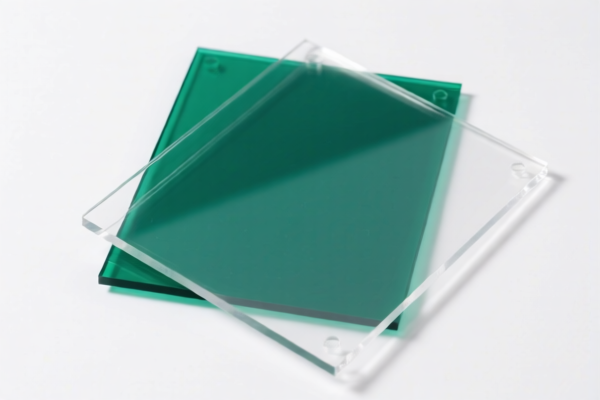
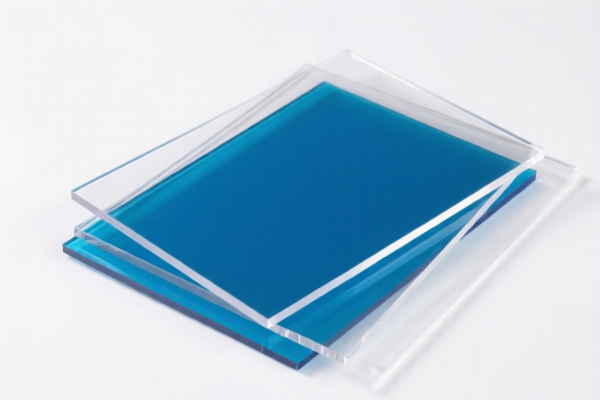
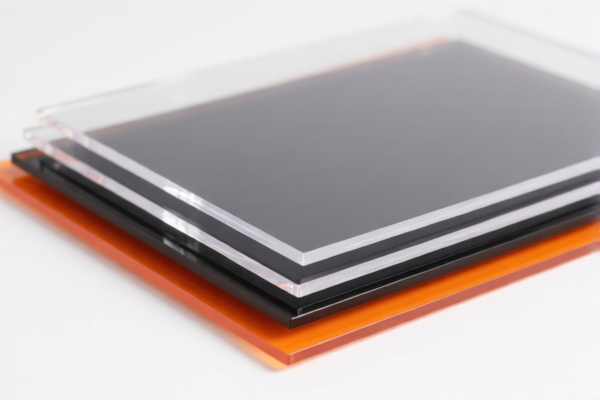
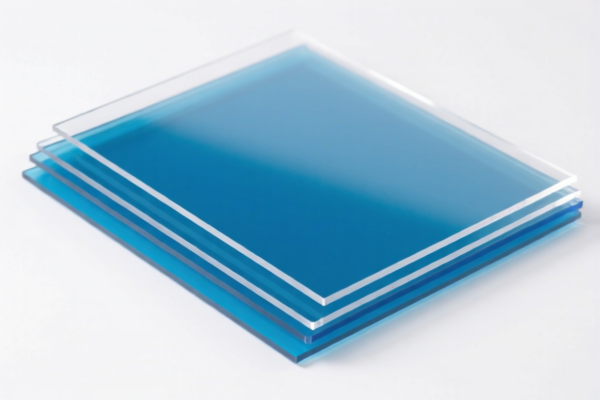
AI Analysis
🌟 PMMA UV Resistant Acrylic Sheet (Polymethyl Methacrylate)
🌐 HS Code Reference & Customs Clearance Guide | 2026 Latest Tariff Analysis | Professional Clearance Strategy
📌 1. Product Definition & Classification: Do You Really Understand "Acrylic Sheet"?
PMMA (Polymethyl Methacrylate), commonly known as "Acrylic" or "Plexiglass," is a transparent thermoplastic. When marketed as "UV Resistant Acrylic Sheet," it refers to flat panels made of this polymer, often with surface coatings or bulk additives to resist yellowing from sunlight.
In international trade, these sheets fall into specific categories based on their physical form (flat plate vs. finished product) and chemical nature (polymer classification). The critical distinction lies in whether they are classified as raw material plates (Chapter 39) or other plastic articles.
⚠️ Key Distinction:
- If the product is a flat plate/panel made of acrylic polymer → It falls under Chapter 39, Heading 3920 or 3921.
- If it is a finished article (e.g., a cut sign, a lampshade, a molded part) → It may fall under Chapter 39, Heading 3926.
- Crucial Note: Even with "UV Resistant" coating, if it remains a sheet/plate form, it is generally treated as a plastic plate, not a distinct chemical category.
📦 2. HS Code Classification Details (2026 Latest Tariff Authority Comparison)
Based on the provided data, here are the four potential HS Codes for PMMA UV Resistant Acrylic Sheets, along with their descriptions and tax implications.
| HS Code | Product Description | Application Scenario | Key Characteristics |
|---|---|---|---|
3920.51.50.50 |
PMMA (Polymethyl Methacrylate) Plates, conforming to acrylic polymer and plate form characteristics. | Raw acrylic sheets, signage substrates, architectural glazing | ✅ Classified as Acrylic Polymer Plates |
3926.90.99.89 |
PMMA Plastic Products, plate form, classified as other plastic articles not specified elsewhere. | Semi-finished parts, non-standard plate forms, or articles not fitting 3920/3921 | ⚠️ Classified as Other Plastic Articles (Lower Tariff) |
3920.51.50.90 |
PMMA Plates, conforming to acrylic polymer/non-foam/unlaminated material and form. | High-quality raw sheets, non-foam, not laminated with other materials | ✅ Classified as Acrylic Polymer Plates (Non-foam) |
3921.19.00.90 |
PMMA Plastic Plates, conforming to plate/sheet/film/foil form, classified as other plastics. | General plastic plates, possibly including laminates or other plastic bases | ⚠️ Classified as Other Plastic Plates |
3921.90.50.50 |
PMMA Plates, conforming to plastic material and "plates, sheets" classification, no material conflict. | Standard plastic plates/sheets, broad category | ✅ Classified as Plastic Plates/Sheets |
🔍 Important Reminder:
- HS Code3926.90.99.89has the lowest total tax (22.8%) but requires proving the item is an "article" not elsewhere specified, rather than a raw plate.
- HS Codes3920.51.50.50and3920.51.50.90have the highest total tax (41.5%) but are the most accurate for standard raw PMMA sheets.
- HS Code3921.90.50.50offers a mid-range tax (39.8%)** and is suitable for broader plastic sheet classifications.
💰 3. 2026 Latest Tariff Rate Breakdown (Including Surtaxes & Policy Surcharges)
✅ Applicable Country: United States (US)
✅ Country of Origin: China (CN)
✅ Effective Time: 2025/2026 Import Period
🎯 1. 3920.51.50.50 & 3920.51.50.90 —— PMMA Acrylic Polymer Plates
| Item | Content |
|---|---|
| Base Tariff Rate | 6.5% (Ad Valorem) |
| Section 301 Surtax | +25.0% (Added Tariff) |
| Section 122 Surtax | +10.0% (122 Clause Tariff) |
| Total Tax Rate | 41.5% |
| Tax Calculation | CIF Value × 41.5% |
| De Minimis Eligibility | ❌ Not Eligible (Subject to high tariffs) |
| Legal Basis | Base Tariff + Section 301 (25%) + Section 122 (10%) |
📌 Explanation:
- Base Tariff (6.5%): Standard MFN rate for acrylic plates.
- Section 301 (25%): US trade remedy tariff on Chinese goods.
- Section 122 (10%): Additional surcharge on specific plastic products from China.
- Total 41.5%: This is a very high tariff, significantly impacting profit margins. Must be carefully calculated in pricing strategies.
🎯 2. 3926.90.99.89 —— Other Plastic Articles (PMMA)
| Item | Content |
|---|---|
| Base Tariff Rate | 5.3% (Ad Valorem) |
| Section 301 Surtax | +7.5% (Added Tariff) |
| Section 122 Surtax | +10.0% (122 Clause Tariff) |
| Total Tax Rate | 22.8% |
| Tax Calculation | CIF Value × 22.8% |
| De Minimis Eligibility | ❌ Not Eligible |
| Legal Basis | Base Tariff + Section 301 (7.5%) + Section 122 (10%) |
📌 Note:
- This code has the lowest total tax (22.8%) among all options.
- However, it applies only if the product is classified as an "article" rather than a raw "plate."
- Use this only if the product is a semi-finished item or does not fit the strict definition of a polymer plate under 3920.
🎯 3. 3921.19.00.90 —— Other Plastic Plates (PMMA)
| Item | Content |
|---|---|
| Base Tariff Rate | 6.5% (Ad Valorem) |
| Section 301 Surtax | +25.0% (Added Tariff) |
| Section 122 Surtax | +10.0% (122 Clause Tariff) |
| Total Tax Rate | 41.5% |
| Tax Calculation | CIF Value × 41.5% |
| De Minimis Eligibility | ❌ Not Eligible |
| Legal Basis | Base Tariff + Section 301 (25%) + Section 122 (10%) |
📌 Explanation:
- Same high tariff structure as3920.51.50.
- Applies to plates/sheets of other plastics (including PMMA if not classified as acrylic polymer specifically).
- Risk: Misclassification here may lead to duty evasion penalties if deemed more accurately described under 3920.
🎯 4. 3921.90.50.50 —— Plastic Plates/Sheets (PMMA)
| Item | Content |
|---|---|
| Base Tariff Rate | 4.8% (Ad Valorem) |
| Section 301 Surtax | +25.0% (Added Tariff) |
| Section 122 Surtax | +10.0% (122 Clause Tariff) |
| Total Tax Rate | 39.8% |
| Tax Calculation | CIF Value × 39.8% |
| De Minimis Eligibility | ❌ Not Eligible |
| Legal Basis | Base Tariff + Section 301 (25%) + Section 122 (10%) |
📌 Explanation:
- Slightly lower base rate (4.8%) than 3920/3921.19, resulting in a 39.8% total.
- Useful if the PMMA sheet is part of a composite or does not fit the "acrylic polymer" definition strictly.
- Savings: 1.7% lower than the 41.5% codes, but still high.
🛠️ 4. Customs Clearance Practical Advice (Avoid Pitfalls Guide)
✅ 1. Preparation Checklist (All Documents Required)
| Document | Mandatory | Description |
|---|---|---|
| ✅ Product Specification Sheet | ✔️ | Must include material (PMMA), thickness, dimensions, UV resistance grade, manufacturing method (cast vs. extruded). |
| ✅ Material Safety Data Sheet (MSDS) | ✔️ | For chemical safety compliance. |
| ✅ Product Photos (Front, Back, Edge) | ✔️ | Clear images showing transparency, edge quality, and any UV coating. |
| ✅ Commercial Invoice | ✔️ | Must clearly state "PMMA Acrylic Sheet" and HS Code. |
| ✅ Packing List | ✔️ | Detail weight, dimensions, and packaging type. |
| ✅ Certificates of Analysis (COA) | ✔️ | Proof of UV resistance performance (e.g., ASTM D2565 testing). |
| ✅ Origin Certificate (CO) | ✔️ | Required for Section 301/122 determination. |
✅ 2. Declaration Tips (Key Mantra)
🔥 "Form Determines Code, Code Determines Tax, Be Precise or Pay More!"
| Scenario | Correct Declaration | Incorrect Practice |
|---|---|---|
| Raw PMMA Sheet (Clear, UV Coated) | 3920.51.50.50 or 3920.51.50.90 |
Misdeclare as "Plastic Panel" → 41.5% |
| Cut Acrylic Signs (Finished) | 3926.90.99.89 |
Misdeclare as "Sheet" → 22.8% (If eligible) |
| Composite Plate (PMMA + Other Material) | 3921.19.00.90 or 3921.90.50.50 |
Misdeclare as Pure PMMA → 41.5% |
| Foam PMMA Board | Not in Data | Misdeclare as Solid Sheet → 41.5% |
✅ 3. Special Cases Handling
| Situation | Handling Advice |
|---|---|
| UV Coating vs. Bulk UV | If UV is only a surface coating, it’s still 3920. If it’s a bulk additive, still 3920. Clarify in specs. |
| Laminated Acrylic | If layered with other plastics, may fall under 3921. Avoid 3920 if not pure acrylic. |
| OEM Custom Sizes | Provide customer order + design drawings. Declare as "Cut-to-size," but HS Code remains based on material. |
| Export to Non-US Markets | Check local tariffs. US rates are high due to Section 301/122. |
🌍 5. Global Market Comparison (2026 Latest)
| Country/Region | Recommended HS Code | Tariff (China Origin) | Certification Requirements | Notes |
|---|---|---|---|---|
| 🇺🇸 United States | 3920.51.50.50 / 3926.90.99.89 |
22.8% - 41.5% | ASTM D2565 (UV Resistance) | Highest tariffs due to Section 301/122. |
| 🇨🇳 China | 3920.51.00 / 3921.19 |
~6.5% | None | Low duty, no surtaxes. |
| 🇪🇺 EU | 3920.51 / 3921.19 |
~6.5% | REACH, RoHS | No Section 301/122 equivalents. |
| 🇬🇧 UK | 3920.51 / 3921.19 |
~6.5% | UKCA, RoHS | Post-Brexit rules apply. |
| 🇦🇺 Australia | 3920.51 / 3921.19 |
~5.0% | RCM | Low tariff, no surtaxes. |
📌 Conclusion:
- USA is the most expensive market for PMMA sheets due to additional surtaxes.
- EU/Asia markets offer significantly lower duties (~5-6.5%).
- Strategy: Consider Third-Party Assembly (e.g., Vietnam, Mexico) for US-bound finished goods to mitigate Section 301/122 tariffs.
📌 6. Common Mistakes & Pitfalls (Lessons Learned)
❌ Mistake 1: Declaring "UV Resistant Coating" as a separate chemical product
👉 Consequence: Misclassification → 41.5% on the whole item, or penalty.
👉 Fix: Include coating details in specs, but keep HS Code for the plate.
❌ Mistake 2: Using 3926.90.99.89 for raw sheets
👉 Consequence: Customs may reject and reclassify to 3920, adding 18.7% difference + delay.
👉 Fix: Only use 3926 for finished articles, not raw plates.
❌ Mistake 3: Ignoring "Section 122" in tariff calculation
👉 Consequence: Underestimating total cost by 10%.
👉 Fix: Always add 10% to Section 301 + Base Rate for US imports from China.
❌ Mistake 4: Vague Product Description ("Acrylic Sheet")
👉 Consequence: Customs inspection → Delay + Possible Fine.
👉 Fix: Use "PMMA Acrylic Sheet, UV Resistant, [Thickness]mm, Cast/Extruded."
✅ Correct Practice:
"PMMA Polymethyl Methacrylate Acrylic Sheet, UV-Resistant Coating, Clear, 3mm Thickness, Cast Process, Model XYZ, ASTM D2565 Certified"
🎯 7. Conclusion: Professional Declaration, Save Time & Money!
🎯 Remember the Mantra:
🔹 "Form is King: Sheet = 3920/3921 (41.5%), Article = 3926 (22.8%)."
🔹 "UV is a Feature, Not a Code Changer: Still PMMA."
🔹 "US Tariffs are High: Plan for 41.5% or Seek Alternatives."
📌 Pro Tip:
If your acrylic sheets are processed into finished signs/lamps in a third country (e.g., Vietnam, Thailand), you may qualify for preferential tariffs or exemptions from Section 301/122.
Recommendation: Apply for an Advance Ruling from US Customs (CBP) before shipment to confirm HS Code and tariff liability.
📣 Take Action Now:
📞 Contact a licensed customs broker + Provide product specs + Apply for HS Code Advance Ruling
🚀 Ensure your PMMA sheets pass smoothly, avoid delays, and maximize profit!
✨ Professional Customs Clearance Starts with Accurate Classification!
💼 Every percentage point of tariff matters! Calculate precisely!
Customer Reviews
About HS Code Classification
The Harmonized System (HS) is an internationally standardized nomenclature developed by the World Customs Organization (WCO) to classify traded products. Over 200 countries use the HS system as the basis for customs tariffs, trade statistics, and import/export regulations.
Each HS code follows a hierarchical structure:
- Chapter (2 digits) — Broad category of goods (e.g., Chapter 84: Machinery and Mechanical Appliances)
- Heading (4 digits) — More specific grouping within the chapter
- Subheading (6 digits) — Internationally standardized breakdown, used by all WCO member countries
- National subdivisions (8-10 digits) — Country-specific extensions for further classification, such as US HTSUS 10-digit codes
Correct HS code classification is essential for smooth customs clearance, accurate duty payment, and compliance with trade regulations. Misclassification can lead to customs delays, overpayment of duties, or penalties.
When importing from CN to US, the applicable tariff rates may include:
- Most-Favored-Nation (MFN) rate — The standard duty rate applied to WTO members
- General rate — Applied to countries without trade agreements
- Trade remedy duties — Additional tariffs such as Section 301 (anti-dumping), Section 232 (national security), or countervailing duties
The information provided on this page is for reference purposes only. For official classification, please consult with your local customs authority or a licensed customs broker.