POS Machine Paper Roll
CN → US| HS Code | Tariff Rate | Origin | Destination | Doc |
|---|---|---|---|---|
| 4802202000 | 35.0% | CN | US | Official Doc |
| 4802201000 | 35.0% | CN | US | Official Doc |
| 4811908030 | 35.0% | CN | US | Official Doc |
| 4811909030 | 35.0% | CN | US | Official Doc |
| 4911998000 | 17.5% | CN | US | Official Doc |
Product Images
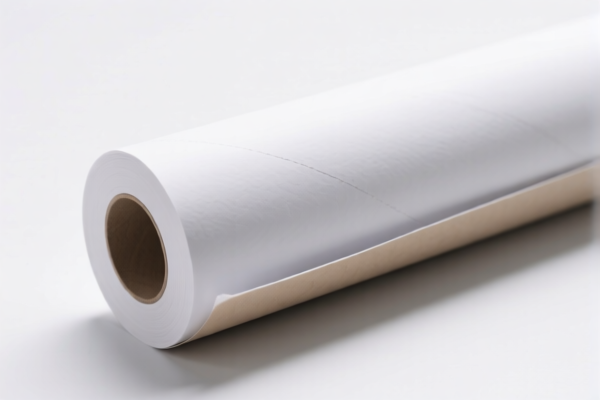
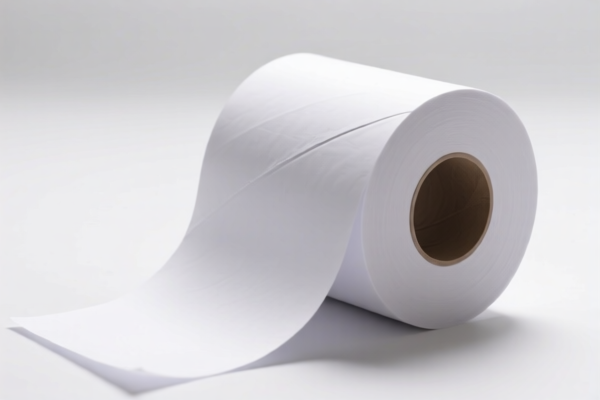
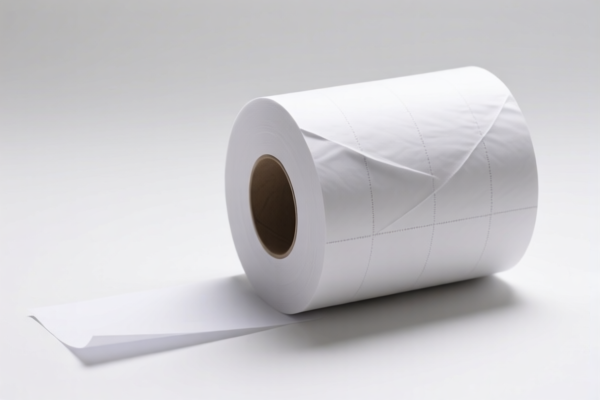

AI Analysis
🧾 Thermal Paper Rolls (POS Machine Paper)
🌐 HS Code Reference & Customs Clearance Guide | 2026 Latest Tariff Analysis | Professional Clearance Strategy
📌 I. Product Definition & Classification: Do You Really Understand "POS Paper"?
Thermal paper rolls, commonly known as POS machine paper, are the consumable core for receipt printers, credit card terminals, and fax machines. In international trade, their classification depends strictly on material composition, processing method, and intended use. They are primarily categorized into base paper for thermal printing and coated thermal paper.
⚠️ Key Distinction Point:
- If the paper is identified as "base paper" matching the physical/chemical properties of photosensitive/thermal paper but lacks the final coating process or is classified as a foundational substrate → It falls under 4802.20.xxxx.
- If the paper is explicitly identified by its core attribute "thermal coating" or "direct thermal application" → It falls under 4811.90.xxxx.
- If the product is broadly categorized as "printed matter" (less common for raw rolls, but possible for pre-printed rolls) → It may fall under 4911.99.80.00.
📦 II. HS Code Classification Details (2026 Latest Tariff Authority Comparison)
| HS Code | Product Description | Application Scenario | Basis for Classification |
|---|---|---|---|
4802.20.20.00 |
Thermal Paper Base Paper | Matches the base attributes of photosensitive/thermal paper/cardboard | Base Paper Attribute: Classified as paper base matching thermal/photo-sensitive properties. |
4802.20.10.00 |
Thermal Paper | Consistent with material and name | Consistency Principle: Material is paper, name matches "thermal paper" directly. |
4811.90.80.30 |
Thermal Coated Paper | Product name directly corresponds to the core attribute "thermal" | Direct Attribute: Core function is thermal coating; name reflects this directly. |
4811.90.90.30 |
Thermal Paper | Material is paper, use is direct thermal coating | Usage-Based: Paper material + specific use for direct thermal coating. |
4911.99.80.00 |
Other Printed Matter | Thermal paper belongs to printing category and is paper-based | Broad Category: Treated as other printed matter due to paper material. |
🔍 Key Reminder:
- 4802 series focuses on the base paper structure and its match with thermal properties.
- 4811 series focuses on the surface treatment/coating (thermal coating) and direct usability.
- 4911 series is a residual category for printed matter, often used if the thermal aspect is secondary to the printing content (rare for blank rolls).
- Tax Rate Implication: All listed codes attract high tariffs due to US-China trade policies.
💰 III. 2026 Latest Tariff Rate Details (Including Surtaxes & Policy Add-ons)
✅ Applicable Country: United States (US)
✅ Origin: China (CN)
✅ Effective Date: November 10, 2025 onwards (including subsequent imports)
🎯 1. 4802.20.20.00 & 4802.20.10.00 —— Thermal Paper (Base Paper Attribute)
| Item | Content |
|---|---|
| Basic Tariff Rate | 0% (ad valorem) |
| Section 301 Surtax | +25% |
| Section 122 Tariff | +10% |
| Total Tariff Rate | 35.0% |
| Tax Calculation | CIF Value × 35% |
| De Minimis Exemption | ❌ Not Eligible (denied for paper products under these codes) |
| Legal Basis Path | Section 301: 4802.20 → Section 122: Paper Products → USITC: 4802.20.xx |
📌 Explanation:
- The 25% Section 301 surtax is applied to paper products from China under specific headings.
- The 10% Section 122 tariff is an additional national security/economic surcharge on specific Chinese goods.
- Total 35%: This is a significant cost factor. The base rate is 0%, but the surtaxes dominate.
🎯 2. 4811.90.80.30 & 4811.90.90.30 —— Thermal Coated/Printed Paper
| Item | Content |
|---|---|
| Basic Tariff Rate | 0% (ad valorem) |
| Section 301 Surtax | +25% |
| Section 122 Tariff | +10% |
| Total Tariff Rate | 35.0% |
| Tax Calculation | CIF Value × 35% |
| De Minimis Exemption | ❌ Not Eligible |
| Legal Basis Path | Section 301: 4811 → Section 122: Paper Products → USITC: 4811.90.xx |
📌 Note:
- These codes are for paper with thermal coating or direct thermal use.
- Tax rate is identical to 4802 series due to the same surtax structure.
🎯 3. 4911.99.80.00 —— Other Printed Matter
| Item | Content |
|---|---|
| Basic Tariff Rate | 0% (ad valorem) |
| Section 301 Surtax | +7.5% |
| Section 122 Tariff | +10% |
| Total Tariff Rate | 17.5% |
| Tax Calculation | CIF Value × 17.5% |
| De Minimis Exemption | ❌ Not Eligible |
| Legal Basis Path | Section 301: 4911 → Section 122: Paper Products → USITC: 4911.99 |
📌 Warning:
- This code has a lower surtax (7.5%) compared to 25% for 4802/4811, resulting in a 17.5% total rate.
- However, using this code is risky for blank thermal rolls. It is typically for pre-printed materials or non-thermal specific paper. Misclassification can lead to customs penalties. Only use if the product is clearly defined as "printed matter" rather than "thermal paper."
🛠️ IV. Customs Clearance Practical Advice (Battle-Tested Pitfall Avoidance Guide)
✅ 1. Required Documentation Checklist (No Shortages Allowed)
| Document | Required | Description |
|---|---|---|
| ✅ Product Specification Sheet | ✔️ | Must include: Grammage, core size, roll diameter, thermal layer type (BPA-free/BPA), heat sensitivity. |
| ✅ Product Photos | ✔️ | Clear images of the roll, label, and coating texture. |
| ✅ Commercial Invoice | ✔️ | Must clearly state: "Thermal Paper Roll for POS Receipt Printer" or "Base Paper for Thermal Printing." Avoid vague terms like "Paper." |
| ✅ Packing List | ✔️ | Detail inner/outer packaging to show roll integrity. |
| ✅ Certificate of Origin (CO) | ✔️ | Crucial for verifying Chinese origin and applying surtaxes. |
| ✅ Third-Party Test Report | ✔️ | ISO certification, BPA-free declaration, heat sensitivity test results. |
✅ 2. Declaration Tips (Key Mnemonic)
🔥 “Name Accurate, Code Specific, Surtax High, Avoid 4911!”
| Scenario | Correct Declaration | Wrong Practice |
|---|---|---|
| Blank thermal rolls for POS | 4802.20.10.00 or 4811.90.80.30 |
Using 4911.99.80.00 to lower tax → High Risk of Audit/penalty |
| Pre-printed thermal receipts | 4911.99.80.00 (if primarily printed) |
Declaring as blank thermal paper → Misclassification |
| Base paper for thermal coating | 4802.20.20.00 |
Declaring as coated paper → Tax Discrepancy |
| Mixed shipment (Paper + Printer) | Separate Declaration | Combining into one line item → Complex Valuation Issues |
✅ 3. Special Situation Handling
| Situation | Handling Advice |
|---|---|
| BPA-Free Thermal Paper | Highlight "BPA-Free" in description. May help with consumer perception but does not change HS Code or Tariff. |
| OEM/White Label | Provide client PO and design specs. Ensure invoice matches the declared "manufacturer" or "brand" accurately. |
| Pre-printed Rolls | If the roll is pre-printed with store logos, consider 4911.99.80.00 but be prepared for customs scrutiny. Justify why it's not "thermal paper." |
| Small Quantity Samples | Still subject to tariffs. De minimis does not apply to these HS codes. |
🌍 V. Global Market Clearance Comparison (2026 Latest)
| Country/Region | Recommended HS Code | Tariff (China Origin) | Certification Requirements | Notes |
|---|---|---|---|---|
| 🇺🇸 United States | 4802.20.10.00 / 4811.90.80.30 |
35% (Total) | None specific, but BPA-free preferred | High surtaxes (301 + 122) |
| 🇺🇸 United States | 4911.99.80.00 |
17.5% (Total) | None | High Risk: Only for pre-printed/printed matter |
| 🇨🇳 China | 4811.90.90.30 |
5% (Import) | CCC (if applicable) | No surtaxes |
| 🇪🇺 European Union | 4811.90.90.30 |
6.5% | CE (if packaging), REACH | No US-style surtaxes |
| 🇬🇧 United Kingdom | 4811.90.90.30 |
6.5% | UKCA | Post-Brexit rules apply |
| 🇦🇺 Australia | 4811.90.90.30 |
5% | None | Standard MFN rate |
📌 Conclusion:
- USA is the most expensive market for thermal paper due to the 35% combined surtax.
- EU/UK/AU offer significantly lower tariffs (5-6.5%).
- Do not attempt to misclassify thermal paper as "printed matter" (4911) to save 17.5% in the US. Customs audits are frequent, and penalties can exceed the tax savings.
📌 VI. Common Mistakes & Pitfall Avoidance Guide (Lessons Learned)
❌ Mistake 1: Declaring "Thermal Paper" as "Copy Paper" (4802.55)
👉 Consequence: Customs will reject because thermal paper has a distinct coating. Delay + Penalty.
❌ Mistake 2: Using 4911.99.80.00 for blank thermal rolls to avoid the 25% Section 301 tax
👉 Consequence: High risk of audit. Customs may reclassify and impose back taxes + interest.
👉 Correct Approach: Use 4802.20.10.00 or 4811.90.80.30 and pay the 35% tax. Plan your pricing accordingly.
❌ Mistake 3: Ignoring the "Section 122" 10% tariff
👉 Consequence: Underestimating landed cost. Many importers forget this additional layer on top of Section 301.
👉 Correct Approach: Always calculate Base + 301 + 122 = 35% for US imports of thermal paper.
✅ Correct Declaration Example:
"Thermal Paper Roll, 57mm x 40m, BPA-Free, Coated Surface, for POS Receipt Printer, HS Code: 4811.90.80.30"
🎯 VII. Conclusion: Professional Declaration, Cost Control, Efficiency!
🎯 Remember the Mnemonic:
🔹 “Blank Rolls 35%, Printed Matter 17.5%, But Risk is High!”
🔹 “301 plus 122 equals 35, don’t gamble, be precise!”
🔹 “HS Code determines the tax, accuracy saves thousands!”
📌 Pro Tip:
- If you are importing large volumes, consider supplier-managed inventory or bonded warehouses to defer tariff payments until the goods are released for consumption.
- Apply for Advance Rulings from CBP if your product has unique characteristics (e.g., special coatings). This provides legal certainty for your 35% tax burden.
📣 Immediate Action:
📞 Contact a Professional Customs Broker + Provide Product Specs + Confirm HS Code
🚀 Ensure Smooth Clearance, Avoid Delays, and Protect Your Margins!
✨ Professional Clearance Starts with Accurate Classification!
💼 Every Percent of Tax is a Percent of Your Profit!
Customer Reviews
About HS Code Classification
The Harmonized System (HS) is an internationally standardized nomenclature developed by the World Customs Organization (WCO) to classify traded products. Over 200 countries use the HS system as the basis for customs tariffs, trade statistics, and import/export regulations.
Each HS code follows a hierarchical structure:
- Chapter (2 digits) — Broad category of goods (e.g., Chapter 84: Machinery and Mechanical Appliances)
- Heading (4 digits) — More specific grouping within the chapter
- Subheading (6 digits) — Internationally standardized breakdown, used by all WCO member countries
- National subdivisions (8-10 digits) — Country-specific extensions for further classification, such as US HTSUS 10-digit codes
Correct HS code classification is essential for smooth customs clearance, accurate duty payment, and compliance with trade regulations. Misclassification can lead to customs delays, overpayment of duties, or penalties.
When importing from CN to US, the applicable tariff rates may include:
- Most-Favored-Nation (MFN) rate — The standard duty rate applied to WTO members
- General rate — Applied to countries without trade agreements
- Trade remedy duties — Additional tariffs such as Section 301 (anti-dumping), Section 232 (national security), or countervailing duties
The information provided on this page is for reference purposes only. For official classification, please consult with your local customs authority or a licensed customs broker.