PP Hard Pipe
CN → US| HS Code | Tariff Rate | Origin | Destination | Doc |
|---|---|---|---|---|
| 3917220000 | 38.1% | CN | US | Official Doc |
| 3926909989 | 22.8% | CN | US | Official Doc |
| 3917290090 | 38.1% | CN | US | Official Doc |
| 3926909987 | 22.8% | CN | US | Official Doc |
Product Images


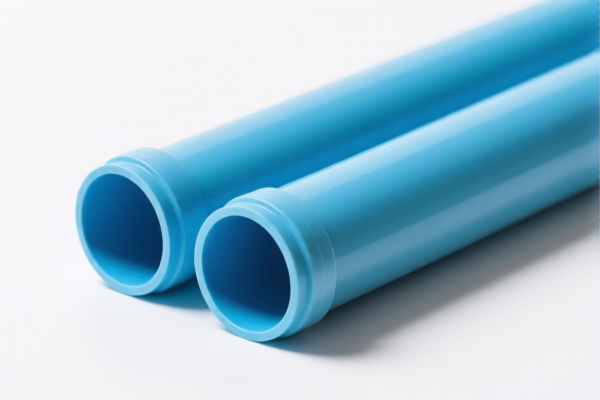

AI Analysis
🔧 PP Hard Pipe (Polypropylene Rigid Conduit/Tubing)
🌐 HS Code Reference & Customs Clearance Guide | 2026 Latest Tariff Analysis | Professional Compliance Strategy
📌 I. Product Definition: What Exactly is a "PP Hard Pipe"?
Polypropylene (PP) hard pipes are rigid plastic tubes made from polypropylene homopolymers or copolymers. In international trade, the classification hinges on two critical factors: 1. Material Composition: Is it a pure polymer (Pipe) or a fabricated article (Other Plastic Article)? 2. Function/Use: Is it primarily for conveying fluids/gases (Pipe) or is it a specific manufactured component like a wire conduit?
⚠️ Critical Distinction:
- If the item is a generic tube/pipeline for fluid/gas transport → Classified under Chapter 3917 (Plastic Pipes & Tubes). - If the item is a finished article not specifically listed elsewhere (e.g., specific wire conduits, fittings, or non-pipe shaped rigid forms) → Classified under Chapter 3926 (Other Plastic Articles).
📦 II. HS Code Classification Matrix (2026 Latest Customs Data)
| HS Code | Product Description | Application Scenario | Key Classification Feature |
|---|---|---|---|
3917.22.00.00 |
Pipes & Tubes, Rigid, of Polypropylene (PP) | General plumbing, industrial fluid transport, chemical lines | ✅ Primary Pipe Classification: Pure PP material, rigid tube form. |
3917.29.00.90 |
Other Pipes & Tubes, Rigid, of Plastics | Non-PP plastics (e.g., PVC, PE), or mixed polymer pipes not in 3917.22 | ✅ Secondary Pipe Classification: Fits "Plastic Rigid Tube" but not specifically PP (or generic PP if 3917.22 is deemed too specific/narrow by local customs). |
3926.90.99.89 |
Other Plastic Articles, n.e.s. (Not Elsewhere Specified) | Complex PP fittings, non-standard rigid components, specialized wire conduits | ✅ Article Classification: Not a simple pipe; considered a "manufactured article." |
3926.90.99.87 |
Other Plastic Articles, n.e.s. (Specifically for Wire Ducts/Conduits) | Electrical wire protection pipes, cable management systems | ✅ Article Classification: Specific use-case (wire conduit) overrides general pipe classification in some interpretations. |
🔍 Key Insight:
- 3917.22.00.00 is the most accurate for pure PP rigid pipes.
- 3926.90.99.87 is often used for electrical PP conduits because they are seen as "articles for wiring" rather than "pipes for fluid."
- 3917.29.00.90 is a fallback if customs authorities do not recognize 3917.22 for your specific PP variant, or if the pipe contains other polymers.
💰 III. 2026 Tariff Rate Breakdown (US Import from China)
✅ Applicable Country: United States (US)
✅ Origin: China (CN)
✅ Effective Date: 2025–2026 (Current Policy)
⚠️ Note: US tariffs include Base Rate + Section 301 (25%) + 122 Clause (10%).
🎯 1. 3917.22.00.00 – PP Rigid Pipes (Primary Classification)
| Item | Detail |
|---|---|
| Base Tariff | 3.1% |
| Section 301 Tariff | +25.0% |
| 122 Clause Tariff | +10.0% |
| Total Tax Rate | 38.1% |
| Calculation | CIF Value × 38.1% |
| De Minimis Eligibility | ❌ Denied (High-value industrial goods) |
| Legal Basis | HTSUS:3917.22 → USITC:3917.22.00.00 → Footnote 9903.88.01 (301) → 122 Clause |
📌 Explanation:
- PP pipes are considered industrial materials. The 25% Section 301 tariff applies broadly to plastic pipes from China.
- The 122 Clause adds another 10% for specific strategic materials, pushing the total to 38.1%.
- Cost Impact: High. Importers must factor in nearly 40% additional cost.
🎯 2. 3917.29.00.90 – Other Plastic Rigid Pipes (Fallback)
| Item | Detail |
|---|---|
| Base Tariff | 3.1% |
| Section 301 Tariff | +25.0% |
| 122 Clause Tariff | +10.0% |
| Total Tax Rate | 38.1% |
| Calculation | CIF Value × 38.1% |
| De Minimis Eligibility | ❌ Denied |
📌 Note:
- Same tax burden as3917.22.00.00.
- Use this only if3917.22.00.00is rejected due to material composition nuances (e.g., blended polymers).
🎯 3. 3926.90.99.89 – Other Plastic Articles (General)
| Item | Detail |
|---|---|
| Base Tariff | 5.3% |
| Section 301 Tariff | +7.5% |
| 122 Clause Tariff | +10.0% |
| Total Tax Rate | 22.8% |
| Calculation | CIF Value × 22.8% |
| De Minimis Eligibility | ❌ Denied |
| Legal Basis | HTSUS:3926.90 → USITC:3926.90.99.89 → Footnote 9903.88.01 (Note: Lower 301 rate for some "other articles") |
📌 Explanation:
- This is a lower tax bracket (22.8% vs. 38.1%).
- However, misclassifying a pipe as "other article" is a major compliance risk.
- Only use if the product is not a simple tube but a complex molded component (e.g., custom junction boxes made of PP).
🎯 4. 3926.90.99.87 – Other Plastic Articles (Wire Ducts/Conduits)
| Item | Detail |
|---|---|
| Base Tariff | 5.3% |
| Section 301 Tariff | +7.5% |
| 122 Clause Tariff | +10.0% |
| Total Tax Rate | 22.8% |
| Calculation | CIF Value × 22.8% |
| De Minimis Eligibility | ❌ Denied |
📌 Strategic Note:
- If your "PP Hard Pipe" is specifically for electrical wire protection, classify as3926.90.99.87to save 15.3% in tariffs.
- Risk: Customs may reclassify as3917.22.00.00if the pipe is generic. You must prove specific end-use (e.g., labeled "Electrical Conduit," no fluid compatibility).
🛠️ IV. Customs Clearance Best Practices (Avoid Penalties!)
✅ 1. Essential Documentation Checklist
| Document | Required? | Purpose |
|---|---|---|
| ✅ Product Specification Sheet | ✔️ | Must state: Material (PP), Form (Rigid Pipe), Diameter, Wall Thickness. |
| ✅ Material Safety Data Sheet (MSDS) | ✔️ | Confirms pure PP composition (excludes 3917.29 if mixed). |
| ✅ Product Photos | ✔️ | Show ends, markings, and any fittings. |
| ✅ End-Use Statement | ✔️ | Crucial for 3926.90.99.87: Declare "Used for electrical wire protection only, not for fluid transport." |
| ✅ Commercial Invoice | ✔️ | Accurate description: "PP Rigid Electrical Conduit, Model XYZ." |
| ✅ Packing List | ✔️ | Weight and dimensions for duty calculation. |
✅ 2. Classification Strategy & Naming Tips
🔥 “Fluid vs. Wire: Name Matters, Use Defines Tax!”
| Scenario | Recommended HS Code | Tax Rate | Risk Level |
|---|---|---|---|
| General PP Pipe (Plumbing, Chemical) | 3917.22.00.00 |
38.1% | ✅ Low (Accurate) |
| Electrical PP Conduit (Labeled/Designed for wires) | 3926.90.99.87 |
22.8% | ⚠️ Medium (Needs proof of end-use) |
| Mixed Polymer Pipe (Not pure PP) | 3917.29.00.90 |
38.1% | ✅ Low (If not PP) |
| Complex PP Fitting/Box | 3926.90.99.89 |
22.8% | ⚠️ Medium (Must not be a simple tube) |
📌 Key Tip:
- If you declare as 3926.90.99.87 (Wire Duct), ensure the product cannot carry fluids (e.g., no pressure rating, smooth interior for wires, not threaded for pipes).
- If declared as 3917.22.00.00, ensure the material is 100% Polypropylene.
✅ 3. Special Case Handling
| Situation | Recommendation |
|---|---|
| OEM Custom Pipes | Provide client design specs. If client specifies "wire conduit," use 3926.90.99.87. |
| PP Pipes with Fittings Sold Together | Declare as Set: Primary function determines classification. If for wiring, use 3926.90.99.87. |
| PP Pipes for Medical Use | May qualify for different HTS, but generally still 3917.22.00.00 unless specific exemption applies. |
| Mixed Shipment (Pipe + Fittings) | Separate lines: Pipes as 3917.22.00.00, Fittings as 3926.90.99.89 if not part of the same system. |
🌍 V. Global Market Comparison (2026)
| Country | Recommended HS Code | Base Tariff | US Surcharges | Total (China Origin) |
|---|---|---|---|---|
| 🇺🇸 USA | 3917.22.00.00 |
3.1% | +35% (301+122) | 38.1% |
| 🇺🇸 USA | 3926.90.99.87 |
5.3% | +17.5% (301+122) | 22.8% |
| 🇨🇳 China | 3917.22.00.00 |
6.5% | None | 6.5% |
| 🇪🇺 EU | 3917.22.00.00 |
4.5% | None | 4.5% |
| 🇯🇵 Japan | 3917.22.00.00 |
3.0% | None | 3.0% |
📌 Conclusion:
- USA has the highest effective tariff due to Section 301 and 122 Clause.
- Optimization Strategy: If your PP hard pipe is specifically for electrical wiring, classify under 3926.90.99.87 to save 15.3% in duties.
- Documentation is Key: You must prove the "wire conduit" designation to justify the lower tax bracket.
📌 VI. Common Mistakes & Pitfalls (Learn from Others!)
❌ Mistake 1: Declaring all PP pipes as 3926.90.99.87 to save taxes.
👉 Consequence: Customs audits reveal fluid-carrying pipes → 15.3% penalty + back taxes.
❌ Mistake 2: Not specifying material in invoice.
👉 Consequence: Customs assumes worst-case (higher tax or detention).
❌ Mistake 3: Mixing PP and PVC pipes in one HS line.
👉 Consequence: Classification error → Rejection.
✅ Correct Declaration Example:
"PP Rigid Electrical Conduit, 1/2 inch, 100% Polypropylene, Non-pressure rated, For Wire Protection Only, No Fluid Transport."
🎯 VII. Final Recommendations
🎯 Remember This Rule:
🔹 “If it carries fluid → 3917.22 (38.1%). If it carries wires → 3926.90.99.87 (22.8%).”
🔹 “Document the end-use! Labeling is your best defense.”
📌 Pro Tip:
If you are exporting to the USA, consider:
1. Pre-Ruling: Apply for a Binding Ruling from CBP to confirm if your specific PP pipe qualifies as "wire conduit" (3926.90.99.87).
2. Supply Chain Diversification: If tariffs are prohibitive, consider sourcing from Vietnam/Malaysia (if PP resin allows) for lower tariffs.
📣 Action Step:
📞 Contact your freight forwarder with product photos and end-use declaration.
🚀 Optimize your HS Code to save 15.3% in US tariffs if eligible!
✨ Accurate Classification = Lower Costs = Smoother Customs!
💼 Don’t let tariff mistakes eat your margin!
Customer Reviews
About HS Code Classification
The Harmonized System (HS) is an internationally standardized nomenclature developed by the World Customs Organization (WCO) to classify traded products. Over 200 countries use the HS system as the basis for customs tariffs, trade statistics, and import/export regulations.
Each HS code follows a hierarchical structure:
- Chapter (2 digits) — Broad category of goods (e.g., Chapter 84: Machinery and Mechanical Appliances)
- Heading (4 digits) — More specific grouping within the chapter
- Subheading (6 digits) — Internationally standardized breakdown, used by all WCO member countries
- National subdivisions (8-10 digits) — Country-specific extensions for further classification, such as US HTSUS 10-digit codes
Correct HS code classification is essential for smooth customs clearance, accurate duty payment, and compliance with trade regulations. Misclassification can lead to customs delays, overpayment of duties, or penalties.
When importing from CN to US, the applicable tariff rates may include:
- Most-Favored-Nation (MFN) rate — The standard duty rate applied to WTO members
- General rate — Applied to countries without trade agreements
- Trade remedy duties — Additional tariffs such as Section 301 (anti-dumping), Section 232 (national security), or countervailing duties
The information provided on this page is for reference purposes only. For official classification, please consult with your local customs authority or a licensed customs broker.