PP Plastic Craft Packaging Band
CN → US| HS Code | Tariff Rate | Origin | Destination | Doc |
|---|---|---|---|---|
| 3926400010 | 15.3% | CN | US | Official Doc |
| 3926909989 | 22.8% | CN | US | Official Doc |
| 5806321080 | 41.0% | CN | US | Official Doc |
Product Images
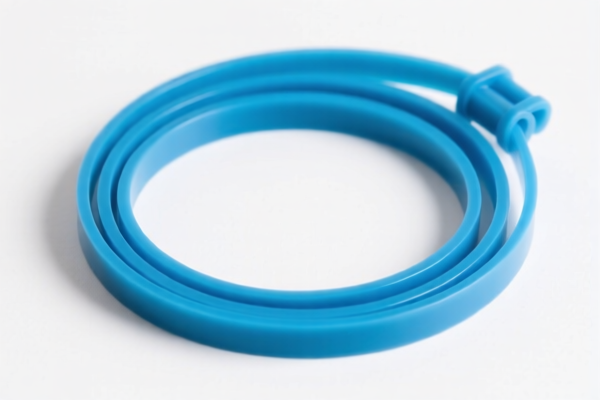
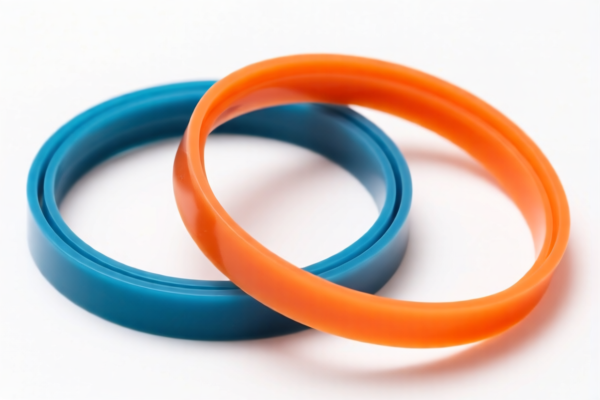
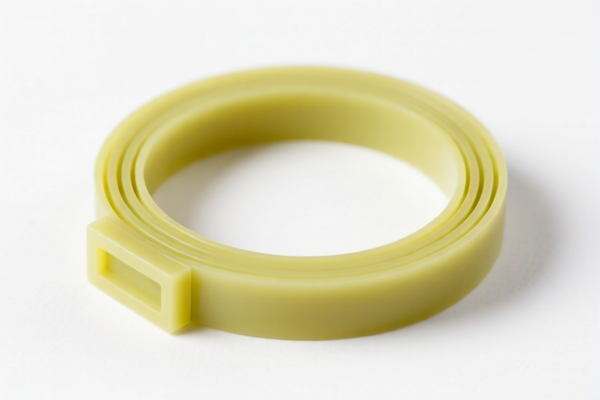
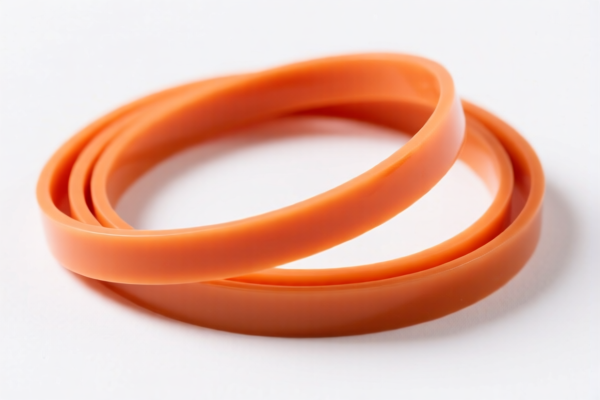
AI Analysis
🎀 PP Plastic Craft Packaging Band (Polypropylene Decorative Ribbon)
🌐 HS Code Reference & Customs Clearance Guide | 2026 Latest Tariff Analysis | Professional Clearance Strategy
📌 I. Product Definition & Classification: Do You Really Understand "PP Plastic Ribbon"?
PP Plastic Craft Packaging Bands are widely used in gift wrapping, holiday decorations, and industrial bundling. In international trade, their classification depends heavily on the material composition and physical form. Although made of plastic (polypropylene), they can sometimes be confused with textile ribbons or classified as "other plastic articles" depending on manufacturing methods.
Key Distinction Points: * Plastic Ribbon (Plastic Material): If the band is made entirely of polypropylene (PP) resin, extruded, and possibly printed, it falls under Chapter 39 (Plastics). * Textile Ribbon (Fabric Material): If the PP is used as a filament in a woven fabric structure that mimics silk/satin, customs may argue it belongs to Chapter 58 (Woven Ribbons). * Decorative vs. Functional: If it’s a complex 3D bow or specific decorative item, it might fall under "other plastic articles."
⚠️ Critical Classification Nuance:
- Pure Plastic Extrusion → Generally 3926 (Other plastic articles).
- Woven/Woven-like Structure → Potentially 5806 (Woven Ribbons).
- "Other" Plastic Items → If it doesn’t fit specific ribbon definitions, 3926.90.
📦 II. HS Code Classification Details (2026 Latest Tariff Authority Comparison)
Based on the provided data, here are the three possible HS Codes for PP Plastic Craft Packaging Bands, ranging from lowest to highest tax burden.
| HS Code | Product Description | Application Scenario | Tax Rate (Total) |
|---|---|---|---|
3926.40.00.10 |
PP Plastic Flower Bouquet Packaging Band or Holiday Gift Band; Material: Polypropylene; Form: Decorative packaging band or bows/like decorative products. | Specific decorative bows, packaged gift ribbons, PP-based decorative bands. | 15.3% |
3926.90.99.89 |
PP Plastic Flower Bouquet Packaging Band or Holiday Gift Band; Material: Polypropylene; Form: Other plastic articles, no specific exclusions. | General PP plastic bands not fitting specific "bow" or "decorative" sub-codes; generic plastic tying bands. | 22.8% |
5806.32.10.80 |
PP Plastic Holiday Gift Band; Material: Polypropylene (Artificial/Synthetic Fiber Category); Form: Narrow woven fabric or satin ribbon category. | PP bands that are woven or structurally classified as "narrow woven fabrics" or "satins." | 41.0% |
🔍 Key Insight:
- The biggest risk is being misclassified under 5806 due to the "woven" appearance of some PP ribbons. This results in a 26.4% higher tariff compared to the optimal plastic classification.
- 3926.40.00.10 is the most favorable if the product can be proven as a specific "decorative plastic article" (like bows or specific packaging bands).
- 3926.90.99.89 is the "catch-all" for plastic items, carrying a moderate penalty due to Section 301 tariffs.
💰 III. 2026 Latest Tariff Rate Breakdown (Including Surcharges & Policy Add-ons)
✅ Applicable Country: United States (US)
✅ Origin: China (CN)
✅ Effective Date: From November 10, 2025 (including subsequent imports)
🎯 1. 3926.40.00.10 — PP Plastic Bow/Decorative Band (Optimal)
| Item | Content |
|---|---|
| Base Duty | 5.3% (ad valorem) |
| Section 301 Add-on Tariff | 0.0% |
| IEEPA 122 Clause Tariff | +10.0% |
| Total Tax Rate | 15.3% |
| Calculation | CIF Value × 15.3% |
| De Minimis Exemption | ❌ Not Eligible (deny_de_minimis) |
| Legal Basis Path | IEEPA:9903.01.24 → USITC:3926.40.00.10 → FOOTNOTE:122 |
📌 Explanation:
- This is the lowest tax bracket. It assumes the product is specifically identified as "decorative plastic articles" (like bows).
- The 10% IEEPA tariff is applied due to the "122 Clause" targeting specific Chinese plastic imports.
- No Section 301 penalty makes this the most cost-effective classification.
🎯 2. 3926.90.99.89 — Other Plastic Articles (Standard)
| Item | Content |
|---|---|
| Base Duty | 5.3% (ad valorem) |
| Section 301 Add-on Tariff | +7.5% |
| IEEPA 122 Clause Tariff | +10.0% |
| Total Tax Rate | 22.8% |
| Calculation | CIF Value × 22.8% |
| De Minimis Exemption | ❌ Not Eligible (deny_de_minimis) |
| Legal Basis Path | IEEPA:9903.01.24 → IEEPA:9903.88.01 → USITC:3926.90.99.89 |
📌 Explanation:
- Used if the product is a generic PP plastic band that doesn’t fit the specific "bow/decorative" description of 3926.40.
- Suffers from a 7.5% Section 301 surcharge in addition to the 10% IEEPA tariff.
- Total cost is 48% higher than the optimal classification.
🎯 3. 5806.32.10.80 — Woven/Textile-like PP Ribbon (High Risk)
| Item | Content |
|---|---|
| Base Duty | 6.0% (ad valorem) |
| Section 301 Add-on Tariff | +25.0% |
| IEEPA 122 Clause Tariff | +10.0% |
| Total Tax Rate | 41.0% |
| Calculation | CIF Value × 41.0% |
| De Minimis Exemption | ❌ Not Eligible (deny_de_minimis) |
| Legal Basis Path | IEEPA:9903.01.24 → USITC:5806.32.10.80 → FOOTNOTE:9903.88.01 |
📌 Explanation:
- Highest Risk Category. If customs determines the PP ribbon is "woven" or functionally equivalent to textile ribbons, this applies.
- The 25% Section 301 tariff is applied, significantly increasing costs.
- 41% total duty can erode profit margins completely. Avoid if possible.
🛠️ IV. Customs Clearance Practical Advice (Battle-Tested Pitfall Guide)
✅ 1. Required Documentation Checklist (None Can Be Missing)
| Document | Must Provide | Description |
|---|---|---|
| ✅ Product Specification Sheet | ✔️ | Detailed material composition (100% PP?), manufacturing process (extruded vs. woven), dimensions. |
| ✅ Photos (Clear & Detailed) | ✔️ | Show cross-section, texture, and usage. Crucial for distinguishing plastic extrusion from woven fabric. |
| ✅ Commercial Invoice | ✔️ | Clearly state "PP Plastic Packaging Band" or "Polypropylene Bow." Avoid vague terms like "Gift Accessory." |
| ✅ Packing List | ✔️ | Consistent quantities and weights. |
| ✅ Certificate of Origin | ✔️ | Required for origin verification. |
| ✅ Manufacturing Process Description | ✔️ | Critical: Explain if the band is extruded, printed, or woven. If extruded, emphasize "Plastic Article." |
✅ 2. Declaration Strategy (Key Mantras)
🔥 “Plastic Not Fabric, Extrusion Not Weave, Name Specific, Tax Drops Fast!”
| Scenario | Correct Declaration | Wrong Approach |
|---|---|---|
| Extruded PP Ribbon | 3926.40.00.10 or 3926.90.99.89 |
Mislabel as "Fabric Ribbon" → 41% |
| PP Bows/Bands | 3926.40.00.10 |
Generic "Plastic Part" → 22.8% |
| Woven PP-like Ribbon | 5806.32.10.80 (if unavoidable) |
Force into plastic category without proof → Audit Risk |
✅ 3. Special Handling Tips
| Situation | Advice |
|---|---|
| PP Ribbon that Looks Like Silk | Provide microscopic analysis or manufacturer affidavit proving it is not woven textile. |
| Mixed Materials (PP + Paper) | If >50% PP by weight/value, argue for plastic classification. If mixed, risk of being classified as composite good. |
| OEM Custom Bows | Provide design files showing 3D structure. Helps justify 3926.40.00.10 (specific decorative article). |
| Large Volume Shipments | Consider Advance Ruling (Pre-classification) from CBP to lock in the 15.3% rate. |
🌍 V. Global Market Clearance Comparison (2026 Latest)
| Country/Region | Recommended HS Code | Duty | Certification | Remarks |
|---|---|---|---|---|
| 🇺🇸 USA | 3926.40.00.10 |
15.3% | None | Critical: Avoid 5806 (41%) or 3926.90 (22.8%). |
| 🇨🇳 China | 3926.40.00.10 |
5.3% | CCC (if applicable) | Lower base duty, no IEEPA. |
| 🇪🇺 EU | 3926.90.99 |
6.5% | REACH | No Section 301. |
| 🇬🇧 UK | 3926.90.99 |
6.5% | UKCA | Post-Brexit rules apply. |
📌 Conclusion:
- USA is the most complex market due to layered tariffs (Base + 301 + IEEPA).
- Strive for3926.40.00.10to minimize costs.
- Prove it’s Plastic, Not Fabric. This is the single most important action.
📌 VI. Common Errors & Pitfall Guide (Lessons Learned the Hard Way)
❌ Mistake 1: Using the term "Woven Ribbon" in documentation for an extruded PP band.
👉 Consequence: Customs assumes textile classification → 41% duty.
❌ Mistake 2: Vague description "Plastic Band" without specifying decorative nature.
👉 Consequence: Landed in 3926.90.99.89 → 22.8% duty (vs. 15.3%).
❌ Mistake 3: Ignoring Section 301 and IEEPA implications.
👉 Consequence: Underestimated landed cost, leading to cash flow issues.
❌ Mistake 4: Declaring as "Textile" to avoid plastic tariffs (reverse logic).
👉 Consequence: Still subject to China-specific surcharges if misclassified, plus potential anti-dumping reviews.
✅ Correct Action:
"Polypropylene (PP) Plastic Decorative Ribbon, Extruded, Non-Woven, for Gift Packaging, 12mm Width, Printed Design, Model XYZ"
🎯 VII. Conclusion: Precision in Classification Saves Money!
🎯 Remember the Mantra:
🔹 “Plastic is Cheap, Fabric is Expensive (41%), Extrusion is Key.”
🔹 “3926.40 is the Gold Standard (15.3%), Avoid 5806 at All Costs.”
🔹 “Document the Process, Not Just the Product.”
📌 Pro Tip:
If your product is 100% Polypropylene and extruded (not woven), insist on 3926.40.00.10. Provide a technical data sheet from the manufacturer highlighting the extrusion process. If possible, obtain a CBP Advance Ruling before shipment to guarantee the 15.3% rate.
📣 Immediate Action Required:
📞 Consult with a licensed customs broker.
📄 Submit product samples + manufacturing process docs.
🚀 Secure the 15.3% tariff rate and avoid the 41% trap.
✨ Professional Clearance Starts with Accurate Classification!
💼 Every percentage point saved is pure profit!
Customer Reviews
About HS Code Classification
The Harmonized System (HS) is an internationally standardized nomenclature developed by the World Customs Organization (WCO) to classify traded products. Over 200 countries use the HS system as the basis for customs tariffs, trade statistics, and import/export regulations.
Each HS code follows a hierarchical structure:
- Chapter (2 digits) — Broad category of goods (e.g., Chapter 84: Machinery and Mechanical Appliances)
- Heading (4 digits) — More specific grouping within the chapter
- Subheading (6 digits) — Internationally standardized breakdown, used by all WCO member countries
- National subdivisions (8-10 digits) — Country-specific extensions for further classification, such as US HTSUS 10-digit codes
Correct HS code classification is essential for smooth customs clearance, accurate duty payment, and compliance with trade regulations. Misclassification can lead to customs delays, overpayment of duties, or penalties.
When importing from CN to US, the applicable tariff rates may include:
- Most-Favored-Nation (MFN) rate — The standard duty rate applied to WTO members
- General rate — Applied to countries without trade agreements
- Trade remedy duties — Additional tariffs such as Section 301 (anti-dumping), Section 232 (national security), or countervailing duties
The information provided on this page is for reference purposes only. For official classification, please consult with your local customs authority or a licensed customs broker.