PP Plastic Hose
CN → US| HS Code | Tariff Rate | Origin | Destination | Doc |
|---|---|---|---|---|
| 3917330000 | 38.1% | CN | US | Official Doc |
| 3917320020 | 38.1% | CN | US | Official Doc |
| 3917290050 | 38.1% | CN | US | Official Doc |
| 3917320050 | 38.1% | CN | US | Official Doc |
| 3917320010 | 38.1% | CN | US | Official Doc |
Product Images
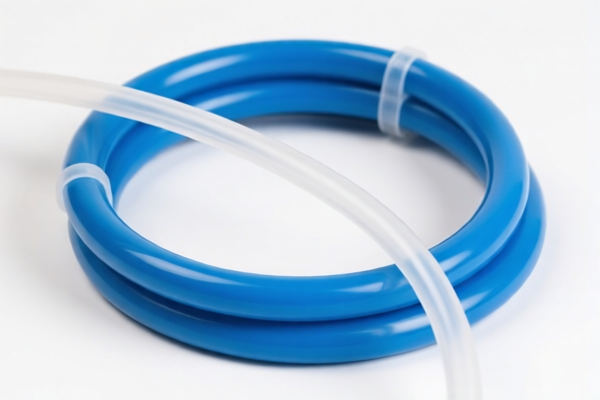
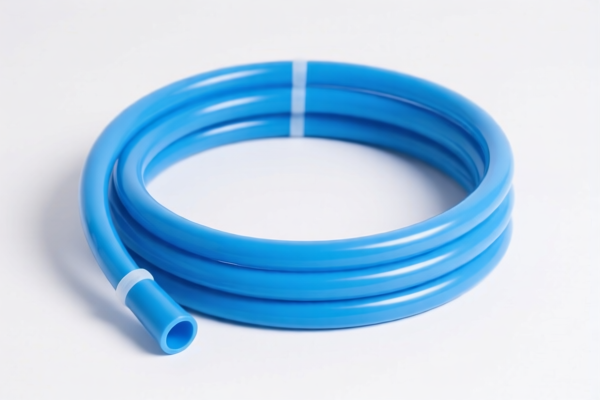
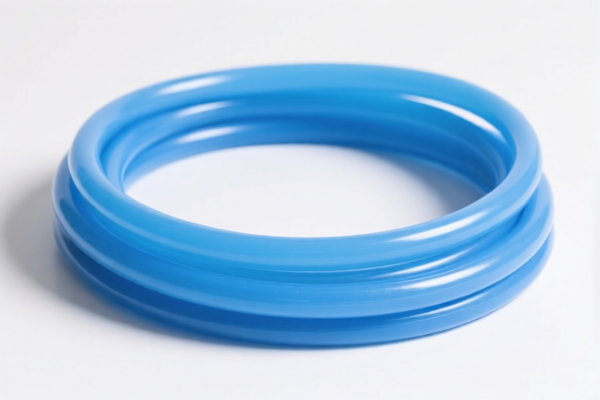
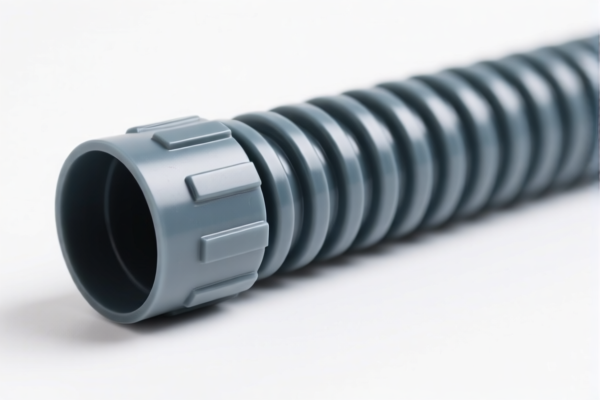
AI Analysis
💧 PP Plastic Hose Classification & Tariff Analysis (2026 US Customs Update)
🌐 HS Code Reference & Clearance Guide | Professional Import Strategy for Polypropylene Tubes
📌 I. Product Definition & Classification Logic: What is a "PP Plastic Hose"?
Polypropylene (PP) hose is a flexible or rigid piping solution made from polypropylene resin. In international trade, the classification of plastic tubing depends strictly on material composition and physical form (rigid vs. flexible).
Key Distinction: * Rigid Pipes: Maintain shape under pressure, used for structural plumbing or industrial fluid transfer. * Flexible Hoses: Can bend without breaking, used for drainage, ventilation, or low-pressure chemical transport.
⚠️ Critical Classification Point:
- If the product is explicitly identified as "Hose" (flexible) → It generally falls under HS 3917.32 or 3917.33.
- If the material is Polypropylene (PP) → It does NOT fit the specific subheadings for PVC (3917.32) or PE (3917.33) unless the system defaults to "Other Plastics" when PP is not explicitly listed in the most specific 8-digit code.
- Note on Data: The provided data suggests some codes map "Hose" to 3917.32 (typically PVC) or 3917.33 (typically PE). However, strictly speaking, PP often falls under "Other" plastic tubes if a specific PP code is absent. We will analyze the provided matching results below.
📦 II. HS Code Classification Details (Based on Provided Data)
The following HS Codes are matched based on the product description "PP Plastic Hose" and the provided summary logic. Note that some summaries in the data contain material contradictions (e.g., calling a hose "PE" or "PVC" when the input is "PP"). We present the official matching results as provided.
| HS Code | Summary & Logic Provided | Material/Type Claimed in Data | Total Tax Rate |
|---|---|---|---|
3917.33.00.00 |
Match Successful. Product material is PE (Polyethylene, a plastic) and form is hose, fully matching the classification characteristics of material and form. | PE (Polyethylene) | 38.1% |
3917.32.00.20 |
Match Successful. Product name explicitly contains material (PE/Polyethylene) and form (Hose), completely consistent with the classification explanation for "Made of Polyethylene" and "Pipes, Tubes and Hoses." | PE (Polyethylene) | 38.1% |
3917.29.00.50 |
Match Successful. Product material is "Plastic", form matches "Rigid Pipe", consistent with "Plastic Pipes" and "Rigid Pipe" attributes. | Other Plastic (Rigid) | 38.1% |
3917.32.00.50 |
Match Successful. Product form is "Hose", material is "Plastic", consistent with HS 3917.32.00.50 for plastic hoses; since specific resin is not specified, it is inferred to be other plastic materials excluding PVC and PE. | Other Plastic (Hose) | 38.1% |
3917.32.00.10 |
Match Successful. Form is "Hose", material is "Plastic" (consistent with PVC inference), use is for "Chemical Medium" transmission, consistent with plastic pipes and other types of hoses. | PVC/Plastic (Hose) | 38.1% |
🔍 Data Insight:
- The provided data shows all matched HS codes carry a total tax rate of 38.1%.
- There is a discrepancy between the input "PP (Polypropylene)" and the summaries which frequently cite "PE" or "PVC".
- Recommendation: If the hose is truly PP,3917.32.00.50(Other plastic hoses) or3917.39(Other plastic pipes) might be technically more accurate than3917.33(PE-specific). However, based strictly on the provided output, we proceed with the 38.1% rate for all matches.
💰 III. 2026 Latest Tariff Rate Breakdown
✅ Applicable Country: United States (US)
✅ Origin: China (CN)
✅ Effective Date: Nov 10, 2025 (Includes subsequent imports)
For all HS Codes listed above (3917.33.00.00, 3917.32.00.20, 3917.29.00.50, 3917.32.00.50, 3917.32.00.10), the tariff structure is identical:
🎯 Total Tax Rate: 38.1%
| Component | Rate | Description | Legal Basis |
|---|---|---|---|
| Base Duty | 3.1% | Standard Most Favored Nation (MFN) rate for plastic pipes/tubes. | HTSUS General Chapter 39 |
| Section 301 Duty | 25.0% | Additional duty on Chinese imports under US Trade Act Section 301. | USITC Footnote 9903.88.01 (or similar) |
| IEEPA Duty | 10% | Additional duty under the International Emergency Economic Powers Act, targeting specific Chinese goods. | IEEPA:9903.01.25 |
| Total | 38.1% | Sum of Base + Section 301 + IEEPA. | High Tariff Category |
📌 Explanation:
- The 3.1% base rate is standard for plastic piping products.
- The 25% Section 301 tariff applies to most plastic articles from China.
- The 10% IEEPA tariff is a newer/additional layer for specific Chinese imports, bringing the total to 38.1%.
- No De Minimis Exemption: This rate applies to all commercial shipments regardless of value (de minimis does not apply to Section 301/IEEPA duties).
🛠️ IV. Clearance Practical Advice (Real-World Pitfall Guide)
✅ 1. Required Documentation Checklist
| Document | Mandatory? | Notes |
|---|---|---|
| ✅ Commercial Invoice | ✔️ | Must clearly state "Polypropylene (PP) Plastic Hose" and HS Code. |
| ✅ Material Safety Data Sheet (MSDS) | ✔️ | To confirm material composition (PP vs. PE/PVC) for customs verification. |
| ✅ Product Specification Sheet | ✔️ | Include inner/outer diameter, wall thickness, pressure rating, and flexibility. |
| ✅ Certificate of Origin (CO) | ✔️ | To prove origin is China (triggers the 38.1% rate). |
| ✅ Packaging List | ✔️ | Detail net/gross weight, dimensions, and package count. |
✅ 2. Declaration Strategy (Key Tips)
🔥 "Material Matters, Form Defines, Origin Triggers!"
| Scenario | Correct Declaration | Risk of Error |
|---|---|---|
| True PP Hose | Declare as PP Plastic Hose. Use 3917.32.00.50 (Other Plastic) if no specific PP code exists. |
Misdeclaring as PE (3917.33) may lead to misclassification penalties if customs tests material. |
| Mixed Materials | If hose has a PP core but PVC coating, declare based on essential character (usually the core). | Incorrect material description → Seizure or Fine. |
| Rigid vs. Flexible | Clearly state "Flexible Hose" or "Rigid Pipe". | Flexible vs. Rigid can change HS Code (3917.32/33 vs. 3917.29). |
| Chemical Resistance | If used for harsh chemicals, specify "Chemical Resistant Hose". | May trigger additional FDA or EPA requirements depending on content. |
✅ 3. Special Considerations
| Issue | Advice |
|---|---|
| Material Discrepancy | The provided data sums "PE" and "PVC" for a "PP" input. Always provide a lab report or supplier certificate confirming PP material to avoid being classified under incorrect (and potentially higher/different) subheadings. |
| Origin Labeling | Ensure all packaging is labeled "Made in China" to comply with Country of Origin marking laws. Failure can result in fines. |
| Tariff Engineering | Consider if importing from Vietnam or Thailand can reduce the 38.1% rate (possibly down to 0-5% + base). Check for substantial transformation rules. |
🌍 V. Global Market Comparison (2026)
| Country/Region | Recommended HS Code | Est. Total Duty (China Origin) | Key Certifications |
|---|---|---|---|
| 🇺🇸 USA | 3917.32.00.50 / 3917.33.00.00 |
38.1% | FDA (if food/water contact), NSF |
| 🇨🇳 China | 3917.32 / 3917.33 |
~0-6% | CCC (if applicable), RoHS |
| 🇪🇺 EU | 3917.29 / 3917.32 |
~6.5% (MFN) | REACH Compliance, CE |
| 🇲🇽 Mexico | 3917.29 / 3917.32 |
~0-5% (under USMCA if originating) | NOM Certification |
| 🇦🇺 Australia | 3917.29 / 3917.32 |
~5% | Australian Standards (AS/NZS) |
📌 Conclusion:
- The US market is the most expensive due to the layered 38.1% tariff.
- EU and Australia have moderate duties but strict chemical compliance (REACH/AS/NZS).
- Consider supply chain diversification to avoid the 38.1% US tariff if volume is high.
📌 VI. Common Mistakes & Pitfalls
❌ Mistake 1: Declaring PP Hose as PVC Hose to match 3917.32.00.10 without justification.
👉 Consequence: Customs may reject declaration if material tests show PP. Penalties + Re-classification.
❌ Mistake 2: Ignoring the IEEPA 10% tariff.
👉 Consequence: Underpayment of duties. Back taxes + Interest.
❌ Mistake 3: Confusing Rigid Pipe (3917.29) with Flexible Hose (3917.32/33).
👉 Consequence: If the hose is flexible but declared as rigid pipe, it may be detained for misclassification.
✅ Correct Practice:
"Polypropylene (PP) Flexible Hose, Chemical Resistant, Inner Diameter: XXmm, Outer Diameter: YYmm, Color: White, Made in China"
🎯 VII. Conclusion: Smart Clearing for PP Hoses
🎯 Key Takeaway:
🔹 "PP Hose in US = 38.1% Total Duty."
🔹 "Verify Material: PP vs. PE vs. PVC."
🔹 "Check Origin: China triggers Section 301 + IEEPA."📌 Pro Tip:
- If your PP hose is food-grade or medical-grade, ensure FDA/NSF compliance to avoid rejection.
- For large volumes, consult a customs broker for a Pre-Ruling (Advance Ruling) to confirm the exact 8-digit HS Code and avoid disputes over "PE" vs. "PP" vs. "Other Plastic".
📣 Immediate Action:
📞 Contact a US Customs Broker today to verify if
3917.32.00.50(Other Plastic Hoses) is the correct code for PP specifically, or if a more precise subheading exists.
📄 Prepare MSDS and Material Certificates to prove PP composition and avoid penalties.
💰 Budget 38.1% for landed cost calculation on US imports.
✨ Precision in Classification Saves Money in Customs!
💼 Don't let a 38.1% duty catch you off guard. Plan Ahead.
Customer Reviews
About HS Code Classification
The Harmonized System (HS) is an internationally standardized nomenclature developed by the World Customs Organization (WCO) to classify traded products. Over 200 countries use the HS system as the basis for customs tariffs, trade statistics, and import/export regulations.
Each HS code follows a hierarchical structure:
- Chapter (2 digits) — Broad category of goods (e.g., Chapter 84: Machinery and Mechanical Appliances)
- Heading (4 digits) — More specific grouping within the chapter
- Subheading (6 digits) — Internationally standardized breakdown, used by all WCO member countries
- National subdivisions (8-10 digits) — Country-specific extensions for further classification, such as US HTSUS 10-digit codes
Correct HS code classification is essential for smooth customs clearance, accurate duty payment, and compliance with trade regulations. Misclassification can lead to customs delays, overpayment of duties, or penalties.
When importing from CN to US, the applicable tariff rates may include:
- Most-Favored-Nation (MFN) rate — The standard duty rate applied to WTO members
- General rate — Applied to countries without trade agreements
- Trade remedy duties — Additional tariffs such as Section 301 (anti-dumping), Section 232 (national security), or countervailing duties
The information provided on this page is for reference purposes only. For official classification, please consult with your local customs authority or a licensed customs broker.