PP Plastic New Year Theme Packaging Film
CN → US| HS Code | Tariff Rate | Origin | Destination | Doc |
|---|---|---|---|---|
| 3920200020 | 39.2% | CN | US | Official Doc |
| 3920200055 | 39.2% | CN | US | Official Doc |
| 3921190010 | 41.5% | CN | US | Official Doc |
| 3921905050 | 39.8% | CN | US | Official Doc |
| 4811596000 | 35.0% | CN | US | Official Doc |
Product Images
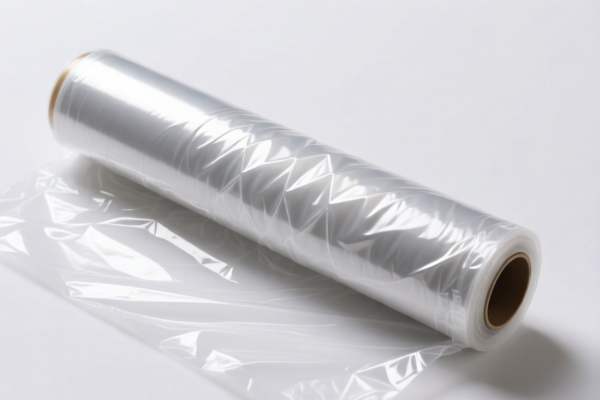
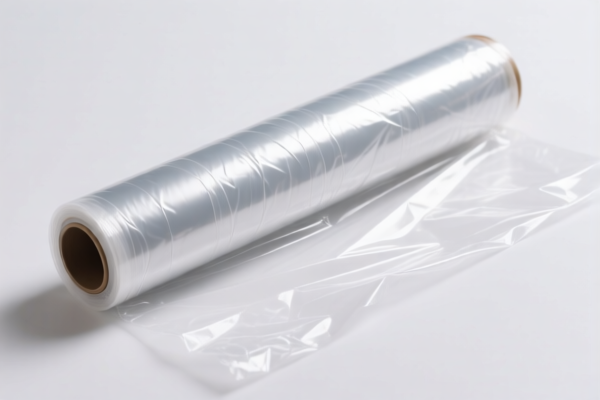
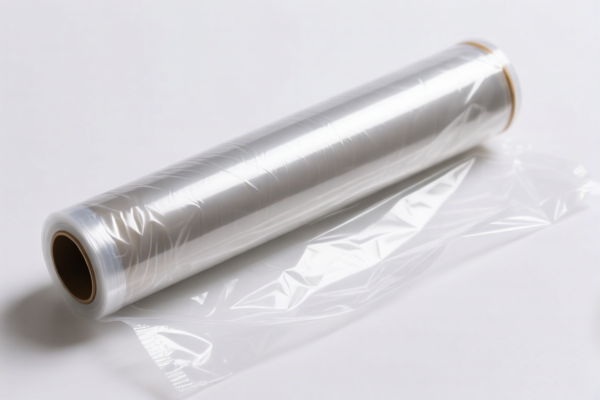
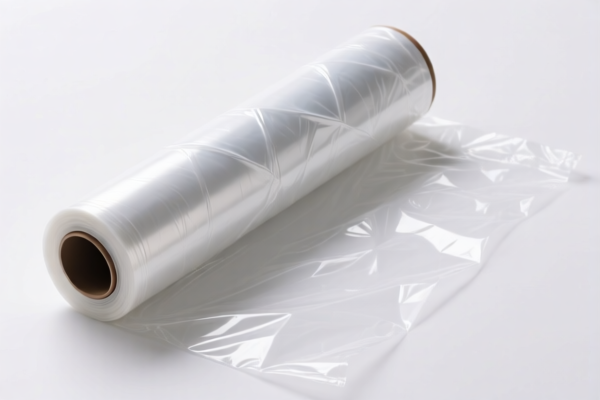
AI Analysis
🎉 PP Plastic New Year Theme Packaging Film (Red & Gold Holiday Wrapping)
🌐 HS Code Reference & Customs Clearance Guide | 2026 Latest Tariff Analysis | Professional Clearance Strategy
📌 I. Product Definition & Classification: Is it Paper or Plastic?
PP Plastic Packaging Film is a versatile material widely used for gift wrapping, retail packaging, and promotional displays during the New Year season. In international trade, the core distinction lies in the material composition:
- Pure Plastic Film (Polypropylene - PP): Transparent, glossy, or metallic finish, made entirely of plastic polymers.
- Coated Paper/Plastic-Covered Paper: Paper base with a thin plastic coating (if the paper base is dominant, it may fall under Chapter 48; however, for pure "PP Plastic Film," Chapter 39 applies).
⚠️ Critical Distinction:
- If the product is 100% Polypropylene (PP) film →归入 Chapter 39 (Plastics and Articles Thereof).
- If the product is Paper with a PP coating (where paper is the essential character) → 归入 Chapter 48 (Paper and Paperboard).
- Note: The provided data focuses on PP Plastic Film scenarios. Below are the most likely HS Codes for pure PP film.
📦 II. HS Code Classification Details (2026 Latest Tariff Authority Comparison)
| HS Code | Product Description | Applicable Scenario | Key Differentiator |
|---|---|---|---|
3920.20.00.20 |
PP Plastic New Year Packaging Film, shape: Packaging Film | Generic PP film for wrapping | Classified under "Plastics... other than sheets, film, foil..."; often used for specific film types not listed elsewhere. |
3920.20.00.55 |
PP Plastic New Year Packaging Film, shape: Film | General PP film sheets/films | Classified under "Other plates, sheets, film, foil and strips" of PP polymers. |
3921.19.00.10 |
PP Plastic New Year Packaging Film, material: PP | "Other plastic films" category | Falls under "Other plastic films" (3921) if it has specific properties (e.g., coated, laminated beyond basic PP). |
3921.90.50.50 |
PP Plastic New Year Packaging Film, material: PP | "Other plates, sheets, film, foil, strips" | Broad category for films not specified in 3920 or 3921.19. |
4811.59.60.00 |
PP Plastic New Year Packaging Film (Inferred) | Plastic-covered paper/film | Riskier classification. Used if the product is deemed a "paper product covered with plastic." |
🔍 Key Reminder:
-3920.20and3921.19are the most common for pure PP films.
-4811.59is only appropriate if the substrate is paper with a plastic coating (not pure PP plastic). Misclassification here can lead to significant tax discrepancies.
- The "New Year Theme" (red/gold printing) does not change the HS code, but must be declared in the product description.
💰 III. 2026 Latest Tariff Rate Details (Including Surcharge Policies)
✅ Applicable Country: United States (US)
✅ Origin: China (CN)
✅ Effective Date: From November 10, 2025 (including subsequent imports)
🎯 1. 3920.20.00.20 & 3920.20.00.55 —— PP Plastic Film (Specific Subheadings)
| Item | Content |
|---|---|
| Base Tariff | 4.2% (ad valorem) |
| Section 301 Surcharge | +25.0% (USITC Footnote 9903.88.01) |
| Section 122 Surcharge | +10.0% (IEEPA/Emergency Powers) |
| Total Tariff Rate | 39.2% |
| Tax Calculation | CIF Value × 39.2% |
| De Minimis Exemption? | ❌ No (deny_de_minimis) |
| Legal Basis Path | USITC:3920.20.00.20/55 → FOOTNOTE:9903.88.01 + IEEPA:122 |
📌 Explanation:
- The 4.2% base rate is standard for general plastic films.
- The 25% is the Section 301 tariff for Chinese plastics.
- The 10% is an additional surcharge under Section 122 (often applied to specific high-risk or policy-targeted goods).
- Total 39.2% is high. Must be factored into cost calculations.
🎯 2. 3921.19.00.10 —— Other Plastic Film (Broader Category)
| Item | Content |
|---|---|
| Base Tariff | 6.5% (ad valorem) |
| Section 301 Surcharge | +25.0% |
| Section 122 Surcharge | +10.0% |
| Total Tariff Rate | 41.5% |
| Tax Calculation | CIF Value × 41.5% |
| De Minimis Exemption? | ❌ No |
| Legal Basis Path | USITC:3921.19.00.10 → FOOTNOTE:9903.88.01 + IEEPA:122 |
📌 Note:
- Slightly higher base rate (6.5%) makes this more expensive than 3920.20 variants.
- Choose 3920.20 if the film fits its description; otherwise, 3921.19 is a fallback.
🎯 3. 3921.90.50.50 —— Other Plastic Sheets/Films (Generic)
| Item | Content |
|---|---|
| Base Tariff | 4.8% (ad valorem) |
| Section 301 Surcharge | +25.0% |
| Section 122 Surcharge | +10.0% |
| Total Tariff Rate | 39.8% |
| Tax Calculation | CIF Value × 39.8% |
| De Minimis Exemption? | ❌ No |
| Legal Basis Path | USITC:3921.90.50.50 → FOOTNOTE:9903.88.01 + IEEPA:122 |
📌 Note:
- Base rate is 4.8%, slightly higher than 3920.20.
- Useful if the film does not fit specific 3920 or 3921.19 descriptions.
🎯 4. 4811.59.60.00 —— Plastic-Covered Paper (Inferred)
| Item | Content |
|---|---|
| Base Tariff | 0.0% (ad valorem) |
| Section 301 Surcharge | +25.0% |
| Section 122 Surcharge | +10.0% |
| Total Tariff Rate | 35.0% |
| Tax Calculation | CIF Value × 35.0% |
| De Minimis Exemption? | ❌ No |
| Legal Basis Path | USITC:4811.59.60.00 → FOOTNOTE:9903.88.01 + IEEPA:122 |
📌 Caution:
- Lowest base rate (0%), but misclassification risk is HIGH.
- Only use if the product is paper-based with a plastic coating. If it is pure PP plastic, declaring it as 4811.59.60.00 is fraudulent and can lead to penalties.
- Use only if your product is truly "paper with plastic coating" (e.g., some luxury gift wrap papers).
🛠️ IV. Customs Clearance Practical Advice (Avoid Pitfalls)
✅ 1. Documentation Checklist (Mandatory)
| Document | Required | Explanation |
|---|---|---|
| ✅ Product Specification Sheet | ✔️ | Must state: Material (100% PP or Paper+PP), Thickness, Width, Length, Printing Details. |
| ✅ Material Composition Certificate | ✔️ | To prove it is PP (Chapter 39) and not paper (Chapter 48). |
| ✅ Product Photos | ✔️ | Clear images showing texture, gloss, and any metallic/holographic effects. |
| ✅ Commercial Invoice | ✔️ | Must describe as "PP Plastic Film" or "Plastic-Coated Paper" accurately. |
| ✅ Packing List | ✔️ | Net weight, gross weight, number of rolls/sheets. |
✅ 2. Declaration Tips (Key Mantra)
🔥 "Material First, Base Second, Description Precise, Tariff Clear!"
| Scenario | Correct Declaration | Wrong Practice |
|---|---|---|
| Pure PP Film | HS: 3920.20.00.20 Description: "Polypropylene (PP) Plastic Film, Red/Gold Print" |
Describing as "Paper Film" → 35% vs 39.2% (Risk of audit) |
| Paper with PP Coating | HS: 4811.59.60.00 Description: "Paper Covered with PP Film, New Year Print" |
Describing as "PP Plastic" → 0% (Fraud) |
| Laminated PP Film | HS: 3921.19.00.10 |
Describing as simple film → Higher base rate avoided if misclassified |
| Small Samples | Still declare full HS | Claiming "De Minimis" → ❌ Denied (All are deny_de_minimis) |
✅ 3. Special Case Handling
| Situation | Handling Advice |
|---|---|
| Metallic/Holographic PP Film | Declare as PP film (3920.20 or 3921.19). Holographic effect does not change material. |
| Multi-layer Film (PP + PE) | Declare based on essential character. If PP is dominant, use 3920.20/3921.19. |
| Custom Printed Design | Ensure the description includes "New Year Theme Print" to avoid confusion with generic film. |
| Roll vs. Sheet | Both fall under similar HS codes. Declare dimensions (Width x Length) clearly. |
🌍 V. Global Market Comparison (2026 Latest)
| Country/Region | Recommended HS Code | Tariff (China Origin) | Certification | Remarks |
|---|---|---|---|---|
| 🇺🇸 USA | 3920.20.00.20 |
39.2% (Total) | None specific | High tariff due to Section 301 + 122. |
| 🇨🇳 China | 3920.20.00.20 |
4.2% (Export Duty 0%) | CCC (if applicable) | No additional surcharges. |
| 🇪🇺 EU | 3920.20.00 |
0% - 2.5% | REACH, RoHS | No Section 301/122 equivalents. |
| 🇬🇧 UK | 3920.20.00 |
0% - 2.5% | UKCA | Post-Brexit standards. |
| 🇯🇵 Japan | 3920.20.00 |
0% - 3.5% | PSE (if electrical) | Low tariff, high quality standards. |
📌 Conclusion:
- USA has the highest total tariff (35%-41.5%) due to multiple surcharges.
- EU/UK/Japan are much more favorable for plastic films.
- Cost Optimization: Consider sourcing PP film from non-China origins if targeting the US market to avoid surcharges.
📌 VI. Common Errors & Pitfall Guide (Lessons Learned)
❌ Error 1: Declaring pure PP film as "Paper Film" (4811.59.60.00) to save 4-6.5% base rate.
👉 Consequence: Customs audit, penalty, and possible fraud charges. Risk is not worth the small saving.
❌ Error 2: Ignoring Section 122 and 301 surcharges.
👉 Consequence: Underpayment of taxes → Back taxes + Interest + Penalties.
❌ Error 3: Using vague descriptions like "Packaging Material."
👉 Consequence: Customs delays, additional documentation requests, potential re-classification to higher tariff codes.
❌ Error 4: Claiming De Minimis for small shipments.
👉 Consequence: All listed HS Codes are deny_de_minimis. Small shipments are NOT exempt.
✅ Correct Practice:
"Polypropylene (PP) Plastic Film, Red and Gold New Year Design, 0.05mm Thickness, Roll Format, 100% PP Material, Model NY-2026"
🎯 VII. Conclusion: Professional Declaration, Cost Control, Efficiency!
🎯 Remember the Mantra:
🔹 "PP is Plastic, Paper is Paper. Don't mix them up!"
🔹 "Section 301 + 122 = ~35-41%. Plan your pricing accordingly!"
🔹 "Documentation is Key: Proof of Material Composition saves you from audits."
📌 Tips:
- If your PP film is imported from Vietnam, Thailand, or Malaysia, you may avoid Section 301 tariffs. Check for Free Trade Agreement (FTA) benefits.
- Consider applying for an Advance Ruling (ACE) from CBP to confirm the HS code before shipment.
- Cost Impact: At 39.2%, a $10,000 shipment incurs $3,920 in taxes. Budget accordingly!
📣 Immediate Action:
📞 Contact a licensed customs broker + Provide Material Certificates + Apply for HS Code Pre-Ruling
🚀 Ensure your PP Plastic New Year Packaging Film clears US customs smoothly and legally!
✨ Professional Clearance Starts with Accurate Classification!
💼 Every cent of tax is worth calculating precisely!
Customer Reviews
About HS Code Classification
The Harmonized System (HS) is an internationally standardized nomenclature developed by the World Customs Organization (WCO) to classify traded products. Over 200 countries use the HS system as the basis for customs tariffs, trade statistics, and import/export regulations.
Each HS code follows a hierarchical structure:
- Chapter (2 digits) — Broad category of goods (e.g., Chapter 84: Machinery and Mechanical Appliances)
- Heading (4 digits) — More specific grouping within the chapter
- Subheading (6 digits) — Internationally standardized breakdown, used by all WCO member countries
- National subdivisions (8-10 digits) — Country-specific extensions for further classification, such as US HTSUS 10-digit codes
Correct HS code classification is essential for smooth customs clearance, accurate duty payment, and compliance with trade regulations. Misclassification can lead to customs delays, overpayment of duties, or penalties.
When importing from CN to US, the applicable tariff rates may include:
- Most-Favored-Nation (MFN) rate — The standard duty rate applied to WTO members
- General rate — Applied to countries without trade agreements
- Trade remedy duties — Additional tariffs such as Section 301 (anti-dumping), Section 232 (national security), or countervailing duties
The information provided on this page is for reference purposes only. For official classification, please consult with your local customs authority or a licensed customs broker.