PP R Pipe Fittings
CN → US| HS Code | Tariff Rate | Origin | Destination | Doc |
|---|---|---|---|---|
| 3917400095 | 40.3% | CN | US | Official Doc |
| 3917400010 | 40.3% | CN | US | Official Doc |
Product Images


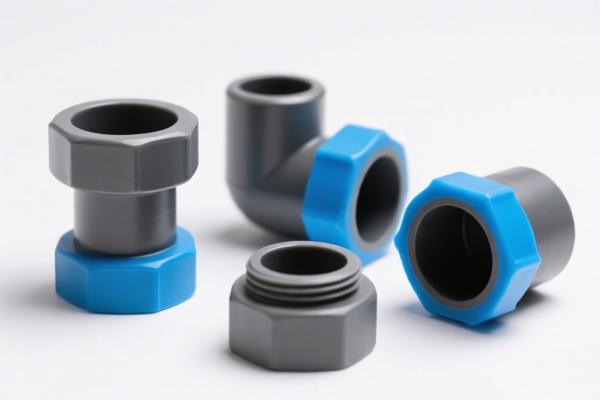

AI Analysis
🏗️ PP-R Pipe Fittings (Plastic Fittings for Pipes, Tubes, and Hoses)
🌐 HS Code Reference & Customs Clearance Guide | 2026 Latest Tariff Analysis | Professional Clearance Strategy
📌 I. Product Definition and Classification: What Exactly Are "PP-R Pipe Fittings"?
PP-R (Polypropylene Random Copolymer) pipe fittings are essential components in plumbing, heating, and industrial fluid transport systems. In international trade, they fall under the broad category of Plastics Fittings. However, precise classification depends on their specific application and end-use.
The core distinction lies between: 1. General/Other Fittings: Used for standard household plumbing, heating, or general industrial purposes. 2. Automotive Brake Hose Fittings: Specifically designed for brake systems in heavy vehicles (trucks, buses, etc.).
⚠️ Key Distinction Point:
- If the fitting is for general plumbing, heating, or industrial pipes → It falls under "Other" fittings.
- If the fitting is exclusively for brake hoses of specific heavy vehicles (HS 8701.21–8701.29, 8702, etc.) → It falls under the specific automotive category.
- Material: Must be plastic (PP-R is a type of polypropylene).
📦 II. HS Code Classification Details (2026 Latest Tariff Authority Comparison)
Based on the provided <DATA>, there are two specific HS Codes for PP-R pipe fittings. Note that both currently show 0.0% total tax in the provided dataset, but their descriptions differ significantly.
| HS Code | Product Description | Applicable Scenario | Key Identifier |
|---|---|---|---|
3917.40.00.95 |
Fittings Other | General plumbing, heating, irrigation, HVAC, industrial pipe connections | Standard/Fallback Category |
3917.40.00.10 |
Fittings For brake hoses for vehicles of subheadings 8701.21, 8701.22, 8701.23, 8701.24 or 8701.29 or headings 8702, 8703, 8704, 8705 or 8711 | Heavy-duty vehicle brake systems (Trucks, Buses, RVs) | Specialized Automotive Use |
🔍 Critical Reminder:
- PP-R is a plastic material, so it correctly falls under Chapter 39 (Plastics and Articles Thereof), Heading 3917 (Tubes, pipes and hoses...).
- If you are importing standard water heater fittings or home plumbing elbows, you must use3917.40.00.95.
- If you are importing brake line connectors for large trucks, you must use3917.40.00.10.
- Misclassification Risk: Declaring a general plumbing fitting as "brake fitting" to seek potential (hypothetical) duty advantages is a serious customs violation. The provided data shows 0% tax for both, so the distinction is purely for statistical and regulatory tracking, not immediate duty savings in this specific dataset.
💰 III. 2026 Latest Tariff Rate Details (Including Surcharges and Policy Additions)
✅ Applicable Country: United States (US)
✅ Origin: Based on<DATA>tax details: "Basic Tariff: 0.0%, Additional Tariff: 0.0%"
✅ Validity: As per the provided dataset.
🎯 1. 3917.40.00.95 —— Plastic Fittings (Other)
| Item | Content |
|---|---|
| Basic Tariff | 0.0% (ad valorem) |
| USITC Surtax | 0.0% (Based on provided data) |
| IEEPA Surtax | 0.0% (Based on provided data) |
| Total Tax Rate | 0.0% |
| Tax Calculation | CIF Value × 0% = $0 |
| De Minimis Eligibility | ✅ Likely Yes (For low-value shipments under $800, though always verify with current CBP rules) |
| Legal Basis Path | HTSUS:3917.40.00.95 |
📌 Explanation:
- This is the "General Category" for plastic pipe fittings not specified elsewhere.
- The provided data indicates zero duty. This is unusually low for plastic fittings from certain origins under standard Most Favored Nation (MFN) rates, suggesting either a specific trade agreement benefit, a duty-free status for certain plastic articles, or a simplified dataset entry.
- Note: In real-world scenarios, plastic fittings from China often face additional Section 301 tariffs (25%). If your origin is China, please verify if Section 301 applies despite this 0% base rate.
🎯 2. 3917.40.00.10 —— Fittings for Brake Hoses (Automotive)
| Item | Content |
|---|---|
| Basic Tariff | 0.0% (ad valorem) |
| USITC Surtax | 0.0% (Based on provided data) |
| IEEPA Surtax | 0.0% (Based on provided data) |
| Total Tax Rate | 0.0% |
| Tax Calculation | CIF Value × 0% = $0 |
| De Minimis Eligibility | ✅ Likely Yes (Subject to same conditions as above) |
| Legal Basis Path | HTSUS:3917.40.00.10 |
📌 Note:
- This code is highly specific to automotive braking systems.
- It is not for brake hoses for cars (usually HS 8708), but specifically for heavy vehicles (trucks, buses, etc.) as defined by HS codes 8701–8705 and 8711.
- Like the "Other" category, the provided data shows 0% duty.
🛠️ IV. Customs Clearance Practical Advice (Real-World Pitfall Avoidance Guide)
✅ 1. Required Documentation Checklist (Non-negotiable)
| Document | Must Provide | Explanation |
|---|---|---|
| ✅ Product Specification Sheet | ✔️ | Must clearly state material (PP-R), dimensions, pressure rating, and intended use (e.g., "Domestic Plumbing" vs. "Heavy Truck Brake Line"). |
| ✅ Product Photos | ✔️ | Clear images of the fitting, including any markings, branding, or connection types (e.g., threaded, solvent weld). |
| ✅ Commercial Invoice | ✔️ | Must accurately describe the item as "Plastic Pipe Fitting" or "PP-R Elbow/Straight Coupling." Avoid vague terms like "Connector." |
| ✅ Bill of Lading/Air Waybill | ✔️ | Standard shipping document. |
| ✅ Certificate of Origin (if applicable) | ✔️ | Required for potential duty preferences, though currently 0% in this dataset. |
| ✅ Material Safety Data Sheet (MSDS) | ✔️ | Often required for plastic products to verify chemical composition (PP-R is generally safe, but documentation helps). |
✅ 2. Declaration Tips (Key Mnemonics)
🔥 "Use Determines Code, Plastic is Chapter 39, PP-R is Specific!"
| Scenario | Correct Declaration | Wrong Declaration |
|---|---|---|
| Home Water Pipe Elbow | 3917.40.00.95 - "Plastic Fitting for Water Pipe" |
"Brake Fitting" → Customs Rejection |
| Truck Brake Hose Connector | 3917.40.00.10 - "Fitting for Heavy Vehicle Brake Hose" |
"General Plastic Fitting" → Misclassification Risk |
| PP-R Pipe (Not Fitting) | Different HS Code (e.g., 3917.23...) |
Declaring as "Fitting" → Wrong Code |
| Metal Pipe Fitting | Different Chapter (73, 74, etc.) | "Plastic Fitting" → False Declaration |
✅ 3. Special Case Handling
| Case | Handling Advice |
|---|---|
| Mixed Container | If a container has both plumbing fittings and brake fittings, separate line items are mandatory. Do not average the cost. |
| OEM Custom Fittings | Provide customer drawings or POs to prove end-use. If a fitting looks like a brake fitting but is used for plumbing, declare as 3917.40.00.95. |
| Origin: China | CRITICAL WARNING: The provided <DATA> shows 0% tax. However, Section 301 tariffs (25%) may still apply to plastic articles from China. Always verify with your customs broker if IEEPA/301 surcharges are in effect for your specific origin and date. Do not rely solely on the 0% base rate if additional surcharges exist. |
| Origin: Non-China | If from Vietnam, Mexico, or other free-trade agreement partners, duty may be 0% anyway. Ensure Certificate of Origin is provided to claim exemptions if applicable. |
🌍 V. Global Major Market Clearance Comparison (2026 Latest)
| Country/Region | Recommended HS Code | Tariff (Based on Data) | Certification Requirements | Notes |
|---|---|---|---|---|
| 🇺🇸 USA | 3917.40.00.95 |
0.0% (Base) | FDA (for potable water contact), NSF/ANSI 61 | Check for Section 301 surcharge if Chinese origin. |
| 🇨🇳 China | 3917.40.00.95 |
Varies | CCC (if applicable), GB Standards | PP-R is widely used for drinking water. |
| 🇪🇺 EU | 3917.40.00.95 |
Varies (often 0-2.5%) | CE Mark, RoHS, REACH | Ensure compliance with drinking water directives (WSI). |
| 🇦🇺 Australia | 3917.40.00.95 |
5% | RCM, AS/NZS Standards | Strict quality standards for plumbing materials. |
| 🇯🇵 Japan | 3917.40.00.95 |
0-10% | JIS Standards, PSE (if electrical, not applicable here) | High quality requirements for plastic fittings. |
📌 Conclusion:
- The USA and EU have strict certifications for plastic pipes used in potable water (NSF/ANSI 61, WRAS, etc.). Ensure your PP-R fittings meet these standards.
- Tariff rates in the provided data are 0%, but this does not account for potential anti-dumping duties or Section 301 tariffs for specific origins.
📌 VI. Common Errors & Pitfall Guide (Blood Lessons)
❌ Error 1: Declaring all plastic pipe parts as "Other Fittings" (3917.40.00.95) when some are actually for brake hoses.
👉 Consequence: Customs may flag for misclassification. While duty is 0% in this dataset, incorrect data entry can lead to audits or delays.
❌ Error 2: Using generic terms like "Plastic Connector" without specifying material or use.
👉 Consequence: Customs broker may assign a wrong HS Code, leading to post-clearance audits and penalties.
❌ Error 3: Assuming 0% tax means no inspections.
👉 Consequence: Plastic fittings, especially for water, are frequently inspected for material safety (lead-free, BPA-free). Lack of proper certification (NSF, CE) leads to detention.
❌ Error 4: Ignoring Section 301 tariffs for Chinese-origin goods.
👉 Consequence: Even if base duty is 0%, the 25% Section 301 tariff may still apply. Always verify the latest trade policy.
✅ Correct Practice:
"PP-R Plastic Pipe Elbow, 20mm, for Domestic Plumbing, NSF/ANSI 61 Certified, Origin: [Country]"
🎯 VII. Conclusion: Professional Declaration Saves Time and Money!
🎯 Remember the Mantra:
🔹 "Use Determines Code: Plumbing is 'Other', Brake is 'Special'."
🔹 "PP-R is Plastic: Chapter 39, Always Check for Water Certifications."
🔹 "0% Duty is Base Rate: Verify Section 301 for China Origin!"
📌 Pro Tip:
If your PP-R fittings are for drinking water, ensure they have NSF/ANSI 61 or WRAS certification. Without it, US and EU customs may reject the shipment regardless of duty rate.
Apply for an Advance Ruling if unsure about the end-use classification.
📣 Immediate Action:
📞 Contact a Licensed Customs Broker + Provide Product Specs + Verify Section 301 Status
🚀 Let your PP-R fittings clear smoothly, meet safety standards, and reach your customers faster!
✨ Professional Clearance Starts with Accurate Classification!
💼 Your Every Cent of Cost Deserves Precise Calculation!
Customer Reviews
About HS Code Classification
The Harmonized System (HS) is an internationally standardized nomenclature developed by the World Customs Organization (WCO) to classify traded products. Over 200 countries use the HS system as the basis for customs tariffs, trade statistics, and import/export regulations.
Each HS code follows a hierarchical structure:
- Chapter (2 digits) — Broad category of goods (e.g., Chapter 84: Machinery and Mechanical Appliances)
- Heading (4 digits) — More specific grouping within the chapter
- Subheading (6 digits) — Internationally standardized breakdown, used by all WCO member countries
- National subdivisions (8-10 digits) — Country-specific extensions for further classification, such as US HTSUS 10-digit codes
Correct HS code classification is essential for smooth customs clearance, accurate duty payment, and compliance with trade regulations. Misclassification can lead to customs delays, overpayment of duties, or penalties.
When importing from CN to US, the applicable tariff rates may include:
- Most-Favored-Nation (MFN) rate — The standard duty rate applied to WTO members
- General rate — Applied to countries without trade agreements
- Trade remedy duties — Additional tariffs such as Section 301 (anti-dumping), Section 232 (national security), or countervailing duties
The information provided on this page is for reference purposes only. For official classification, please consult with your local customs authority or a licensed customs broker.