PP Rigid Tube
CN → US| HS Code | Tariff Rate | Origin | Destination | Doc |
|---|---|---|---|---|
| 3917220000 | 38.1% | CN | US | Official Doc |
| 3926909989 | 22.8% | CN | US | Official Doc |
| 3917290090 | 38.1% | CN | US | Official Doc |
| 3926909987 | 22.8% | CN | US | Official Doc |
Product Images
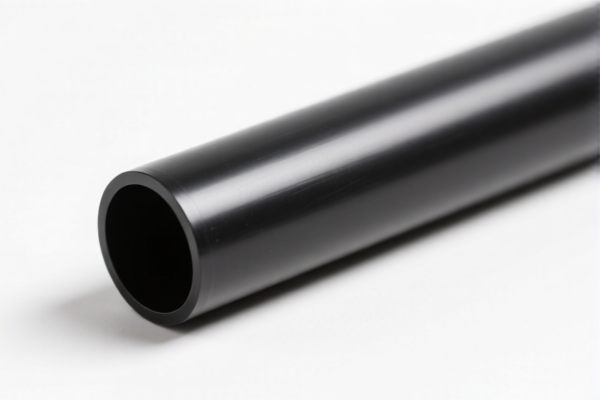
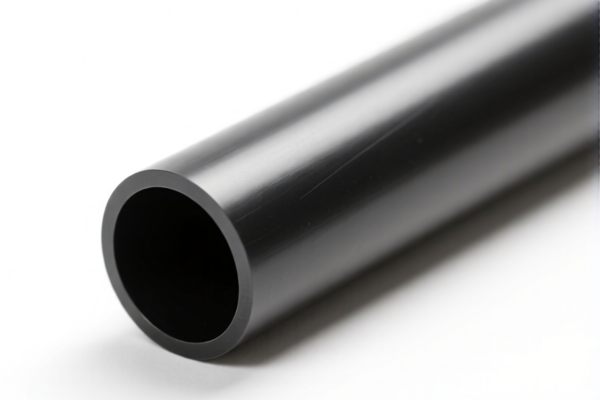
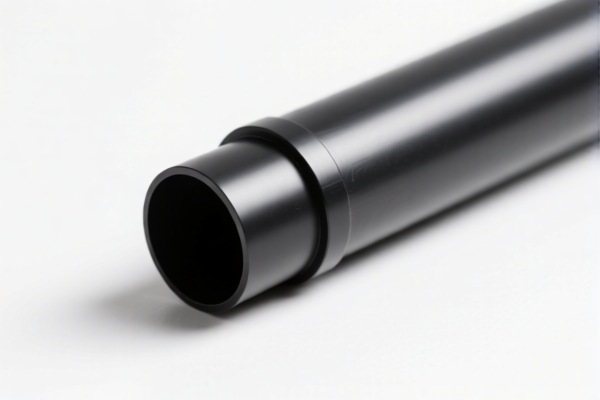
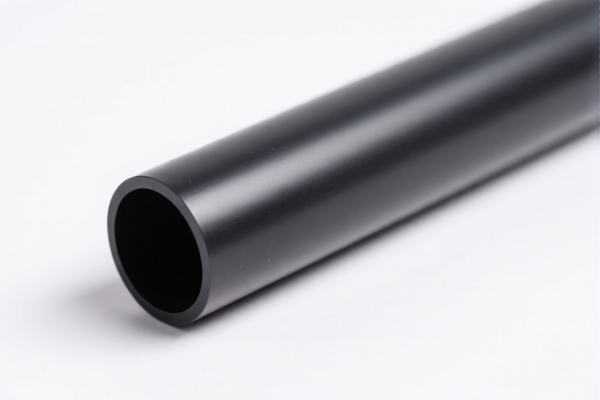
AI Analysis
🧪 PP Rigid Tube (Polypropylene Rigid Pipe)
🌐 HS Code Reference & Customs Clearance Guide | 2026 Latest Tariff Analysis | Professional Level Strategy
📌 Part I: Product Definition & Classification: Do You Really Know "PP Rigid Tube"?
Polypropylene (PP) Rigid Tubes are essential components in industrial fluid transport, chemical processing, and electrical conduit systems. Unlike flexible PP tubing, these are hard, semi-rigid, or rigid pipes designed for structured installation.
In international trade, the classification of PP tubes is highly sensitive to specific polymer type (Homopolymer vs. Copolymer) and structural definition (Pipe vs. Other Plastic Article). Misclassification can lead to drastically different tariff rates (from 22.8% to 38.1%).
⚠️ Key Distinction Point:
- If classified strictly as a "Pipe of Homopolymer Propylene", it falls under 3917.22.00.00 (Higher Tariff).
- If classified broadly as "Other Plastic Tubes" or "Other Plastic Articles" (due to copolymer nature or broader categorization), it may fall under 3917.29.00.90 (Higher Tariff) or 3926.90.99 (Lower Tariff).
- Crucial Note: The provided data shows significant tariff disparities based on whether the HS code captures the "Polymer of Propylene" specificity (Ch 3917) versus "Other Plastic Articles" (Ch 3926).
📦 Part II: HS Code Classification Details (Latest 2026 Tariff Authority Comparison)
Based on the provided data, here are the specific HS Codes, their summaries, and tax implications. Note that some HS codes in the data are duplicated; they are treated as consistent entries.
| HS Code | Product Description & Logic | Total Tax Rate | Tariff Breakdown |
|---|---|---|---|
3917.22.00.00 |
PP (Polypropylene) Material, Homopolymer, Pipe Form. Matches the definition of "Hard tubes of homopolymers of propylene." (Appears twice in data with identical logic) |
38.1% | Base: 3.1% Section 301: 25.0% Section 122: 10.0% |
3917.29.00.90 |
PP (Polypropylene) Material, Pipe Form. Fits the characteristics of "Plastic Pipes." Broader category than 3917.22. (Implies Copolymer or non-homopolymer) |
38.1% | Base: 3.1% Section 301: 25.0% Section 122: 10.0% |
3926.90.99.87 |
PP Material, Rigid Tube/Hard Pipe. Used for applications like wire conduits. Classified under "Other Articles of Plastics" not elsewhere specified. (Broadest category, lowest base rate) |
22.8% | Base: 5.3% Section 301: 7.5% Section 122: 10.0% |
3926.90.99.89 |
PP Material, Pipe Form. Other plastic articles not more specifically listed. Alternative to 3926.87. (Broadest category, lowest base rate) |
22.8% | Base: 5.3% Section 301: 7.5% Section 122: 10.0% |
🔍 Critical Analysis:
- Group A (High Tariff ~38.1%): Codes 3917.22.00.00 and 3917.29.00.90. These fall under Chapter 3917 ("Plastic Pipes, Hoses, and Tubes"). The high Section 301 rate (25%) applies. This is the standard classification for industrial-grade PP pipes.
- Group B (Lower Tariff ~22.8%): Codes 3926.90.99.87 and 3926.90.99.89. These fall under Chapter 3926 ("Other Articles of Plastics"). The Section 301 rate is significantly lower (7.5%). This classification often applies if the product is considered a "fitting," "conduit," or if the polymer type doesn't strictly meet the homopolymer definition of 3917.22.
💰 Part III: 2026 Latest Tariff Rate Details (Including Add-ons)
✅ Applicable Country: United States (US)
✅ Origin: China (CN)
✅ Effective Time: Current Trade Policies (Including Section 301 & 122)
🎯 1. 3917.22.00.00 & 3917.29.00.90 —— Plastic Pipes (Homopolymer/Copolymer)
| Item | Content |
|---|---|
| Base Duty Rate | 3.1% |
| Section 301 Add-on | +25.0% (Heavy duty imposed on Chinese plastic pipes) |
| Section 122 Add-on | +10.0% (Specific trade remedy) |
| Total Tax Rate | 38.1% |
| Tax Calculation | CIF Value × 38.1% |
| De Minimis Eligibility | ❌ NO (High-risk category) |
| Legal Path | HTSUS:3917 → USITC:3917.22.00.00 / 3917.29.00.90 → Section 301: Footnote 9903.88.01 |
📌 Explanation:
- The 25% Section 301 duty is the primary cost driver.
- These codes are considered "Plastic Pipes" under Chapter 3917.
- 3917.22.00.00 is for Homopolymers of propylene.
- 3917.29.00.90 is for Other plastic pipes (e.g., Copolymers or blends).
- Both incur the same high total rate of 38.1%.
🎯 2. 3926.90.99.87 & 3926.90.99.89 —— Other Plastic Articles (Conduits/Broad Pipes)
| Item | Content |
|---|---|
| Base Duty Rate | 5.3% |
| Section 301 Add-on | +7.5% (Reduced duty for specific plastic articles) |
| Section 122 Add-on | +10.0% |
| Total Tax Rate | 22.8% |
| Tax Calculation | CIF Value × 22.8% |
| De Minimis Eligibility | ❌ NO (Still subject to high scrutiny) |
| Legal Path | HTSUS:3926 → USITC:3926.90.99.87/89 → Section 301: Footnote 9903.88.01 (Lower bracket) |
📌 Explanation:
- These codes classify the product as an "Other Article of Plastic" rather than a specific "Pipe" under 3917.
- 3926.90.99.87 is often used for wire conduits or rigid tubes with specific uses not covered by 3917.
- 3926.90.99.89 is a general catch-all for other plastic articles.
- The Section 301 rate is only 7.5%, making this 15.3% cheaper than the 3917 codes.
- Risk: Using these codes for standard industrial PP pipes may be challenged by Customs if the product clearly fits the definition of a "pipe" in 3917.
🛠️ Part IV: Customs Clearance Practical Advice (Pitfall Avoidance Guide)
✅ 1. Documentation Checklist (Essential)
| Document | Required? | Notes |
|---|---|---|
| ✅ Product Specification Sheet | ✔️ | Must specify: PP Type (Homopolymer vs. Copolymer), Diameter, Wall Thickness, Pressure Rating. |
| ✅ Material Safety Data Sheet (MSDS) | ✔️ | Confirms chemical composition (Polypropylene). |
| ✅ Commercial Invoice | ✔️ | Must clearly state "PP Rigid Tube" or "PP Pipe." Avoid vague terms like "Plastic Part." |
| ✅ Packing List | ✔️ | Quantity and weight per package. |
| ✅ Certificate of Origin | ✔️ | To prove Chinese origin (triggering tariffs). |
| ✅ Photos | ✔️ | Clear images of the tube ends, markings, and any fittings. |
✅ 2. Declaration Tips (Key Mnemonics)
🔥 "Classify by Polymer, Not Just Shape! 3917 vs 3926!"
| Scenario | Recommended HS Code | Reason |
|---|---|---|
| Industrial PP Pipe (Homopolymer) | 3917.22.00.00 |
Matches "Hard tubes of homopolymers of propylene." |
| Industrial PP Pipe (Copolymer/Blend) | 3917.29.00.90 |
Matches "Other plastic pipes." |
| Electrical Conduit (PP Rigid) | 3926.90.99.87 |
Often classified as "Other articles" if used for wiring protection, not fluid transport. |
| General PP Fitting/Tube (Non-Standard) | 3926.90.99.89 |
Catch-all if it doesn't fit 3917 definitions. |
✅ 3. Special Circumstances Handling
| Situation | Handling Advice |
|---|---|
| Mixed Shipment (Pipes + Fittings) | Declare fittings separately if possible. Fittings may also fall under 3926, potentially lowering the overall weighted average duty. |
| OEM Custom Pipe | Provide customer specifications. If the customer specifies "Copolymer PP," use 3917.29.00.90. If "Homopolymer," use 3917.22.00.00. |
| Dispute on "Pipe" vs. "Article" | If using 3926 codes for standard pipes, be prepared to justify why it doesn't fit 3917. Customs may reclassify and charge the higher 38.1% rate + penalties. |
| Section 122 Impact | Remember, the 10% Section 122 tariff applies to all listed codes in the data. Do not forget to include it in your cost calculation. |
🌍 Part V: Global Market Comparison (2026 Update)
| Country/Region | Recommended HS Code | Base Tariff | US-Specific Surcharges | Notes |
|---|---|---|---|---|
| 🇺🇸 USA | 3917.22.00.00 / 3926.90.99.87 |
3.1% - 5.3% | +25% (S301) + +10% (S122) | High total burden (38.1% or 22.8%). |
| 🇨🇳 China | 3917.22.00.00 |
~5-7% | None | No Section 301/122. |
| 🇪🇺 EU | 3917.21.00 |
~5.3% | None | No equivalent S301. |
| 🇯🇵 Japan | 3917.21.00 |
~5-6% | None |
📌 Conclusion:
- The US market is significantly more expensive for Chinese-origin PP tubes due to Section 301 and 122 tariffs.
- Cost Saving Strategy: If the product can legally be classified as 3926.90.99.87 (e.g., as a conduit or non-pipe article), you save 15.3% in total duties.
- Risk: Aggressive classification to 3926 for standard pipes may lead to customs audits.
📌 Part VI: Common Errors & Pitfalls (Lessons Learned)
❌ Error 1: Assuming all PP tubes are 3917.22.00.00.
👉 Consequence: If it's a copolymer or conduit, you may have overpaid or misdeclared. Conversely, if you use 3926 for a standard pipe, you risk penalties.
❌ Error 2: Ignoring Section 122.
👉 Consequence: Forgetting the 10% S122 tariff results in a 10% shortfall in tax payment, leading to penalties and interest.
❌ Error 3: Using "Plastic Pipe" as the only description.
👉 Consequence: Customs lacks data to determine Homopolymer vs. Copolymer. Result: Delay for additional info or reclassification.
❌ Error 4: Confusing "Flexible PP Tubing" with "Rigid PP Tube."
👉 Consequence: Flexible tubes may fall under different subheadings. Ensure your declaration matches the rigid nature of the product.
✅ Correct Practice:
"PP Homopolymer Rigid Pipe, Diameter 2", Wall Thickness 0.1", for Industrial Fluid Transport, Made in China."
🎯 Part VII: Conclusion: Precision Classification, Cost Control!
🎯 Remember the Golden Rules:
🔹 "Check Polymer Type: Homo vs. Copolymer!"
🔹 "3917 is for Pipes, 3926 is for Other Articles!"
🔹 "Total Tax = Base + 25% (S301) + 10% (S122)!"
🔹 "38.1% for Pipes, 22.8% for Articles. Choose wisely!"
📌 Pro Tip:
If your PP tubes are electric conduits, strongly consider arguing for 3926.90.99.87 to save 15.3% in duties. Provide technical data showing their primary use is electrical protection, not fluid transport.
📣 Immediate Action:
📞 Consult a Customs Broker to review your product's technical specs.
📝 Apply for a Binding Tariff Ruling if importing large volumes to ensure classification certainty.
💼 Your Bottom Line Depends on the Last Digit of the HS Code!
✨ Professional Clearance Starts with Precise Classification!
💼 Every Cent Saved is Pure Profit!
Customer Reviews
About HS Code Classification
The Harmonized System (HS) is an internationally standardized nomenclature developed by the World Customs Organization (WCO) to classify traded products. Over 200 countries use the HS system as the basis for customs tariffs, trade statistics, and import/export regulations.
Each HS code follows a hierarchical structure:
- Chapter (2 digits) — Broad category of goods (e.g., Chapter 84: Machinery and Mechanical Appliances)
- Heading (4 digits) — More specific grouping within the chapter
- Subheading (6 digits) — Internationally standardized breakdown, used by all WCO member countries
- National subdivisions (8-10 digits) — Country-specific extensions for further classification, such as US HTSUS 10-digit codes
Correct HS code classification is essential for smooth customs clearance, accurate duty payment, and compliance with trade regulations. Misclassification can lead to customs delays, overpayment of duties, or penalties.
When importing from CN to US, the applicable tariff rates may include:
- Most-Favored-Nation (MFN) rate — The standard duty rate applied to WTO members
- General rate — Applied to countries without trade agreements
- Trade remedy duties — Additional tariffs such as Section 301 (anti-dumping), Section 232 (national security), or countervailing duties
The information provided on this page is for reference purposes only. For official classification, please consult with your local customs authority or a licensed customs broker.