PPR Aquatherm Valve
CN → US| HS Code | Tariff Rate | Origin | Destination | Doc |
|---|---|---|---|---|
| 8481805090 | 38.0% | CN | US | Official Doc |
| 8481809050 | 37.0% | CN | US | Official Doc |
| 3917400095 | 40.3% | CN | US | Official Doc |
Product Images
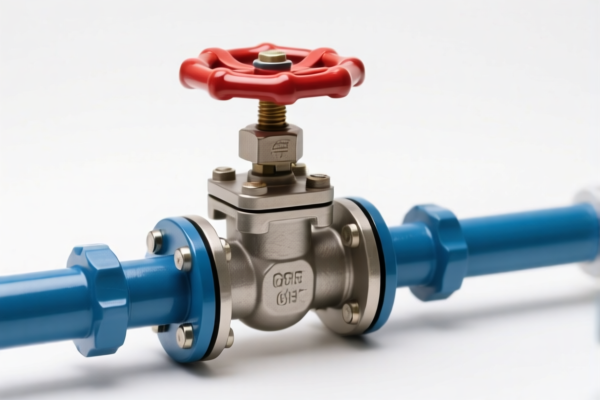
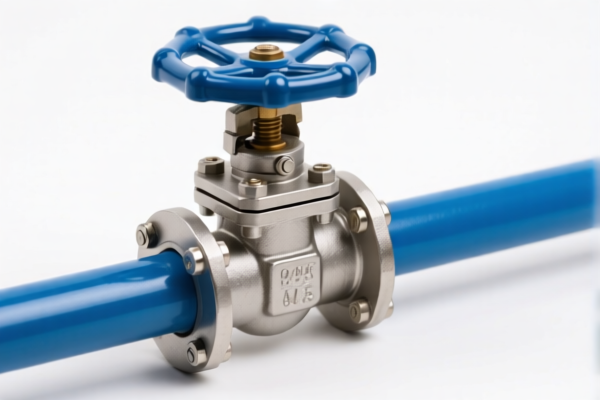
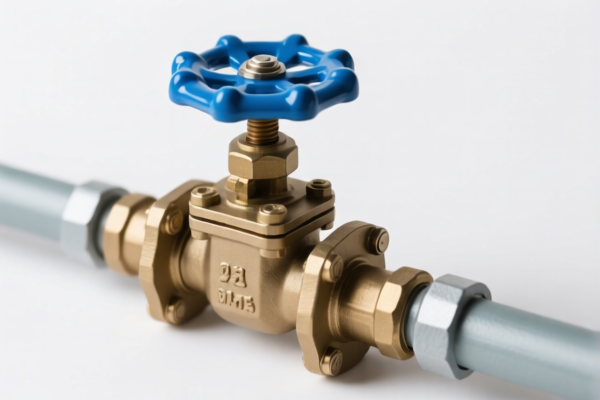
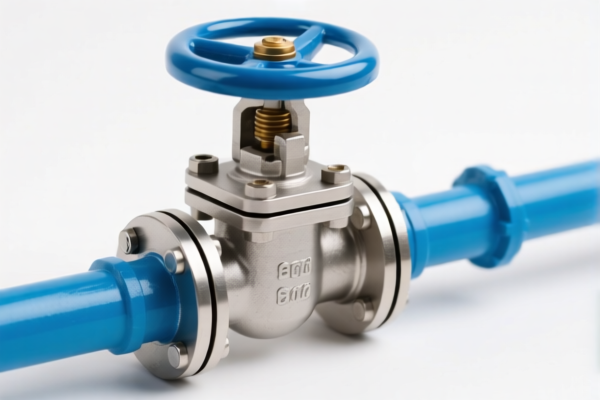
AI Analysis
🚰 PPR Aquatherm Valves & Plastic Fittings
🌐 HS Code Reference & Customs Clearance Guide | 2026 Latest Tariff Analysis | Professional Compliance Strategy
📌 1. Product Definition & Classification: Do You Really Know "Plastic Fittings" vs. "Valves"?
PPR (Polypropylene Random) Aquatherm Valves are critical components in modern plumbing, heating, and cooling systems. They are typically made from cross-linked polypropylene or high-quality PPR-C, designed for hot and cold water distribution.
In international trade, these products are strictly divided into two categories based on their material composition and functional mechanism:
1. Pure Plastic Fittings (PPR Fittings):
Entirely made of plastics (polypropylene, PVC, etc.), including elbows, tees, couplings, and flanges. They have no moving metal parts or complex mechanical valve mechanisms.
2. Valves with Plastic Components (Mix Materials):
Devices that include taps, cocks, valves, or pressure-reducing mechanisms. Even if the body is plastic, if it contains a mechanical closure mechanism (often with metal inserts or ceramic discs) and is classified under Chapter 84, it is treated as a valve/appliance, not a simple plastic fitting.
⚠️ Critical Distinction Point:
- If the product is a simple connector, elbow, tee, or flange made entirely of plastic → It falls under HS Code 3917.40 (Plastics Fittings).
- If the product is a Tap, Cock, or Valve (e.g., a PPR ball valve with a handle and closure mechanism), it generally falls under HS Code 8481 (Valves and Similar Appliances), even if the body is plastic.
- Note: Customs authorities scrutinize "Plastic Valves" closely. If the primary characteristic is the valve mechanism (Chapter 84) rather than the material (Chapter 39), it often shifts to 8481.
📦 2. HS Code Classification Details (2026 Latest Tariff Authority)
Based on the provided , here are the specific HS Codes and their applications for PPR/Aquatherm products:
| HS Code | Product Description | Application Scenario | Material/Mechanism |
|---|---|---|---|
3917.40.00.95 |
Tubes, pipes, and hoses and fittings therefor... Of plastics: Fittings Other | Pure PPR Elbows, Tees, Couplings, Flanges, Connectors. No moving valve parts. | ✅ Pure Plastic |
3917.40.00.10 |
...Fittings For brake hoses for specific vehicles (8701-8711) | Not Applicable for plumbing. Reserved for automotive brake hose fittings. | ✅ Plastic (Automotive) |
8481.80.50.90 |
Taps, cocks, valves...: Other appliances: Hand operated: Of other materials Other | PPR Ball Valves, Gate Valves, Check Valves with handles. Even if plastic body, the valve function dominates. | ⚠️ Mixed (Plastic + Mechanical/Metal parts) |
8481.80.90.50 |
Taps, cocks, valves...: Other appliances: Other Other: Other | Automated valves, thermostatic valves, or non-hand-operated plastic valves. | ⚠️ Complex Mechanism |
🔍 Key Reminder:
- "PPR Aquatherm" is a brand/technology name for plastic piping systems.
- If you import simple connectors (elbows, tees), use 3917.40.00.95.
- If you import valves (e.g., PPR Ball Valve with a lever handle), use 8481.80.50.90.
- Do NOT classify a PPR Valve as a "Plastic Fitting" (3917) if it has a mechanical closure device. Customs may reclassify it, leading to higher duties and penalties.
💰 3. 2026 Latest Tariff Rate Breakdown (Including Surcharges)
✅ Applicable Country: United States (US)
✅ Origin: China (CN)
✅ Effective Date: Current rates apply as per the provided data.
🎯 1. 3917.40.00.95 —— Pure Plastic Fittings (Elbows, Tees, Connectors)
| Item | Content |
|---|---|
| Base Tariff Rate | 0.0% (ad valorem) |
| Section 301 Surcharge | 0.0% |
| Total Tax Rate | 0.0% |
| Tax Calculation | CIF Value × 0.0% = $0 |
| De Minimis Eligible | ✅ Yes (if under $800) |
| Legal Basis | HS Code 3917.40.00.95 has no listed surcharge in the provided data. |
📌 Explanation:
- This code applies to simple plastic fittings.
- Zero duty makes this highly cost-effective for importers of pure PPR plumbing accessories.
- Ensure the product description strictly says "Plastic Fittings" (e.g., Elbow, Tee) and not "Valve."
🎯 2. 3917.40.00.10 —— Automotive Brake Hose Fittings (Plastic)
| Item | Content |
|---|---|
| Base Tariff Rate | 0.0% |
| Section 301 Surcharge | 0.0% |
| Total Tax Rate | 0.0% |
| Note | Not Applicable for plumbing/Aquatherm valves. This code is reserved for vehicles (8701-8711). |
⚠️ Warning:
- Do not use this code for plumbing products. Misclassification can lead to audits.
🎯 3. 8481.80.50.90 —— PPR/Plastic Hand-Operated Valves (Ball Valves, Gate Valves)
| Item | Content |
|---|---|
| Base Tariff Rate | 3.0% (ad valorem) |
| Section 301 Surcharge | 25.0% |
| Total Tax Rate | 28.0% |
| Tax Calculation | CIF Value × 28.0% |
| De Minimis Eligible | ❌ No (If declared as commercial shipment) |
| Legal Basis | HS Code 8481.80.50.90 |
📌 Explanation:
- This code covers valves (taps, cocks, taps with handles).
- Even if the valve body is PPR (plastic), the presence of a mechanical valve mechanism moves it to Chapter 84.
- High Duty Alert: The 28% total tax (3% base + 25% surcharge) is significantly higher than pure plastic fittings.
- Many importers try to misclassify valves as fittings to avoid this, but customs uses X-ray and product specs to detect this.
🎯 4. 8481.80.90.50 —— Other Valves (Non-Hand Operated or Complex)
| Item | Content |
|---|---|
| Base Tariff Rate | 2.0% |
| Section 301 Surcharge | 25.0% |
| Total Tax Rate | 27.0% |
| Tax Calculation | CIF Value × 27.0% |
📌 Explanation:
- Applies to automated, thermostatic, or non-hand-operated valves.
- Slightly lower base rate (2%) than hand-operated (3%), but surcharge remains 25%.
🛠️ 4. Customs Clearance Practical Advice (Avoid Pitfalls)
✅ 1. Documentation Checklist (Non-Negotiable)
| Document | Required? | Description |
|---|---|---|
| ✅ Product Specification Sheet | ✔️ | Must clearly state: Material (PPR), Type (Fitting/Valve), Pressure Rating (e.g., PN20), Temperature Range. |
| ✅ Clear Product Photos | ✔️ | Show the entire product. For valves, show the handle and closure mechanism. For fittings, show no moving parts. |
| ✅ Commercial Invoice | ✔️ | Use precise HS Code descriptions. - For 3917.40.00.95: "PPR Plastic Elbow/Fitting" - For 8481.80.50.90: "PPR Hand-Operated Ball Valve" |
| ✅ Packing List | ✔️ | List items separately. Do not bundle "Valves" and "Fittings" in a way that obscures the count. |
| ✅ Certificate of Origin | ✔️ | If claiming any preferential rates (not applicable here for US/China, but useful for other markets). |
✅ 2. Declaration Tips (Key Rules)
🔥 “Don’t Call a Valve a Fitting to Save Money – Customs Knows!”
| Scenario | Correct Declaration | Incorrect Declaration | Consequence |
|---|---|---|---|
| PPR Elbow, Tee, Coupling | 3917.40.00.95 "PPR Plastic Fitting" |
8481.80.50.90 "Plastic Valve" |
Unnecessary high duty (28% vs 0%). |
| PPR Ball Valve with Handle | 8481.80.50.90 "PPR Hand-Operated Valve" |
3917.40.00.95 "PPR Fitting" |
Customs Rejection + Penalty! Misclassification. |
| Mixed Shipment (Valves + Fittings) | Declare separately with distinct HS Codes | Combine under one HS Code | Customs will split the shipment, assess higher duty on the whole batch. |
✅ 3. Special Cases Handling
| Situation | Recommendation |
|---|---|
| OEM Branding | Provide brand authorization. Ensure the product name on the invoice matches the HS Code description (e.g., "Aquatherm Fitting" vs "Aquatherm Valve"). |
| Plastic Valve with Metal Insert | Still classified under 8481 if the valve mechanism is the primary function. Do not use 3917. |
| "Aquatherm" as a Brand | "Aquatherm" is a brand name for PPR piping systems. Use it in the description, but the HS Code depends on function (Fitting vs. Valve). |
| Small Sample Shipments | If under $800, 3917.40.00.95 fittings may enter duty-free under de minimis. Valves (8481) generally do NOT qualify for de minimis if they are commercial samples or if value exceeds threshold. |
🌍 5. Global Market Comparison (2026)
| Country/Region | Recommended HS Code | Tariff Rate | Notes |
|---|---|---|---|
| 🇺🇸 USA | 3917.40.00.95 (Fittings) 8481.80.50.90 (Valves) |
0% (Fittings) 28% (Valves) |
High risk for misclassifying valves as fittings. |
| 🇨🇳 China | 3917.40.00.00 (Fittings) 8481.80.90.00 (Valves) |
~0-2% (Fittings) ~2-3% (Valves) |
Lower base rates, but verify latest Chinese tariff. |
| 🇪🇺 EU | 3917.40 (Fittings) 8481.80 (Valves) |
~0-1.7% (Fittings) ~1.7-3% (Valves) |
No Section 301 surcharge. VAT applies separately. |
| 🇦🇺 Australia | 3917.40 (Fittings) 8481.80 (Valves) |
5% (Fittings) 5% (Valves) |
GST 10% applies on top. |
📌 Conclusion:
- USA has the most complex duty structure due to Section 301 surcharges on valves (25%).
- Fittings are duty-free in the US (0%).
- Valves are heavily taxed in the US (28%).
- Clear distinction between "Fitting" (no moving parts) and "Valve" (mechanical closure) is essential.
📌 6. Common Mistakes & Pitfalls (Lessons Learned)
❌ Mistake 1: Declaring a PPR Ball Valve as a "Plastic Fitting" (3917.40.00.95)
👉 Consequence: Customs detects the valve mechanism via X-ray or photo. Penalty + Back Taxes + 28% Duty instead of 0%.
❌ Mistake 2: Using the same HS Code for mixed shipments of valves and fittings
👉 Consequence: Customs may assess the highest duty rate on the entire shipment.
❌ Mistake 3: Ignoring the "Hand Operated" detail in 8481.80.50.90
👉 Consequence: If the valve is automated, it should be 8481.80.90.50 (27%). Misclassification leads to discrepancies.
✅ Correct Practice:
“PPR Plastic Elbow, No Moving Parts, PN20, 25mm” →
3917.40.00.95
“PPR Ball Valve, Hand Operated, Brass Insert, PN20” →8481.80.50.90
🎯 7. Conclusion: Precision Saves Money!
🎯 Remember:
🔹 “Fittings = No Movement = 0% Duty (USA)”
🔹 “Valves = Mechanical Function = 28% Duty (USA)”
🔹 “Don’t risk 28% by calling a valve a fitting!”
📌 Pro Tip:
If you are importing large volumes of PPR Valves, consider:
1. Pre-Classification Ruling: Contact US Customs for an advance ruling to confirm HS Code.
2. Supply Chain Optimization: Source fittings from duty-free countries if possible (though unlikely for plastics).
3. Accurate Documentation: Always provide clear photos and specs to avoid delays.
📣 Action Step:
📞 Verify your product’s function (Fitting vs. Valve).
📄 Declare accurately with precise HS Codes.
💰 Save 28% on fittings by not over-declaring them as valves!
✨ Professional Clearance Starts with Accurate Classification!
💼 Your Profit Margin Depends on the Right HS Code!
Customer Reviews
About HS Code Classification
The Harmonized System (HS) is an internationally standardized nomenclature developed by the World Customs Organization (WCO) to classify traded products. Over 200 countries use the HS system as the basis for customs tariffs, trade statistics, and import/export regulations.
Each HS code follows a hierarchical structure:
- Chapter (2 digits) — Broad category of goods (e.g., Chapter 84: Machinery and Mechanical Appliances)
- Heading (4 digits) — More specific grouping within the chapter
- Subheading (6 digits) — Internationally standardized breakdown, used by all WCO member countries
- National subdivisions (8-10 digits) — Country-specific extensions for further classification, such as US HTSUS 10-digit codes
Correct HS code classification is essential for smooth customs clearance, accurate duty payment, and compliance with trade regulations. Misclassification can lead to customs delays, overpayment of duties, or penalties.
When importing from CN to US, the applicable tariff rates may include:
- Most-Favored-Nation (MFN) rate — The standard duty rate applied to WTO members
- General rate — Applied to countries without trade agreements
- Trade remedy duties — Additional tariffs such as Section 301 (anti-dumping), Section 232 (national security), or countervailing duties
The information provided on this page is for reference purposes only. For official classification, please consult with your local customs authority or a licensed customs broker.