PS Plastic Additive Waste
CN → US| HS Code | Tariff Rate | Origin | Destination | Doc |
|---|---|---|---|---|
| 3915900090 | 35.0% | CN | US | Official Doc |
| 3825610000 | 35.0% | CN | US | Official Doc |
| 3915200000 | 35.0% | CN | US | Official Doc |
| 3825690000 | 35.0% | CN | US | Official Doc |
Product Images
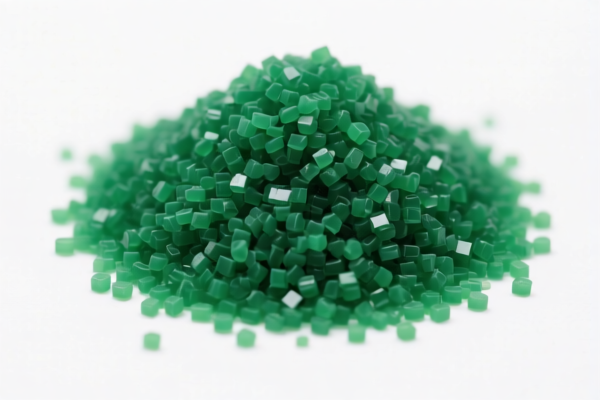

AI Analysis
🧪 PS Plastic Additive Waste (Polystyrene Cleaning Waste)
🌐 HS Code Reference & Customs Clearance Guide | 2026 Latest Tariff Analysis | Professional Customs Strategy
📌 I. Product Definition & Classification: What is "PS Plastic Additive Waste"?
Polystyrene (PS) plastic cleaning waste refers to the by-products generated during the cleaning and processing of PS plastics, such as plastic bottles, packaging, and foam materials. These wastes are typically contaminated with residual substances and require specific chemical or physical processing for recycling or disposal.
In international trade, this type of waste is classified based on its composition and processing stage. It can be categorized under two main headings: Plastic Waste and Chemical Industry Waste.
⚠️ Key Distinction:
- If the waste is primarily plastic material (even if contaminated), it falls under Chapter 39 (Plastics).
- If the waste is a result of chemical processing or contains significant chemical residues, it may fall under Chapter 38 (Chemical Products).
📦 II. HS Code Classification Details (2026 Latest Tariff Authority Comparison)
| HS Code | Product Description | Applicable Scenario | Notes |
|---|---|---|---|
3915.90.00.90 |
Plastic Waste and Scrap, Other | General PS plastic waste, including cleaning residues | Broad category for unspecified plastic waste |
3825.61.00.00 |
Waste from Chemical Processing of Inorganic Materials | Chemical industry waste from PS processing | Applicable if chemical treatment is involved |
3915.20.00.00 |
Waste and Scrap of Polymers of Styrene | Specific PS polymer waste | Most accurate for pure PS waste |
3825.69.00.00 |
Other Waste from Chemical Processing | Other chemical industry waste | Fallback for unspecified chemical waste |
🔍 Important Note:
- All four HS Codes listed above are subject to the same total tariff rate of 35%.
- The classification depends on the exact nature of the waste and documentation provided.
-3915.20.00.00is the most precise for PS-specific waste, but3915.90.00.90and3825.61.00.00are commonly used due to broader interpretations.
💰 III. 2026 Latest Tariff Rate Breakdown (Including Surcharge & Policy Surcharges)
✅ Applicable Country: United States (US)
✅ Origin: China (CN)
✅ Effective Date: November 10, 2025 (and subsequent imports)
🎯 1. 3915.90.00.90 – Plastic Waste and Scrap, Other
| Item | Content |
|---|---|
| Base Tariff | 0% (ad valorem) |
| USITC Surcharge | +25% (from USITC Footnote 9903.88.01) |
| IEEPA Surcharge | +10% (for China/HK products, effective Nov 10, 2025) |
| Total Tariff | 35% |
| Tax Calculation | CIF Value × 35% |
| De Minimis Eligibility | ❌ Not Eligible (deny_de_minimis) |
| Legal Basis Path | IEEPA:9903.01.25 → IEEPA:9903.01.24 → USITC:3915.90.00.90 → FOOTNOTE:9903.88.01 |
📌 Explanation:
- The "25% USITC Surcharge" is from Section 301 of the U.S. Trade Act.
- The "10% IEEPA Surcharge" is an additional tariff under the International Emergency Economic Powers Act.
- Total 35% is a high tariff, requiring advance planning.
🎯 2. 3825.61.00.00 – Waste from Chemical Processing of Inorganic Materials
| Item | Content |
|---|---|
| Base Tariff | 0% |
| USITC Surcharge | +25% |
| IEEPA Surcharge | +10% |
| Total Tariff | 35% |
| Tax Calculation | CIF × 35% |
| De Minimis Eligibility | ❌ Not Eligible |
| Legal Basis Path | IEEPA:9901.25 → IEEPA:9903.01.24 → USITC:3825.61.00.00 → FOOTNOTE:9903.88.01 |
📌 Note:
- Same tariff as above, applies to chemical industry waste.
- Even if the waste is mixed with other materials, as long as it originates from chemical processing of PS, this code applies.
🎯 3. 3915.20.00.00 – Waste and Scrap of Polymers of Styrene
| Item | Content |
|---|---|
| Base Tariff | 0% |
| USITC Surcharge | +25% |
| IEEPA Surcharge | +10% |
| Total Tariff | 35% |
| Tax Calculation | CIF × 35% |
| De Minimis Eligibility | ❌ Not Eligible |
| Legal Basis Path | IEEPA:9903.01.25 → IEEPA:9903.01.24 → USITC:3915.20.00.00 → FOOTNOTE:9903.88.01 |
📌 Note:
- Most accurate for pure PS waste.
- Provides clear traceability for customs inspections.
🎯 4. 3825.69.00.00 – Other Waste from Chemical Processing
| Item | Content |
|---|---|
| Base Tariff | 0% |
| USITC Surcharge | +25% |
| IEEPA Surcharge | +10% |
| Total Tariff | 35% |
| Tax Calculation | CIF × 35% |
| De Minimis Eligibility | ❌ Not Eligible |
| Legal Basis Path | IEEPA:9901.25 → IEEPA:9903.01.24 → USITC:3825.69.00.00 → FOOTNOTE:9903.88.01 |
📌 Note:
- Fallback code for unspecified chemical waste.
- Less precise than3825.61.00.00but still widely used.
🛠️ IV. Customs Clearance Practical Advice (Battlefield Pitfall Avoidance Guide)
✅ 1. Required Documents Checklist (All Mandatory)
| Document | Must Provide | Notes |
|---|---|---|
| ✅ Product Specification Sheet | ✔️ | Includes material type (PS), contamination level, processing method |
| ✅ Chemical Composition Report | ✔️ | For Chapter 38 codes, prove chemical origin |
| ✅ Product Photos (with Label) | ✔️ | Clear view of waste form (granules, flakes, etc.) |
| ✅ Third-Party Test Report | ✔️ | RoHS, REACH, or similar environmental compliance |
| ✅ Commercial Invoice | ✔️ | Clearly state "PS Plastic Cleaning Waste" |
| ✅ Certificate of Origin (CO) | ✔️ | If non-China origin, may qualify for lower rates |
| ✅ Packing List | ✔️ | Detail packaging to avoid misclassification |
✅ 2. Declaration Tips (Key Mantras)
🔥 “Clear Origin, Precise Classification, Avoid Ambiguity!”
| Scenario | Correct Declaration | Incorrect Practice |
|---|---|---|
| Pure PS Waste | 3915.20.00.00 |
Misclassified as general plastic waste → Higher scrutiny |
| Chemically Treated PS Waste | 3825.61.00.00 |
Misclassified as 3915.90.00.90 → Potential penalty |
| Mixed Waste (PS + Other Plastics) | 3915.90.00.90 |
Over-specifying as pure PS → Discrepancy |
| Unknown Chemical Origin | 3825.69.00.00 |
Fallback option, but less preferred |
✅ 3. Special Cases Handling
| Scenario | Recommendation |
|---|---|
| OEM Custom Waste | Provide client order + processing specs to justify classification |
| Recycled PS Pellets | If reprocessed into pellets, may qualify for different HS Code (e.g., 3904.21.00.00), but waste remains 3915.20.00.00 |
| Environmental Compliance | Ensure RoHS/REACH compliance to avoid detention |
| Mixed Containers | Clearly separate PS waste from other materials in packing list |
🌍 V. Global Customs Clearance Comparison (2026 Latest)
| Country/Region | Recommended HS Code | Tariff | Certification Requirements | Notes |
|---|---|---|---|---|
| 🇺🇸 USA | 3915.20.00.00 |
35% (China Origin) | RoHS + REACH | High tariff, strict inspection |
| 🇨🇳 China | 3915.20.00.00 |
5% | CCC + RoHS | No additional surcharges |
| 🇪🇺 EU | 3915.20.00.00 |
0% (if compliant) | CE + REACH | No surcharges |
| 🇦🇺 Australia | 3915.20.00.00 |
5% | RCM | No surcharges |
| 🇯🇵 Japan | 3915.20.00.00 |
0% | PSE | No surcharges |
📌 Conclusion:
- USA is the only market with high additional tariffs for PS plastic waste.
- China-origin PS waste faces a 35% total tariff, making it costly for US importers.
- Consider reclassifying as recycled material if possible to reduce tariff burden.
📌 VI. Common Mistakes & Pitfall Avoidance (Blood & Tears Lessons)
❌ Mistake 1: Declaring PS waste as "General Plastic Scrap" without specifying PS origin
👉 Consequence: Higher inspection rate, potential delay or penalty.
❌ Mistake 2: Not providing chemical composition for Chapter 38 codes
👉 Consequence: Customs may reject declaration or assign higher tariff.
❌ Mistake 3: Using vague terms like "Plastic Waste" instead of "PS Plastic Cleaning Waste"
👉 Consequence: Misclassification risk, 35% tariff may be increased if deemed non-compliant.
❌ Mistake 4: Ignoring de minimis rules
👉 Consequence: Small shipments still subject to 35% tariff; no exemption.
✅ Correct Approach:
"Polystyrene (PS) Plastic Cleaning Waste, Granular Form, RoHS Compliant, Origin: China, HS Code: 3915.20.00.00"
🎯 VII. Conclusion: Professional Declaration Saves Time, Money, and Stress!
🎯 Remember the Mantra:
🔹 “PS Waste = 3915.20.00.00, 35% Total Tariff, No De Minimis!”
🔹 “Precise Declaration = Lower Risk, Faster Clearance, Higher Profit!”
📌 Pro Tip:
If your PS waste is originating from Vietnam, Mexico, Thailand, or Malaysia, you may apply for IEEPA Exemption, reducing the tariff to 0%~5%.
Recommend Advance Ruling Application to avoid customs disputes.
📣 Immediate Action:
📞 Contact Professional Customs Broker + Provide Product Specs + Apply for HS Code Advance Ruling
🚀 Ensure Smooth Clearance, Efficient Export, Increased Profit!
✨ Professional Customs Clearance Starts with Precise Classification!
💼 Every Dollar Saved is a Dollar Earned!
Customer Reviews
About HS Code Classification
The Harmonized System (HS) is an internationally standardized nomenclature developed by the World Customs Organization (WCO) to classify traded products. Over 200 countries use the HS system as the basis for customs tariffs, trade statistics, and import/export regulations.
Each HS code follows a hierarchical structure:
- Chapter (2 digits) — Broad category of goods (e.g., Chapter 84: Machinery and Mechanical Appliances)
- Heading (4 digits) — More specific grouping within the chapter
- Subheading (6 digits) — Internationally standardized breakdown, used by all WCO member countries
- National subdivisions (8-10 digits) — Country-specific extensions for further classification, such as US HTSUS 10-digit codes
Correct HS code classification is essential for smooth customs clearance, accurate duty payment, and compliance with trade regulations. Misclassification can lead to customs delays, overpayment of duties, or penalties.
When importing from CN to US, the applicable tariff rates may include:
- Most-Favored-Nation (MFN) rate — The standard duty rate applied to WTO members
- General rate — Applied to countries without trade agreements
- Trade remedy duties — Additional tariffs such as Section 301 (anti-dumping), Section 232 (national security), or countervailing duties
The information provided on this page is for reference purposes only. For official classification, please consult with your local customs authority or a licensed customs broker.