PS Plastic Conductive Board
CN → US| HS Code | Tariff Rate | Origin | Destination | Doc |
|---|---|---|---|---|
| 3921110000 | 40.3% | CN | US | Official Doc |
| 3921190090 | 41.5% | CN | US | Official Doc |
| 3920300000 | 40.8% | CN | US | Official Doc |
| 3926909989 | 22.8% | CN | US | Official Doc |
| 9405994090 | 91.0% | CN | US | Official Doc |
Product Images

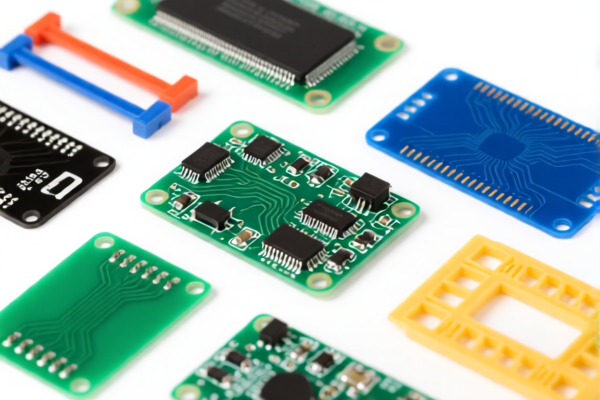
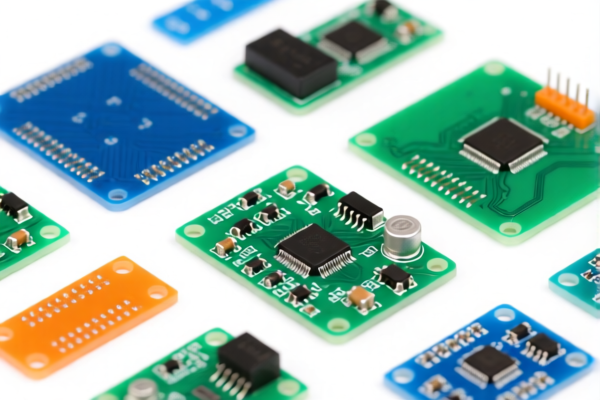

AI Analysis
🏗️ PS Plastic Conductive Board (Polymer Plates & Sheets)
🌐 HS Code Reference & Clearance Guide | 2026 Latest Tariff Analysis | Professional Clearance Strategy
📌 I. Product Definition & Classification: Do You Truly Understand "PS Conductive Boards"?
PS Plastic Conductive Boards (Polystyrene-based conductive sheets) are critical materials used in anti-static packaging, electronics shielding, and industrial flooring. In international trade, the classification depends strictly on material composition, physical state (foam vs. non-foam), and intended use (plate vs. finished product like light boxes).
Key Distinction Logic:
- Conductive vs. Non-Conductive: The term "Conductive" often implies additives. However, HS Code classification primarily hinges on the base polymer (Polystyrene) and form factor (Plate/Sheet).
- Application Specifics: If used specifically for light boxes (lighting fixtures), it may fall under lighting parts. If used generally as industrial plates, it falls under plastic plates.
- Fire Retardancy: If marked "Flame Retardant," it still primarily follows the PS plate classification unless the specific additive changes the chemical composition significantly (which rarely changes HS code for PS).
⚠️ Critical Note for "Conductive":
- Even if conductive, if it is a plain sheet/plate, it typically归类s under Chapter 39 (Plastics).
- If it is a finished component for lighting (e.g., a diffuser plate), it may归类s under Chapter 94 (Furniture/Lighting).
📦 II. HS Code Classification Details (2026 Latest Tariff Authority Comparison)
| HS Code | Product Description | Application Scenario | Tax Rate (CN→US) | Key Classification Logic |
|---|---|---|---|---|
3921.11.00.00 |
Plates, sheets, film, foil & strip, of polymers of styrene | PS Foam Plates (if rigid foam) or Specific PS Polymer Plates | 40.3% | Base 5.3% + 25% (Section 301) + 10% (122) |
3921.19.00.90 |
Other plates, sheets, film, foil & strip, of plastics (PS) | General PS Plastic Plates (Non-Foam, Non-Specific) | 41.5% | Base 6.5% + 25% (Section 301) + 10% (122) |
3920.30.00.00 |
Plates, sheets, film, foil & strip, of polystyrene (Non-foam) | Non-foamed PS Plates, Non-Reinforced | 40.8% | Base 5.8% + 25% (Section 301) + 10% (122) |
3926.90.99.89 |
Other articles of plastics | PS Light Box Plates (Finished Plastic Goods) | 22.8% | Base 5.3% + 7.5% (Section 301) + 10% (122) |
9405.99.40.90 |
Parts of lighting fittings (other materials) | PS Light Box Plates (Classified as Lighting Parts) | 91.0% | Base 6.0% + 25% (Section 301) + 10% (122) + 50% (Steel/Alum/Copper surcharge if applicable) |
🔍 Clarification on "Conductive":
- If the board is purely PS with conductive additives but remains a raw plate/sheet, use 3920 or 3921.
- If the board is finished for a Light Box, it can be classified as 3926.90.99.89 (Plastic Article) or 9405.99.40.90 (Lighting Part). 3926 is significantly cheaper!
💰 III. 2026 Latest Tariff Rate Detailed Breakdown (Including Surcharges)
✅ Applicable Country: United States (US)
✅ Origin: China (CN)
✅ Effective Date: Post-November 2025 (Includes subsequent imports)
🎯 1. 3921.11.00.00 —— Polymers of Styrene Plates (Specific)
| Item | Detail |
|---|---|
| Base Tariff | 5.3% (Ad Valorem) |
| Section 301 Surcharge | +25.0% |
| Section 122 Surcharge | +10.0% |
| Total Tariff | 40.3% |
| Tax Calculation | CIF Value × 40.3% |
| De Minimis Exemption | ❌ Not Applicable (Deny) |
| Legal Basis | USITC:3921.11.00.00 → Footnote: 9903.88.01 (301 Tariff) + 122 Tariff |
📌 Interpretation:
- This code is used for specific Styrene Polymer Plates.
- The 10% Section 122 tariff is a recent addition on certain plastic products.
- Total burden: 40.3%. High impact on low-margin goods.
🎯 2. 3921.19.00.90 —— Other Plastic Plates (PS)
| Item | Detail |
|---|---|
| Base Tariff | 6.5% (Ad Valorem) |
| Section 301 Surcharge | +25.0% |
| Section 122 Surcharge | +10.0% |
| Total Tariff | 41.5% |
| Tax Calculation | CIF Value × 41.5% |
| De Minimis Exemption | ❌ Not Applicable |
| Legal Basis | USITC:3921.19.00.90 → Footnote: 9903.88.01 + 122 Tariff |
📌 Interpretation:
- Used for general PS plates not specified elsewhere in 3921.11.
- Slightly higher total rate (41.5%) due to higher base tariff.
- Avoid if possible; 3921.11.00.00 or 3920.30.00.00 may be better depending on foam status.
🎯 3. 3920.30.00.00 —— Polystyrene Plates (Non-Foam)
| Item | Detail |
|---|---|
| Base Tariff | 5.8% (Ad Valorem) |
| Section 301 Surcharge | +25.0% |
| Section 122 Surcharge | +10.0% |
| Total Tariff | 40.8% |
| Tax Calculation | CIF Value × 40.8% |
| De Minimis Exemption | ❌ Not Applicable |
| Legal Basis | USITC:3920.30.00.00 → Footnote: 9903.88.01 + 122 Tariff |
📌 Interpretation:
- Best for Non-Foamed, Non-Reinforced PS Plates.
- If your "Conductive Board" is a solid sheet (not foam), this is likely the correct technical classification.
- Rate: 40.8%. Competitive for raw materials.
🎯 4. 3926.90.99.89 —— PS Light Box Plates (Plastic Article)
| Item | Detail |
|---|---|
| Base Tariff | 5.3% (Ad Valorem) |
| Section 301 Surcharge | +7.5% (Reduced rate for some plastic goods?) |
| Section 122 Surcharge | +10.0% |
| Total Tariff | 22.8% |
| Tax Calculation | CIF Value × 22.8% |
| De Minimis Exemption | ❌ Not Applicable |
| Legal Basis | USITC:3926.90.99.89 → Footnote: 9903.01.25 (7.5% tier) + 122 Tariff |
📌 Interpretation:
- HUGE SAVINGS! If the PS plate is intended for Light Boxes, classify as "Other Plastic Articles" rather than "Lighting Parts".
- Rate: 22.8%. Nearly half of the 9405 rate.
- Strategy: Market as "PS Plastic Sheet for Light Box Diffuser" rather than "Lighting Component" if possible, to leverage lower Section 301 rate (7.5% vs 25%).
🎯 5. 9405.99.40.90 —— Light Box Plates (Lighting Parts)
| Item | Detail |
|---|---|
| Base Tariff | 6.0% (Ad Valorem) |
| Section 301 Surcharge | +25.0% |
| Section 122 Surcharge | +10.0% |
| Metal Surcharge (if applicable) | +50% (If containing steel/aluminum/copper parts) |
| Total Tariff | 91.0% (Without metal) / 141.0% (With metal) |
| Tax Calculation | CIF Value × 91.0% |
| De Minimis Exemption | ❌ Not Applicable |
| Legal Basis | USITC:9405.99.40.90 → Footnote: 9903.88.01 + 122 Tariff |
📌 Interpretation:
- AVOID THIS CODE IF POSSIBLE.
- Classifying PS light box plates as "Parts of Lighting Fittings" triggers the highest tariff.
- Only use if the product is a finished lighting fixture part with metal components (triggering additional 50%).
- Cost Impact: Catastrophic for profitability.
🛠️ IV. Customs Clearance Practical Advice (Risk Avoidance Guide)
✅ 1. Documentation Checklist (Essential)
| Document | Required | Explanation |
|---|---|---|
| ✅ Product Specification | ✔️ | Detail: Material (PS), Conductive? Fire-Retardant? Thickness? |
| ✅ Product Photos | ✔️ | Clear images of the board. Is it foam or solid? Is it a raw sheet or a cut-to-size light box panel? |
| ✅ Commercial Invoice | ✔️ | Description must match HS Code. • For 3920/3921: "PS Plastic Sheet" • For 3926: "PS Plastic Panel for Light Box" |
| ✅ Material Safety Data Sheet (MSDS) | ✔️ | If conductive, disclose additives. |
| ✅ Bill of Lading | ✔️ | Ensure no "Lighting Equipment" declaration if using 3926. |
✅ 2. Declaration Strategy (Critical Tips)
🔥 "Raw Sheet vs. Finished Part: The 68% Tariff Difference!"
| Scenario | Recommended HS Code | Tariff Rate | Why? |
|---|---|---|---|
| Raw PS Sheet (Conductive, Non-Foam) | 3920.30.00.00 |
40.8% | It is a plastic material, not a finished good. |
| Raw PS Sheet (Foam) | 3921.11.00.00 |
40.3% | Specific Styrene Polymer classification. |
| Cut Panel for Light Box | 3926.90.99.89 |
22.8% | Classified as "Other Plastic Article". Cheapest! |
| Finished Light Box Part | 9405.99.40.90 |
91.0% | EXPENSIVE. Only use if unavoidable. |
📌 Warning:
- Do NOT declare "Light Box" in the product name if using3926.90.99.89to avoid triggering the 9405 code. Use "PS Plastic Sheet".
- If the product is conductive, ensure the description mentions "Additive" but not "Electronic Component" to stay in Chapter 39.
✅ 3. Special Cases & Pitfalls
| Situation | Handling Advice |
|---|---|
| Conductive Additives | Still classified under Chapter 39 if the base material is PS. Do not move to Chapter 85 (Electrical). |
| Fire Retardant PS | Still Chapter 39. Do not let "Fire Retardant" change the code to 3907 (if it's not granules). |
| Mixed Materials (PS + Metal) | If metal frame/edges are included, 9405 or 73/76 parts may apply. Split shipment if possible to optimize tax. |
| Light Box Assembly | If sold as a complete light box, it becomes 9405.40 (Lighting Fittings), not 9405.99. Check rate for 9405.40. |
🌍 V. Global Market Comparison (2026 Latest)
| Country/Region | Recommended HS Code | Tariff (CN) | Certification | Notes |
|---|---|---|---|---|
| 🇺🇸 USA | 3920.30.00.00 / 3926.90.99.89 |
40.8% / 22.8% | FDA (if food contact), RoHS | Avoid 9405 unless necessary. |
| 🇨🇳 China | 3920.30.00.00 |
5% | CCC (if electrical) | No Section 301. |
| 🇪🇺 EU | 3920.30.00.00 |
0% | REACH, RoHS | No anti-dumping on PS plates. |
| 🇬🇧 UK | 3920.30.00.00 |
0% | UKCA | Post-Brexit, stable rates. |
| 🇦🇺 Australia | 3920.30.00.00 |
5% | RCM | No high surcharges. |
📌 Conclusion:
- USA is the most complex market due to Section 301 and 122 Tariffs.
- Optimization Strategy: Use3926.90.99.89for light box panels to save 18% in tariffs compared to other PS plate codes.
- Avoid9405.99.40.90unless the product is a high-value finished component where cost is less critical than speed.
📌 VI. Common Errors & Pitfalls (Blood Lessons)
❌ Error 1: Declaring "Conductive PS Board" as 8537.10 (Electrical Control Panels)
👉 Consequence: Misclassification. If it's just a sheet, not a control panel with relays/switches, this is wrong.
👉 Result: Seizure or heavy fine.
❌ Error 2: Using 9405.99.40.90 for a simple PS sheet
👉 Consequence: Paying 91% tax instead of 22.8%.
👉 Result: Profit wiped out.
❌ Error 3: Failing to declare "Conductive"
👉 Consequence: If required for safety (e.g., ESD zones), customs may reject for incomplete disclosure.
👉 Result: Delay.
✅ Correct Practice:
"Polystyrene Plastic Sheet, Conductive Additive, Non-Foam, for Industrial Use" →
3920.30.00.00
"PS Plastic Panel for Light Box Diffuser" →3926.90.99.89
🎯 VII. Conclusion: Professional Classification Saves Money!
🎯 Key Takeaway:
🔹 "Conductive" does not mean "Electrical" (Chapter 85). It is still Plastic (Chapter 39).
🔹 "Light Box Plate" can be "Plastic Article" (22.8%) NOT "Lighting Part" (91.0%).
🔹 "Section 122" adds 10% to almost all plastic products from China.📌 Pro Tip:
- Always check if the product is Foam (3921) or Non-Foam (3920).
- Always check if it is a Raw Sheet (3920/3921) or a Finished Article (3926).
- Pre-Ruling: Apply for an Advance Ruling from US Customs for3926.90.99.89vs9405.99.40.90to ensure safety.
📣 Action Now:
📞 Contact your freight forwarder with product photos and intended use.
📄 Request Pre-classification for3926.90.99.89to save 68.2% in tariffs!
🚀 Smart Classification = High Profit!
✨ Professional Clearance Starts with Precision!
💼 Every percent saved is pure profit!
Customer Reviews
About HS Code Classification
The Harmonized System (HS) is an internationally standardized nomenclature developed by the World Customs Organization (WCO) to classify traded products. Over 200 countries use the HS system as the basis for customs tariffs, trade statistics, and import/export regulations.
Each HS code follows a hierarchical structure:
- Chapter (2 digits) — Broad category of goods (e.g., Chapter 84: Machinery and Mechanical Appliances)
- Heading (4 digits) — More specific grouping within the chapter
- Subheading (6 digits) — Internationally standardized breakdown, used by all WCO member countries
- National subdivisions (8-10 digits) — Country-specific extensions for further classification, such as US HTSUS 10-digit codes
Correct HS code classification is essential for smooth customs clearance, accurate duty payment, and compliance with trade regulations. Misclassification can lead to customs delays, overpayment of duties, or penalties.
When importing from CN to US, the applicable tariff rates may include:
- Most-Favored-Nation (MFN) rate — The standard duty rate applied to WTO members
- General rate — Applied to countries without trade agreements
- Trade remedy duties — Additional tariffs such as Section 301 (anti-dumping), Section 232 (national security), or countervailing duties
The information provided on this page is for reference purposes only. For official classification, please consult with your local customs authority or a licensed customs broker.