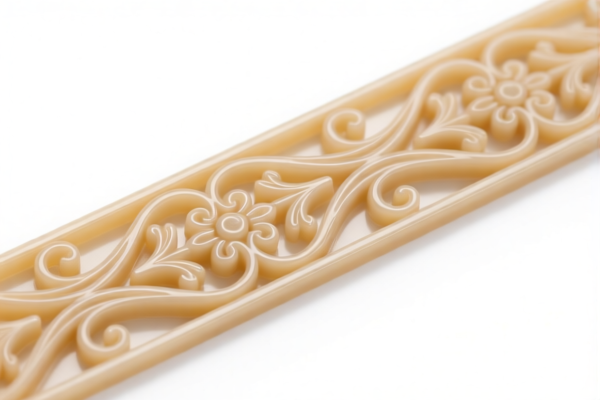
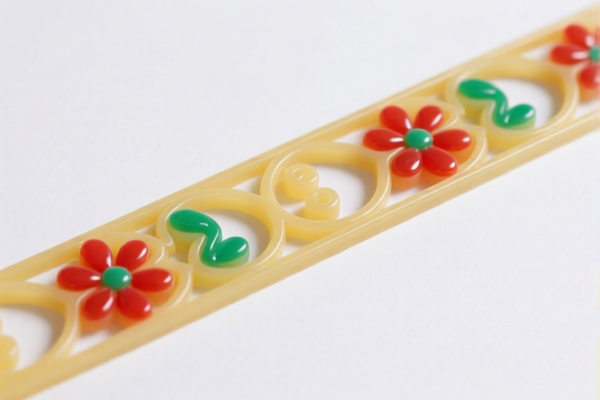
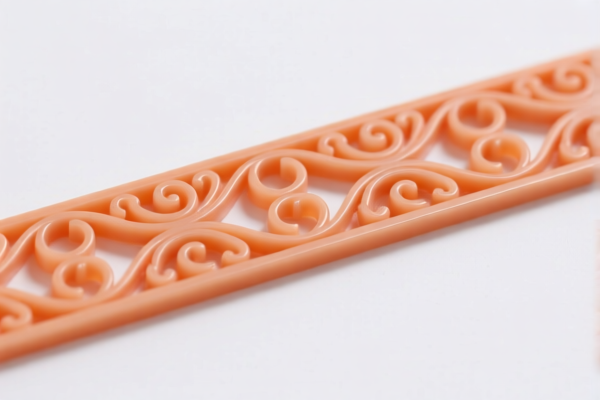
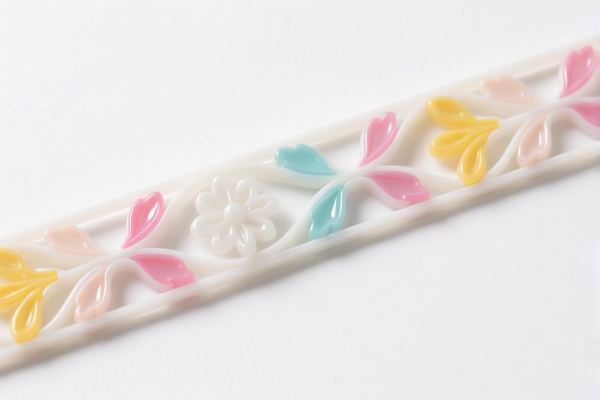
PS Plastic Decorative Strip
CN → US| HS Code | Tariff Rate | Origin | Destination | Doc |
|---|---|---|---|---|
| 3919905060 | 40.8% | CN | US | Official Doc |
| 3925900000 | 40.3% | CN | US | Official Doc |
| 3919102055 | 40.8% | CN | US | Official Doc |
| 3926400090 | 15.3% | CN | US | Official Doc |
| 3926909989 | 22.8% | CN | US | Official Doc |
Product Images
AI Analysis
🎨 PS Plastic Decorative Strip (Polymer Products)
🌐 HS Code Reference & Customs Clearance Guide | 2026 Latest Tariff Analysis | Professional Clearance Strategy
📌 I. Product Definition & Classification: Do You Really Know "PS Plastic Decorative Strips"?
PS (Polystyrene) Plastic Decorative Strips are widely used in home decoration, interior design, and architectural embellishments. In international trade, their classification depends heavily on their form, function, and final application. They fall under Chapter 39 (Plastics and Articles Thereof).
Key Distinction:
- Are they flat sheets/films/rolls (self-adhesive or not)? → Likely 3919.
- Are they finished decorative articles (sculptures, plaques)? → Likely 3926.40.
- Are they general plastic articles not elsewhere specified? → Likely 3926.90.
- Are they building construction components (e.g., baseboards, trim)? → Likely 3925 or 3926.
⚠️ Critical Note:
The presence of additional duties (Section 301 and Section 122) significantly impacts the total tax burden for products originating from China.
📦 II. HS Code Classification Details (2026 Latest Tariff Authority Comparison)
| HS Code | Product Description | Application Scenario | Tax Rate (Total) |
|---|---|---|---|
3919.90.50.60 |
PS Plastic, shape: pendants or decorative strips; belongs to the category of flat plastic products | Self-adhesive strips, wallpaper borders, flat decorative profiles | 40.8% |
3925.90.00.00 |
PS Plastic, shape: building components or decorative strips; fits the "other" category inference | Baseboards, skirting boards, wall trims for construction | 40.3% |
3919.10.20.55 |
PS Plastic, shape: finished consumer goods or decorative strips; fits flat/other shape categories | Ready-to-use decorative strips, consumer-grade plastic trims | 40.8% |
3926.40.00.90 |
PS Plastic, shape: decorative items; fits the category of plastic ornaments | Plastic ornaments, statues, purely aesthetic decorative pieces | 15.3% |
3926.90.99.89 |
PS Plastic, shape: decorative strips; fits the "other plastic articles" bottom-up classification | General plastic decorative strips not specified elsewhere | 22.8% |
🔍 Key Insight:
- 3919 codes are for flat plastic products (often self-adhesive or in rolls/sheets).
- 3925 is specifically for installation materials for buildings (e.g., structural trim).
- 3926.40 is for statues and other ornamental articles.
- 3926.90 is the residual category ("Other plastics and articles thereof").
💰 III. 2026 Latest Tariff Rate Detailed Explanation (Including Additional Taxes)
✅ Applicable Country: USA (US)
✅ Origin: China (CN)
✅ Effective Time: Current trade policies apply (Section 301 & Section 122)
🎯 1. 3919.90.50.60 & 3919.10.20.55 — Flat Plastic Products (Decorative Strips)
| Item | Content |
|---|---|
| Base Tariff | 5.8% (ad valorem) |
| Section 301 Additional Duty | +25.0% |
| Section 122 Duty | +10.0% |
| Total Tax Rate | 40.8% |
| Tax Calculation | CIF Value × 40.8% |
| De Minimis Exemption | ❌ Not Eligible (High value + additional duties usually exclude de minimis benefits in practice for commercial imports) |
| Legal Basis | HTSUS 3919.90.50.60 / 3919.10.20.55 + Section 301 (Footnote 9903.88.01 equivalent) + Section 122 |
📌 Explanation:
- 5.8% is the standard Most Favored Nation (MFN) rate for flat plastic products.
- 25% is the Section 301 tariff imposed on many Chinese plastic goods.
- 10% is the Section 122 tariff (often applied to specific categories under trade enforcement).
- Total: 40.8%. This is a high tariff bracket, requiring careful cost calculation.
🎯 2. 3925.90.00.00 — Building Construction Materials (Plastic Trim/Components)
| Item | Content |
|---|---|
| Base Tariff | 5.3% (ad valorem) |
| Section 301 Additional Duty | +25.0% |
| Section 122 Duty | +10.0% |
| Total Tax Rate | 40.3% |
| Tax Calculation | CIF Value × 40.3% |
| De Minimis Exemption | ❌ Not Eligible |
| Legal Basis | HTSUS 3925.90.00.00 + Section 301 + Section 122 |
📌 Explanation:
- Slightly lower base rate (5.3%) compared to general flat plastics (5.8%), but still subject to the same heavy additional duties.
- Applies to construction-related PS strips (e.g., indoor/outdoor wall trim).
🎯 3. 3926.40.00.90 — Plastic Ornaments/Decorations
| Item | Content |
|---|---|
| Base Tariff | 5.3% (ad valorem) |
| Section 301 Additional Duty | 0.0% |
| Section 122 Duty | +10.0% |
| Total Tax Rate | 15.3% |
| Tax Calculation | CIF Value × 15.3% |
| De Minimis Exemption | ❌ Not Eligible |
| Legal Basis | HTSUS 3926.40.00.90 + Section 122 |
📌 CRITICAL STRATEGY:
- Lowest Tax Rate (15.3%)!
- Why? Section 301 (25%) does NOT apply to plastic ornaments (3926.40).
- Condition: The item must be clearly classified as an ornament or decorative article (e.g., a plastic statue, plaque, or artistic piece), NOT a functional building trim or flat strip.
- Risk: Customs may reclassify if the item is clearly a "strip" for installation. Misclassification can lead to penalties.
🎯 4. 3926.90.99.89 — Other Plastic Articles (Residual Category)
| Item | Content |
|---|---|
| Base Tariff | 5.3% (ad valorem) |
| Section 301 Additional Duty | +7.5% |
| Section 122 Duty | +10.0% |
| Total Tax Rate | 22.8% |
| Tax Calculation | CIF Value × 22.8% |
| De Minimis Exemption | ❌ Not Eligible |
| Legal Basis | HTSUS 3926.90.99.89 + Section 301 + Section 122 |
📌 Explanation:
- This is a "catch-all" for plastic decorative strips that don't fit 3919, 3925, or 3926.40.
- Section 301 rate is reduced to 7.5% for some categories under 3926.90 (check latest exclusion lists).
- Total 22.8% is a middle-ground option if 15.3% is not applicable.
🛠️ IV. Customs Clearance Practical Advice (Avoiding Pitfalls)
✅ 1. Documentation Checklist (Essential)
| Document | Required | Notes |
|---|---|---|
| ✅ Product Specification Sheet | ✔️ | Include material (100% PS), dimensions, weight, usage. |
| ✅ Product Photos | ✔️ | Clear images showing the item is a strip or ornament. |
| ✅ Commercial Invoice | ✔️ | Accurate description: e.g., "PS Plastic Decorative Ornament" vs. "PS Building Trim". |
| ✅ Packing List | ✔️ | Match invoice details. |
| ✅ Certificate of Origin (CO) | ✔️ | Confirm Chinese origin for accurate duty calculation. |
| ✅ Test Reports (if applicable) | ✔️ | Flammability, safety standards for home decor. |
✅ 2. Declaration Tips (Key Mnemonic)
🔥 "Form Dictates Code, Function Defines Rate!"
| Scenario | Correct HS Code | Why? |
|---|---|---|
| Flat, self-adhesive, wallpaper border | 3919.90.50.60 / 3919.10.20.55 |
Classified as "flat plastic products". |
| Baseboard, skirting, wall trim for construction | 3925.90.00.00 |
Classified as "installation materials for buildings". |
| Artistic plastic statue, plaque, purely decorative | 3926.40.00.90 |
Classified as "ornaments" → Lowest Tax (15.3%). |
| Other decorative PS strips (not flat, not building, not ornament) | 3926.90.99.89 |
Residual category → Middle Tax (22.8%). |
✅ 3. Special Handling
| Situation | Advice |
|---|---|
| Trying to use 3926.40 (15.3%) | Ensure the product is not a functional building component. Use terms like "Ornament," "Decorative Art Piece," "Statue." Avoid "Trim," "Molding," "Strip" in the product name if possible. |
| Using 3925 (40.3%) | Clearly state "Building Material," "Wall Trim," "Skirting Board." Include installation instructions if available. |
| Using 3919 (40.8%) | Suitable for self-adhesive strips. Ensure it is described as a "flat plastic product." |
| Using 3926.90 (22.8%) | Use if the product doesn't fit the above perfectly. It’s a safer fallback than misclassifying as 3926.40. |
🌍 V. Global Market Comparison (2026)
| Country/Region | Recommended HS Code | Estimated Tax (China Origin) | Certification Requirements | Notes |
|---|---|---|---|---|
| 🇺🇸 USA | 3926.40.00.90 |
15.3% (Optimal) | No special certs usually | Avoid Section 301 if possible! |
| 🇺🇸 USA | 3919.90.50.60 |
40.8% | No special certs usually | High tax due to Section 301 + 122. |
| 🇨🇳 China | 3926.40.00.90 |
~5-6% | CCC (if applicable) | Low import tax for domestic use. |
| 🇪🇺 EU | 3926.40.00.90 |
~0-6.5% | CE, REACH | No Section 301 equivalent. |
| 🇬🇧 UK | 3926.40.00.90 |
~0-6.5% | UKCA, UK REACH | Post-Brexit rules apply. |
📌 Conclusion:
- USA is the most critical market due to Section 301 and Section 122 tariffs.
- Classifying as "Ornaments" (3926.40) can save 25% in duties compared to "Flat Products" or "Building Materials."
- EU/UK have no such additional tariffs, making them more favorable for general plastic goods.
📌 VI. Common Errors & Pitfalls (Lessons Learned)
❌ Error 1: Calling a "baseboard" an "ornament" to get 15.3%
👉 Consequence: Customs reclassification + penalty + back taxes. Baseboards are clearly building materials.
❌ Error 2: Using "Flat Plastic Product" for a 3D decorative strip
👉 Consequence: Misclassification. If it’s not flat/self-adhesive, it may not fit 3919.
❌ Error 3: Ignoring Section 122 (10%)
👉 Consequence: Underpaying duties. Many forget this 10% layer on top of Section 301.
❌ Error 4: Using 3926.90.99.89 when 3926.40.00.90 is applicable
👉 Consequence: Overpaying taxes. 22.8% vs. 15.3% is a significant difference on large volumes.
✅ Correct Practice:
"PS Plastic Decorative Ornament, Hand-Painted, 10cm Height, For Home Decor, Model XYZ"
🎯 VII. Conclusion: Professional Classification Saves Money!
🎯 Key Takeaways:
🔹 "Ornaments Pay Less: 15.3% vs. 40.8%!"
🔹 "Building Trim is Taxed Heavy: 40.3% – Plan Costs Accordingly."
🔹 "Flat Strips = High Tax: 40.8% – Consider Alternative Classifications if Possible."
📌 Pro Tip:
If your product can be reasonably described as an ornament or decorative article (even if it’s a strip used for decoration), explore 3926.40.00.90. However, ensure it meets the legal definition of "ornament" (i.e., not primarily functional).
📣 Immediate Action:
📞 Consult a licensed customs broker for Pre-Ruling on HS Code classification.
🚀 Optimize your supply chain by selecting the lowest applicable tariff code legally!
✨ Accurate Classification, Lower Costs, Smoother Clearance!
💼 Every percentage point counts in international trade!
Customer Reviews
About HS Code Classification
The Harmonized System (HS) is an internationally standardized nomenclature developed by the World Customs Organization (WCO) to classify traded products. Over 200 countries use the HS system as the basis for customs tariffs, trade statistics, and import/export regulations.
Each HS code follows a hierarchical structure:
- Chapter (2 digits) — Broad category of goods (e.g., Chapter 84: Machinery and Mechanical Appliances)
- Heading (4 digits) — More specific grouping within the chapter
- Subheading (6 digits) — Internationally standardized breakdown, used by all WCO member countries
- National subdivisions (8-10 digits) — Country-specific extensions for further classification, such as US HTSUS 10-digit codes
Correct HS code classification is essential for smooth customs clearance, accurate duty payment, and compliance with trade regulations. Misclassification can lead to customs delays, overpayment of duties, or penalties.
When importing from CN to US, the applicable tariff rates may include:
- Most-Favored-Nation (MFN) rate — The standard duty rate applied to WTO members
- General rate — Applied to countries without trade agreements
- Trade remedy duties — Additional tariffs such as Section 301 (anti-dumping), Section 232 (national security), or countervailing duties
The information provided on this page is for reference purposes only. For official classification, please consult with your local customs authority or a licensed customs broker.