PS Plastic Pallet
CN → US| HS Code | Tariff Rate | Origin | Destination | Doc |
|---|---|---|---|---|
| 3926901000 | 20.9% | CN | US | Official Doc |
| 3926909989 | 22.8% | CN | US | Official Doc |
| 3924102000 | 24.0% | CN | US | Official Doc |
| 3924104000 | 13.4% | CN | US | Official Doc |
| 3926909989 | 22.8% | CN | US | Official Doc |
Product Images
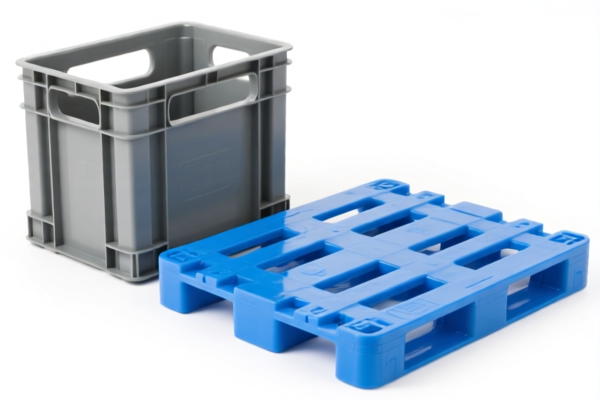

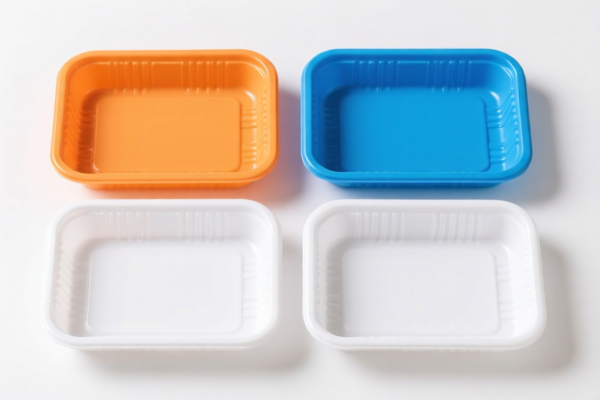
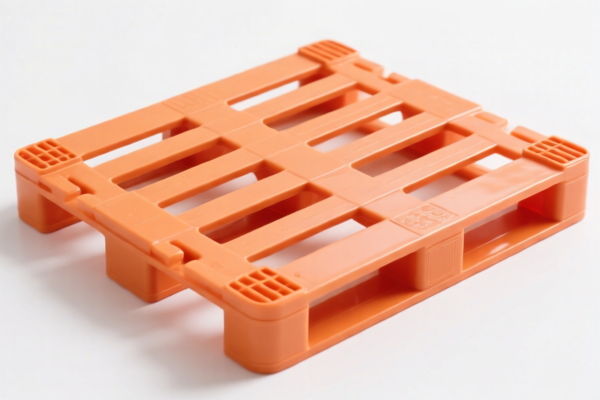
AI Analysis
📦 PS Plastic Pallet – HS Code & Tariff Guide | 2026 Latest Customs Classification & Duty Breakdown
🌐 HS Code Reference & Customs Clearance Strategy | 2026 Updated Tariff Rules | Expert-Level Import Planning
📌 One: Product Definition & Classification – What Exactly Is a PS Plastic Pallet?
A PS Plastic Pallet (Polystyrene Pallet) is a rigid, lightweight, and cost-effective material used for stacking, transporting, and storing goods—especially in retail, food packaging, and industrial logistics.
In international trade, its classification hinges on material type, intended use, and structural design. While commonly made from Polystyrene (PS), it may be confused with polyethylene (PE) pallets. However, PS pallets are typically more rigid and brittle, often used for display or lightweight storage, not heavy-duty industrial use.
⚠️ Key Differentiator:
- If used for storing or displaying items (e.g., fruits, cosmetics, electronics) → classified as a plastic container or tray
- If used for heavy-load logistics (e.g., warehouse stacking) → may be considered plastic packaging or other plastic articles
- Not classified as a "transport container" or "pallet" in the traditional wooden or metal sense
📊 Two: HS Code Classification Breakdown (2026 Official Tariff Authority Match)
| HS Code | Product Description | Applicable Use Case | Tax Rate | Key Notes |
|---|---|---|---|---|
3926.90.10.00 |
Plastic articles not elsewhere specified (e.g., trays, pallets, containers), made of polyethylene (PE) | PS plastic pallets used for storage/display can be referenced under this code | 20.9% | Base: 3.4%, +7.5% (additional), +10% (Section 122) |
3926.90.99.89 |
Other plastic articles not elsewhere specified, including PS-based pallets | PS pallets not falling under other subheadings; commonly used for light-duty transport/display | 22.8% | Base: 5.3%, +7.5% (additional), +10% (Section 122) |
3924.10.20.00 |
Plastic tableware, kitchenware, or containers for food/drink, including PS fruit trays | If PS pallet is used to hold food items (e.g., fruit, baked goods), it may fall under this category | 24.0% | Base: 6.5%, +7.5% (additional), +10% (Section 122) |
3924.10.40.00 |
Plastic tableware, kitchenware, or containers for food/drink, with lower base tariff | PS pallets used for food display but with lower base rate | 13.4% | Base: 3.4%, +0% (no additional), +10% (Section 122) |
3926.90.99.89 |
Repeat entry – PS plastic pallets as plastic articles not elsewhere specified | Same as above; most commonly used for non-food PS pallets | 22.8% | Base: 5.3%, +7.5% (additional), +10% (Section 122) |
🔍 Critical Insight:
- PS plastic pallets are NOT automatically classified as "pallets" in the traditional sense; they are treated as plastic articles unless proven for heavy-duty industrial use.
- Food-contact use triggers higher tariff due to stricter classification under 3924.10.20.00 / 3924.10.40.00
- 3926.90.99.89 is the most frequently applicable for non-food PS pallets
💰 Three: 2026 Updated Tariff Breakdown (With Detailed Duty Clauses)
✅ Applicable Country: United States (US)
✅ Origin: China (CN)
✅ Effective Date: November 10, 2025 (and ongoing)
🎯 1. 3926.90.10.00 — Plastic Articles (PE/PS Pallets, Non-Food Use)
| Item | Detail |
|---|---|
| Base Tariff | 3.4% (ad valorem) |
| Additional Duty (Section 301) | +7.5% (from USITC under Section 301 of Trade Act) |
| Section 122 Tariff | +10% (under IEEPA – International Emergency Economic Powers Act) |
| Total Effective Duty | 20.9% |
| Duty Calculation | CIF Value × 20.9% |
| De Minimis Threshold | ❌ Not eligible (denied under 19 CFR 152.103) |
| Legal Basis Path | IEEPA:9903.01.25 → Section 301:9903.88.01 → HS:3926.90.10.00 |
📌 Explanation:
- Section 301 (7.5%) applies to all goods from China under the U.S. Trade Representative’s (USTR) retaliatory measures
- Section 122 (10%) is part of the IEEPA framework, targeting Chinese-origin goods under national emergency powers
- Total = 20.9% — moderate but significant for light-weight plastic pallets
🎯 2. 3926.90.99.89 — Other Plastic Articles (PS Pallets, Non-Food)
| Item | Detail |
|---|---|
| Base Tariff | 5.3% |
| Additional Duty (Section 301) | +7.5% |
| Section 122 Tariff | +10% |
| Total Effective Duty | 22.8% |
| Duty Calculation | CIF Value × 22.8% |
| De Minimis Threshold | ❌ Not eligible |
| Legal Basis Path | IEEPA:9903.01.25 → Section 301:9903.88.01 → HS:3926.90.99.89 |
📌 Why Higher Than 3926.90.10.00?
- This code is less specific, so it inherits the full set of附加 duties
- Most commonly used for PS pallets not clearly defined as PE or food containers
- Recommended for non-food PS pallets
🎯 3. 3924.10.20.00 — Plastic Tableware / Food Containers (PS Pallets Used for Food)
| Item | Detail |
|---|---|
| Base Tariff | 6.5% |
| Additional Duty (Section 301) | +7.5% |
| Section 122 Tariff | +10% |
| Total Effective Duty | 24.0% |
| Duty Calculation | CIF Value × 24.0% |
| De Minimis Threshold | ❌ Not eligible |
| Legal Basis Path | IEEPA:9903.01.25 → Section 301:9903.88.01 → HS:3924.10.20.00 |
📌 Key Risk:
- If the pallet is used to display or store food, even if not food-grade, it may be reclassified under this higher-duty category
- Proof of non-food use is critical to avoid reclassification
🎯 4. 3924.10.40.00 — Plastic Tableware (Lower Base Rate)
| Item | Detail |
|---|---|
| Base Tariff | 3.4% |
| Additional Duty (Section 301) | +0.0% (no additional duty) |
| Section 122 Tariff | +10% |
| Total Effective Duty | 13.4% |
| Duty Calculation | CIF Value × 13.4% |
| De Minimis Threshold | ❌ Not eligible |
| Legal Basis Path | IEEPA:9903.01.25 → HS:3924.10.40.00 |
📌 Best Option for Food-Use PS Pallets?
- Lower base rate (3.4%) and no Section 301 duty
- BUT still subject to 10% Section 122 tariff
- Only applicable if clearly used for food display and not for heavy-duty logistics
🛠️ Four: Customs Clearance Best Practices (Pro Tips to Avoid Penalties)
✅ 1. Required Documentation (MUST-HAVE)
| Document | Required? | Why It Matters |
|---|---|---|
| ✅ Product Specification Sheet | ✔️ | Shows material (PS), dimensions, weight, use case |
| ✅ Product Photos (with label/model) | ✔️ | Proves intended use (food vs. non-food) |
| ✅ Commercial Invoice | ✔️ | Must state "PS Plastic Pallet for Display/Storage" |
| ✅ Bill of Lading | ✔️ | Proves shipment origin & route |
| ✅ Test Report (e.g., FDA/CFR compliance) | ✔️ | If used for food, must prove food-safe |
| ✅ Certificate of Origin (CO) | ✔️ | If from non-China, may qualify for lower duty |
| ✅ Packing List | ✔️ | Shows pallets per container, total volume |
✅ 2.申报技巧(Key Rules to Remember)
🔥 "Use Case Defines HS Code – Food = Higher Duty!"
| Scenario | Correct HS Code | Common Mistake |
|---|---|---|
| PS pallet used to display electronics | 3926.90.99.89 |
Misreported as 3926.90.10.00 |
| PS pallet used to hold fruit | 3924.10.40.00 (if low base) or 3924.10.20.00 (if high base) |
Reported as 3926.90.99.89 → higher tax |
| PS pallet not food-contact, non-heavy-duty | 3926.90.99.89 |
Reported as 3926.90.10.00 → lower rate but risk of audit |
| PS pallet with logo, branding, or display design | 3926.90.99.89 |
Treated as "decorative" → no duty reduction |
✅ 3. Special Handling Scenarios
| Situation | Recommended Action |
|---|---|
| Pallets are recycled PS | Declare as "recycled plastic" — may qualify for lower base tariff if proven |
| Pallets are custom-designed for a retailer | Provide customer contract + design proof — avoid "generic" classification |
| Pallets are part of a larger shipment (e.g., 1000 units) | Do NOT split into multiple HS codes — one HS code per product type |
| Pallets are exported from Vietnam/Mexico | Apply for IEEPA exemption — 0% duty possible |
🌍 Five: Global Market Comparison (2026)
| Country | Recommended HS Code | Tariff | Certification | Notes |
|---|---|---|---|---|
| 🇺🇸 USA | 3926.90.99.89 |
22.8% (China) | FDA (if food) | High duty due to 301 + 122 |
| 🇨🇳 China | 3926.90.99.89 |
5% | CCC | No additional duties |
| 🇪🇺 EU | 3926.90.99.89 |
0% (if CE) | CE | No 301/122 tariffs |
| 🇦🇺 Australia | 3926.90.99.89 |
5% | RCM | No extra duties |
| 🇯🇵 Japan | 3926.90.99.89 |
0% | PSE | No additional tariffs |
📌 Conclusion:
- USA is the highest-risk market due to Section 301 + Section 122 tariffs
- China, EU, AU, JP are much more favorable for PS pallet exports
📌 Six: Common Mistakes & How to Avoid Them
❌ Mistake 1: Reporting PS pallets as "wooden pallets" or "industrial pallets"
👉 Result: Incorrect HS code → duty underpayment + penalties
❌ Mistake 2: Not proving non-food use for a pallet used in retail display
👉 Result: Re-classified under 3924.10.20.00 → +10% duty
❌ Mistake 3: Splitting a shipment of 500 PS pallets into 500 separate entries
👉 Result: Each entry faces 22.8% duty → total cost spikes
❌ Mistake 4: Using generic name like "Plastic Tray" without specifying material (PS) and use case
👉 Result: Customs delays, audit, or rejection
✅ Correct Declaration Example:
"PS Plastic Pallet, 48x48 cm, 1.5 kg, for retail display of non-food items, made of polystyrene (PS), not food-contact, not for heavy-load use, Model XYZ"
🎯 Seven: Final Verdict – How to Win at PS Pallet Import
🔹 For Non-Food Use: Use
3926.90.99.89→ 22.8% duty
🔹 For Food Display (Low Base): Use3924.10.40.00→ 13.4% duty
🔹 For Food Display (High Base): Use3924.10.20.00→ 24.0% duty
🔹 Avoid3926.90.10.00unless you have proof of PE origin✅ Pro Tip:
- Apply for an Advance Ruling (Pre-Approval) from U.S. Customs before shipment
- Use a licensed broker with experience in plastic goods and Section 301/122 tariffs
📣 Act Now – Don’t Let Duty Kill Your Profit!
📞 Contact a Customs Broker + Submit product photos + Request HS Code Pre-Approval
🚀 Save 10–20% in duties with proper classification
💼 Your PS pallets deserve a smart, compliant, and profitable journey!
✨ Smart Classification = Smart Savings
💼 One wrong HS code = Thousands in extra duty
🎯 Get it right from Day 1!
Customer Reviews
About HS Code Classification
The Harmonized System (HS) is an internationally standardized nomenclature developed by the World Customs Organization (WCO) to classify traded products. Over 200 countries use the HS system as the basis for customs tariffs, trade statistics, and import/export regulations.
Each HS code follows a hierarchical structure:
- Chapter (2 digits) — Broad category of goods (e.g., Chapter 84: Machinery and Mechanical Appliances)
- Heading (4 digits) — More specific grouping within the chapter
- Subheading (6 digits) — Internationally standardized breakdown, used by all WCO member countries
- National subdivisions (8-10 digits) — Country-specific extensions for further classification, such as US HTSUS 10-digit codes
Correct HS code classification is essential for smooth customs clearance, accurate duty payment, and compliance with trade regulations. Misclassification can lead to customs delays, overpayment of duties, or penalties.
When importing from CN to US, the applicable tariff rates may include:
- Most-Favored-Nation (MFN) rate — The standard duty rate applied to WTO members
- General rate — Applied to countries without trade agreements
- Trade remedy duties — Additional tariffs such as Section 301 (anti-dumping), Section 232 (national security), or countervailing duties
The information provided on this page is for reference purposes only. For official classification, please consult with your local customs authority or a licensed customs broker.