PS Plastic Recycled Material (Thermoforming Grade)
CN → US| HS Code | Tariff Rate | Origin | Destination | Doc |
|---|---|---|---|---|
| 3915200000 | 35.0% | CN | US | Official Doc |
| 3915900090 | 35.0% | CN | US | Official Doc |
Product Images
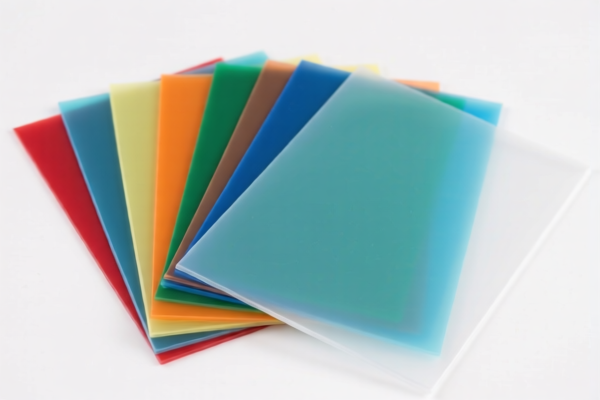
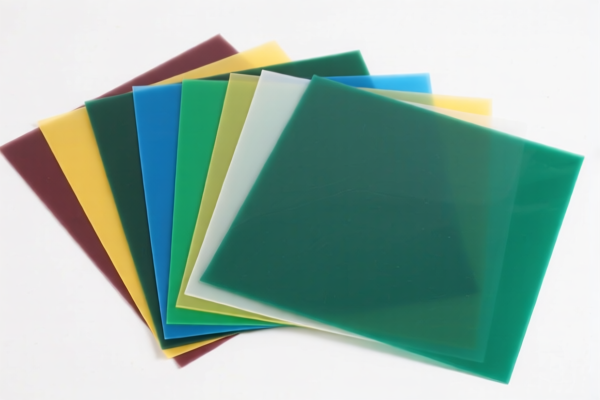

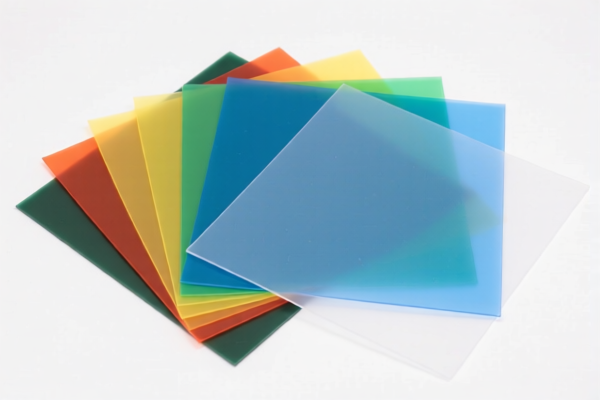
AI Analysis
🔄 PS Plastic Recycled Material (Thermoforming Grade)
🌐 HS Code Reference & Customs Clearance Guide | 2026 Latest Tariff Analysis | Professional Entry Strategy
📌 I. Product Definition & Classification: Do You Really Understand "PS Waste"?
Polystyrene (PS) recycled material, specifically for thermoforming, is categorized in international trade not as a finished product, but as "Waste, Parings and Scrap". Even if it is cleaned, ground, or granulated for recycling purposes, customs authorities generally classify it under Chapter 39 (Plastics and Articles Thereof), specifically under subheading 3915.
In the provided data, there are two primary HS Codes depending on the chemical structure of the Polystyrene:
- Polymer of Styrene (Homopolymers): If the material is primarily homopolymerized polystyrene (standard PS).
- Other Plastics: If the material involves copolymers (e.g., SAN, ABS blends) or specific modified polymers that do not fit the strict definition of "polymers of styrene."
⚠️ Key Distinction Point:
- If the PS is pure homopolymer (standard rigid PS, often used in disposable cups/containers) → 3915.20.00.00
- If the PS is a copolymer (e.g., Acrylonitrile-Butadiene-Styrene blend, or modified PS) or falls outside specific styrene polymer definitions → 3915.90.00.90
📦 II. HS Code Classification Details (2026 Latest Tariff Authority Comparison)
| HS Code | Product Description | Applicable Scenario | Tax Structure (China to US) |
|---|---|---|---|
3915.20.00.00 |
Waste, parings and scrap, of plastics: Of polymers of styrene | Recycled homopolymer PS pellets/flakes; standard PS thermoforming scrap | Base: 0% Additional: 25% Total: 25% |
3915.90.00.90 |
Waste, parings and scrap, of plastics: Of other plastics Other | Copolymer PS (SAN), ABS scrap, or mixed PS recyclates not classified as pure styrene polymers | Base: 0% Additional: 25% Total: 25% |
🔍 Key Reminder:
- Both codes result in a 25% total tax rate in the provided dataset.
- The distinction is critical for data reporting and anti-dumping checks, even if the final duty amount is currently the same.
- "Thermoforming Grade" implies it is raw material (scrap/waste), not a finished container. Do not declare as "Finished Goods" or "Raw Polymer Resin" (which may have different codes like 3903).
💰 III. 2026 Latest Tariff Rate Details (Including Additional Taxes)
✅ Applicable Country: United States (US)
✅ Origin: China (CN) (Based on the 25% additional tariff pattern in data)
✅ Effective Time: 2025+ (Current Trade Policy)
🎯 1. 3915.20.00.00 —— Polymers of Styrene (Waste/Scrap)
| Item | Content |
|---|---|
| Base Tariff | 0.0% (ad valorem) |
| Section 301 Additional Tariff | +25.0% |
| Total Tariff Rate | 25.0% |
| Tax Calculation | CIF Value × 25% |
| De Minimis Eligibility | ❌ No (Section 301 goods are generally exempt from de minimis relief) |
| Legal Basis | HTSUS 3915.20.00.00 + USITC Footnote 9903.88.01 (if applicable to plastics) |
📌 Explanation:
- The 0% base tariff reflects the low duty on plastic waste/scrap.
- The 25% additional tariff is imposed under Section 301 of the Trade Act of 1974, targeting specific Chinese goods, including many plastic products and scrap.
- Note: If the goods are from a different origin (e.g., Vietnam, India), the 25% may not apply, but verify the Substantial Transformation rules.
🎯 2. 3915.90.00.90 —— Other Plastics Waste/Scrap
| Item | Content |
|---|---|
| Base Tariff | 0.0% (ad valorem) |
| Section 301 Additional Tariff | +25.0% |
| Total Tariff Rate | 25.0% |
| Tax Calculation | CIF Value × 25% |
| De Minimis Eligibility | ❌ No |
| Legal Basis | HTSUS 3915.90.00.90 + USITC Footnote 9903.88.01 |
📌 Note:
- Despite being "Other Plastics," the rate is identical in this dataset.
- Ensure the chemical composition is accurately declared to avoid misclassification penalties.
🛠️ IV. Customs Clearance Practical Advice (Battle-Tested Pitfall Guide)
✅ 1. Documentation Checklist (Must-Have)
| Document | Required? | Explanation |
|---|---|---|
| ✅ Commercial Invoice | ✔️ | Must explicitly state "Recycled Polystyrene Waste/Scrap" and HS Code. |
| ✅ Packing List | ✔️ | Clearly separate PS from other plastics to avoid commingling claims. |
| ✅ Product Specification Sheet | ✔️ | Detail: % of PS, presence of contaminants, particle size, moisture content. |
| ✅ Certificate of Recycling/Origin | ✔️ | Proves the material is truly "scrap/waste" and not new resin (which could have different duties). |
| ✅ Photos of Goods | ✔️ | Show granules/flakes, packaging (usually in bales or bags), and any labels. |
| ✅ ISRI Grade Specification | ✔️ | If applicable, reference standard industry grades (e.g., ISRI 102 for PS). |
✅ 2. Declaration Tips (Key Mantra)
🔥 "Clear Labeling, No Hidden Mixed Plastics, Accurate Description, Smooth Customs!"
| Scenario | Correct Declaration | Wrong Practice |
|---|---|---|
| Pure Homopolymer PS Scrap | 3915.20.00.00 - "PS Scrap" |
Mixing with ABS/PC → 100% rejection/audit |
| Copolymer/Modified PS Scrap | 3915.90.00.90 - "Other Plastic Scrap" |
Declaring as Homopolymer → Misclassification |
| Mixed Plastic Waste | Do not blend unless explicitly allowed | Mixing different plastic types in one bale → Higher scrutiny |
✅ 3. Special Considerations
| Situation | Handling Advice |
|---|---|
| Contaminated Scrap | If moisture >10% or dirt content is high, declare as "Waste" not "Recyclable Material" to avoid environmental inspections. |
| EPA/FDA Regulations | If the recycled PS is intended for food-contact thermoforming, it requires FDA compliance and strict hygiene documentation. |
| Country of Origin | If the PS was processed in multiple countries, ensure the Substantial Transformation occurs in the declared country. |
| Anti-Dumping | Check for any specific anti-dumping duties on Chinese PS resin vs. scrap. Currently, scrap is generally lower risk but still subject to 301. |
🌍 V. Global Market Comparison (2026 Latest)
| Country/Region | Recommended HS Code | Tariff (China Origin) | Certification | Remarks |
|---|---|---|---|---|
| 🇺🇸 USA | 3915.20.00.00 or 3915.90.00.90 |
25% (Total) | None specific | High tariff due to 301; EPA rules apply |
| 🇨🇳 China | 3915.20.00.00 |
~5-6% | N/A | Import of recycled plastic is restricted; check MOFCOM lists |
| 🇪🇺 EU | 3915.20 or 3915.90 |
6.5% | REACH | Strict chemical registration; no 25% tariff |
| 🇮🇳 India | 3915.20 |
Varies | BIS | High tariffs on scrap to promote domestic recycling |
📌 Conclusion:
- USA has the simplest tariff structure (0% base + 25% additional) but the highest effective rate for Chinese goods.
- EU and other markets may have higher base tariffs but no 301-style additions, making them potentially cheaper if logistics allow.
📌 VI. Common Errors & Pitfall Guide (Lessons Learned)
❌ Error 1: Declaring "Recycled PS" as "New PS Resin" (3903.11.00)
👉 Consequence: If caught, it’s fraud. If not caught, you might face lower duties initially but later audits will result in back taxes + penalties.
👉 Actual Tax: New Resin may have different duties, but Scrap is strictly regulated as waste.
❌ Error 2: Mixing PS Scrap with Other Plastics in One Shipment
👉 Consequence: Customs may classify the entire shipment under the highest-risk code or reject it as mixed waste.
👉 Solution: Segregate by polymer type.
❌ Error 3: Ignoring Moisture/Contaminant Levels
👉 Consequence: If moisture content is too high, customs may reclassify as "Garbage" or "Hazardous Waste," leading to return shipment.
👉 Solution: Ensure moisture <10% and provide test reports.
❌ Error 4: Incorrectly Using 3920 (Plates/Sheets) Instead of 3915 (Waste/Scrap)
👉 Consequence: 3920 has different duties and regulatory requirements. Misclassification leads to audit flags.
👉 Solution: Clearly state "Scrap," "Waste," "Parings," or "Granules for Recycling."
✅ Correct Declaration Example:
"Recycled Polystyrene (PS) Scrap, Thermoforming Grade, Homopolymer, Granulated, Free from Contaminants, HS Code 3915.20.00.00"
🎯 VII. Conclusion: Precision in Classification Saves Costs!
🎯 Remember the Mantra:
🔹 "Scrap is Waste, Resin is New. Know the Polymer, Avoid the Flaw!"
🔹 "25% Tax Hits Hard, Declare Accurate, Keep the Ship Moving!"
📌 Pro Tip:
- If your PS is copolymer (SAN/ABS), use 3915.90.00.90 to be safe.
- If it is pure PS, use 3915.20.00.00.
- Always check for FDA compliance if the end-use is food-related.
- Consider pre-classification rulings from CBP if the shipment is large.
📣 Immediate Action:
📞 Consult a licensed customs broker + Provide chemical composition reports + Apply for CBP Ruling if unsure.
🚀 Ensure smooth clearance, avoid delays, and protect your margins!
✨ Professional Clearance Starts with Accurate Classification!
💼 Every Percent of Duty Counts in Recycled Materials Trade!
Customer Reviews
About HS Code Classification
The Harmonized System (HS) is an internationally standardized nomenclature developed by the World Customs Organization (WCO) to classify traded products. Over 200 countries use the HS system as the basis for customs tariffs, trade statistics, and import/export regulations.
Each HS code follows a hierarchical structure:
- Chapter (2 digits) — Broad category of goods (e.g., Chapter 84: Machinery and Mechanical Appliances)
- Heading (4 digits) — More specific grouping within the chapter
- Subheading (6 digits) — Internationally standardized breakdown, used by all WCO member countries
- National subdivisions (8-10 digits) — Country-specific extensions for further classification, such as US HTSUS 10-digit codes
Correct HS code classification is essential for smooth customs clearance, accurate duty payment, and compliance with trade regulations. Misclassification can lead to customs delays, overpayment of duties, or penalties.
When importing from CN to US, the applicable tariff rates may include:
- Most-Favored-Nation (MFN) rate — The standard duty rate applied to WTO members
- General rate — Applied to countries without trade agreements
- Trade remedy duties — Additional tariffs such as Section 301 (anti-dumping), Section 232 (national security), or countervailing duties
The information provided on this page is for reference purposes only. For official classification, please consult with your local customs authority or a licensed customs broker.