PS Plastic Shockproof Pad
CN → US| HS Code | Tariff Rate | Origin | Destination | Doc |
|---|---|---|---|---|
| 3921190090 | 41.5% | CN | US | Official Doc |
| 3921905050 | 39.8% | CN | US | Official Doc |
| 3926909989 | 22.8% | CN | US | Official Doc |
| 3926904590 | 38.5% | CN | US | Official Doc |
| 3921190090 | 41.5% | CN | US | Official Doc |
Product Images
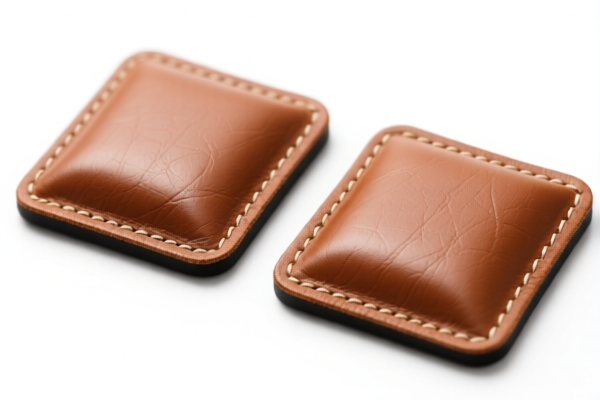
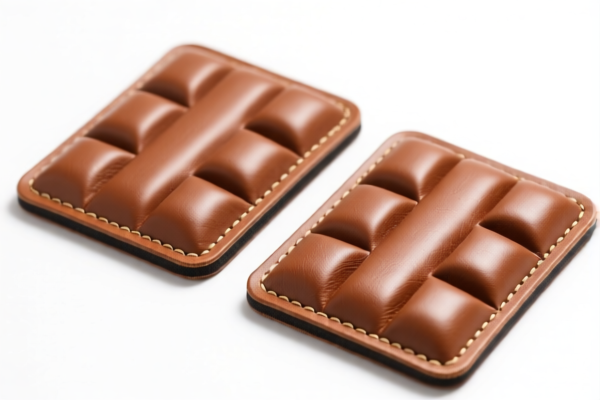
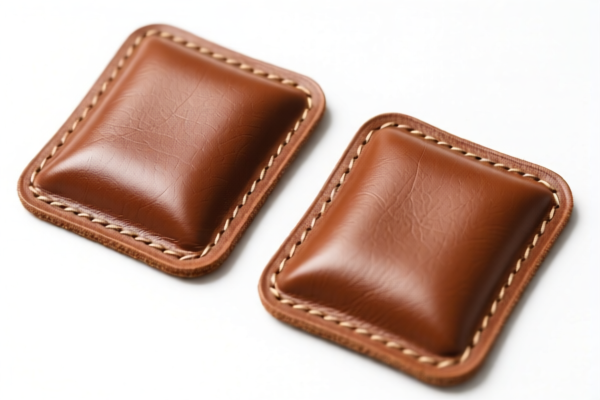
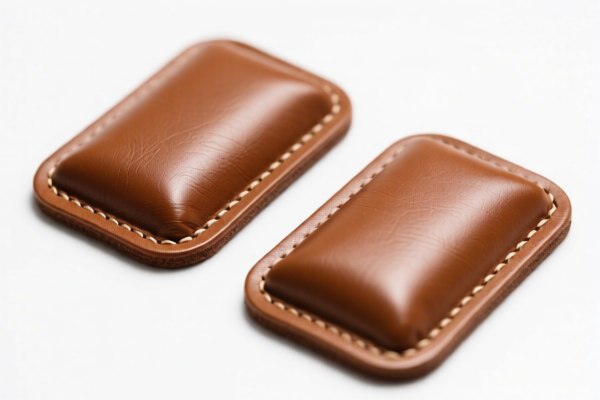
AI Analysis
🛡️ PS Plastic Shockproof Pad (Plastic Anti-Vibration Pad)
🌐 HS Code Reference & Clearance Guide | 2024/2025 Latest Tariff Analysis | Professional Customs Strategy
📌 I. Product Definition & Classification: Do You Really Understand "Shockproof Pads"?
Plastic shockproof pads are essential components used to absorb vibration, cushion impacts, and prevent damage to equipment or packaging. In international trade, they are often misclassified due to their varied forms (sheets, films, or specific shaped pads).
Based on the provided data, these products fall into four distinct categories depending on their physical form and specific application:
- Sheets/Foils/Belts: If the pad is in the form of a plate, sheet, film, foil, or belt (even if made of foam, unless otherwise specified).
- Pads (General): Specific "pad" shapes that fall under "other plastic plates, sheets, film, foil, and tape."
- Miscellaneous Plastic Articles: If it doesn't fit the specific "plate/sheet" definitions, it may be categorized as "other plastic articles."
- Sealing Gaskets (Non-O-Ring): If used specifically as a seal (but not an O-ring).
⚠️ Key Distinction Point:
- Form Matters: Is it a continuous roll/sheet (3921.19) or a discrete pad item (3921.90or3926.90)?
- Function Matters: Is it purely for cushioning (3926.90.99) or does it serve as a seal (3926.90.45)?
📦 II. HS Code Classification Details (Latest Tariff Reference)
| HS Code | Product Description | Application Scenario | Form/Type |
|---|---|---|---|
3921.19.00.90 |
Plastic shockproof pads, form matches plates/sheets/films/foils; foam material unspecified, classified under others | Bulk rolls, flat sheets, continuous foam sheets for packaging | Sheet/Film Form |
3921.90.50.50 |
Plastic shockproof pads, form is "pad," classified under other plastic plates/sheets/films | Discrete cushioning pads, industrial gaskets in pad shape | Specific Pad Form |
3926.90.99.89 |
Plastic shockproof pads, classified as other unlisted plastic articles | Custom-shaped pads, specialized protective components not fitting above | Miscellaneous Article |
3926.90.45.90 |
Plastic shockproof pads, classified as non-O-ring plastic sealing gaskets | Pads used specifically for sealing joints/flanges (not O-rings) | Sealing Gasket |
🔍 Key Reminder:
- If the product is a continuous roll or sheet used for wrapping/cushioning, it likely falls under 3921 (Plates, Sheets, Film, Foil).
- If it is a pre-molded discrete item used for general protection, it may fall under 3926.90.99 (Other Articles).
- If it has a sealing function (e.g., preventing fluid/gas leakage) but isn't an O-ring, it falls under 3926.90.45.
💰 III. 2024/2025 Latest Tariff Rate Breakdown (Including Surcharges & Policy Add-ons)
✅ Applicable Country: United States (US)
✅ Origin: China (CN)
✅ Effective Time: Ongoing (Includes Section 301 & Section 122 measures)
🎯 1. 3921.19.00.90 —— Plastic Shockproof Pads (Sheet/Film Form)
| Item | Content |
|---|---|
| Base Tariff Rate | 6.5% |
| Additional Tariff (Section 301) | +25.0% |
| Section 122 Tariff | +10.0% |
| Total Tariff Rate | 41.5% |
| Tax Calculation | CIF Value × 41.5% |
| De Minimis Exemption | ❌ Not Applicable (High rates trigger scrutiny) |
| Legal Basis Path | HTSUS: 3921.19.00.90 → USITC Footnotes → Section 301 List → Section 122 |
📌 Explanation:
- This is the highest tax bracket among the options.
- Base (6.5%) is the standard MFN rate for plastic sheets.
- Section 301 (25%) applies to most Chinese plastic articles.
- Section 122 (10%) is a recent additional levy affecting certain plastic products.
- Total 41.5% significantly impacts profit margins.
🎯 2. 3921.90.50.50 —— Plastic Shockproof Pads (Other Plastic Plates/Sheets)
| Item | Content |
|---|---|
| Base Tariff Rate | 4.8% |
| Additional Tariff (Section 301) | +25.0% |
| Section 122 Tariff | +10.0% |
| Total Tariff Rate | 39.8% |
| Tax Calculation | CIF Value × 39.8% |
| De Minimis Exemption | ❌ Not Applicable |
| Legal Basis Path | HTSUS: 3921.90.50.50 → USITC Footnotes → Section 301 → Section 122 |
📌 Explanation:
- Slightly lower base rate (4.8%) compared to3921.19(6.5%).
- Still subject to the full 35% surcharge (25% + 10%).
- Total 39.8% is still very high.
🎯 3. 3926.90.99.89 —— Plastic Shockproof Pads (Other Plastic Articles)
| Item | Content |
|---|---|
| Base Tariff Rate | 5.3% |
| Additional Tariff (Section 301) | +7.5% |
| Section 122 Tariff | +10.0% |
| Total Tariff Rate | 22.8% |
| Tax Calculation | CIF Value × 22.8% |
| De Minimis Exemption | ❌ Not Applicable |
| Legal Basis Path | HTSUS: 3926.90.99.89 → USITC Footnotes → Section 301 → Section 122 |
📌 Explanation:
- Best Option for Cost Optimization among the provided codes.
- Base Rate (5.3%) is standard for miscellaneous plastic goods.
- Section 301 surcharge is lower (7.5%) for this category compared to the 25% in Chapter 39.01-39.14.
- Total 22.8% is significantly more competitive.
- Strategy: If the product is a pre-molded pad (not a sheet/roll), strive to classify under this code.
🎯 4. 3926.90.45.90 —— Plastic Shockproof Pads (Non-O-Ring Sealing Gaskets)
| Item | Content |
|---|---|
| Base Tariff Rate | 3.5% |
| Additional Tariff (Section 301) | +25.0% |
| Section 122 Tariff | +10.0% |
| Total Tariff Rate | 38.5% |
| Tax Calculation | CIF Value × 38.5% |
| De Minimis Exemption | ❌ Not Applicable |
| Legal Basis Path | HTSUS: 3926.90.45.90 → USITC Footnotes → Section 301 → Section 122 |
📌 Explanation:
- Lowest base rate (3.5%), but high surcharge.
- Only applicable if the pad functions as a seal.
- Total 38.5% is still high due to the 35% surcharge.
- Warning: Misclassifying a cushioning pad as a "seal" can lead to customs penalties if the sealing function is not primary.
🛠️ IV. Customs Clearance Practical Advice (Pitfall Avoidance Guide)
✅ 1. Required Documentation Checklist
| Document | Mandatory | Description |
|---|---|---|
| ✅ Product Specification Sheet | ✔️ | Must clearly state: Material (e.g., PE, EVA, PU), Density, Thickness, Dimensions. |
| ✅ Product Photos | ✔️ | Clear images showing if it is a roll/sheet (continuous) or discrete pad. |
| ✅ Commercial Invoice | ✔️ | Describe accurately: "Plastic Shockproof Pad, Model XYZ, for Equipment Cushioning." Avoid vague terms like "Plastic Part." |
| ✅ Packing List | ✔️ | Detail weight and volume. If sold as rolls, specify linear meters/sqm. |
| ✅ Certificate of Origin | ✔️ | Required for tariff verification. |
✅ 2. Declaration Tips (Critical Keywords)
🔥 "Form Defines Code, Function Defines Rate!"
| Scenario | Correct Declaration | Common Mistake |
|---|---|---|
| Sold as Rolls/Sheets | "Plastic Foam Sheet for Cushioning" → 3921.19.00.90 |
Calling it "Pads" → Risk of reclassification |
| Sold as Discrete Cushioning Pads | "Pre-molded Plastic Shock Absorber" → 3926.90.99.89 |
Calling it "Plate" → Higher tax (39.8%) |
| Used as Seals | "Plastic Gasket, Non-O-Ring, Sealing Function" → 3926.90.45.90 |
Using cushioning language → Misclassification |
| Generic Plastic Parts | "Other Plastic Articles" → 3926.90.99.89 |
Too vague → Customs detention |
✅ 3. Special Considerations
| Situation | Advice |
|---|---|
| Composite Materials | If the pad has adhesive backing or metal inserts, disclose fully. May change classification. |
| Custom Shapes | If the pad is uniquely shaped (e.g., star, hexagon) and not a standard sheet, 3926.90.99.89 is safer and cheaper (22.8%). |
| Sealing vs. Cushioning | If the primary purpose is to absorb shock, do NOT use 3926.90.45.90 (Sealing) unless it also seals. Misuse leads to audits. |
🌍 V. Global Market Comparison (2024/2025)
| Country/Region | Recommended HS Code | Estimated Tariff (China Origin) | Key Requirements |
|---|---|---|---|
| 🇺🇸 USA | 3926.90.99.89 |
22.8% (Lowest Option) | Section 301 & 122 Apply |
| 🇺🇸 USA | 3921.19.00.90 |
41.5% (Highest Option) | Avoid if possible |
| 🇪🇺 EU | 3926.90.99 |
~5-6% (Standard) | CE Marking, REACH Compliance |
| 🇨🇳 China | 3926.90.99 |
~5-7% (Import) | Domestic production usually lower |
📌 Conclusion:
- For US Imports, the biggest savings come from correctly classifying discrete pads under3926.90.99.89(22.8%) instead of sheet forms (39.8-41.5%).
- Documentation is Key: Photos showing "discrete items" vs "rolls" are critical for proving eligibility for the lower tax bracket.
📌 VI. Common Errors & Pitfall Guide (Lessons Learned)
❌ Error 1: Declaring discrete pads as "Plastic Plates/Sheets" (3921)
👉 Consequence: Tax jumps from 22.8% to ~40%. Loss of ~17% profit margin.
❌ Error 2: Using "O-Ring" classification for square/rectangular pads
👉 Consequence: If not an O-ring, 3926.90.45 may be challenged. Must be "Non-O-Ring Gasket."
❌ Error 3: Vague Description "Plastic Pad"
👉 Consequence: Customs may select any code, likely the highest one, or hold shipment for clarification.
❌ Error 4: Ignoring Section 122
👉 Consequence: Failure to account for the extra 10% leads to underpayment and penalties upon audit.
✅ Correct Practice:
"Pre-molded Polyethylene (PE) Shock Absorbing Pads, 10cm x 10cm, Discrete Items, for Machinery Vibration Damping, Model VIB-100"
🎯 VII. Conclusion: Professional Declaration, Save Cost, Ensure Smooth Clearance!
🎯 Key Takeaway:
🔹 "Discrete Pad? Go for 3926.90.99 (22.8%)."
🔹 "Sheet/Roll? Stuck with 3921.19 (41.5%)."
🔹 "Seal? Check 3926.90.45 (38.5%)."
🔹 "HS Code Determines Tax, Precision Saves Money!"
📌 Pro Tip:
- Always provide photos showing the product is pre-molded and discrete to support the 3926.90.99.89 classification.
- If your supply chain involves converting rolls into pads, consider whether the import is of the raw material (sheet) or the finished good (pad). Importing finished pads often yields the lower 22.8% rate if classified correctly under Chapter 39.26.
📣 Immediate Action:
📞 Consult a licensed customs broker.
📸 Provide clear product images.
📝 Apply for a Pre-Ruling (ACE Portal) if volume is high, to lock in the 22.8% classification.
🚀 Avoid the 41.5% trap!
✨ Professional Customs Clearance Starts with Precise Classification!
💼 Every Percent Saved is Pure Profit!
Customer Reviews
About HS Code Classification
The Harmonized System (HS) is an internationally standardized nomenclature developed by the World Customs Organization (WCO) to classify traded products. Over 200 countries use the HS system as the basis for customs tariffs, trade statistics, and import/export regulations.
Each HS code follows a hierarchical structure:
- Chapter (2 digits) — Broad category of goods (e.g., Chapter 84: Machinery and Mechanical Appliances)
- Heading (4 digits) — More specific grouping within the chapter
- Subheading (6 digits) — Internationally standardized breakdown, used by all WCO member countries
- National subdivisions (8-10 digits) — Country-specific extensions for further classification, such as US HTSUS 10-digit codes
Correct HS code classification is essential for smooth customs clearance, accurate duty payment, and compliance with trade regulations. Misclassification can lead to customs delays, overpayment of duties, or penalties.
When importing from CN to US, the applicable tariff rates may include:
- Most-Favored-Nation (MFN) rate — The standard duty rate applied to WTO members
- General rate — Applied to countries without trade agreements
- Trade remedy duties — Additional tariffs such as Section 301 (anti-dumping), Section 232 (national security), or countervailing duties
The information provided on this page is for reference purposes only. For official classification, please consult with your local customs authority or a licensed customs broker.