PS Plastic Storage Board
CN → US| HS Code | Tariff Rate | Origin | Destination | Doc |
|---|---|---|---|---|
| 3926305000 | 22.8% | CN | US | Official Doc |
| 3920991000 | 41.0% | CN | US | Official Doc |
| 3921190090 | 41.5% | CN | US | Official Doc |
| 3921905050 | 39.8% | CN | US | Official Doc |
| 3926909989 | 22.8% | CN | US | Official Doc |
Product Images
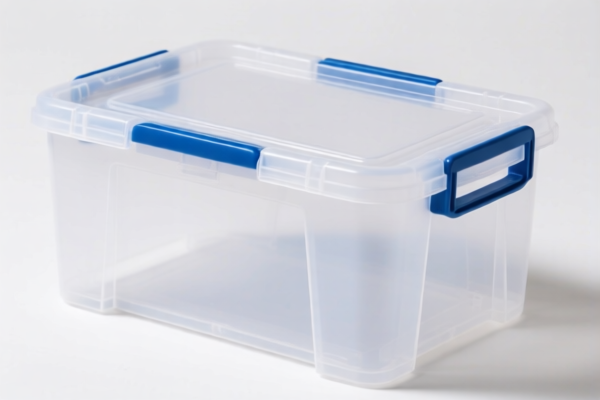
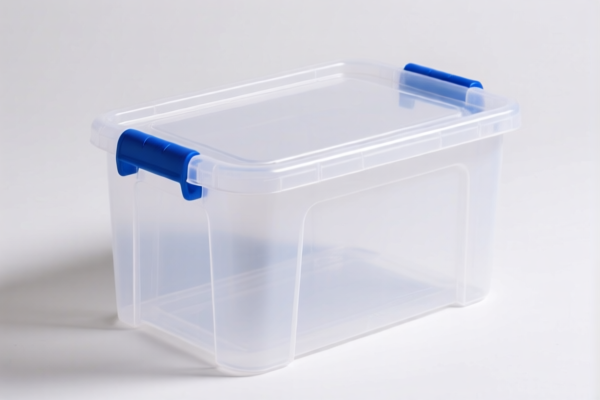
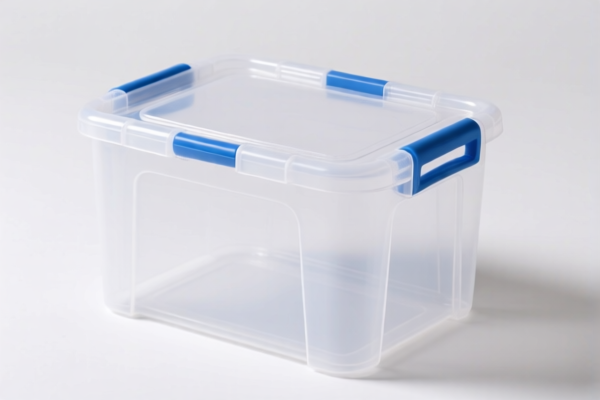
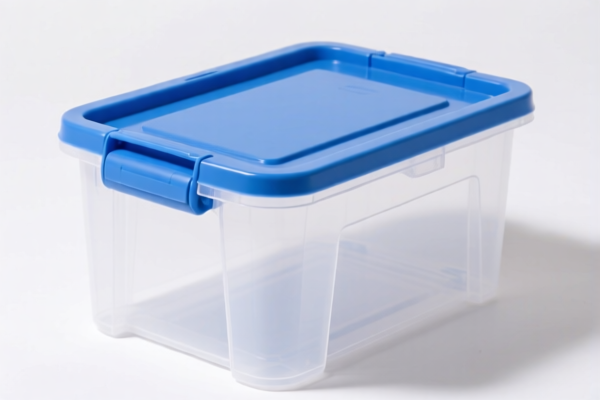
AI Analysis
📦 PS Plastic Storage Board (Polystyrene Storage Panels)
🌐 HS Code Reference & Customs Clearance Guide | 2026 Latest Tariff Analysis | Professional Clearance Strategy
📌 I. Product Definition & Classification: What Exactly Is a "PS Plastic Storage Board"?
Polystyrene (PS) Plastic Storage Boards are rigid, lightweight panels made from synthetic polymer materials. In international trade, they are primarily used for organizing, separating, or protecting goods in storage, packaging, or display applications.
Key Distinction in Classification:
The classification depends heavily on the specific material composition and functional design of the board:
- General Plastic Articles: If the board is considered a "miscellaneous article of plastic" (e.g., shaped inserts, custom racks), it falls under Chapter 39, Heading 3926.
- Plastic Plates, Sheets, Films, Foil, and Strip: If the board is classified as a semi-finished material (flat plates/sheets without specific functional shaping beyond cutting), it falls under Chapter 39, Heading 3920 or 3921.
⚠️ Critical Differentiator:
- If the board is finished, shaped for a specific purpose (e.g., custom-cut dividers, finished storage bins made of flat panels) → Likely 3926.
- If the board is generic flat stock (raw material for further manufacturing) → Likely 3920 or 3921.
📋 II. HS Code Classification Details (2026 Latest Tariff Authority Cross-Reference)
Based on the provided data, here are the possible HS codes for PS Plastic Storage Boards and their corresponding tax implications.
| HS Code | Product Description (Summary) | Classification Logic | Total Tax Rate (US Import from China) | Tax Breakdown |
|---|---|---|---|---|
3926.30.50.00 |
Storage plastic board, material: plastic, form: board; meets requirements for other articles of plastic. | Categorized as a miscellaneous plastic article (finished good). | 22.8% | Base: 5.3% + Section 301: 7.5% + Section 122: 10% |
3920.99.10.00 |
Storage plastic board, material: plastic, form: board; reasonable inference for other chapters. | Categorized as a plain plastic plate/sheet (semi-finished). | 41.0% | Base: 6.0% + Section 301: 25.0% + Section 122: 10% |
3921.19.00.90 |
Storage plastic board, material: plastic, form: board; meets plate/sheet/film/strip requirements. | Categorized as plastic plates, sheets, film, foil, and strip (specific type). | 41.5% | Base: 6.5% + Section 301: 25.0% + Section 122: 10% |
3921.90.50.50 |
Storage plastic board, material: plastic, form: board; meets classification characteristics of plastic plates/sheets. | Categorized as other plastic plates, sheets, film, foil, and strip. | 39.8% | Base: 4.8% + Section 301: 25.0% + Section 122: 10% |
3926.90.99.89 |
Storage plastic board, material: plastic, form: board shape; no material conflict. | Categorized as other miscellaneous plastic articles (catch-all for 3926). | 22.8% | Base: 5.3% + Section 301: 7.5% + Section 122: 10% |
🔍 Key Insight:
- HS Codes 3926.30.50.00 and 3926.90.99.89 offer the lowest total tax rate (22.8%). These are favorable if the board can be argued as a "finished article" rather than a raw material.
- HS Codes 3920.99.10.00, 3921.19.00.90, and 3921.90.50.50 incur higher tax rates (39.8% - 41.5%) because they are treated as basic plastic sheets/plates with higher Section 301 surcharges (25%).
💰 III. 2026 Latest Tariff Rate Details (Including Additional Taxes & Policy Surcharges)
✅ Applicable Country: United States (US)
✅ Country of Origin: China (CN)
✅ Effective Time: November 10, 2025 (for imports thereafter)
🎯 1. Favorable Classification: 3926.30.50.00 & 3926.90.99.89
(Lowest Tax Rate: 22.8%)
| Item | Details |
|---|---|
| Base Tariff | 5.3% ad valorem |
| Section 301 Tariff (USITC) | +7.5% (Lower rate for specific 3926 subheadings) |
| Section 122 Tariff | +10% (Applied to Chinese-origin plastic articles) |
| Total Effective Rate | 22.8% |
| Tax Calculation | CIF Value × 22.8% |
| De Minimis Exemption | ❌ Not Eligible (Deny De Minimis) |
| Legal Basis Path | USITC:3926.30.50.00 → IEEPA:9903.01.25 → FOOTNOTE:122 |
📌 Explanation:
- The Section 301 rate is only 7.5% for these specific 3926 codes, significantly lower than the standard 25%.
- This makes 3926 the preferred classification if the product can be justified as a "finished storage article" rather than a raw sheet.
🎯 2. Less Favorable Classifications: 3920.99.10.00, 3921.19.00.90, 3921.90.50.50
(Higher Tax Rate: 39.8% - 41.5%)
| HS Code | Base Tariff | Section 301 | Section 122 | Total Rate |
|---|---|---|---|---|
3920.99.10.00 |
6.0% | +25% | +10% | 41.0% |
3921.19.00.90 |
6.5% | +25% | +10% | 41.5% |
3921.90.50.50 |
4.8% | +25% | +10% | 39.8% |
📌 Note:
- These codes fall under Section 301 List 4C or similar, which carries the standard 25% additional duty.
- While the base tariff might be slightly lower (e.g., 4.8% for 3921.90.50.50), the 25% Section 301 duty makes the total cost significantly higher than the 3926 options.
- Use these only if the product strictly meets the definition of "plastic plates, sheets, film, foil, and strip" (unshaped, generic stock).
🛠️ IV. Customs Clearance Practical Advice (Avoiding Pitfalls)
✅ 1. Required Documentation Checklist (Mandatory)
| Document | Required? | Purpose |
|---|---|---|
| ✅ Product Specification Sheet | ✔️ | Must detail: Material (PS/Polystyrene), Dimensions, Thickness, Weight, Intended Use (Storage/Organization). |
| ✅ Commercial Invoice | ✔️ | Must clearly state: "Polystyrene Plastic Storage Board" and HS Code. Avoid vague terms like "Plastic Part." |
| ✅ Packing List | ✔️ | Itemize quantities, weights, and packaging details. |
| ✅ Certificate of Origin (CO) | ✔️ | Required for origin verification (China). |
| ✅ Product Photos | ✔️ | Show the board’s shape, edges, and any finishing. Crucial for proving it’s a "finished article" (3926) vs. "raw sheet" (3920/3921). |
| ✅ Material Safety Data Sheet (MSDS) | ✔️ | If required by carrier or specific use case. |
✅ 2. Declaration Tips (Key Strategy)
🔥 “Shape Matters: Finished Article = Lower Tax; Raw Sheet = Higher Tax!”
| Scenario | Recommended HS Code | Why? |
|---|---|---|
| Cut-to-size, shaped, or finished storage inserts | 3926.30.50.00 or 3926.90.99.89 |
These are considered "articles of plastic," not just sheets. Lower Section 301 duty. |
| Generic, unshaped PS sheets/panels for further manufacturing | 3920.99.10.00 or 3921.90.50.50 |
If they are truly raw materials, you must declare them as such. Higher tax applies. |
| Mixed shipments (some finished, some raw) | Split Declaration | Do not mix. Declare each type under its correct HS code to avoid audits. |
✅ 3. Special Cases & Risk Management
| Situation | Advice |
|---|---|
| OEM Custom Boards | Provide design drawings to prove the product is a "finished article" tailored for storage. This supports classification under 3926. |
| White Label/Generic Sheets | If sold as generic stock, expect higher taxes under 3920/3921. |
| Packaging vs. Product | Ensure the storage board is not classified as "packaging material" (which may have different rules). |
| Anti-Dumping Duties | Check if PS plastic falls under any AD/CVD orders. Generally, plain PS sheets may be exempt, but verify current USITC lists. |
🌍 V. Global Market Comparison (2026 Latest)
| Country/Region | Recommended HS Code | Est. Tariff (China Origin) | Key Certifications | Notes |
|---|---|---|---|---|
| 🇺🇸 USA | 3926.90.99.89 |
22.8% | FDA (if food-contact), RoHS | Best rate for finished articles. Avoid 3920/3921 if possible. |
| 🇨🇳 China | 3926.90.99.89 |
5.0% (Import) / 13% (VAT) | CCC (if applicable) | Low import duty, but high VAT. |
| 🇪🇺 EU | 3926.90.99 |
6.5% | CE, REACH | No Section 301/122. Standard EU duty applies. |
| 🇯🇵 Japan | 3926.90.90 |
5.0% | PSE, RoHS | Low tariffs, stable trade relations. |
📌 Conclusion:
- The US market is the most challenging due to Section 301 and Section 122 tariffs.
- Strategic Classification: Arguing for 3926 (finished article) saves ~17-19% in total duty compared to 3920/3921.
- EU, Japan, and China offer much lower tariff barriers, making them more cost-effective for PS plastic products.
📌 VI. Common Errors & Pitfalls (Lessons Learned)
❌ Error 1: Declaring "Shaped Storage Inserts" as "Plastic Sheets" (3920)
👉 Consequence: Audit by CBP for misclassification. Penalties + Back Taxes.
👉 Fix: Prove the item is a "finished article" with specific utility → Use 3926.
❌ Error 2: Ignoring Section 122 Tariff
👉 Consequence: Unexpected 10% charge on all plastic articles from China.
👉 Fix: Always include Section 122 in total cost calculation.
❌ Error 3: Using Vague Descriptions like "Plastic Board"
👉 Consequence: CBP assigns highest duty rate by default.
👉 Fix: Use precise descriptions: "Polystyrene Plastic Storage Divider, Finished Article."
🎯 VII. Conclusion: Optimize Classification, Reduce Costs!
🎯 Key Takeaway:
🔹 "Finished Article = 3926 (22.8%) | Raw Sheet = 3920/3921 (40%+)"
🔹 Section 122 (10%) applies to ALL plastic articles from China.
🔹 Section 301 (7.5% vs 25%) is the key differentiator.
📌 Pro Tip:
If your PS Plastic Storage Boards are custom-shaped for specific storage needs, always declare under 3926. This can save you ~17-19% in duties compared to declaring them as generic plastic sheets.
📣 Immediate Action:
📞 Consult a customs broker to prepare a Pre-Ruling Request for the correct HS Code.
📄 Ensure your Commercial Invoice clearly states the product’s finished nature.
✨ Professional Customs Clearance Starts with Accurate Classification!
💼 Every Percent Saved is Pure Profit!
Customer Reviews
About HS Code Classification
The Harmonized System (HS) is an internationally standardized nomenclature developed by the World Customs Organization (WCO) to classify traded products. Over 200 countries use the HS system as the basis for customs tariffs, trade statistics, and import/export regulations.
Each HS code follows a hierarchical structure:
- Chapter (2 digits) — Broad category of goods (e.g., Chapter 84: Machinery and Mechanical Appliances)
- Heading (4 digits) — More specific grouping within the chapter
- Subheading (6 digits) — Internationally standardized breakdown, used by all WCO member countries
- National subdivisions (8-10 digits) — Country-specific extensions for further classification, such as US HTSUS 10-digit codes
Correct HS code classification is essential for smooth customs clearance, accurate duty payment, and compliance with trade regulations. Misclassification can lead to customs delays, overpayment of duties, or penalties.
When importing from CN to US, the applicable tariff rates may include:
- Most-Favored-Nation (MFN) rate — The standard duty rate applied to WTO members
- General rate — Applied to countries without trade agreements
- Trade remedy duties — Additional tariffs such as Section 301 (anti-dumping), Section 232 (national security), or countervailing duties
The information provided on this page is for reference purposes only. For official classification, please consult with your local customs authority or a licensed customs broker.