PS Plastic Wire and Cable Sheathing
CN → US| HS Code | Tariff Rate | Origin | Destination | Doc |
|---|---|---|---|---|
| 8544499000 | 38.9% | CN | US | Official Doc |
| 3917320010 | 38.1% | CN | US | Official Doc |
| 3921125000 | 41.5% | CN | US | Official Doc |
| 3921121950 | 40.3% | CN | US | Official Doc |
| 3917390020 | 38.1% | CN | US | Official Doc |
Product Images
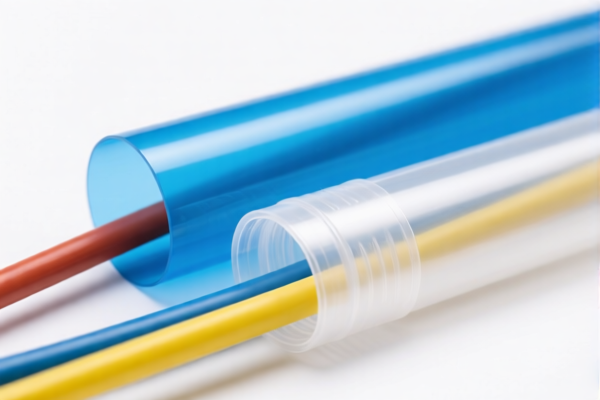
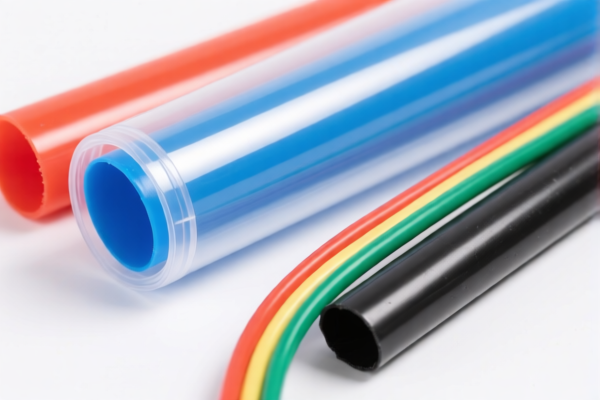
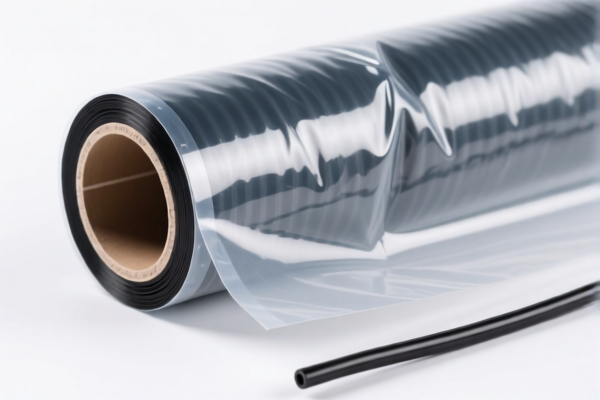

AI Analysis
🧪 PVC Plastic Wire & Cable Sheathing: The Ultimate HS Code & Tariff Guide
🌐 HS Code Reference & Customs Clearance Guide | 2026 Latest Tariff Analysis | Professional Clearance Strategy
📌 Part 1: Product Definition & Classification – Do You Really Understand "Sheathing"?
PVC Plastic Wire and Cable Sheathing is the protective outer layer of electrical conductors. It provides insulation, mechanical protection, and environmental resistance. In international trade, its classification depends heavily on function, material structure, and physical form.
It is generally divided into two logical categories based on its role:
- Part of Electrical Equipment (Insulated Conductors): If the sheathing is integral to the electrical function (insulation), it may fall under Chapter 85.
- Plastic Products (Insulating Material): If treated primarily as a raw plastic material (tubes, strips, sheets) before being applied, it falls under Chapter 39.
⚠️ Key Distinction Point:
- If it is integrated with the conductor and functions primarily as electrical insulation → Classified under HS 8544.
- If it is a standalone plastic tube/strip/sheet made of PVC, intended to become sheathing or used as a general plastic tube → Classified under HS 3917 or HS 3921.
📦 Part 2: HS Code Classification Details (2026 Latest Tariff Authority Comparison)
| HS Code | Product Description | Application Scenario | Key Logic |
|---|---|---|---|
8544.49.90.00 |
Insulated Wires/Cables: Other | PVC sheathing acting as insulation for conductors within voltage limits. | ✅ Electrical Function Primary |
3917.32.00.10 |
PVC Tubes/Conduits (Unreinforced) | PVC sheathing in tube/hose form, without reinforcement or fittings. | ✅ Plastic Form Primary |
3921.12.50.00 |
PVC Plates/Sheets/Strips (Unreinforced) | PVC sheathing in strip/film/form (flat or thin profile). | ✅ Plastic Form Primary |
3921.12.19.50 |
Other PVC Plates/Sheets/Strips | PVC sheathing as an extended application of PVC sheets/films. | ✅ Plastic Form Primary |
3917.39.00.20 |
Other PVC Tubes/Hoses/Accessories | PVC sheathing as accessories/attachments to pipes or hoses. | ✅ Plastic Form Primary |
🔍 Critical Reminder:
- If the product is sold as "Cable" or "Insulated Wire" (with copper/aluminum core), it MUST be classified under 8544.49.90.00.
- If sold as "PVC Conduit", "PVC Tube", or "PVC Strip" (without electrical function yet), it falls under 3917 or 3921.
- Do not mix declarations: Splitting a single cable into "wire" + "sheathing" parts is a major compliance risk.
💰 Part 3: 2026 Latest Tariff Rate Breakdown (Including Surtaxes & Policy Add-ons)
✅ Applicable Country: United States (US)
✅ Origin: China (CN)
✅ Effective Date: Post-2025 (Current High-Tariff Regime)
🎯 1. 8544.49.90.00 — Insulated Conductors (Sheathing as Insulation)
| Item | Details |
|---|---|
| Base Tariff | 3.9% (ad valorem) |
| Section 301 Surtax | +25.0% (USITC Footnote 9903.88.01 equivalent logic) |
| Section 122 Surtax | +10.0% (Specific to certain electrical/plastic components) |
| Total Tax Rate | 38.9% |
| Tax Calculation | CIF Value × 38.9% |
| De Minimis Exemption | ❌ Not Eligible (High tariff goods are excluded) |
| Legal Basis Path | Base: 3.9% → 301: 25% → 122: 10% |
📌 Explanation:
- "Base 3.9%": Standard MFN tariff for insulated wires.
- "301 Surtax 25%": Standard US-China trade war tariff on many electrical goods.
- "122 Surtax 10%": Additional levy under specific Section 122 authorities (often applied to electrical materials deemed national security risks or unfair trade practices).
- Total: 38.9%. This is a high-cost classification.
🎯 2. 3917.32.00.10 — PVC Tubes (Unreinforced)
| Item | Details |
|---|---|
| Base Tariff | 3.1% |
| Section 301 Surtax | +25.0% |
| Section 122 Surtax | +10.0% |
| Total Tax Rate | 38.1% |
| Tax Calculation | CIF Value × 38.1% |
| De Minimis Exemption | ❌ Not Eligible |
| Legal Basis Path | Base: 3.1% → 301: 25% → 122: 10% |
📌 Explanation:
- Classified as PVC tubes/hoses (unreinforced).
- Slightly lower base rate (3.1%) compared to electrical wires, but still subject to 35% surtaxes.
- Total: 38.1%. Best used when selling bare PVC tubes not yet attached to wires.
🎯 3. 3921.12.50.00 — PVC Plates/Strips (Film/Strip Form)
| Item | Details |
|---|---|
| Base Tariff | 6.5% |
| Section 301 Surtax | +25.0% |
| Section 122 Surtax | +10.0% |
| Total Tax Rate | 41.5% |
| Tax Calculation | CIF Value × 41.5% |
| De Minimis Exemption | ❌ Not Eligible |
| Legal Basis Path | Base: 6.5% → 301: 25% → 122: 10% |
📌 Explanation:
- Classified as PVC strips/films/plates.
- Higher base rate (6.5%) due to being considered a "processed plastic product."
- Total: 41.5%. This is the highest tariff among the options. Avoid unless the product is strictly a flat strip/film.
🎯 4. 3921.12.19.50 — Other PVC Plates/Sheets (Extended Application)
| Item | Details |
|---|---|
| Base Tariff | 5.3% |
| Section 301 Surtax | +25.0% |
| Section 122 Surtax | +10.0% |
| Total Tax Rate | 40.3% |
| Tax Calculation | CIF Value × 40.3% |
| De Minimis Exemption | ❌ Not Eligible |
| Legal Basis Path | Base: 5.3% → 301: 25% → 122: 10% |
📌 Explanation:
- Classified as Other PVC plates/sheets.
- Base rate is moderate (5.3%).
- Total: 40.3%. Use if the product is a sheet-like sheathing material.
🎯 5. 3917.39.00.20 — Other PVC Tubes/Accessories
| Item | Details |
|---|---|
| Base Tariff | 3.1% |
| Section 301 Surtax | +25.0% |
| Section 122 Surtax | +10.0% |
| Total Tax Rate | 38.1% |
| Tax Calculation | CIF Value × 38.1% |
| De Minimis Exemption | ❌ Not Eligible |
| Legal Basis Path | Base: 3.1% → 301: 25% → 122: 10% |
📌 Explanation:
- Classified as Other PVC tubes/accessories (not specifically unreinforced tubes in 3917.32).
- Same total rate as3917.32.00.10(38.1%).
- Suitable for accessory-style sheathing or complex tube forms.
🛠️ Part 4: Customs Clearance Practical Advice (Battle-Tested Pitfall Guide)
✅ 1. Document Checklist (Non-Negotiable)
| Document | Required | Explanation |
|---|---|---|
| ✅ Product Specification Sheet | ✔️ | Must state: Material (PVC), Form (Tube/Strip), Voltage Rating (if insulated), Diameter/Thickness. |
| ✅ Photos (Labeled) | ✔️ | Show the product with and without the conductor. Clear view of ends and cross-section. |
| ✅ Bill of Materials (BOM) | ✔️ | If sold as a kit (wire + sheathing), declare as one unit under 8544.49.90.00. |
| ✅ Commercial Invoice | ✔️ | Description must match HS code logic. e.g., "PVC Insulated Cable" vs. "PVC Tubing". |
| ✅ Certificate of Origin (CO) | ✔️ | Required to verify Country of Origin (China) for surtax application. |
| ✅ Packaging List | ✔️ | Confirm no mixed shipments (e.g., don't mix insulated cables with bare PVC tubes in one box if possible). |
✅ 2. Declaration Strategy (Key Mantra)
🔥 "Wire Gets Insulation, Tube Gets Plastic; Name It Right, Tax Goes Right!"
| Scenario | Correct HS Code | Wrong Declaration | Risk |
|---|---|---|---|
| Cable with PVC sheath (Insulated) | 8544.49.90.00 |
Declaring as "PVC Tube" | Misclassification Penalty; Audit Trigger |
| Bare PVC Conduit/Tubing (No Wire) | 3917.32.00.10 |
Declaring as "Electrical Cable" | Overpayment (3.9% vs 3.1% base) or Rejection |
| PVC Strip/Film for Sheathing | 3921.12.50.00 |
Declaring as "Tube" | Incorrect Form Classification |
| Mixed Shipment | Separate Lines | One Line Item | Customs Hold; Valuation Dispute |
✅ 3. Special Situations Handling
| Situation | Handling Advice |
|---|---|
| OEM Custom Sheathing | Provide design drawings. If it’s a standard tube, use 3917. If it’s custom-shaped for a specific cable, argue for 8544 if it’s sold as part of the cable assembly. |
| Bare Tube vs. Insulated Wire | Critical! If the tube is sold separately from the wire, it MUST be 3917/3921. If sold pre-assembled, it is 8544. |
| Reinforced Sheathing | If the PVC is reinforced with mesh or fiber, it may move to 3917.31 (Reinforced Tubes), but surtaxes still apply. Check specific footnote. |
| Low-Value Shipments | ❌ De Minimis ($800) does NOT apply due to Section 301/122 surtaxes. Even small shipments are subject to full duty + surtax. |
🌍 Part 5: Global Market Comparison (2026 Latest)
| Country/Region | Recommended HS Code | Tariff (China Origin) | Certification Required | Notes |
|---|---|---|---|---|
| 🇺🇸 USA | 8544.49.90.00 or 3917.32.00.10 |
38.1% - 41.5% | UL, CSA, RoHS | Highest cost market. Surtaxes are mandatory. |
| 🇨🇳 China | 8544.49.90.00 |
3.9% | CCC | Domestic trade, no surtax. |
| 🇪🇺 EU | 8544.42.00 or 3917.32 |
0% - 4% | CE, REACH | No Section 301/122 surtaxes. |
| 🇬🇧 UK | 8544.42.00 |
0% - 4% | UKCA | Post-Brexit, aligns with EU logic. |
| 🇯🇵 Japan | 8544.42.00 |
0% - 5% | PSE, JIS | No major surtaxes. |
📌 Conclusion:
- USA is the most expensive market due to Section 301 (25%) + Section 122 (10%) surtaxes.
- EU/Asia are much more favorable, with tariffs often 0-5%.
- Strategy: Consider third-country assembly (e.g., Vietnam, Mexico) if exporting to the US to avoid surtaxes (subject to strict Rules of Origin).
📌 Part 6: Common Errors & Pitfall Guide (Blood & Tears Lessons)
❌ Error 1: Declaring Insulated Cables as "PVC Tubing" to save 0.8% base tax.
👉 Consequence: Customs detects electrical content → Retrospective Audit, fines, and potential fraud charges.
❌ Error 2: Declaring Bare PVC Tubes as "Insulated Wires".
👉 Consequence: Overpayment of base tariff (3.9% vs 3.1%) + Compliance Flag for misdeclaration.
❌ Error 3: Ignoring Section 122 Surtax.
👉 Consequence: Underpayment by 10% → Penalties + Interest upon arrival.
❌ Error 4: Using "De Minimis" for small samples.
👉 Consequence: Package seized, tariff + surtax charged + storage fees.
✅ Correct Approach:
"PVC Insulated Electrical Cable, 600V, Copper Conductor, HS 8544.49.90.00"
OR
"Unreinforced PVC Electrical Conduit Tube, 1/2 inch, HS 3917.32.00.10"
🎯 Part 7: Conclusion – Professional Declaration, Save Costs!
🎯 Remember the Mantra:
🔹 "Wire = 8544 (38.9%), Tube = 3917 (38.1%), Strip = 3921 (40.3-41.5%)"
🔹 "Base Tax + 301 (25%) + 122 (10%) = Total Burden"
🔹 "Never split a cable; never declare a tube as wire!"
📌 Pro Tip:
If your PVC Sheathing is originating from Vietnam, Mexico, or Thailand, you MAY qualify for IEEPA/301 Exemptions, reducing tariffs to 0-5%.
✅ Recommendation: Always apply for an Advance Ruling from US CBP if the product form is ambiguous (e.g., semi-finished sheathing).
📣 Immediate Action:
📞 Consult a Licensed Customs Broker
📄 Provide Product Photos + Technical Specs
🚀 Ensure Accurate HS Classification to Avoid Costly Delays!
✨ Professional Clearance Starts with Precise Classification!
💼 Every Cent Saved is a Cent Earned!
Customer Reviews
About HS Code Classification
The Harmonized System (HS) is an internationally standardized nomenclature developed by the World Customs Organization (WCO) to classify traded products. Over 200 countries use the HS system as the basis for customs tariffs, trade statistics, and import/export regulations.
Each HS code follows a hierarchical structure:
- Chapter (2 digits) — Broad category of goods (e.g., Chapter 84: Machinery and Mechanical Appliances)
- Heading (4 digits) — More specific grouping within the chapter
- Subheading (6 digits) — Internationally standardized breakdown, used by all WCO member countries
- National subdivisions (8-10 digits) — Country-specific extensions for further classification, such as US HTSUS 10-digit codes
Correct HS code classification is essential for smooth customs clearance, accurate duty payment, and compliance with trade regulations. Misclassification can lead to customs delays, overpayment of duties, or penalties.
When importing from CN to US, the applicable tariff rates may include:
- Most-Favored-Nation (MFN) rate — The standard duty rate applied to WTO members
- General rate — Applied to countries without trade agreements
- Trade remedy duties — Additional tariffs such as Section 301 (anti-dumping), Section 232 (national security), or countervailing duties
The information provided on this page is for reference purposes only. For official classification, please consult with your local customs authority or a licensed customs broker.