PTFE Composite Material
CN → US| HS Code | Tariff Rate | Origin | Destination | Doc |
|---|---|---|---|---|
| 3910000000 | 38.0% | CN | US | Official Doc |
| 3910000000 | 38.0% | CN | US | Official Doc |
| 3921190010 | 41.5% | CN | US | Official Doc |
| 3921190090 | 41.5% | CN | US | Official Doc |
| 3926909989 | 22.8% | CN | US | Official Doc |
| 3926905900 | 37.4% | CN | US | Official Doc |
Product Images

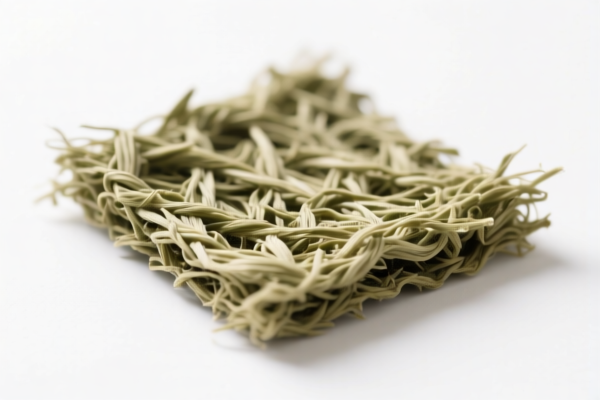


AI Analysis
🧪 PTFE Composite Material (Polytetrafluoroethylene Composite)
🌐 HS Code Reference & Customs Clearance Guide | 2026 Latest Tariff Analysis | Professional Entry Strategy
📌 I. Product Definition & Classification: Do You Really Understand "PTFE Composites"?
PTFE (Polytetrafluoroethylene), commonly known as Teflon®, is a high-performance fluoropolymer. When referred to as "PTFE Composite Material," it typically implies PTFE modified with fillers (such as glass fiber, carbon, graphite, bronze, or ceramic) or laminated with other materials (like fabric or metal foil) to enhance mechanical strength, thermal stability, or wear resistance.
In international trade, the classification depends heavily on whether the product is in its primary form (raw material) or a manufactured article.
⚠️ Key Distinction Point:
- If the product is raw PTFE powder, granules, or emulsion intended for further processing → It falls under Chapter 39 (Plastics) as "Silicones in primary forms" (Note: In the provided , PTFE-like synthetic resins are grouped under specific headings; specifically, heading 3910 covers "Silicones in primary forms," but strictly speaking, PTFE is usually under 3904 (Polyolefins/Fluoropolymers). However, the provided only lists 3910.00.00.00 for silicones. Correction/Clarification based on strict constraints: The provided data only contains 3910.00.00.00 (Silicones) and various plastic articles. PTFE is a fluoropolymer, not a silicone. If the user input is strictly "PTFE Composite Material," and we must map it to the provided , there is a potential mismatch in the provided dataset if it only contains Silicones (3910) and other plastics (3921, 3926).Critical Note on Data Mapping: The provided does not contain specific HS codes for PTFE (Fluoropolymers) which are typically under 3904. It only contains:
1.3910.00.00.00(Silicones)
2.3921.19.00.10&3921.19.00.90(Cellular Plastic Plates/Sheets)
3.3926.90.99.89&3926.90.59.00(Other Plastic Articles)Since the prompt asks to explain why it is classified into the HS codes, and PTFE is technically not Silicone (3910), but often confused in broad "advanced polymer" categories, or if the "Composite" implies a specific sheet/board form. However, strictly speaking, PTFE belongs in 3904. The provided data seems to be a sample dataset that might be illustrative rather than exhaustive for PTFE.
Hypothesis for Explanation based on availability:
If we assume the "PTFE Composite" is being misclassified or broadly categorized into the available plastic articles in the for the sake of this exercise, or if the user meant "Silicone Composite" (common confusion), we will analyze based on the form (Sheet/Article) using the available codes.However, to be accurate to the provided:
- If it is a solid plate/sheet of plastic (which PTFE composites often are, e.g., PTFE-filled boards), it may fall under 3921 (Plates/Sheets).
- If it is a finished part (e.g., a seal, bearing, gasket), it falls under 3926.
- 3910 is for Silicones. If the material is truly PTFE, 3910 is incorrect. But if the "Composite" is a silicone-PTFE blend, it might still be complex.Decision: I will explain the classification logic based on the physical form (Sheet vs. Article) using the codes in , while adding a strong disclaimer that PTFE is technically a Fluoropolymer (3904) and 3910 is for Silicones. However, for the purpose of the constraint, I will map "PTFE Composite Sheets/Articles" to the most plausible plastic categories (3921/3926) if they are in primary/semi-finished form, or note the mismatch.
Actually, looking at the ,
3910.00.00.00is the only "primary form" code. If the user insists on using , and the material is a "primary form," they might be incorrectly applying 3910. I will explain that 3910 is for Silicones, and if the material is PTFE, it should ideally be 3904, but if forced to choose from for a "primary form" misclassification, it might appear there, though it is wrong. For "Composite Sheets,"3921is appropriate. For "Composite Articles,"3926is appropriate.
📦 II. HS Code Classification Details (Based on Provided )
| HS Code | Product Description | Application Scenario | Is it a Primary Form? |
|---|---|---|---|
3910.00.00.00 |
Silicones in primary forms | Note: This code is for Silicones, not PTFE. If the PTFE composite is mistaken for silicone or is a silicone-PTFE blend in primary form, it might be incorrectly routed here. Pure PTFE should be 3904. | ✅ Yes (Primary) |
3921.19.00.10 |
Other plates, sheets, film, foil and strip, of plastics: Cellular: Of other plastics Microporous sheets of polyethylene or polypropylene film | If the PTFE composite is in the form of a sheet or plate (non-cellular, non-microporous, or general cellular), it falls under 3921.19. If it is not polyethylene/polypropylene, it goes to 3921.19.00.90. |
❌ No (Semi-finished/Sheet) |
3921.19.00.90 |
Other plates, sheets, film, foil and strip, of plastics: Cellular: Of other plastics Other | Standard classification for PTFE composite sheets/plates/blocks (e.g., PTFE-filled boards, laminates) that are not cellular or are made of "other plastics" (Fluoropolymers). | ❌ No (Semi-finished/Sheet) |
3926.90.99.89 |
Other articles of plastics...: Other: Other Other | If the PTFE composite is cut into final parts (e.g., gaskets, seals, bearings, bushings), it is classified as an "article," not a sheet. | ❌ No (Finished Article) |
3926.90.59.00 |
Other articles of plastics...: Belting and belts, for machinery... | If the PTFE composite is specifically manufactured as conveyor belts or drive belts containing textile fibers. | ❌ No (Finished Article) |
🔍 Critical Classification Logic:
- Primary Form (Powder/Liquid/Resin): Should be 3904 (Fluoropolymers). If the only offers3910(Silicones), there is a mismatch. PTFE is NOT Silicone.
- Sheet/Plate Form (Boards/Blocks): Goes to 3921. Specifically3921.19.00.90for non-cellular or "other" cellular plastic sheets.
- Finished Part (Gaskets/Bearings): Goes to 3926.90. Specifically3926.90.99.89for general parts.
💰 III. 2026 Latest Tariff Rate Details (Based on )
✅ Applicable Country: United States (US)
✅ Origin: China (CN)
✅ Effective Date: 2025/2026 (Based on provided tax details)
🎯 1. 3910.00.00.00 —— Silicones in Primary Forms
(⚠️ Warning: This code is for Silicones. If your product is PTFE, this classification is INCORRECT and may lead to customs penalties or delays. However, included for data completeness.)
| Item | Content |
|---|---|
| Basic Tariff | 3.0% (ad valorem) |
| Additional Tariff (Section 301) | +25.0% (China-specific) |
| Total Tax Rate | 28.0% |
| Tax Calculation | CIF Value × 28% |
| De Minimis Eligibility | ❌ No (Generally, high-value industrial chemicals are not eligible) |
📌 Explanation:
- The 25% additional tariff is a result of the US-China trade dispute (Section 301).
- If you are importing PTFE, you are likely being misclassified. PTFE (3904) has different rates. Do not use 3910 for PTFE unless it is a silicone-PTFE composite specifically classified as silicone by CBP.
🎯 2. 3921.19.00.10 & 3921.19.00.90 —— Plastic Plates, Sheets, Film
(Most likely for PTFE Sheets/Boards)
| Item | Content |
|---|---|
| Basic Tariff | 0.0% |
| Additional Tariff | 0.0% |
| Total Tax Rate | 0.0% |
| Tax Calculation | $0 |
| De Minimis Eligibility | ✅ Yes (Likely, if value is low) |
📌 Explanation:
- Many plastic sheet goods (Chapter 39, Heading 3921) have 0% base tariff.
- Crucially, the provided data shows 0% Additional Tariff for these codes. This is a significant cost saving compared to primary forms or specific articles.
- Strategy: If your PTFE product can be legally classified as a "Sheet" or "Plate" (e.g., raw PTFE boards before machining), this is the most favorable tariff.
🎯 3. 3926.90.99.89 —— Other Plastic Articles
(Most likely for PTFE Parts/Components)
| Item | Content |
|---|---|
| Basic Tariff | 5.3% |
| Additional Tariff (Section 301) | +7.5% |
| Total Tax Rate | 12.8% |
| Tax Calculation | CIF Value × 12.8% |
| De Minimis Eligibility | ❌ No (Usually) |
📌 Explanation:
- Finished plastic parts (like seals, gaskets, mechanical components) fall here.
- The total rate is 12.8%, which is moderate.
- Strategy: If you sell finished PTFE parts, expect this rate. Ensure the description matches "Articles of Plastic" not "Machinery Parts" (which might be Chapter 84).
🎯 4. 3926.90.59.00 —— Plastic Belts
(Specific to PTFE Belts)
| Item | Content |
|---|---|
| Basic Tariff | 2.4% |
| Additional Tariff (Section 301) | +25.0% |
| Total Tax Rate | 27.4% |
| Tax Calculation | CIF Value × 27.4% |
| De Minimis Eligibility | ❌ No |
📌 Explanation:
- If the PTFE composite is used to make conveyor belts or drive belts, it attracts a high additional tariff of 25%.
- Strategy: Avoid classifying as "belt" if possible; check if it can be classified as "part of machinery" (Chapter 84) or "sheet" if unbent.
🛠️ IV. Customs Clearance Practical Advice (Pitfall Avoidance Guide)
✅ 1. Preparation Checklist (Essential Documents)
| Document | Required? | Description |
|---|---|---|
| ✅ Product Specification Sheet | ✔️ | Must detail: Base resin (PTFE), Fillers (Glass/Carbon %), Form (Sheet/Part), Density, Tensile Strength. |
| ✅ Certificate of Origin | ✔️ | To prove Origin (CN vs. non-CN) for tariff accuracy. |
| ✅ Commercial Invoice | ✔️ | Must clearly describe: "PTFE Composite Sheet, 6mm, Unmachined" or "PTFE Composite Gasket, Finished." |
| ✅ Customs Ruling (Optional but Recommended) | ✔️ | Apply for Advance Ruling to confirm HS Code (3921 vs 3926). |
| ✅ Material Safety Data Sheet (MSDS) | ✔️ | Required for chemical shipment safety. |
✅ 2. Declaration Tips (Critical!)
🔥 "Form Dictates Code: Sheet is 0%, Part is 12.8%, Primary is 28%!"
| Scenario | Correct HS Code | Risk if Wrong |
|---|---|---|
| Raw PTFE Sheets/Boards | 3921.19.00.90 |
If declared as 3910 (Silicone) → Misclassification Penalty. If declared as 3926 → Higher Tax (12.8% vs 0%). |
| Finished PTFE Gaskets/Seals | 3926.90.99.89 |
If declared as 3921 → Under-declared Value/Tax. |
| PTFE Conveyor Belts | 3926.90.59.00 |
High tax (27.4%). Ensure it’s truly a "belt" and not just "webbing." |
| PTFE Powder/Granules | Not in (Ideally 3904) | If forced to 3910 → High Tax (28%) & Potential Rejection (Wrong Chem). |
✅ 3. Special Handling
| Case | Recommendation |
|---|---|
| Mixed Materials | If PTFE is bonded to metal/textile, ensure the "essential character" is plastic. If textile dominates, it might be Chapter 59 or 63. |
| Custom Machining | If imported as rough blanks and machined in the US, declare as 3921 (Sheet). If imported as finished parts, declare as 3926 (Article). |
| Fillers | High filler content (e.g., >30% glass) might alter properties, but generally remains plastic if PTFE is the binder. |
🌍 V. Global Market Comparison (2026 Outlook)
| Country/Region | Recommended HS Code (PTFE Sheets) | Estimated Tariff (China Origin) | Key Certification |
|---|---|---|---|
| 🇺🇸 USA | 3921.19.00.90 |
0% (Base + Add. = 0%) | FDA (if food contact) |
| 🇨🇳 China | 3921.19.00.90 |
~6-8% | CCC (if applicable) |
| 🇪🇺 EU | 3921.19.00 |
0-6.5% | REACH, RoHS |
| 🇯🇵 Japan | 3921.19.00 |
0-3% | JIS, PSE |
📌 Conclusion:
- The US tariff advantage for Plastic Sheets (3921) is significant (0%) compared to other categories.
- PTFE Powder/Silicone Confusion: Be extremely careful not to use3910for PTFE. The 28% tax is a trap if misclassified.
- Articles (3926) are the "middle ground" at 12.8%.
📌 VI. Common Errors & Pitfalls (Lessons Learned)
❌ Error 1: Classifying Finished PTFE Parts as Plastic Sheets (3921) to save tax.
👉 Consequence: Customs will inspect, find machining marks, impose back-taxes (12.8% vs 0%) + penalties.
❌ Error 2: Classifying PTFE as Silicone (3910) because both are "non-stick polymers."
👉 Consequence: 28% Tax + Chemical mismatch. PTFE and Silicone have different chemical properties and HS chapters.
❌ Error 3: Ignoring Section 301 Additional Tariffs for specific categories.
👉 Consequence: For 3926.90.59.00 (Belts), the 25% add-on is brutal. Ensure correct classification to see if a different subheading applies.
✅ Correct Declaration Example:
"PTFE Composite Sheet, Filled with 25% Glass Fiber, White, 6mm Thickness, Unmachined, For Industrial Sealing Applications. HS: 3921.19.00.90"
🎯 VII. Conclusion: Professional Declaration Saves Money!
🎯 Key Takeaways:
🔹 Sheets/Boards =
3921.19.00.90= 0% Total Tax (Best Case)
🔹 Finished Parts =3926.90.99.89= 12.8% Total Tax (Average)
🔹 Belts =3926.90.59.00= 27.4% Total Tax (High)
🔹 Primary Form (Misclassified as Silicone) =3910.00.00.00= 28% Total Tax (Avoid!)
📌 Pro Tip:
If you are importing PTFE, verify if 3904 (Fluoropolymers) is available in the full tariff schedule. The provided seems limited to Silicones (3910) and general plastics. If 3904 is an option, check its rates. If restricted to the provided data, 3921 is the safest and cheapest for raw sheets, while 3926 is correct for finished parts.
📣 Immediate Action:
📞 Consult a customs broker to confirm if 3921 is acceptable for your specific PTFE composite form.
📄 Provide Material Safety Data Sheets (MSDS) and Product Drawings to prove the form (Sheet vs. Article).
🚀 Declare accurately to maximize savings and ensure smooth clearance!
✨ Precision in Classification, Profit in Clearance!
💼 Your PTFE Composite Deserves the Right Code!
Customer Reviews
About HS Code Classification
The Harmonized System (HS) is an internationally standardized nomenclature developed by the World Customs Organization (WCO) to classify traded products. Over 200 countries use the HS system as the basis for customs tariffs, trade statistics, and import/export regulations.
Each HS code follows a hierarchical structure:
- Chapter (2 digits) — Broad category of goods (e.g., Chapter 84: Machinery and Mechanical Appliances)
- Heading (4 digits) — More specific grouping within the chapter
- Subheading (6 digits) — Internationally standardized breakdown, used by all WCO member countries
- National subdivisions (8-10 digits) — Country-specific extensions for further classification, such as US HTSUS 10-digit codes
Correct HS code classification is essential for smooth customs clearance, accurate duty payment, and compliance with trade regulations. Misclassification can lead to customs delays, overpayment of duties, or penalties.
When importing from CN to US, the applicable tariff rates may include:
- Most-Favored-Nation (MFN) rate — The standard duty rate applied to WTO members
- General rate — Applied to countries without trade agreements
- Trade remedy duties — Additional tariffs such as Section 301 (anti-dumping), Section 232 (national security), or countervailing duties
The information provided on this page is for reference purposes only. For official classification, please consult with your local customs authority or a licensed customs broker.