PTFE Filler Particles
CN → US| HS Code | Tariff Rate | Origin | Destination | Doc |
|---|---|---|---|---|
| 3914006000 | 38.9% | CN | US | Official Doc |
| 3904610010 | 40.8% | CN | US | Official Doc |
| 3926909989 | 22.8% | CN | US | Official Doc |
| 3914002000 | 35.0% | CN | US | Official Doc |
| 3904610090 | 40.8% | CN | US | Official Doc |
Product Images
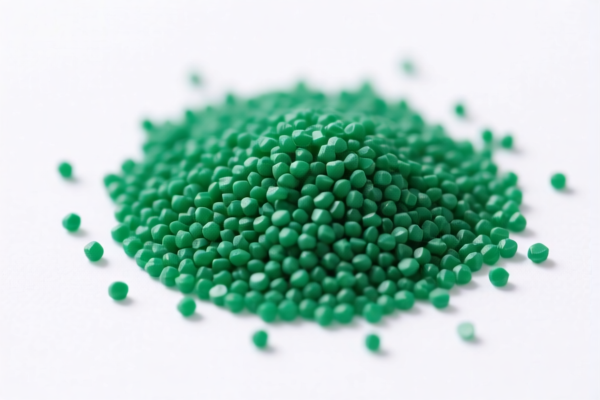
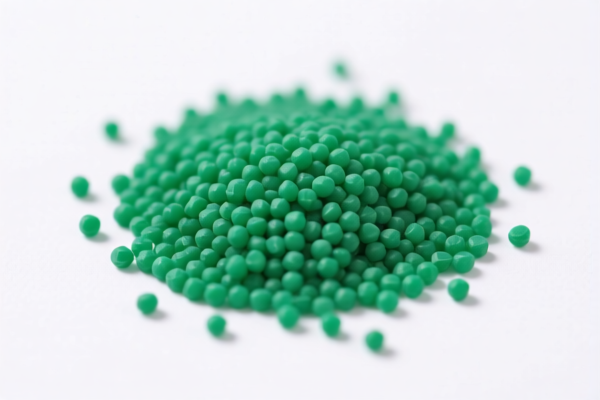
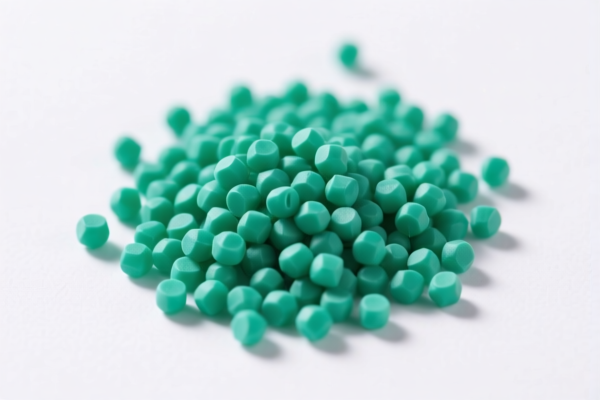
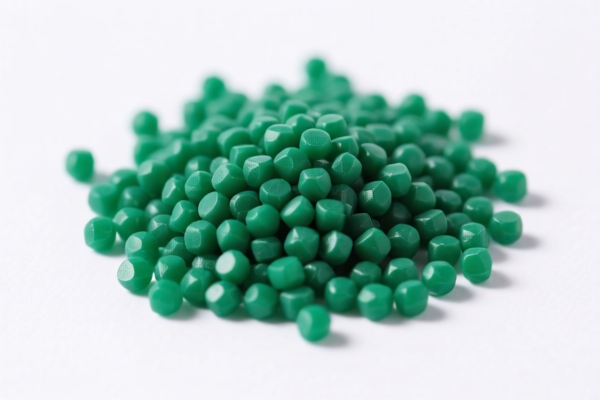
AI Analysis
🔬 PTFE Filler Particles (Polytetrafluoroethylene Injection Molding Granules)
🌐 HS Code Reference & Customs Clearance Guide | 2026 Latest Tariff Analysis | Professional Import Strategy
📌 I. Product Definition & Classification: Do You Really Understand "PTFE Granules"?
PTFE (Polytetrafluoroethylene) is a high-performance fluoropolymer known for its exceptional chemical resistance, low friction, and high-temperature stability. In international trade, PTFE Injection Molding Granules are classified based on their physical form (granular/powder = primary form) and specific chemical structure.
According to the provided data, these granules fall under Chapter 39 (Plastics and Articles Thereof), specifically focusing on Fluoropolymers (Headings 3904 and 3914).
⚠️ Key Distinction Point:
- If the material is specifically Polytetrafluoroethylene (PTFE) in primary form (granules/powder) → 3904.61 or 3914.00
- If the classification relies on it being a generic "plastic part" or broad polymer category without specific fluoropolymer designation → 3926.90 (Less common for raw granules)
- Critical Note: Import duties are heavily impacted by Section 301 Tariffs and Section 122 Tariffs for US-origin imports from China.
📦 II. HS Code Classification Details (2026 Latest Tariff Authority Cross-Reference)
Based on the provided data, here are the five possible HS Code classifications for PTFE Filler Particles / Injection Molding Granules:
| HS Code | Product Description | Key Attributes | Total Tax Rate |
|---|---|---|---|
| 3914.00.60.00 | PTFE Injection Molding Granules | Material: PTFE; Form: Granules; Fits "Primary Form/Raw Material" characteristics | 38.9% |
| 3904.61.00.10 | PTFE Injection Molding Granules | Material: PTFE; Form: Granules; Fully complies with "Granular Physical Form" requirements | 40.8% |
| 3926.90.99.89 | PTFE Injection Molding Granules | Material: Plastic; Form: Granules; Fits "Plastic Articles" category (Broader) | 22.8% |
| 3914.00.20.00 | PTFE Injection Grade Granules | Material: Polymer; Form: Granules; Fits "Polymer Primary Form" description | 35.0% |
| 3904.61.00.90 | PTFE Injection Grade Granules | Material: PTFE; Form: Granules; Fits "Other" sub-category material requirements | 40.8% |
🔍 Critical Insight:
- 3904.61 is the most precise HS heading for Fluoropolymers in primary forms.
- 3914.00 also covers Fluoropolymers but may vary by specific sub-code nuances (e.g., 60.00 vs 20.00).
- 3926.90 is likely a misclassification risk for raw granules, as it typically covers "Other Articles of Plastics" (finished parts), not raw materials. However, the data lists it with a lower tax rate (22.8%), which might tempt incorrect classification. Caution: Customs may reject this if it doesn't fit the "finished article" definition.
💰 III. 2026 Latest Tariff Rate Breakdown (Detailed Tax Clauses)
✅ Applicable Country: United States (US)
✅ Origin: China (CN)
✅ Effective Time: Current rates (2025-2026)
🎯 1. 3914.00.60.00 —— PTFE Granules (Primary Form)
| Item | Detail |
|---|---|
| Base Tariff | 3.9% |
| Section 301 Tariff | +25.0% |
| Section 122 Tariff | +10.0% |
| Total Tax Rate | 38.9% |
| Tax Calculation | CIF Value × 38.9% |
| De Minimis Exemption | ❌ Not Eligible (High tax rate prevents $800 exemption) |
| Legal Basis Path | HTSUS: 3914.00.60.00 → USITC Section 301 → Customs Service Section 122 |
📌 Explanation:
- This code captures PTFE as a fluoropolymer.
- The 25% Section 301 tariff is standard for Chinese-origin plastics.
- The 10% Section 122 tariff applies to certain strategic materials.
- Total: 38.9%. This is a high-cost classification but legally accurate for PTFE granules.
🎯 2. 3904.61.00.10 —— PTFE Granules (Granular Form Specific)
| Item | Detail |
|---|---|
| Base Tariff | 5.8% |
| Section 301 Tariff | +25.0% |
| Section 122 Tariff | +10.0% |
| Total Tax Rate | 40.8% |
| Tax Calculation | CIF Value × 40.8% |
| De Minimis Exemption | ❌ Not Eligible |
| Legal Basis Path | HTSUS: 3904.61.00.10 → USITC Section 301 → Customs Service Section 122 |
📌 Explanation:
- 3904.61 specifically refers to Polytetrafluoroethylene in primary forms.
- The base tariff (5.8%) is higher than 3914.00.60.00, leading to a higher total tax (40.8%).
- This is the most technically accurate code for PTFE granules per Harmonized System Explanatory Notes.
🎯 3. 3926.90.99.89 —— Plastic Articles (General)
| Item | Detail |
|---|---|
| Base Tariff | 5.3% |
| Section 301 Tariff | +7.5% |
| Section 122 Tariff | +10.0% |
| Total Tax Rate | 22.8% |
| Tax Calculation | CIF Value × 22.8% |
| De Minimis Exemption | ❌ Not Eligible |
| Legal Basis Path | HTSUS: 3926.90.99.89 → USITC Section 301 → Customs Service Section 122 |
📌 Warning:
- This code is for "Other articles of plastics" (finished goods, not raw materials).
- Using this for raw granules is a high-risk misclassification.
- While the tax is lower (22.8%), Customs may audit and reassess to 3904.61 or 3914.00, leading to penalties + back taxes.
- Recommendation: Avoid unless the product is definitively a finished plastic part, not raw granules.
🎯 4. 3914.00.20.00 —— Polymer Granules (Injection Grade)
| Item | Detail |
|---|---|
| Base Tariff | 0.0% |
| Section 301 Tariff | +25.0% |
| Section 122 Tariff | +10.0% |
| Total Tax Rate | 35.0% |
| Tax Calculation | CIF Value × 35.0% |
| De Minimis Exemption | ❌ Not Eligible |
| Legal Basis Path | HTSUS: 3914.00.20.00 → USITC Section 301 → Customs Service Section 122 |
📌 Explanation:
- This code has a 0% base tariff, making it attractive.
- However, it must strictly meet the "Polymer Primary Form" definition.
- Total Tax: 35.0%. This is lower than 3904.61 but higher than 3926.90.
- Risk: If Customs determines it's specifically PTFE (fluoropolymer), they may force reclassification to 3904.61.
🎯 5. 3904.61.00.90 —— PTFE Granules (Other)
| Item | Detail |
|---|---|
| Base Tariff | 5.8% |
| Section 301 Tariff | +25.0% |
| Section 122 Tariff | +10.0% |
| Total Tax Rate | 40.8% |
| Tax Calculation | CIF Value × 40.8% |
| De Minimis Exemption | ❌ Not Eligible |
| Legal Basis Path | HTSUS: 3904.61.00.90 → USITC Section 301 → Customs Service Section 122 |
📌 Explanation:
- This is the "Other" sub-category under 3904.61.
- Identical tax rate to3904.61.00.10(40.8%).
- Use only if3904.61.00.10does not specifically match your product's detailed specifications.
🛠️ IV. Customs Clearance Practical Advice (Avoid Pitfalls)
✅ 1. Required Documentation Checklist (Non-negotiable)
| Document | Mandatory? | Description |
|---|---|---|
| ✅ Product Specification Sheet | ✔️ | Must specify: PTFE, Granular Form, Injection Molding Grade |
| ✅ Chemical Composition Analysis | ✔️ | Proof that material is ≥99% PTFE (to justify HS 3904/3914) |
| ✅ HS Code Justification Letter | ✔️ | Explain why it’s not 3926.90 (raw vs. finished) |
| ✅ Commercial Invoice | ✔️ | Must state: "PTFE Granules for Injection Molding, HS Code XXXX" |
| ✅ Packing List | ✔️ | Detail weight, quantity, and packaging type |
| ✅ Origin Certificate | ✔️ | To prove CN origin (for 301/122 tariff application) |
✅ 2. Declaration Strategy (Key Mantras)
🔥 “PTFE is Fluoropolymer, Not General Plastic. Granules are Raw Material, Not Finished Part.”
| Scenario | Correct Declaration | Wrong Practice |
|---|---|---|
| Raw PTFE Granules | 3904.61.00.10 or 3914.00.60.00 |
Misclassify as 3926.90 → Audit Risk |
| PTFE Powder | 3904.61.00.10 |
Misclassify as 3901.xx (Polymers) → Incorrect Tax |
| Finished PTFE Part | 3926.90.99.89 |
Declare as Granules → Underpayment Penalty |
| Mix of PTFE & Fillers | 3904.61.00.10 |
Declare as "Plastic Mix" → Higher Tax Risk |
✅ 3. Special Handling Tips
| Scenario | Recommendation |
|---|---|
| High-Volume Imports | Apply for Advance Ruling (Binding Ruling) from CBP to confirm HS Code (3904.61 vs 3914.00) |
| Section 301 Exemption | ❌ No Exemption for PTFE from China. Budget for full tax. |
| Misclassification Risk | If Customs challenges 3926.90, be prepared to pay back taxes + interest (up to 40.8%). |
| Documentation Clarity | Clearly state "Primary Form" in invoices to justify 3904/3914. |
🌍 V. Global Market Comparison (2026 Latest)
| Country/Region | Recommended HS Code | Base Tariff | Total Tariff (China Origin) | Remarks |
|---|---|---|---|---|
| 🇺🇸 USA | 3904.61.00.10 |
5.8% | 40.8% | High due to 301+122 tariffs |
| 🇨🇳 China | 3904.61.00.10 |
5.8% | 5.8% | No additional tariffs |
| 🇪🇺 EU | 3904.61.00 |
6.5% | 6.5% | No Section 301 equivalent |
| 🇬🇧 UK | 3904.61.00 |
6.5% | 6.5% | Post-Brexit independent tariffs |
| 🇯🇵 Japan | 3904.61.00 |
6.0% | 6.0% | Low tariff, high quality standards |
📌 Conclusion:
- USA has the highest effective tariff (40.8%) due to geopolitical trade policies.
- China, EU, Japan have significantly lower base tariffs.
- US Importers must factor in 40.8% tax or explore alternative sourcing (e.g., Southeast Asia) if eligible.
📌 VI. Common Errors & Pitfalls (Lessons Learned)
❌ Error 1: Declaring PTFE Granules as 3926.90.99.89 to save 18% tax
👉 Consequence: CBP reclassifies to 3904.61 → Back taxes + 25% penalty.
❌ Error 2: Mixing "PTFE" and "General Polymer" in one shipment
👉 Consequence: CBP audits entire shipment → Delays + Higher Risk.
❌ Error 3: Not specifying "Primary Form" in description
👉 Consequence: CBP assumes finished goods → Incorrect Tariff Application.
❌ Error 4: Ignoring Section 122 Tariffs
👉 Consequence: Underpayment of 10% → Audits and Fines.
✅ Correct Approach:
"PTFE (Polytetrafluoroethylene) Injection Molding Granules, Primary Form, HS Code 3904.61.00.10, Origin: China"
🎯 VII. Conclusion: Professional Classification Saves Money!
🎯 Remember the Mantra:
🔹 "PTFE is Fluoropolymer, Not Plastic."
🔹 "Granules are Raw, Not Finished."
🔹 "US Tariffs are High, Plan Ahead."
🔹 "Misclassification Costs More Than Tax."
📌 Pro Tip:
If your PTFE granules are exclusively for injection molding, ensure the specification sheet highlights "Injection Molding Grade" to support classification under 3904.61.00.10 or 3914.00.60.00.
📣 Immediate Action:
📞 Consult a Licensed Customs Broker
📄 Prepare Chemical Composition Certificate
🚀 Apply for CBP Advance Ruling to lock in HS Code before shipment!
✨ Professional Classification Starts with Precision!
💼 Every Percent of Tax Matters in High-Value Polymer Imports!
Customer Reviews
About HS Code Classification
The Harmonized System (HS) is an internationally standardized nomenclature developed by the World Customs Organization (WCO) to classify traded products. Over 200 countries use the HS system as the basis for customs tariffs, trade statistics, and import/export regulations.
Each HS code follows a hierarchical structure:
- Chapter (2 digits) — Broad category of goods (e.g., Chapter 84: Machinery and Mechanical Appliances)
- Heading (4 digits) — More specific grouping within the chapter
- Subheading (6 digits) — Internationally standardized breakdown, used by all WCO member countries
- National subdivisions (8-10 digits) — Country-specific extensions for further classification, such as US HTSUS 10-digit codes
Correct HS code classification is essential for smooth customs clearance, accurate duty payment, and compliance with trade regulations. Misclassification can lead to customs delays, overpayment of duties, or penalties.
When importing from CN to US, the applicable tariff rates may include:
- Most-Favored-Nation (MFN) rate — The standard duty rate applied to WTO members
- General rate — Applied to countries without trade agreements
- Trade remedy duties — Additional tariffs such as Section 301 (anti-dumping), Section 232 (national security), or countervailing duties
The information provided on this page is for reference purposes only. For official classification, please consult with your local customs authority or a licensed customs broker.