PTFE Tube
CN → US| HS Code | Tariff Rate | Origin | Destination | Doc |
|---|---|---|---|---|
| 9024900080 | 35.0% | CN | US | Official Doc |
| 9024900040 | 35.0% | CN | US | Official Doc |
Product Images
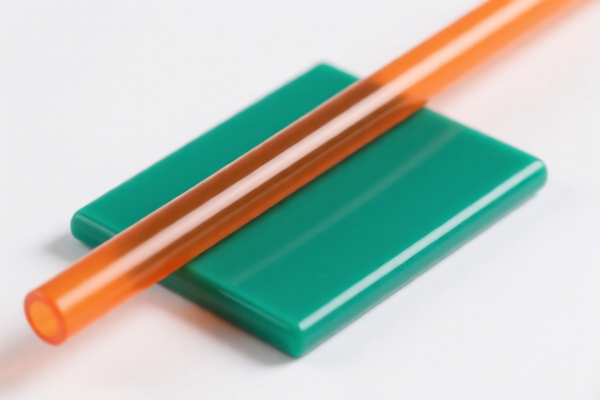
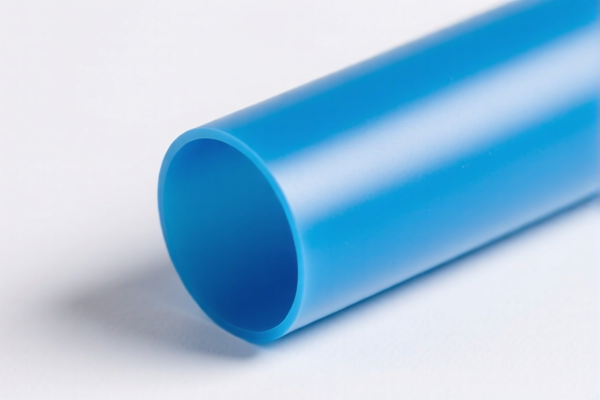
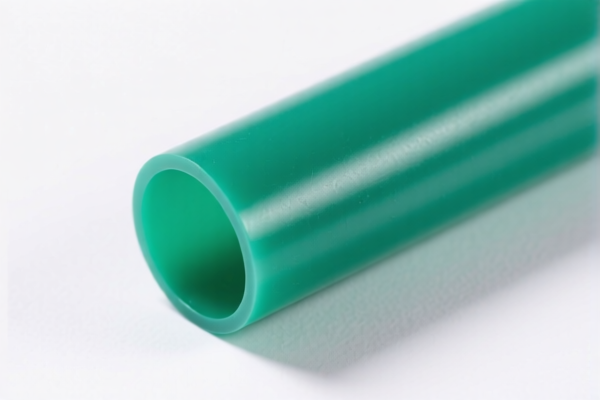

AI Analysis
🧪 PTFE Tube (Polytetrafluoroethylene Tubing)
🌐 HS Code Reference & Customs Clearance Guide | 2026 Latest Tariff Analysis | Professional-Level Compliance Strategy
📌 I. Product Definition & Classification: Do You Really Know "PTFE Tube"?
PTFE (Polytetrafluoroethylene), commonly known by the trade name Teflon®, is a synthetic fluoropolymer. When formed into tubes, it is a critical material in industries demanding extreme chemical resistance, high thermal stability, and low friction. In international trade, its classification depends entirely on its physical form and intended use, but it generally falls under plastics.
Key Distinctions: * Plastic Tubing (General): Pure PTFE tubes used for general fluid transport, chemical lines, or instrumentation are classified under Chapter 39 (Plastics and Articles Thereof). * Parts of Machines/Instruments: If the tube is specifically designed as a spare part for a specific machine (e.g., a specific gas chromatography machine or hardness tester) and is clearly identifiable as such, it might fall under the parts chapter of that machine (e.g., Chapter 90). However, for general "PTFE Tubes," Chapter 39 is the primary classification.
⚠️ Critical Distinction Point: * If it is a general-purpose flexible or rigid tube → Classify under Chapter 39 (e.g., 3917.21/3917.29). * If it is a specific spare part for a specific apparatus (e.g., a specialized probe for a hardness tester) → Potentially Classify under Chapter 90 (e.g., 9024.90). * Note on User Input: The user input was "PTFE Tube." Without specific context linking it to a machine like a hardness tester, the standard classification is Chapter 39. However, since the provided
<DATA>only lists HS Codes 9024.90, we must address why a PTFE tube might be classified there if it is a specific accessory for the machines described in the data.
📦 II. HS Code Classification Details (Based on Provided DATA)
The provided <DATA> contains only HS Codes related to Parts and Accessories for Mechanical Property Testing Machines. This implies that the "PTFE Tube" in question is likely a specialized component for a hardness, strength, or compressibility tester (e.g., a fluid line in a hydraulic compression tester or a sample holder component).
| HS Code | Product Description | Applicability for PTFE Tube | Why it fits the DATA |
|---|---|---|---|
9024.90.00.80 |
Parts and accessories of machines/appliances for testing hardness, strength, etc. (Other) | If the tube is a generic part for such testing machines (e.g., hydraulic lines, cooling pipes for the tester). | It is a part of a testing machine. |
9024.90.00.40 |
Parts and accessories of machines/appliances for testing metals | If the PTFE tube is specifically used in metal testing equipment (e.g., lubrication lines, cooling systems for metal presses). | Specifically for metal testing machines. |
🔍 Important Warning: * A standard PTFE tube sold for plumbing or general chemistry lab use should NOT be classified under 9024.90. It should be under 3917.21 (Tubes, pipes, and hoses, rigid, of polymers of ethylene) or 3917.29 (Other plastics). * The HS Codes in the
<DATA>are highly specific to testing equipment parts. If your PTFE tube is not a part of a hardness/strength tester, these HS codes are incorrect and will lead to misclassification penalties. * Assumption: This guide assumes the PTFE tube is a spare part/accessory for a mechanical testing machine (e.g., a universal testing machine, hardness tester).
💰 III. 2026 Latest Tariff Rate Details (Based on Provided DATA)
✅ Applicable Country: USA (US)
✅ Origin: China (CN)
✅ Effective Time: Based on current USITC schedules (2025/2026)
🎯 1. 9024.90.00.80 – Parts and Accessories (Other)
| Item | Content |
|---|---|
| Description | Parts and accessories of machines for testing mechanical properties (e.g., metals, wood, textiles, paper, plastics). |
| Base Tariff | 0.0% (ad valorem) |
| Additional Tariff (Section 301) | +25.0% |
| Total Tariff | 25.0% |
| Tax Detail | 基础关税: 0.0%, 加征关税: 25.0% |
| Legal Basis | USITC Section 301 Duties on Chinese Imports |
📌 Explanation: * The base duty for parts of measuring/controlling/testing instruments is often 0%. * However, due to US-China trade tensions, these goods are subject to a 25% additional tariff under Section 301. * Total Cost Impact: For every $10,000 CIF value, you pay $2,500 in additional duties.
🎯 2. 9024.90.00.40 – Parts for Testing Metals
| Item | Content |
|---|---|
| Description | Parts and accessories of machines/appliances for testing metals. |
| Base Tariff | 0.0% (ad valorem) |
| Additional Tariff (Section 301) | +25.0% |
| Total Tariff | 25.0% |
| Tax Detail | 基础关税: 0.0%, 加征关税: 25.0% |
| Legal Basis | USITC Section 301 Duties on Chinese Imports |
📌 Explanation: * Similar to the "Other" category, the base duty is 0%. * The 25% Section 301 tariff applies because these are Chinese-origin goods classified under Chapter 90. * Total Cost Impact: For every $10,000 CIF value, you pay $2,500 in additional duties.
⚠️ Key Note: Both HS codes in the
<DATA>have the same total tax rate of 25.0%. The distinction is only for customs statistical and regulatory purposes, not for tax savings in this specific data set.
🛠️ IV. Customs Clearance Practical Advice (Battle-Tested Pitfall Guide)
✅ 1. Preparation Checklist (Must-Have)
| Document | Required | Reason |
|---|---|---|
| ✅ Product Specification | ✔️ | Must state: "PTFE Tube," "Material: PTFE," "Dimensions," "Use: Part for Testing Machine." |
| ✅ Technical Drawing | ✔️ | Show if it is a standard tube or a custom-shaped part for a specific machine. |
| ✅ Commercial Invoice | ✔️ | Clearly describe as "Parts for Mechanical Testing Machine" not "Plastic Tube." |
| ✅ Packing List | ✔️ | List items as parts/accessories, not raw materials. |
| ✅ Proof of Use | ✔️ | If possible, provide a letter from the end-user stating these tubes are used in their testing equipment. |
✅ 2. Declaration Tips (Key Mnemonic)
🔥 “Don’t Call it Plastic, Call it Part! Be Specific, Avoid the Art.”
| Scenario | Correct Declaration | Wrong Declaration |
|---|---|---|
| PTFE Tube for Hardness Tester | Parts for Mechanical Testing Machine, Model XYZ, PTFE Material |
PTFE Plastic Tube |
| Standard PTFE Tubing (General Use) | NOT 9024.90 → Use 3917.21 or 3917.29 |
9024.90.00.80 (Misclassification) |
| Tube with Fittings Attached | Declare as a whole assembly if it’s a single unit part. | Separate declaration (may increase scrutiny). |
✅ 3. Special Cases
| Case | Advice |
|---|---|
| Is it really for a testing machine? | If no, use Chapter 39 (3917.29). Using 9024.90 for general tubes is smuggling/misdeclaration risk. |
| Custom Shaped PTFE | If machined specifically for one machine, emphasize "Custom Part for [Machine Name]." |
| General PTFE Tubing | If sold in rolls or standard lengths for general lab use, do not use 9024.90. Use 3917.29.00.90 (Other plastic tubes). |
🌍 V. Global Market Comparison (2026 Latest)
| Country/Region | Recommended HS Code | Tariff | Certification | Notes |
|---|---|---|---|---|
| 🇺🇸 USA | 9024.90.00.80 or 40 |
25% (Section 301) | None specific | High risk of misclassification if not a true part. |
| 🇨🇳 China | 9024.90.00 |
0% (Import) | N/A | No additional tariffs. |
| 🇪🇺 EU | 9024.80 (Parts) |
0% | CE (if machinery) | Lower tariffs, strict conformity. |
| 🇯🇵 Japan | 9024.80 |
0% | PSE (if electrical) | No additional tariffs. |
📌 Conclusion: * The 25% US tariff is the major cost driver. * Misclassification is the biggest risk. If you import general PTFE tubing under
9024.90, US Customs may reclassify it to Chapter 39, which has different rates (often lower base, but still subject to 301 if Chinese), and issue penalties.
📌 VI. Common Errors & Pitfalls (Blood-Teaching Lessons)
❌ Error 1: Declaring general PTFE tubing as "Parts for Testing Machine" to hide the real nature. 👉 Consequence: Customs audit → Revaluation + Penalties + Delay.
❌ Error 2: Ignoring the "Section 301" 25% tariff. 👉 Consequence: Unexpected $2,500 cost per $10k shipment.
❌ Error 3: Using 9024.90.00.40 (Metals) for tubes used in wood/plastic testing.
👉 Consequence: Incorrect subheading, potential audit flag. Use .80 (Other) if not specific to metals.
❌ Error 4: Not providing enough detail on the invoice. 👉 Consequence: CBP issues a "Request for Information" (RFI) → Shipment held at port.
✅ Correct Practice:
"PTFE Tubing, Custom-Machined Part for Hydraulic System of Universal Testing Machine, Model ABC, Chinese Origin"
🎯 VII. Conclusion: Precise Classification Saves Money!
🎯 Remember the Rule:
🔹 "If it's a part of a testing machine, use 9024.90 (25% Tariff). If it's general plastic tubing, use 3917 (Varies). Do not mix them!"
🔹 "The 25% tariff is unavoidable for Chinese origin under 9024. Be prepared for the cost!"
📌 Pro Tip: If your PTFE tubes are not specifically for testing machines, DO NOT USE THE HS CODES IN THE DATA. They are only for parts of testing machines. Use 3917.29.00.90 for general PTFE tubes.
📣 Immediate Action:
📞 Verify if your PTFE tube is a custom part for a testing machine. 📄 If yes: Use
9024.90.00.80or9024.90.00.40. 📄 If no: Use3917.29.00.90(or similar Chapter 39 code).
✨ Professional Customs Clearance Starts with Accurate Classification!
💼 Don't Let Misclassification Cost You 25% More!
Customer Reviews
About HS Code Classification
The Harmonized System (HS) is an internationally standardized nomenclature developed by the World Customs Organization (WCO) to classify traded products. Over 200 countries use the HS system as the basis for customs tariffs, trade statistics, and import/export regulations.
Each HS code follows a hierarchical structure:
- Chapter (2 digits) — Broad category of goods (e.g., Chapter 84: Machinery and Mechanical Appliances)
- Heading (4 digits) — More specific grouping within the chapter
- Subheading (6 digits) — Internationally standardized breakdown, used by all WCO member countries
- National subdivisions (8-10 digits) — Country-specific extensions for further classification, such as US HTSUS 10-digit codes
Correct HS code classification is essential for smooth customs clearance, accurate duty payment, and compliance with trade regulations. Misclassification can lead to customs delays, overpayment of duties, or penalties.
When importing from CN to US, the applicable tariff rates may include:
- Most-Favored-Nation (MFN) rate — The standard duty rate applied to WTO members
- General rate — Applied to countries without trade agreements
- Trade remedy duties — Additional tariffs such as Section 301 (anti-dumping), Section 232 (national security), or countervailing duties
The information provided on this page is for reference purposes only. For official classification, please consult with your local customs authority or a licensed customs broker.