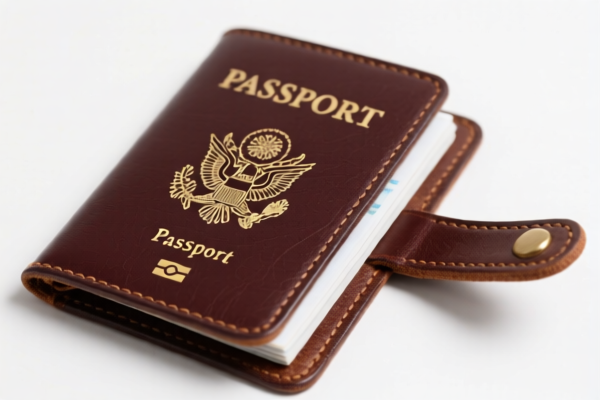
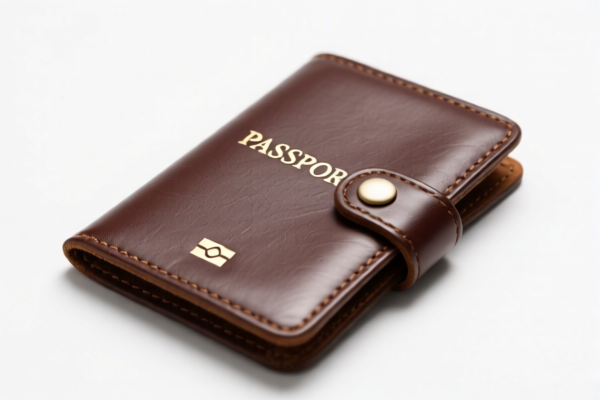
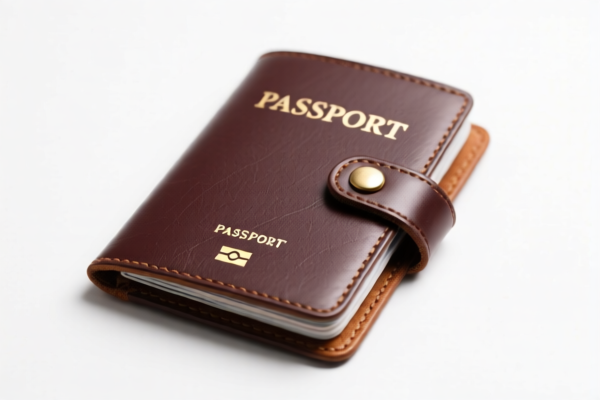
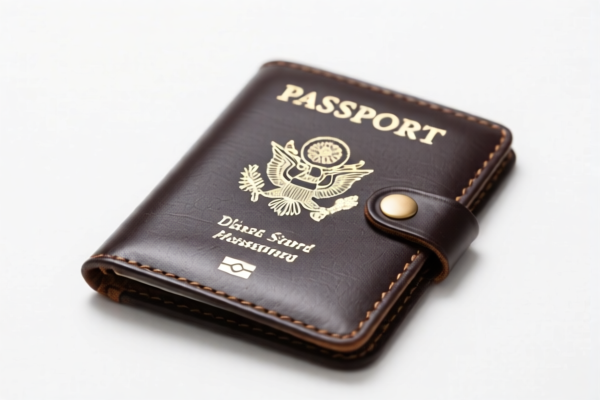
PU Leather Passport Holder
CN → USProduct Images
AI Analysis
🛂 PU Leather Passport Holder (Travel Document Organizer)
🌐 HS Code Reference & Customs Clearance Guide | 2026 Latest Tariff Analysis | Professional Compliance Strategy
📌 I. Product Definition & Classification: What Exactly is a "PU Leather" Holder?
A PU (Polyurethane) Leather Passport Holder is an accessory designed to hold passports, visas, boarding passes, and credit cards. Despite the name "Leather," it is not genuine animal leather.
In international trade, the distinction between Genuine Leather and Synthetic Leather (PU/PVC) is critical for HS Code determination:
- PU Leather (Polyurethane): A synthetic material made by coating fabric or paper with polyurethane. It feels like leather but lacks animal origin.
- Classification Logic: Generally classified under Chapter 39 (Plastics) as articles of plastic, OR Chapter 42 (Articles of Leather) only if it meets specific criteria for imitation leather in some jurisdictions. However, for most major markets (including the US and EU), synthetic leather travel accessories are primarily classified under Chapter 39.
- Genuine Leather: Made from real animal hide.
- Classification Logic: Classified under Chapter 42 (Articles of Leather).
⚠️ Critical Distinction:
- If the product is 100% PU Leather (synthetic) → Chapter 39 (Plastics).
- If the product is Genuine Leather → Chapter 42 (Leather Goods).
- Misclassification risk: Declaring synthetic leather as "Genuine Leather" (Chapter 42) when it is actually Chapter 39 can lead to reclassification, penalties, or duty evasion accusations if duties differ significantly.
📦 II. HS Code Classification Details (2026 Latest Tariff Authority)
| HS Code | Product Description | Applicable Scenario | Material Type | Duty Implication |
|---|---|---|---|---|
3926.90.50.00 |
Other articles of plastics and articles of other materials of heading 3901 to 3914 (e.g., passport holders, wallets, cases) | Most common for PU/PVC leather goods | ✅ Synthetic (Plastic-based) | Lower Base Duty (often 0-5%) |
4202.31.20.00 |
Articles of leather or composition leather, with outer surface of leather or leather board (e.g., wallets, billfolds, passport covers) | Only if made from genuine animal leather | ❌ Not for PU | Higher Base Duty (often 5-10%) |
4202.92.90.00 |
Trunk,旅行箱, briefcases, etc., with outer surface of plastic sheeting | If large enough to be considered "travel accessories" rather than personal articles | ✅ Synthetic | Varies |
9505.90.00.00 |
Festive, carnival or other entertainment articles (e.g., novelty travel souvenirs) | If marketed as a joke item or decorative souvenir only | ✅ Synthetic | Varies |
🔍 Key Reminder:
- Most PU Passport Holders fall under3926.90.50.00in the US and many other regions because they are considered "Other articles of plastics."
- Do NOT use4202.31.20.00unless you have certificates of authenticity proving genuine animal leather content.
- If the product contains significant metal hardware (zippers, clasps) or textile linings, the classification may still be dominated by the outer material (PU).
💰 III. 2026 Latest Tariff Rate Details (Including Add-on Duties & Policy Surcharges)
✅ Applicable Country: United States (US)
✅ Country of Origin: China (CN)
✅ Effective Date: November 10, 2025 onwards (for subsequent imports)
🎯 1. 3926.90.50.00 —— Other articles of plastics (Standard PU Passport Holder)
| Item | Content |
|---|---|
| Base Tariff Rate | 0% (ad valorem) |
| USITC Section 301 Surcharge | +7.5% (if applicable under recent USITC rulings for certain plastic articles; Note: Check if specific subheadings are exempt. Many plastic accessories are now subject to 7.5% or 25% depending on precise composition.) |
| IEEPA Surcharge | +10% (Targeting China/HK products, effective Nov 10, 2025) |
| Total Tariff Rate | 17.5% (if 301 applies) or 10% (if exempt from 301) |
| Tax Calculation | CIF Value × 17.5% |
| De Minimis Eligibility | ❌ No (De Minimis exemption typically applies to < $800, but synthetic leather goods from China are often scrutinized) |
| Legal Path | IEEPA:9903.01.25 → USITC:3926.90.50.00 |
📌 Explanation:
- If the product is exempt from Section 301, the total rate is 10% (IEEPA only).
- If subject to Section 301, the total rate is 17.5% (7.5% 301 + 10% IEEPA).
- Verify with your broker: Some plastic accessories have been excluded from 301 duties. If excluded, you save 7.5%.
🎯 2. 4202.31.20.00 —— Genuine Leather Passport Holder (If misdeclared or actually genuine)
| Item | Content |
|---|---|
| Base Tariff Rate | 5% (ad valorem) |
| USITC Section 301 Surcharge | +25% (Most leather goods from China are subject to full 301 tariffs) |
| IEEPA Surcharge | +10% |
| Total Tariff Rate | 40% |
| Tax Calculation | CIF Value × 40% |
| De Minimis Eligibility | ❌ No |
📌 Warning:
- 40% is significantly higher than synthetic alternatives.
- If you declare PU leather as "Genuine Leather" to avoid higher duties on synthetic goods, you risk fraud penalties.
- Recommendation: Always declare accurately as synthetic if it is PU.
🛠️ IV. Customs Clearance Practical Advice (Real-World Pitfall Avoidance Guide)
✅ 1. Required Documentation Checklist
| Document | Mandatory? | Purpose |
|---|---|---|
| ✅ Product Composition Statement | ✔️ | Must state: "Outer Material: 100% Polyurethane (PU) Leather; Lining: Polyester; Hardware: Zinc Alloy" |
| ✅ Photos of Product & Label | ✔️ | Show material tags, care labels, and overall appearance |
| ✅ Commercial Invoice | ✔️ | Clearly describe as "PU Leather Passport Holder" NOT "Leather Passport Holder" |
| ✅ Material Certificate (Optional) | ✔️ | If challenged, provide a lab test showing no animal hide content |
| ✅ HS Code Pre-Ruling (If possible) | ✔️ | Secure advance determination to avoid disputes |
✅ 2. Declaration Tips (Key Mnemonic)
🔥 "Synthetic is Plastic, Not Leather; Declare as PU, Avoid the 40%!"
| Scenario | Correct Declaration | Incorrect Declaration | Consequence |
|---|---|---|---|
| PU Leather Holder | 3926.90.50.00"PU Leather Passport Holder" |
4202.31.20.00"Leather Passport Holder" |
40% Duty + Penalties |
| Genuine Leather Holder | 4202.31.20.00"Genuine Leather Passport Holder" |
3926.90.50.00"PU Passport Holder" |
Underpayment Risk |
| Mixed Material (PU + Textile) | 3926.90.50.00 (if outer is PU) |
6307.90.98 (Textile) |
Misclassification |
✅ 3. Special Cases & Solutions
| Situation | Handling Advice |
|---|---|
| OEM for US Brands | Ensure invoice reflects actual exporter, not just brand owner |
| Set with Cards/Passport | If passport is included, declare separately or as a "travel set" with clear value allocation |
| E-commerce De Minimis | If value < $800, may enter duty-free under Section 321, but ensure accurate classification to avoid future audits |
| China-Origin PU | Check if your supplier has Section 301 Exclusion Numbers. Some plastic articles are exempt. If yes, rate drops to 10%. |
🌍 V. Global Market Comparison (2026 Latest)
| Country/Region | Recommended HS Code | Duty Rate (CN Origin) | Certification Required | Notes |
|---|---|---|---|---|
| 🇺🇸 USA | 3926.90.50.00 |
10-17.5% | None | High scrutiny on material |
| 🇨🇳 China | 3926.90.90.90 |
5-10% | None | Import duty applies |
| 🇪🇺 EU | 3926.90.97 |
4% | CE (if plastic parts) | Lower duty, but VAT applies |
| 🇬🇧 UK | 3926.90.97 |
4% | UKCA | Post-Brexit rules |
| 🇯🇵 Japan | 3926.90.99 |
5-10% | None | Free if from ASEAN via EPA |
📌 Conclusion:
- PU Leather goods face moderate duties globally, but China-origin goods face IEEPA surcharges in the US.
- EU/UK offer more stable, lower rates for synthetic leather goods.
- Always confirm material composition before shipping.
📌 VI. Common Errors & Pitfall Guide (Lessons Learned)
❌ Error 1: Using "Leather" in the product name for PU items
👉 Consequence: Customs may reclassify to Chapter 42, applying 40% duty instead of 10-17.5%.
✅ Fix: Use "PU Leather," "Synthetic Leather," or "Vegan Leather" in description.
❌ Error 2: Claiming De Minimis for bulk shipments
👉 Consequence: If > $800 total shipment value, or if repeated, customs may audit.
✅ Fix: Properly declare all shipments, even if small.
❌ Error 3: Ignoring Section 301 Exclusions
👉 Consequence: Paying 7.5% extra unnecessarily.
✅ Fix: Check if your specific HS Code has an exclusion number (e.g., Exclusion #1102, etc.).
🎯 VII. Conclusion: Professional Declaration Saves Money!
🎯 Remember the Golden Rules:
🔹 "PU is Plastic, Not Animal Skin"
🔹 "Declare as 3926.90.50.00 for Synthetic"
🔹 "Avoid Chapter 42 Unless It's Real Leather"
🔹 "Check 301 Exclusions to Save 7.5%"
📌 Pro Tip:
If you are importing large volumes, consider pre-classification ruling from US Customs (CBP) to lock in the 10% rate and avoid 301 duties if applicable.
📣 Immediate Action:
📞 Contact your freight forwarder with material specs
📄 Update your product listing to "PU Leather" not "Genuine Leather"
🚀 Ensure compliance to avoid customs delays and heavy fines
✨ Professional Clearance, Starts with Accurate Classification!
💼 Every Dollar Saved is a Dollar Earned!
Customer Reviews
About HS Code Classification
The Harmonized System (HS) is an internationally standardized nomenclature developed by the World Customs Organization (WCO) to classify traded products. Over 200 countries use the HS system as the basis for customs tariffs, trade statistics, and import/export regulations.
Each HS code follows a hierarchical structure:
- Chapter (2 digits) — Broad category of goods (e.g., Chapter 84: Machinery and Mechanical Appliances)
- Heading (4 digits) — More specific grouping within the chapter
- Subheading (6 digits) — Internationally standardized breakdown, used by all WCO member countries
- National subdivisions (8-10 digits) — Country-specific extensions for further classification, such as US HTSUS 10-digit codes
Correct HS code classification is essential for smooth customs clearance, accurate duty payment, and compliance with trade regulations. Misclassification can lead to customs delays, overpayment of duties, or penalties.
When importing from CN to US, the applicable tariff rates may include:
- Most-Favored-Nation (MFN) rate — The standard duty rate applied to WTO members
- General rate — Applied to countries without trade agreements
- Trade remedy duties — Additional tariffs such as Section 301 (anti-dumping), Section 232 (national security), or countervailing duties
The information provided on this page is for reference purposes only. For official classification, please consult with your local customs authority or a licensed customs broker.