PVB Film
CN → US| HS Code | Tariff Rate | Origin | Destination | Doc |
|---|---|---|---|---|
| 3919102055 | 40.8% | CN | US | Official Doc |
| 3919905040 | 40.8% | CN | US | Official Doc |
| 3921190090 | 41.5% | CN | US | Official Doc |
| 3921905050 | 39.8% | CN | US | Official Doc |
| 3919102055 | 40.8% | CN | US | Official Doc |
Product Images
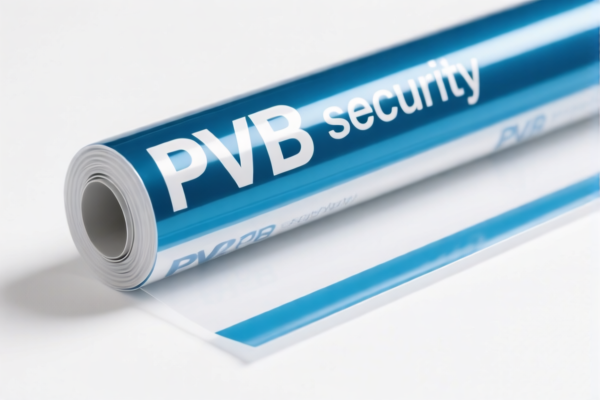
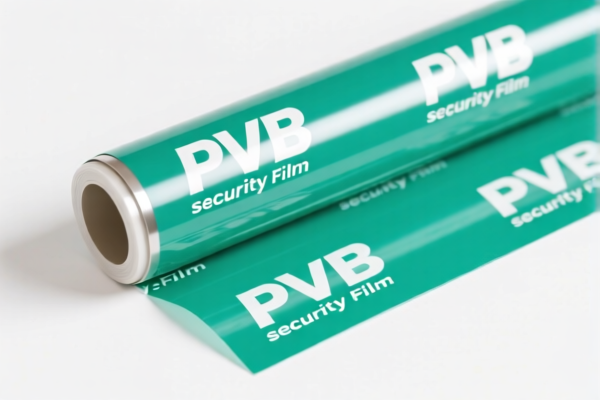
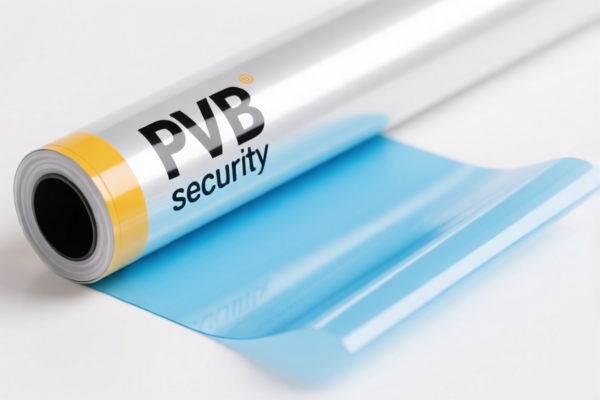
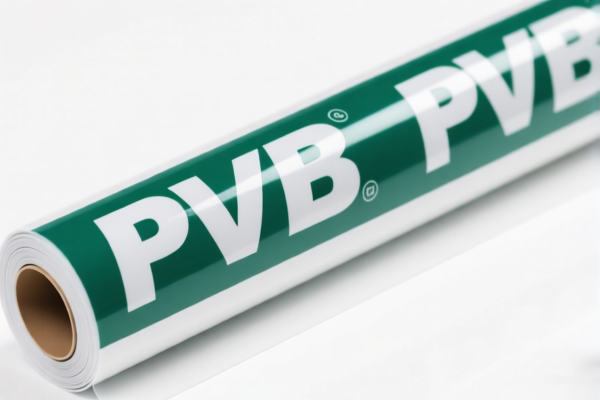
AI Analysis
🎬 PVB Film (Polyvinyl Butyral Interlayer)
🌐 HS Code Reference & Customs Clearance Guide | 2026 Latest Tariff Analysis | Professional Compliance Strategy
📌 I. Product Definition & Classification: Do You Truly Understand "PVB"?
PVB Film, chemically known as Polyvinyl Butyral, is a transparent thermoplastic film primarily used as an interlayer in laminated safety glass. It bonds glass to itself, providing safety, sound insulation, and UV protection.
In international trade, it is classified as a plastic product. Depending on its physical form (self-adhesive backing) and specific structural characteristics, it falls into different sub-categories under Chapter 39 (Plastics and Articles Thereof).
⚠️ Key Distinction for Classification:
- Self-Adhesive/Backing: If the film is supplied with a backing or is inherently self-adhesive in nature for application, it leans towards Heading 3919.
- Non-Self-Adhesive/Sheet Form: If it is a general plastic sheet, strip, or film without the specific "self-adhesive" designation required by 3919, it may fall under Heading 3921.
- Material: Polyvinyl Butyral (PVB) is explicitly recognized as a plastic material compatible with these headings.
📦 II. HS Code Classification Details (2026 Latest Tariff Authority Mapping)
Based on the provided data, PVB Film is classified into the following 5 distinct HS Codes. Note that while the base material is the same, the specific classification (Self-adhesive vs. Other Plastic Sheet) alters the tariff structure.
| HS Code | Product Description | Applicable Scenario | Taxation Profile |
|---|---|---|---|
3919.10.20.55 |
Other plastic self-adhesive flat products, in rolls, <20cm width (Note: Data implies general "Other" self-adhesive category) | PVB film used in lamination, self-adhesive form factor | 40.8% (High) |
3919.90.50.40 |
Other plastic self-adhesive flat products, in strips/bands | PVB film classified under broader self-adhesive "strips" or "other" categories | 40.8% (High) |
3921.19.00.90 |
Other plastic plates, sheets, film, foil, and strip | PVB film as a general plastic sheet/film, non-self-adhesive or different specific use | 41.5% (Highest) |
3921.90.50.50 |
Other plastic plates, sheets, film, etc. (Other specific sub-item) | PVB film as "strips" or other specific plastic forms without self-adhesive classification | 39.8% (Lowest in this set) |
3919.10.20.55 |
Other plastic self-adhesive flat products, in rolls <20cm (Repetition) | Consistent with first entry; confirms stability of this classification for specific roll widths | 40.8% (High) |
🔍 Critical Analysis:
- 3919 Codes: These apply to self-adhesive plastic products. If your PVB film comes with a release liner or is marketed specifically as "self-adhesive interlayer," these codes apply.
- 3921 Codes: These apply to non-self-adhesive plastic plates, sheets, and films. If the PVB is a raw interlayer without adhesive backing properties defined in 3919, these codes apply.
- Tax Variance: The difference between 39.8% and 41.5% may seem small, but on high-value shipments, it matters. The 3919 codes are slightly cheaper than 3921.19.00.90 but more expensive than 3921.90.50.50.
💰 III. 2026 Latest Tariff Rate Breakdown (Including Surcharges & Policy Add-ons)
✅ Applicable Country: United States (US)
✅ Origin: China (CN)
✅ Effective Time: Ongoing (2025-2026 Trade War Surcharges Active)
🎯 1. 3919.10.20.55 & 3919.90.50.40 —— Self-Adhesive PVB Film
| Item | Content |
|---|---|
| Base Duty Rate | 5.8% (Standard MFN Rate for Ch 39 Self-Adhesive) |
| Section 301 Surcharge (Add-on) | +25.0% (USITC Footnote for Section 301 List 4A/B) |
| Section 122 Tariff | +10.0% (Specific statutory surcharge applicable) |
| Total Effective Rate | 40.8% |
| Tax Calculation | CIF Value × 40.8% |
| De Minimis Eligibility | ❌ NO (deny_de_minimis). Section 301 and Section 122 tariffs are not exempt from the $800 de minimis threshold. |
| Legal Path | HTS:3919.10.20.55 → USITC:Footnote_301_List4 → IEEPA/Section122 |
📌 Explanation:
- 5.8%: This is the standard Most Favored Nation (MFN) duty for plastic self-adhesive products.
- 25.0%: This is the aggressive Section 301 tariff imposed on Chinese goods to address trade practices.
- 10%: This refers to the "Section 122" tariff, a specific statutory provision often applied to certain imports.
- Total 40.8%: This is a very high effective duty rate. Importers must budget for this cost.
🎯 2. 3921.19.00.90 —— Other Plastic Sheets/Films (Non-Self-Adhesive)
| Item | Content |
|---|---|
| Base Duty Rate | 6.5% (Standard MFN Rate for Other Plastic Sheets) |
| Section 301 Surcharge (Add-on) | +25.0% |
| Section 122 Tariff | +10.0% |
| Total Effective Rate | 41.5% |
| Tax Calculation | CIF Value × 41.5% |
| De Minimis Eligibility | ❌ NO (deny_de_minimis) |
| Legal Path | HTS:3921.19.00.90 → USITC:Footnote_301_List4 → IEEPA/Section122 |
📌 Note:
- This is the most expensive classification among the options.
- The base rate is higher (6.5% vs 5.8%), and the same surcharges apply.
- Avoid this code if a3919or3921.90alternative is factually accurate, as it increases cost by 0.7% absolute.
🎯 3. 3921.90.50.50 —— Other Plastic Products (Strip/Other)
| Item | Content |
|---|---|
| Base Duty Rate | 4.8% (Standard MFN Rate for Other Plastic Articles) |
| Section 301 Surcharge (Add-on) | +25.0% |
| Section 122 Tariff | +10.0% |
| Total Effective Rate | 39.8% |
| Tax Calculation | CIF Value × 39.8% |
| De Minimis Eligibility | ❌ NO (deny_de_minimis) |
| Legal Path | HTS:3921.90.50.50 → USITC:Footnote_301_List4 → IEEPA/Section122 |
📌 Advantage:
- This code offers the lowest total tariff (39.8%).
- If the PVB film can be legitimately classified as "Other plastic plates, sheets, film... (Other)" under this specific sub-heading without violating the "self-adhesive" definition of 3919, this is the cost-optimal choice.
- Caution: Ensure the product description ("strip" or "other") accurately reflects the physical form. Misclassification can lead to audits and penalties.
🛠️ IV. Customs Clearance Practical Advice (Combat Pitfalls Guide)
✅ 1. Required Documentation Checklist (Non-Negotiable)
| Document | Must Provide | Description |
|---|---|---|
| ✅ Product Specification Sheet | ✔️ | Must explicitly state: Material (PVB), Thickness, Width, Form (Roll/Self-Adhesive), Intended Use (Safety Glass Interlayer). |
| ✅ Technical Data Sheet (TDS) | ✔️ | Proves chemical composition and physical properties. Essential for distinguishing from other plastics like EVA or SGP. |
| ✅ Commercial Invoice | ✔️ | Must clearly describe goods as "PVB Film for Laminated Glass" and avoid vague terms like "Plastic Material." |
| ✅ Packing List | ✔️ | Detail weight, dimensions, and number of rolls. |
| ✅ Certificate of Origin (CO) | ✔️ | Crucial for verifying Chinese origin to apply correct Section 301 surcharges. |
| ✅ Structure Diagram/Photo | ✔️ | Shows if the film has a backing layer (key for 3919 vs 3921 distinction). |
✅ 2. Declaration Strategy (Key Mantra)
🔥 "Material is King, Form is Queen. Self-Adhesive = 3919, Sheet = 3921. Never Under-Declare!"
| Scenario | Correct Declaration | Risk of Error |
|---|---|---|
| PVB with Release Liner/Backing | 3919.10.20.55 or 3919.90.50.40 |
Misdeclaring as 3921 could lead to penalty for missing Section 301 items if 3919 has different footnote rules (though here taxes are similar, accuracy is key). |
| Raw PVB Interlayer (No Adhesive) | 3921.19.00.90 or 3921.90.50.50 |
Misdeclaring as 3919 implies adhesive properties that don't exist. |
| Cut Strips vs. Large Rolls | Ensure HS Code matches "Rolls" vs "Strips" | 3919 often specifies rolls <20cm for some sub-headings. If rolls are wider, 3919.10 might not apply, forcing 3921. |
| Mixed Container | Declare each item separately | Do not lump PVB with glass. PVB is plastic (Ch 39), Glass is glass (Ch 70). Different tariffs! |
✅ 3. Special Handling & Optimization
| Situation | Recommendation |
|---|---|
| High Value Shipment | Apply for Trade Classification Ruling (Advance Ruling) from CBP. Get a binding decision on whether it is 3919 or 3921 to lock in the 39.8% vs 40.8% rate. |
| De Minimis Abuse | DO NOT use $800 de minimis (Section 321) for PVB Film from China. The data explicitly states deny_de_minimis for these HS codes due to Section 301/122 applicability. Using 800-value shipments will result in seizure or heavy penalties. |
| Supply Chain Diversification | If tariffs are too high, consider sourcing PVB from non-China origins (e.g., EU, USA, Japan) if available, to avoid Section 301/122 surcharges entirely. |
| Product Modification | If PVB is combined with other layers to form a composite product, re-evaluate classification. It might shift to a different chapter entirely. |
🌍 V. Global Market Comparison (2026 Update)
| Country/Region | Recommended HS Code | Total Tariff (China Origin) | Notes |
|---|---|---|---|
| 🇺🇸 USA | 3921.90.50.50 |
39.8% | Lowest effective rate. Strict de minimis enforcement. |
| 🇨🇳 China | 3921.90.50.50 |
Low (0-6%) | Export from China usually has low/no export duty, but US import duty is the main cost. |
| 🇪🇺 EU | 3920.62.00 (Est.) |
6.5% | No Section 301 equivalent. Standard MFN applies. |
| 🇬🇧 UK | 3920.62.00 (Est.) |
6.5% | Post-Brexit tariff alignment with EU. |
📌 Conclusion:
- The USA is the most expensive market for PVB Film from China due to the叠加 (stacked) tariffs (Base + 301 + 122).
- Optimization Strategy: Aim for3921.90.50.50(39.8%) if legally compliant. Avoid3921.19.00.90(41.5%) unless the product features clearly dictate it.
- No De Minimis: Small shipments cannot bypass these taxes via Section 321.
📌 VI. Common Errors & Pitfalls (Blood Lessons)
❌ Error 1: Classifying PVB as "Glass Accessories" (Ch 70)
👉 Consequence: Wrong chapter, wrong duty, potential penalty. PVB is a plastic interlayer, not glass.
❌ Error 2: Using "General Plastic Sheet" without specifying PVB
👉 Consequence: CBP may assess highest duty rate or request extensive documentation, causing delays.
❌ Error 3: Assuming $800 De Minimis Applies
👉 Consequence: Severe Penalty. The data shows deny_de_minimis for these codes. Small samples are NOT exempt.
❌ Error 4: Ignoring the "Self-Adhesive" Distinction
👉 Consequence: Misclassification between 3919 and 3921. While taxes are close, legal definitions are strict. 3919 requires specific self-adhesive properties.
✅ Correct Approach:
"Polyvinyl Butyral (PVB) Interlayer Film, 0.76mm, Roll, for Laminated Safety Glass, Made in China, HS Code 3921.90.50.50"
🎯 VII. Conclusion: Precision in Classification, Efficiency in Clearance
🎯 Remember the Mantra:
🔹 "PVB is Plastic, Not Glass. Self-Adhesive = 3919, Sheet = 3921. No De Minimis, No Escape!"
🔹 "39.8% is the Goal (3921.90), 41.5% is the Trap (3921.19). Check Your Form Factor!"
📌 Pro Tip:
If your PVB film is coated or has specific functional layers, consult a customs broker to see if it can be classified under a different, potentially lower-tariff subheading. However, for standard PVB interlayers, the rates are high.
Pre-clearance Ruling is highly recommended to secure the 39.8% rate for 3921.90.50.50.
📣 Immediate Action:
📞 Contact a Licensed Customs Broker
📄 Provide Technical Data Sheet (TDS)
📝 Request Advance Classification Ruling for 3921.90.50.50
🚀 Ensure Smooth Customs Clearance, Minimize Costs, and Keep Your Glass Safe!
✨ Professional Customs Compliance Starts with Accurate HS Codes!
💼 Your Margin Depends on Every Percent of Duty!
Customer Reviews
About HS Code Classification
The Harmonized System (HS) is an internationally standardized nomenclature developed by the World Customs Organization (WCO) to classify traded products. Over 200 countries use the HS system as the basis for customs tariffs, trade statistics, and import/export regulations.
Each HS code follows a hierarchical structure:
- Chapter (2 digits) — Broad category of goods (e.g., Chapter 84: Machinery and Mechanical Appliances)
- Heading (4 digits) — More specific grouping within the chapter
- Subheading (6 digits) — Internationally standardized breakdown, used by all WCO member countries
- National subdivisions (8-10 digits) — Country-specific extensions for further classification, such as US HTSUS 10-digit codes
Correct HS code classification is essential for smooth customs clearance, accurate duty payment, and compliance with trade regulations. Misclassification can lead to customs delays, overpayment of duties, or penalties.
When importing from CN to US, the applicable tariff rates may include:
- Most-Favored-Nation (MFN) rate — The standard duty rate applied to WTO members
- General rate — Applied to countries without trade agreements
- Trade remedy duties — Additional tariffs such as Section 301 (anti-dumping), Section 232 (national security), or countervailing duties
The information provided on this page is for reference purposes only. For official classification, please consult with your local customs authority or a licensed customs broker.