PVB Film for Laminated Glass
CN → US| HS Code | Tariff Rate | Origin | Destination | Doc |
|---|---|---|---|---|
| 3907290000 | 41.5% | CN | US | Official Doc |
| 3907995050 | 41.5% | CN | US | Official Doc |
| 3921190090 | 41.5% | CN | US | Official Doc |
| 3921905050 | 39.8% | CN | US | Official Doc |
Product Images
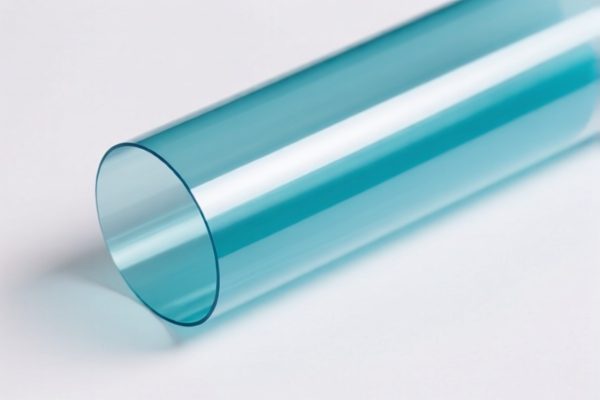
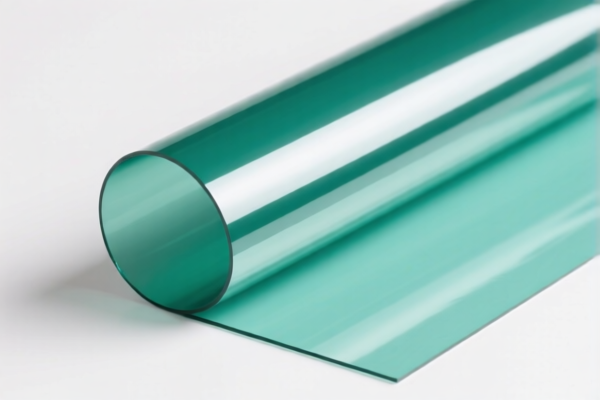
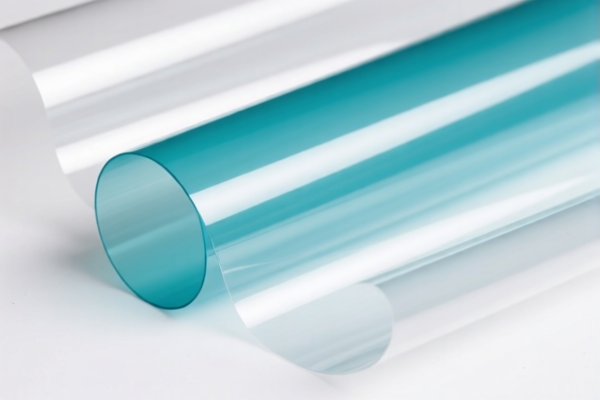

AI Analysis
🪟 PVB Film for Laminated Glass (Polyvinyl Butyral Interlayer)
🌐 HS Code Reference & Customs Clearance Guide | 2026 Latest Tariff Analysis | Professional Entry Strategy
📌 I. Product Definition & Classification: Do You Really Understand "PVB Film"?
PVB (Polyvinyl Butyral) film is a critical interlayer material used in the manufacturing of laminated safety glass. It acts as the "glue" that holds glass fragments together upon impact, providing safety, sound insulation, and UV protection.
In international trade, PVB films are generally classified as Plastics. However, their specific HS Code depends heavily on their chemical structure description and physical form (film/roll).
⚠️ Key Distinction Point:
- If classified as a Derivative of Polyvinyl Alcohol (PVA): Falls under Chapter 39, Heading 3907 (Polyalcohols and their derivatives).
- If classified as a General Plastic Sheet/Film: Falls under Chapter 39, Heading 3921 (Other plates, sheets, film, foil and strip, of plastics).
📦 II. HS Code Classification Details (2026 Latest Tariff Authority Comparison)
Based on the provided data, there are four primary classification options. The tax burden varies slightly depending on the precise chemical definition applied by customs.
| HS Code | Product Description | Application Scenario | Tax Logic & Basis |
|---|---|---|---|
3907.29.00.00 |
PVB as PVA Derivative Form: Film. Classified as a derivative of polyvinyl alcohols. |
Standard industrial PVB interlayer film. | Considered a "primary/intermediate form" of PVA derivative. 💰 Total Tax: 41.5% |
3907.99.50.50 |
Other PVA Derivatives Form: Film. Classified under "Other Polyesters/Derivatives." |
Generic PVB film where specific PVA derivative sub-heading is not fully exclusive. | Viewed as "Other" PVA derivatives. 💰 Total Tax: 41.5% |
3921.19.00.90 |
Other Plastic Sheets/Films Material: PVB (Polyvinyl class plastic). |
PVB treated broadly as a plastic sheet/film rather than a chemical derivative. | Fits "Other plastic plates, sheets, film..." requirements. 💰 Total Tax: 41.5% |
3921.90.50.50 |
Other Plastic Films Material: PVB. |
Broad classification based on "film" form and common sense inference. | Classified as "Other plastic films." 💰 Total Tax: 39.8% |
🔍 Focus Reminder:
- Four out of five potential classifications result in a 41.5% total tax rate.
- Only the classification under3921.90.50.50offers a slightly lower rate of 39.8%.
- All classifications involve significant trade tariffs (Base + Section 301 + Section 232/IEEPA).
💰 III. 2026 Latest Tariff Rate Breakdown (Including Surcharges & Policy Add-ons)
✅ Applicable Country: United States (US)
✅ Origin: China (CN)
✅ Effective Time: Ongoing (Post-2025 adjustments)
🎯 1. Standard High-Scenario: 3907.29.00.00, 3907.99.50.50, 3921.19.00.90
| Item | Content |
|---|---|
| Base Duty Rate | 6.5% (Ad Valorem) |
| Section 301 Add-on Tariff | +25.0% (Specifically targeting Chinese manufacturing) |
| Section 232 / IEEPA Tariff | +10.0% (Additional surcharge for certain Chinese imports) |
| Total Effective Tax Rate | 41.5% |
| Tax Calculation | CIF Value × 41.5% |
| De Minimis Eligibility | ❌ Not Eligible (De minimis exemption does not apply to goods subject to Section 301/232 tariffs) |
| Legal Basis Path | HTSUS:3907.29.00.00 → USITC:301_China → IEEPA:232_Surcharge |
📌 Explanation:
- 6.5% is the standard MFN (Most Favored Nation) duty for plastic films/sheets.
- 25% is the Section 301 tariff, which is standard for many plastic products from China.
- 10% is an additional layer of tariff often applied under IEEPA (International Emergency Economic Powers Act) or Section 232 extensions for specific Chinese industrial inputs.
- Total 41.5% is a very high entry barrier. Cost optimization strategies are mandatory.
🎯 2. Slightly Lower Scenario: 3921.90.50.50
| Item | Content |
|---|---|
| Base Duty Rate | 4.8% (Ad Valorem) |
| Section 301 Add-on Tariff | +25.0% |
| Section 232 / IEEPA Tariff | +10.0% |
| Total Effective Tax Rate | 39.8% |
| Tax Calculation | CIF Value × 39.8% |
| De Minimis Eligibility | ❌ Not Eligible |
| Legal Basis Path | HTSUS:3921.90.50.50 → USITC:301_China → IEEPA:232_Surcharge |
📌 Note:
- This classification saves 1.7% compared to the other three options.
- While small percentage-wise, on large volumes (e.g., shipping containers of glass interlayers), this can save thousands of dollars.
- Justification: Relies on defining PVB strictly as a "film" under "Other plastics" rather than a specific chemical derivative.
🛠️ IV. Customs Clearance Practical Advice (Battle-Tested Pitfall Avoidance)
✅ 1. Required Documentation Checklist (Non-negotiable)
| Document | Must Provide | Description |
|---|---|---|
| ✅ Product Specification Sheet | ✔️ | Must detail chemical composition (PVB content), thickness, transparency, and tensile strength. |
| ✅ Product Photos | ✔️ | Clear images of the roll, labeling (showing HS-relevant descriptors if any), and packaging. |
| ✅ Commercial Invoice | ✔️ | Must clearly state: "Polyvinyl Butyral (PVB) Film for Laminated Glass, Plastic Interlayer" |
| ✅ Packing List | ✔️ | Weight and dimensions per roll. Crucial for verifying "Film" vs. "Sheet" status. |
| ✅ Bill of Lading | ✔️ | Clean title, accurate weight. |
| ✅ Certificate of Origin (CO) | ✔️ | Proof of Chinese origin triggers the 25%+10% tariffs. |
✅ 2. Declaration Strategy (Critical Keywords)
🔥 "Define by Form, Justify by Material"
| Scenario | Correct Declaration Approach | Wrong Approach |
|---|---|---|
| Standard PVB Roll | Use 3907.29.00.00 or 3921.19.00.90. Declare as "PVB Plastic Film, Intermediate Form". |
Declare as "Glass Accessory" → Wrong Chapter (90), leads to seizure. |
| Trying to lower tax | Argue for 3921.90.50.50 if customs accepts "Plastic Film" broadly. Provide lab tests showing generic plastic properties. |
Over-complicate chemical structure → Delays at port. |
| Mixed Container | Separate PVB Film declaration from Glass Panels. | Commingled declaration → Audit risk for both items. |
✅ 3. Special Circumstances Handling
| Situation | Handling Advice |
|---|---|
| White-Label / OEM | Ensure the invoice name matches the shipper. Do not use "Glass" as the primary commodity name. |
| Small Samples | ❌ No De Minimis: Even small shipments are subject to full 41.5% tax. Do not send via postal service expecting low cost. |
| Third-Party Manufacturing | If produced in China but shipped via Vietnam/Malaysia, ensure Substantial Transformation rules are met to avoid "Transshipment" penalties. |
| Pre-Ruling | 💡 Highly Recommended: Apply for an Advance Ruling (CBP Ruling) to lock in 3921.90.50.50 (39.8%) if possible, or confirm 3907.29.00.00 for compliance certainty. |
🌍 V. Global Market Comparison (2026 Latest)
| Country/Region | Recommended HS Code | Approx. Total Tax (China Origin) | Certification Required | Remarks |
|---|---|---|---|---|
| 🇺🇸 USA | 3907.29.00.00 / 3921.19.00.90 |
41.5% | None specific (FTC/CPSC for glass) | Highest cost market. Section 301/232 applies. |
| 🇺🇸 USA (Optimized) | 3921.90.50.50 |
39.8% | None specific | Best case scenario. Requires strong justification. |
| 🇨🇳 China | 3921.10.00.00 |
~6.0% | CCC (if applicable) | Domestic trade, lower logistics cost. |
| 🇪🇺 EU | 3920.62.00 |
~4.0% - 6.5% | REACH (Chemical compliance) | No Section 301 tariffs. REACH registration mandatory for PVB. |
| 🇯🇵 Japan | 3920.62.00 |
~5.5% - 8.0% | JIS | Moderate tariffs, strict quality standards. |
📌 Conclusion:
- The US is the most challenging market for PVB film due to the 41.5% effective tariff.
- EU and Japan offer significantly better duty rates (4-8%) but have stricter chemical safety regulations (REACH/JIS).
- Profit Margin Impact: A $100,000 shipment faces $41,500 in taxes in the US. This must be factored into FOB pricing.
📌 VI. Common Mistakes & Pitfall Guide (Lessons Learned)
❌ Mistake 1: Declaring PVB as "Glass Parts" or "Safety Glass Component"
👉 Consequence: Wrong HS Code (Chapter 70). Customs will reassess under Chapter 39, leading to penalties + back taxes.
❌ Mistake 2: Ignoring the 10% IEEPA/232 Surcharge
👉 Consequence: You budget for 31.5% (6.5+25) but are hit with 41.5%. Unexpected cost overrun.
❌ Mistake 3: Assuming "Film" means low duty
👉 Consequence: In the US, "Plastic Film" from China is heavily targeted. No cheap entry via de minimis.
❌ Mistake 4: Poor Description on Invoice
👉 Consequence: Customs sees "Film" and guesses. If they guess wrong, they apply the highest possible rate or hold the cargo.
✅ Correct Approach:
"Polyvinyl Butyral (PVB) Interlayer Film, Roll Form, Plastic Material, For Use in Laminated Glass Manufacturing. HS: 3907.29.00.00."
🎯 VII. Conclusion: Professional Declaration, Cost Control
🎯 Remember the Mantra:
🔹 "PVB is Plastic, Not Glass."
🔹 "China Origin = 41.5% Tax (Usually)."
🔹 "Try for 39.8% with3921.90.50.50if allowed."
🔹 "Always use Advance Ruling to lock in the code."
📌 Pro Tip:
If your volume is high, consider Supplier Diversification:
- Source PVB from Vietnam, Mexico, or Malaysia to potentially avoid Section 301/232 tariffs (check specific country origin rules).
- This can save ~25-35% in tax duties, significantly boosting margins.
📣 Immediate Action:
📞 Consult a Customs Broker to review your specific PVB technical datasheet.
📝 Request a CBP Advance Ruling before your first large shipment.
🚀 Calculate landed cost accurately: Include the 41.5% in your quotes. Don't let tariffs eat your profit!
✨ Expert Clearance Starts with Accurate Classification!
💼 Every percentage point of tax is pure profit lost. Optimize now.
Customer Reviews
About HS Code Classification
The Harmonized System (HS) is an internationally standardized nomenclature developed by the World Customs Organization (WCO) to classify traded products. Over 200 countries use the HS system as the basis for customs tariffs, trade statistics, and import/export regulations.
Each HS code follows a hierarchical structure:
- Chapter (2 digits) — Broad category of goods (e.g., Chapter 84: Machinery and Mechanical Appliances)
- Heading (4 digits) — More specific grouping within the chapter
- Subheading (6 digits) — Internationally standardized breakdown, used by all WCO member countries
- National subdivisions (8-10 digits) — Country-specific extensions for further classification, such as US HTSUS 10-digit codes
Correct HS code classification is essential for smooth customs clearance, accurate duty payment, and compliance with trade regulations. Misclassification can lead to customs delays, overpayment of duties, or penalties.
When importing from CN to US, the applicable tariff rates may include:
- Most-Favored-Nation (MFN) rate — The standard duty rate applied to WTO members
- General rate — Applied to countries without trade agreements
- Trade remedy duties — Additional tariffs such as Section 301 (anti-dumping), Section 232 (national security), or countervailing duties
The information provided on this page is for reference purposes only. For official classification, please consult with your local customs authority or a licensed customs broker.