PVC 3D Ceiling Panel
CN → US| HS Code | Tariff Rate | Origin | Destination | Doc |
|---|---|---|---|---|
| 3925305000 | 22.8% | CN | US | Official Doc |
| 3925900000 | 40.3% | CN | US | Official Doc |
| 3925305000 | 22.8% | CN | US | Official Doc |
| 3925900000 | 40.3% | CN | US | Official Doc |
| 3925305000 | 22.8% | CN | US | Official Doc |
Product Images
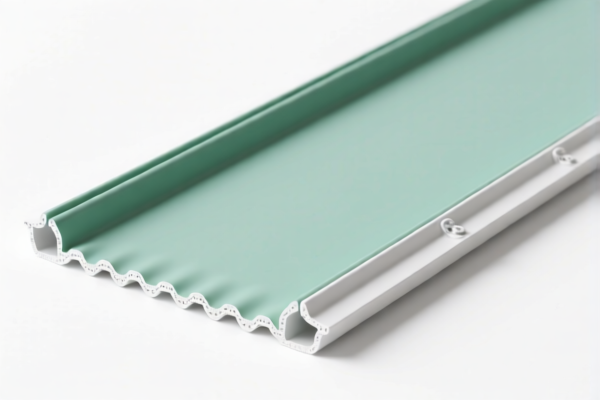
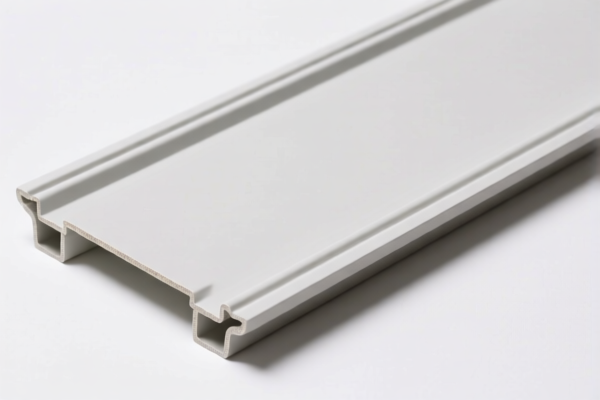
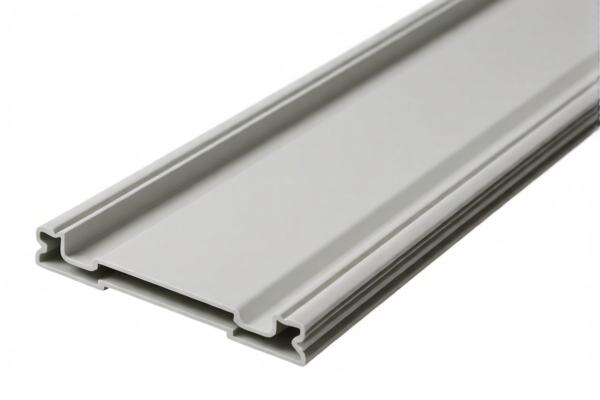
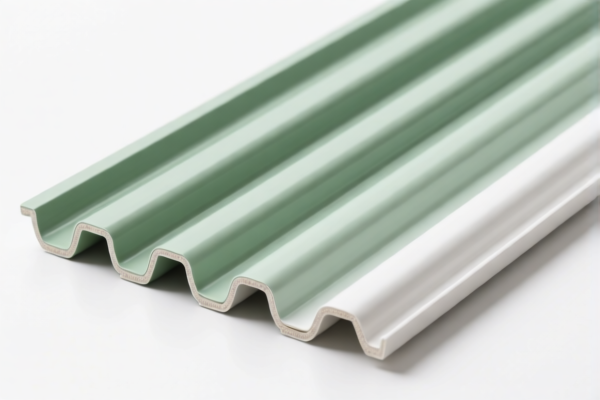
AI Analysis
🏠 PVC 3D Ceiling Panels (Decorative Plasterwork & Builders' Wares)
🌐 HS Code Reference & Customs Clearance Guide | 2026 Latest Tariff Analysis | Professional Strategy for Importers
📌 I. Product Definition & Classification: Do You Know What "3D Ceiling Panel" Really Is?
PVC 3D Ceiling Panels are decorative interior finishing materials made primarily from Polyvinyl Chloride (PVC). They are used to cover ceilings in residential, commercial, and industrial spaces to provide aesthetic appeal, acoustic dampening, or moisture resistance.
In international trade, the classification hinges on whether the item is a "finished decorative article" or a generic "builder's ware component." The critical distinction lies in the specific description of the HS Code:
1. Shutters, Blinds, and Similar Articles (Finished Decorative Items): If the panels are structured specifically as shutters, blinds, or similar decorative articles designed for immediate installation as a finishing layer, they often fall under 3925.30.
2. Builders' Ware, Not Elsewhere Specified (Generic Components): If the items are generic plastic components for building construction that do not fit the specific description of shutters/blinds, they fall under the residual category 3925.90.
⚠️ Key Distinction Point:
- If the product is marketed and structured specifically as "Blinds," "Venetian Blinds," or "Similar Articles" (with slats, louvers, or specific decorative structures for window/ceiling covering) → 3925.30.50.00
- If the product is a generic "Plastic Builder's Ware" not specified elsewhere (e.g., solid PVC boards, generic cladding without specific blind-like structure) → 3925.90.00.00
📦 II. HS Code Classification Details (2026 Latest Tariff Authority对照)
Based on the provided data, here are the two possible classifications for PVC 3D Ceiling Panels:
| HS Code | Product Description | Applicable Scenario | Duty Rate (China Origin → US) |
|---|---|---|---|
3925.90.00.00 |
Builders' ware of plastics, n.e.s.: Other | Generic PVC ceiling tiles, solid panels, or cladding not classified as blinds/shutters. | 0.0% (Base 0% + Add. 0%) |
3925.30.50.00 |
Builders' ware of plastics: Shutters, blinds (including venetian blinds) and similar articles: Other | PVC ceiling panels structured as blinds, louvers, or similar decorative articles designed to cover openings or surfaces like blinds. | 12.8% (Base 5.3% + Add. 7.5%) |
🔍 Crucial Note:
- The difference in duty is significant: 0% vs. 12.8%.
- 3925.30 captures items that are functionally or structurally similar to blinds/shutters (e.g., louvred ceilings, adjustable slats, or decorative "blind-like" PVC assemblies).
- 3925.90 is the residual "catch-all" for plastic builders' ware that doesn't fit other specific categories.
💰 III. 2026 Latest Tariff Rate Details (Including Additional Taxes)
✅ Applicable Country: United States (US)
✅ Country of Origin: China (CN)
✅ Effective Time: 2025/2026 (Current Trade Policy)
🎯 1. 3925.90.00.00 — Builders' Ware of Plastics, n.e.s. (Other)
| Item | Content |
|---|---|
| Base Tariff | 0.0% (ad valorem) |
| Additional Tariff (Section 301/IEEPA) | 0.0% |
| Total Effective Rate | 0.0% |
| Tax Calculation | CIF Value × 0% = $0 |
| De Minimis Eligibility | ✅ Yes (If applicable for small shipments, check current threshold) |
| Legal Basis | Standard HTSUS 3925.90.00 |
📌 Explanation:
- This code represents a zero-duty entry for generic plastic builders' ware.
- Advantage: Lowest possible landed cost.
- Risk: If CBP determines the product is actually "similar to blinds," they may reclassify it to 3925.30, leading to 12.8% back-duties + penalties.
🎯 2. 3925.30.50.00 — Shutters, Blinds, and Similar Articles (Other)
| Item | Content |
|---|---|
| Base Tariff | 5.3% |
| Additional Tariff | 7.5% |
| Total Effective Rate | 12.8% |
| Tax Calculation | CIF Value × 12.8% |
| De Minimis Eligibility | ❌ No (High duty rates often disqualify small shipments from de minimis) |
| Legal Basis | HTSUS 3925.30.50.00 |
📌 Explanation:
- This code applies if the PVC panels are deemed "similar to blinds" (e.g., louvred, slatted, or decorative coverings that function like window blinds but for ceilings).
- Cost Impact: An additional 12.8% duty on the CIF value.
- Why 7.5%?: This is likely a specific Section 301 or IEEPA additional tariff applicable to this subheading.
🛠️ IV. Customs Clearance Practical Advice (Battle-Tested Pitfall Avoidance Guide)
✅ 1. Documentation Checklist (Non-negotiable)
| Document | Required? | Description |
|---|---|---|
| ✅ Product Photos | ✔️ | Must clearly show the structure. Is it a flat tile? Louvred? Slatted? |
| ✅ Product Specification Sheet | ✔️ | Material: 100% PVC or PVC Composite? Dimensions? Weight? |
| ✅ Commercial Invoice | ✔️ | Use precise language: "PVC Ceiling Panels" not just "Plastic Panels." |
| ✅ Import/Export License | ✔️ | If applicable for plastic goods. |
| ✅ Certificate of Origin | ✔️ | For country of origin determination. |
✅ 2. Declaration Strategy (Key Mantra)
🔥 "Structure Defines Code: Blinds-Like = 12.8%, Generic Tile = 0%!"
| Scenario | Correct Declaration | Incorrect Practice | Consequence |
|---|---|---|---|
| Flat/Textured PVC Tiles (No slats/louvers) | 3925.90.00.00 |
Calling them "Blinds" or "Louvred Panels" | Risk: CBP may reclassify to 3925.30 → 12.8% duty |
| Louvred/Slat PVC Panels (Blind-like structure) | 3925.30.50.00 |
Calling them "Generic Tiles" to avoid tax | Risk: 12.8% duty + Penalty + Interest |
| Mixed Shipment (Some flat, some louvred) | Split Declaration | Declaring all as one HS Code | Risk: Audit, seizure, or false statement charges |
✅ 3. Special Case Handling
| Case | Handling Advice |
|---|---|
| OEM Custom Ceiling Panels | Provide CAD drawings showing the surface structure. If it has a 3D relief but no slats/louvers, argue for 3925.90 (Generic Builder's Ware). |
| "Similar Articles" Interpretation | CBP defines "similar to blinds" as articles with slats, louvers, or adjustable parts. If your 3D panel has embossed patterns but no moving slats, it is NOT a blind. Argue strongly for 3925.90. |
| Composite Materials | If the panel contains more than 50% PVC by weight, it is classified under Chapter 39. If it has significant wood or metal frames, it may fall under different chapters (e.g., 44 or 76). Ensure it is >50% PVC. |
🌍 V. Global Market Comparison (2026)
| Country/Region | Recommended HS Code | Tariff (China Origin) | Notes |
|---|---|---|---|
| 🇺🇸 USA | 3925.90.00.00 |
0.0% | Best if classified as generic tile. |
| 🇺🇸 USA | 3925.30.50.00 |
12.8% | If classified as "blinds/similar." |
| 🇨🇳 China | 3925.90.00.00 |
~5-10% | Export duties may apply. |
| 🇪🇺 EU | 3925.90.00 |
0-6% | Varies by specific member state. |
| 🇬🇧 UK | 3925.90.00 |
0-6% | Post-Brexit tariffs may vary. |
📌 Conclusion:
- USA is the most sensitive market for this classification due to the 12.8% penalty if misclassified.
- Zero Duty is achievable only if the product is clearly not a "blind" or "shutter."
📌 VI. Common Mistakes & Pitfalls (Lessons Learned the Hard Way)
❌ Mistake 1: Calling "PVC Ceiling Tiles" as "Blinds" in the invoice.
👉 Result: CBP applies 12.8% duty unnecessarily.
👉 Fix: Use "Decorative Ceiling Panels" or "PVC Wall/Ceiling Cladding."
❌ Mistake 2: Declaring Louvred Ceilings as 3925.90 to save tax.
👉 Result: CBP Rejection. Louvred structures are explicitly "similar to blinds."
👉 Fix: Declare correctly as 3925.30.50.00 and budget for 12.8%.
❌ Mistake 3: Ignoring the "3D" aspect.
👉 Result: CBP may view 3D embossed patterns as "decorative articles" not "builders' ware."
👉 Fix: Emphasize "Construction Material" and "Building Fixture" in the description.
✅ Correct Description Example:
"PVC Decorative Ceiling Panels, 3D Embossed Pattern, Non-Louvred, Used for Interior Ceiling Finishing, 100% Polyvinyl Chloride, Model XYZ."
🎯 VII. Conclusion: Professional Classification, Cost Optimization!
🎯 Remember the Mantra:
🔹 "No Slats? No Louvers? It’s Not a Blind! → 0% Duty!"
🔹 "Slats or Louvers? It’s Like a Blind! → 12.8% Duty!"
🔹 "HS Code is King, Misclassification is King’s Enemy!"
📌 Pro Tip:
- If your product has any slatted or louvered structure, accept the 12.8%. Fighting it is risky.
- If your product is flat or embossed only, strongly argue for 3925.90.00.00 (0%) with photos and structural diagrams.
- Apply for a Binding Ruling from CBP if the product is novel or ambiguous. It saves millions in potential penalties.
📣 Immediate Action:
📞 Contact your customs broker with product photos highlighting the surface structure (flat vs. slatted).
📄 Update your invoice description to avoid "blind-like" terminology if you are claiming 0%.
🚀 Optimize your landed cost with precise classification!
✨ Precision in Classification, Profit in Your Pocket!
💼 Every Percent Counts in Global Trade!
Customer Reviews
About HS Code Classification
The Harmonized System (HS) is an internationally standardized nomenclature developed by the World Customs Organization (WCO) to classify traded products. Over 200 countries use the HS system as the basis for customs tariffs, trade statistics, and import/export regulations.
Each HS code follows a hierarchical structure:
- Chapter (2 digits) — Broad category of goods (e.g., Chapter 84: Machinery and Mechanical Appliances)
- Heading (4 digits) — More specific grouping within the chapter
- Subheading (6 digits) — Internationally standardized breakdown, used by all WCO member countries
- National subdivisions (8-10 digits) — Country-specific extensions for further classification, such as US HTSUS 10-digit codes
Correct HS code classification is essential for smooth customs clearance, accurate duty payment, and compliance with trade regulations. Misclassification can lead to customs delays, overpayment of duties, or penalties.
When importing from CN to US, the applicable tariff rates may include:
- Most-Favored-Nation (MFN) rate — The standard duty rate applied to WTO members
- General rate — Applied to countries without trade agreements
- Trade remedy duties — Additional tariffs such as Section 301 (anti-dumping), Section 232 (national security), or countervailing duties
The information provided on this page is for reference purposes only. For official classification, please consult with your local customs authority or a licensed customs broker.