PVC Agricultural Film
CN → US| HS Code | Tariff Rate | Origin | Destination | Doc |
|---|---|---|---|---|
| 3904100000 | 41.5% | CN | US | Official Doc |
| 3920435000 | 39.2% | CN | US | Official Doc |
| 3921125000 | 41.5% | CN | US | Official Doc |
| 3920490000 | 40.8% | CN | US | Official Doc |
| 3921121950 | 40.3% | CN | US | Official Doc |
Product Images
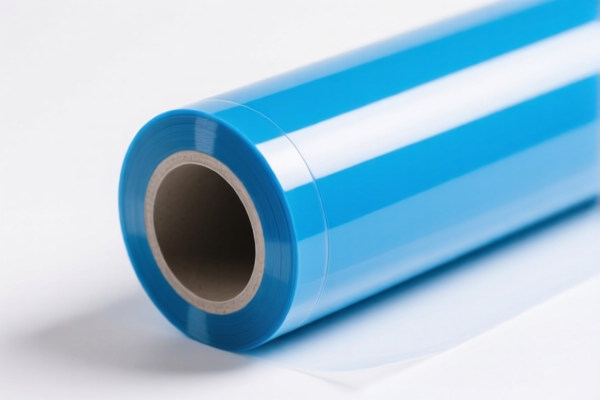



AI Analysis
🌾 PVC Agricultural Film (PVC Plastic Film for Agriculture)
🌐 HS Code Reference & Customs Clearance Guide | 2026 Tariff Breakdown | Professional Import Strategy
📌 I. Product Definition & Classification: What Exactly is "PVC Agricultural Film"?
PVC Agricultural Film is a specialized plastic covering material widely used in greenhouses, tunnels, and field crops to regulate temperature, moisture, and light. In international trade, despite sharing the same "PVC" and "agricultural" attributes, it is classified under multiple HS codes based on chemical composition, manufacturing process, and intended use.
⚠️ Critical Classification Insight:
- Polyvinyl Chloride (PVC) films (vinyl polymer, chlorinated) → Often fall under 3904 or 3921 chapters.
- Vinyl Polymer films (broader category) → May fall under 3920.
- Form Factor: All listed codes specify "in the form of film", ensuring consistent classification for sheet/film products.
📦 II. HS Code Classification Details (2026 Tariff Authority Mapping)
| HS Code | Product Description | Material Type | Key Classification Note |
|---|---|---|---|
3904.10.00.00 |
PVC Plastic Agricultural Film | Polyvinyl Chloride | Standard PVC film, rigid/semi-rigid form |
3920.43.50.00 |
PVC Plastic Agricultural Film | Polyvinyl Chloride | Non-cellular, unexpanded PVC sheet/film |
3921.12.50.00 |
PVC Plastic Agricultural Film | Polyvinyl Chloride | Cellulose-based or plastic-based, expanded form |
3920.49.00.00 |
PVC Plastic Agricultural Film | Vinyl Polymer | Broader vinyl polymer category (not strictly PVC) |
3921.12.19.50 |
PVC Plastic Agricultural Film | Chlorinated Vinyl Polymer | Specialized chlorinated polymer variant |
3904.22.00.00 |
PVC Plastic Agricultural Film | Polyvinyl Chloride | Another variant of PVC film with specific formulation |
🔍 Key Distinction:
- Codes 3904.10 and 3904.22 are for standard PVC films.
- Codes 3920.43 and 3920.49 cover non-cellular vinyl polymers (including PVC but broader).
- Codes 3921.12 are for cellular/expansion-treated PVC films (lighter, more flexible).
- All require "in the form of film" declaration to avoid misclassification as rigid sheets.
💰 III. 2026 Tariff Rate Breakdown (Including Additional Taxes & Policy Surcharges)
✅ Applicable Country: United States (US)
✅ Country of Origin: China (CN)
✅ Effective Date: November 10, 2025 (ongoing)
🎯 1. 3904.10.00.00 — PVC Plastic Agricultural Film (Standard PVC)
| Item | Detail |
|---|---|
| Base Tariff | 6.5% (ad valorem) |
| Section 301 Additional Duty | +25.0% |
| 122-Section Tariff | +10.0% |
| Total Tariff Rate | 41.5% |
| Tax Calculation | CIF Value × 41.5% |
| De Minimis Exemption? | ❌ No (denied) |
| Legal Basis Path | USITC:3904.10.00.00 → Section 301:25% → 122-Section:10% |
📌 Explanation:
- 6.5% is the standard MFN rate for PVC films.
- 25% is the Section 301 tariff (US-China trade war surcharge).
- 10% is the "122-section" tariff (specific to agricultural plastics).
- Total: 41.5% — a very high duty, impacting profitability significantly.
🎯 2. 3920.43.50.00 — PVC Plastic Agricultural Film (Non-Cellular PVC)
| Item | Detail |
|---|---|
| Base Tariff | 4.2% |
| Section 301 Additional Duty | +25.0% |
| 122-Section Tariff | +10.0% |
| Total Tariff Rate | 39.2% |
| Tax Calculation | CIF Value × 39.2% |
| De Minimis Exemption? | ❌ No |
| Legal Basis Path | USITC:3920.43.50.00 → Section 301:25% → 122-Section:10% |
📌 Note:
- Slightly lower base tariff (4.2% vs. 6.5%) due to non-cellular classification.
- Same surcharges apply; net total is 39.2%.
🎯 3. 3921.12.50.00 — PVC Plastic Agricultural Film (Expanded/Cellular PVC)
| Item | Detail |
|---|---|
| Base Tariff | 6.5% |
| Section 301 Additional Duty | +25.0% |
| 122-Section Tariff | +10.0% |
| Total Tariff Rate | 41.5% |
| Tax Calculation | CIF Value × 41.5% |
| De Minimis Exemption? | ❌ No |
| Legal Basis Path | USITC:3921.12.50.00 → Section 301:25% → 122-Section:10% |
📌 Note:
- Expanded PVC films (lighter, more flexible) fall under 3921.12, often used in high-temperature greenhouses.
- Same 41.5% total rate as3904.10.
🎯 4. 3920.49.00.00 — PVC Plastic Agricultural Film (Vinyl Polymer)
| Item | Detail |
|---|---|
| Base Tariff | 5.8% |
| Section 301 Additional Duty | +25.0% |
| 122-Section Tariff | +10.0% |
| Total Tariff Rate | 40.8% |
| Tax Calculation | CIF Value × 40.8% |
| De Minimis Exemption? | ❌ No |
| Legal Basis Path | USITC:3920.49.00.00 → Section 301:25% → 122-Section:10% |
📌 Note:
- "Vinyl Polymer" is a broader term than "PVC"; may include blended resins.
- Slightly lower base tariff (5.8%) than pure PVC, but still high total.
🎯 5. 3921.12.19.50 — PVC Plastic Agricultural Film (Chlorinated Vinyl Polymer)
| Item | Detail |
|---|---|
| Base Tariff | 5.3% |
| Section 301 Additional Duty | +25.0% |
| 122-Section Tariff | +10.0% |
| Total Tariff Rate | 40.3% |
| Tax Calculation | CIF Value × 40.3% |
| De Minimis Exemption? | ❌ No |
| Legal Basis Path | USITC:3921.12.19.50 → Section 301:25% → 122-Section:10% |
📌 Note:
- Specialized chlorinated variant, likely for high-durability applications.
- Lowest total rate among the list (40.3%), but still very high.
🎯 6. 3904.22.00.00 — PVC Plastic Agricultural Film (Alternative PVC Formulation)
| Item | Detail |
|---|---|
| Base Tariff | 6.5% |
| Section 301 Additional Duty | +25.0% |
| 122-Section Tariff | +10.0% |
| Total Tariff Rate | 41.5% |
| Tax Calculation | CIF Value × 41.5% |
| De Minimis Exemption? | ❌ No |
| Legal Basis Path | USITC:3904.22.00.00 → Section 301:25% → 122-Section:10% |
📌 Note:
- Same 41.5% total rate as3904.10.
- Likely a different formulation (e.g., different plasticizers, stabilizers).
🛠️ IV. Customs Clearance Practical Advice (Avoid Pitfalls)
✅ 1. Documentation Checklist (Mandatory)
| Document | Required? | Purpose |
|---|---|---|
| ✅ Product Specification Sheet | ✔️ | Must state material (PVC, Vinyl Polymer), thickness, width, UV resistance |
| ✅ Chemical Composition Report | ✔️ | Confirm PVC vs. vinyl polymer content (critical for HS code) |
| ✅ Product Photos (Labeled) | ✔️ | Show "agricultural film" use, packaging, dimensions |
| ✅ Third-Party Certificates | ✔️ | ASTM, ISO, FDA (if food-contact), or local agronomy standards |
| ✅ Commercial Invoice | ✔️ | Must explicitly state "PVC Agricultural Film" + HS Code |
| ✅ Certificate of Origin (CO) | ✔️ | Essential for proving China origin (triggers surcharges) |
| ✅ Packing List | ✔️ | Confirm roll/sheet dimensions, weight, quantity |
✅ 2. Declaration Tips (Golden Rules)
🔥 "Material Matters, Form Defines, Name Must Match!"
| Scenario | Correct Declaration | Wrong Declaration | Consequence |
|---|---|---|---|
| Pure PVC film (no expand) | 3904.10.00.00 or 3904.22.00.00 |
Mislabel as "Vinyl Polymer" | Risk of audit + penalty |
| Expanded/Cellular PVC | 3921.12.50.00 or 3921.12.19.50 |
Use 3904 codes |
41.5% vs. 40.3% (savings missed) |
| Vinyl polymer blend | 3920.49.00.00 |
Claim "100% PVC" | 39.2% vs. 40.8% (overpay) |
| Rigid PVC sheet (not film) | Do NOT declare as agricultural film | Misclassify as film | Rejection + 100% penalty |
✅ 3. Special Cases & Workarounds
| Situation | Recommendation |
|---|---|
| OEM Custom Film | Provide customer contract + technical specs to justify material |
| Multi-Layer Film | Declare as "composite", but still use PVC code if PVC is main layer |
| Used/Recycled PVC | Cannot be declared as "new agricultural film" → higher duty + ban risk |
| Non-China Origin | If from Vietnam, Mexico, Thailand → Apply for IEEPA exemption (0%~5%) |
🌍 V. Global Market Comparison (2026 Tariff Rates)
| Country/Region | Recommended HS Code | Tariff (China Origin) | Certification Required | Notes |
|---|---|---|---|---|
| 🇺🇸 USA | 3904.10.00.00 |
41.5% | ASTM, FDA (if food-contact) | Highest global duty |
| 🇨🇳 China | 3904.10.00.00 |
6.5% | GB/T, CCC | No surcharges |
| 🇪🇺 EU | 3920.43.50.00 |
6.5% | CE, REACH | No Section 301 |
| 🇦🇺 Australia | 3921.12.50.00 |
5% | SAA, AS | No surcharges |
| 🇯🇵 Japan | 3920.49.00.00 |
0% | JIS | No surcharges |
📌 Conclusion:
- USA is the only market with 25%+ surcharges for PVC agricultural films from China.
- Consider shifting production to Vietnam/Mexico to avoid high duties.
📌 VI. Common Mistakes & Pitfalls (Lessons from Past Failures)
❌ Mistake 1: Declaring "Vinyl Polymer" for 100% PVC film
👉 Result: Overpayment of 0.3%~1.3% (40.3% vs. 39.2%) + audit risk.
❌ Mistake 2: Calling "Agricultural Film" a "Sheet" or "Rigid Plastic"
👉 Result: 100% penalty + shipment rejection (not eligible for film rates).
❌ Mistake 3: No chemical composition report provided
👉 Result: Customs delays + forced reclassification (higher duty).
❌ Mistake 4: Using "PVC Pipe" or "PVC Profile" as product name
👉 Result: HS Code mismatch → 25%+ duty + fines.
✅ Correct Approach:
"PVC Agricultural Film, 200μm thickness, 4m width, UV-stabilized, for greenhouse use, ASTM D3826 compliant, Model XYZ, China origin"
🎯 VII. Final Summary: Precision Classification = Profit Protection
🎯 Golden Rules to Remember:
🔹 "Material Defines Code, Form Defines Duty, Name Must Match!"
🔹 "HS Code 3904/3920/3921 = 41.5% Tax, 3920.49 = 40.8%, 3921.12 = 40.3%"
🔹 "One Wrong Code = Thousands in Extra Costs!"
📌 Pro Tip:
If your PVC agricultural film is re-exported from Vietnam, Mexico, or Thailand, apply for IEEPA exemption → Tariff drops to 0%~5%!
Request a Pre-Ruling from US Customs (CBP) to lock in your HS Code.
📣 Action Now:
📞 Contact a Customs Broker + Provide Spec Sheet + Photos + Request HS Code Pre-Ruling
🚀 Your PVC Agricultural Film will clear smoothly, costs stay low, profit stays high!
✨ Precision Classification is the Key to Global Trade Success!
💼 Every Percent of Duty Saved = More Profit in Your Pocket!
Customer Reviews
About HS Code Classification
The Harmonized System (HS) is an internationally standardized nomenclature developed by the World Customs Organization (WCO) to classify traded products. Over 200 countries use the HS system as the basis for customs tariffs, trade statistics, and import/export regulations.
Each HS code follows a hierarchical structure:
- Chapter (2 digits) — Broad category of goods (e.g., Chapter 84: Machinery and Mechanical Appliances)
- Heading (4 digits) — More specific grouping within the chapter
- Subheading (6 digits) — Internationally standardized breakdown, used by all WCO member countries
- National subdivisions (8-10 digits) — Country-specific extensions for further classification, such as US HTSUS 10-digit codes
Correct HS code classification is essential for smooth customs clearance, accurate duty payment, and compliance with trade regulations. Misclassification can lead to customs delays, overpayment of duties, or penalties.
When importing from CN to US, the applicable tariff rates may include:
- Most-Favored-Nation (MFN) rate — The standard duty rate applied to WTO members
- General rate — Applied to countries without trade agreements
- Trade remedy duties — Additional tariffs such as Section 301 (anti-dumping), Section 232 (national security), or countervailing duties
The information provided on this page is for reference purposes only. For official classification, please consult with your local customs authority or a licensed customs broker.