PVC Black Drain Pipe
CN → US| HS Code | Tariff Rate | Origin | Destination | Doc |
|---|---|---|---|---|
| 3917230000 | 38.1% | CN | US | Official Doc |
| 3926909987 | 22.8% | CN | US | Official Doc |
| 3926909989 | 22.8% | CN | US | Official Doc |
| 3917400020 | 40.3% | CN | US | Official Doc |
Product Images
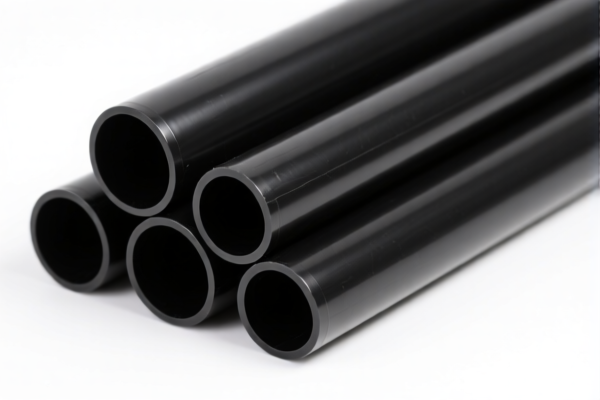
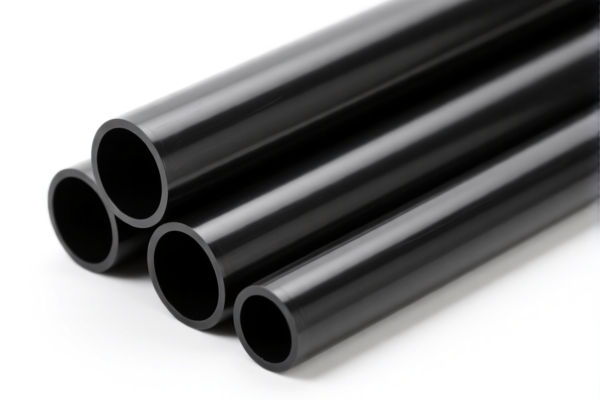
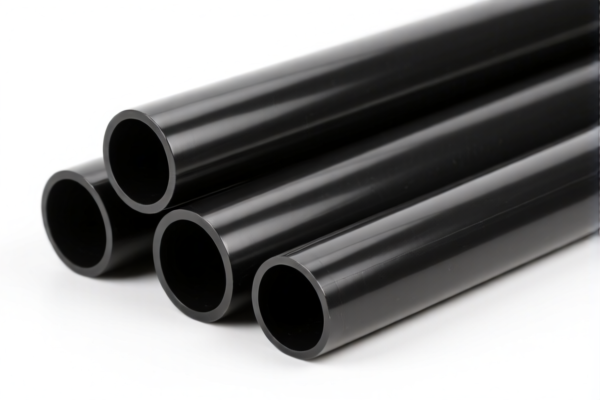
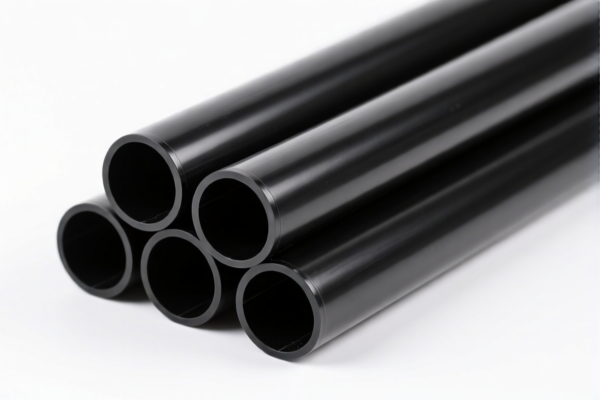
AI Analysis
🏗️ PVC Black Drain Pipe: HS Code Classification & US Customs Clearance Guide
🌐 HS Code Reference & Customs Clearance Guide | 2026 Latest Tariff Analysis | Professional Clearance Strategy
📌 I. Product Definition and Classification: What Exactly is a "PVC Black Drain Pipe"?
PVC (Polyvinyl Chloride) Black Drain Pipes are rigid plastic conduits primarily used for wastewater, sewage, and stormwater drainage systems. In international trade, especially under US Customs regulations, these products fall under Chapter 39 (Plastics and Articles Thereof). However, the specific HS Code depends on whether the product is classified as a "tube, pipe, or hose" (Section 3917) or a general "article of plastic" (Section 3926).
Key Distinction: * Plumbing/Drainage Pipes (HS 3917): Specifically defined as tubes, pipes, and hoses. If the primary function is conveying fluids (water/waste) and it meets the structural definition of a pipe, it often falls here. * General Plastic Articles (HS 3926): If the product is considered a generic plastic component or does not strictly meet the "pipe/hose" definition in Section 3917, it may fall into the "other articles of plastics" category.
⚠️ Critical Differentiator: - If the product is strictly a tube/pipe for conveying fluids (drainage), it is more likely to be classified under 3917. - If it is a non-specific plastic conduit or lacks specific plumbing standards, it may fall under 3926. - Note: US Customs has historically scrutinized PVC pipes due to anti-dumping duties and Section 301/IEEPA tariffs. Accurate classification is vital to avoid penalties.
📦 II. HS Code Classification Details (Based on Provided Data)
| HS Code | Product Description | Applicability & Logic |
|---|---|---|
3917.23.00.00 |
PVC (Vinyl Chloride Polymer) Drain Pipes Matches the definition of "tubes, pipes, and hoses" in HS 3917.23.00.00. |
✅ Preferred for Drainage: Specifically identifies the material (PVC) and function (drainage/piping). High tax due to Section 301/IEEPA. |
3926.90.99.87 |
PVC (Plastic) Pipes Classified as plastic rigid pipes. Fits the category of plastic hard pipes; drainage and electrical conduits belong to the scope of pipe-like products. |
⚠️ Alternative: Used if the product is viewed as a general plastic pipe rather than a specialized plumbing tube. Lower base tariff but still subject to additional duties. |
3926.90.99.89 |
PVC (Polyvinyl Chloride) "Other Plastic Articles" PVC falls under Chapter 39 (3901-3914). Drain pipes are plastic articles, fitting the "other plastic articles" catch-all classification. |
⚠️ Catch-All: Applies if the product does not strictly meet 3917 definitions. Same tax rate as 3926.90.99.87. |
3917.40.00.20 |
PVC (Polyvinyl Chloride) Drain Pipes Fully complies with material and usage requirements in the classification explanation. |
❌ High Risk/High Tax: While it correctly identifies the material, the tariff structure here is the highest, reflecting strict enforcement on specific PVC pipe types. |
🔍 Key Insight: - All proposed HS Codes fall under Chapter 39. - The main difference lies in whether the pipe is classified under Section 3917 (Tubes/Pipes) or Section 3926 (Other Articles). - Tax Implications: HS 3917 codes generally carry higher total tariffs (38.1%–40.3%) compared to HS 3926 codes (22.8%) due to specific duty structures in the provided data.
💰 III. 2026 Latest Tariff Rate Details (Including Surtaxes, Policy Add-ons)
✅ Applicable Country: United States (US)
✅ Origin: China (CN) (Inferred from tax details: 122 Clauses & Section 301)
✅ Effective Time: Ongoing (Current Trade War Tariffs)
🎯 1. 3917.23.00.00 —— PVC Drain Pipes (Tube/Pipe Definition)
| Item | Content |
|---|---|
| Base Tariff | 3.1% |
| Section 301 Surcharge | 25.0% |
| Section 122 Tariff | 10.0% |
| Total Tax Rate | 38.1% |
| Tax Calculation | CIF Value × 38.1% |
| De Minimis Eligibility | ❌ NO (Section 301/IEEPA goods are excluded from de minimis) |
| Legal Basis Path | USITC:3917.23.00.00 → USITC:Footnote_301 → IEEPA:9903.01.25 |
📌 Explanation: - 3.1% Base: Standard MFN rate for PVC pipes. - 25% Section 301: The most significant cost driver, targeting Chinese plastic products. - 10% Section 122: Likely refers to additional national security or trade adjustment tariffs. - Total 38.1%: A substantial cost burden. Must be factored into landed cost calculations.
🎯 2. 3926.90.99.87 & 3926.90.99.89 —— PVC Pipes / Other Plastic Articles
| Item | Content |
|---|---|
| Base Tariff | 5.3% |
| Section 301 Surcharge | 7.5% |
| Section 122 Tariff | 10.0% |
| Total Tax Rate | 22.8% |
| Tax Calculation | CIF Value × 22.8% |
| De Minimis Eligibility | ❌ NO |
| Legal Basis Path | USITC:3926.90.99.xx → USITC:Footnote_301 → IEEPA:9903.01.24 |
📌 Explanation: - 5.3% Base: Higher base rate for "other articles," but lower Section 301 surcharge (7.5% vs 25%). - Total 22.8%: Significantly cheaper than the 3917 classification (15.3% difference). - Strategy: Importers often try to classify PVC pipes under 3926 if they can justify it as a "general plastic article" rather than a "plumbing pipe," but this risks customs audits if the product is clearly marked as "drainage pipe."
🎯 3. 3917.40.00.20 —— PVC Drain Pipes (Specific Subcategory)
| Item | Content |
|---|---|
| Base Tariff | 5.3% |
| Section 301 Surcharge | 25.0% |
| Section 122 Tariff | 10.0% |
| Total Tax Rate | 40.3% |
| Tax Calculation | CIF Value × 40.3% |
| De Minimis Eligibility | ❌ NO |
| Legal Basis Path | USITC:3917.40.00.20 → USITC:Footnote_301 → IEEPA:9903.01.25 |
📌 Explanation: - Highest Tariff: 40.3%. This classification combines a moderate base rate with the full 25% Section 301 duty. - Risk: This is the most expensive option. It should only be used if the product strictly matches the specific description of 3917.40.00.20 (likely specific diameter or pressure rating).
🛠️ IV. Customs Clearance Practical Advice (Battle-Tested Pitfall Guide)
✅ 1. Required Documentation Checklist
| Document | Must Provide | Notes |
|---|---|---|
| ✅ Product Specifications | ✔️ | Must include material (PVC), diameter, wall thickness, pressure rating (if any). |
| ✅ Product Photos | ✔️ | Clear images of the pipe, labels ("PVC", "Drain", "Schedule 40", etc.). |
| ✅ Commercial Invoice | ✔️ | Clearly state "PVC Drain Pipe" or "Plastic Pipe." Avoid vague terms like "Plastic Tubing." |
| ✅ Bill of Lading | ✔️ | Ensure commodity description matches the invoice. |
| ✅ Country of Origin Certificate | ✔️ | Essential for determining Section 301 applicability. |
| ✅ Customs Ruling (Optional) | ✔️ | Pre-approved HS Code ruling from CBP reduces audit risk. |
✅ 2. Declaration Strategy (Key Tips)
🔥 "Describe Accurately, Classify Wisely, Tax Can Be Lowered!"
| Scenario | Correct Declaration | Incorrect Declaration | Consequence |
|---|---|---|---|
| Standard Black Drain Pipe | 3917.23.00.00 or 3926.90.99.87 |
"Plastic Pipe" (Vague) | Customs may reclassify → Higher tax + Penalties. |
| Electrical Conduit (PVC) | 3917.29.00 or 3926.90 |
"Drain Pipe" | Mismatch → Audit delay. |
| Non-Standard Plastic Tube | 3926.90.99.89 |
3917.23.00.00 |
Overpayment of 15.3% tax. |
| Any PVC Pipe from China | Declare HS + "Subject to Sec 301" | Omit Section 301 | Seizure/Fines! |
📌 Important Note: - Do not use "De Minimis" (Section 321) for shipments of PVC pipes from China if the value exceeds $800 and the goods are subject to Section 301/IEEPA duties. The de minimis exemption does not apply to these duties. - Ensure the HTSUS code matches the product's actual use and material composition.
✅ 3. Special Circumstances Handling
| Situation | Recommendation |
|---|---|
| OEM Custom Pipes | Provide client order + technical drawings. Prove if it's a specialized pipe (3917) or general article (3926). |
| Mixed Containers | If mixing PVC pipes with other plastic goods, declare separately. PVC pipes have unique tariff treatments. |
| Labeling Issues | Ensure pipes are labeled "Made in China." Mislabeling leads to severe penalties. |
| Audit Risk | If classified under 3926 (22.8%) but product is clearly for drainage, be prepared to provide evidence that it does not meet 3917 definitions. |
🌍 V. Global Market Comparison (2026 Overview)
| Country/Region | Recommended HS Code | Tariff (China Origin) | Certification | Notes |
|---|---|---|---|---|
| 🇺🇸 USA | 3917.23.00.00 / 3926.90.99.xx |
22.8% – 40.3% | None specific, but must comply with FTC labeling | High tariffs due to Section 301. |
| 🇨🇳 China | 3917.23.00 / 3926.90.99 |
0% – 5% | GB Standards | Low import duty for foreign PVC. |
| 🇪🇺 EU | 3917.23 / 3926.90 |
6.5% – 7.0% | CE Marking (if applicable) | No Section 301 equivalent. |
| 🇲🇽 Mexico | 3917.23 / 3926.90 |
0% (under USMCA if qualified) | NOM Certification | Check USMCA rules of origin. |
📌 Conclusion: - USA is the most expensive market for PVC pipes from China due to Section 301 and IEEPA tariffs. - Tariff Savings Strategy: Attempt to classify under 3926.90.99 (22.8%) if the product can be justified as a general plastic article rather than a specific plumbing pipe (3917), but ensure compliance with customs definitions.
📌 VI. Common Mistakes & Pitfall Guide (Lessons Learned)
❌ Mistake 1: Classifying PVC Drain Pipes as "De Minimis" shipments 👉 Consequence: Seizure. Section 301 and IEEPA duties apply regardless of value.
❌ Mistake 2: Using vague descriptions like "Plastic Tubing" 👉 Consequence: Customs may assign a higher duty code or delay clearance for further investigation.
❌ Mistake 3: Ignoring the 122 Clause Tariff 👉 Consequence: Underpayment of duties. The 10% surcharge is mandatory for these goods.
❌ Mistake 4: Mixing PVC Pipes with Other Goods Without Separate Declaration 👉 Consequence: If the PVC pipes are subject to 301 duties and other goods are not, incorrect separation can lead to audits and penalties.
✅ Correct Approach:
"PVC Black Drain Pipe, Schedule 40, 4-inch Diameter, Made in China. HS Code: 3917.23.00.00 (or 3926.90.99.87 if justified). Subject to Section 301 (25%) and IEEPA (10%)."
🎯 VII. Conclusion: Precision in Classification Saves Money!
🎯 Remember the Golden Rules:
🔹 "PVC Pipes from China = High Tariffs (22.8%–40.3%). No De Minimis!"
🔹 "3917 vs. 3926: A 15.3% Difference. Choose Wisely, Declare Accurately!"
🔹 "Documentation is Key: Invoice, Photos, and Origin Certificate are Mandatory."
📌 Pro Tip:
If your PVC pipes are not made in China (e.g., Vietnam, Mexico, Thailand), you may avoid Section 301 tariffs.
However, Section 122 and other duties may still apply. Always verify the country of origin.
📣 Immediate Action:
📞 Contact a licensed customs broker.
📄 Prepare detailed product specs and photos.
🚀 Get a Pre-Ruling from CBP if the classification is ambiguous.
💡 Cost-Saving: Evaluate if classifying under 3926.90.99.87/89 is defensible to save ~15% in duties.
✨ Professional Clearance, Starting from Accurate Classification!
💼 Every Percent Saved is Pure Profit!
Customer Reviews
About HS Code Classification
The Harmonized System (HS) is an internationally standardized nomenclature developed by the World Customs Organization (WCO) to classify traded products. Over 200 countries use the HS system as the basis for customs tariffs, trade statistics, and import/export regulations.
Each HS code follows a hierarchical structure:
- Chapter (2 digits) — Broad category of goods (e.g., Chapter 84: Machinery and Mechanical Appliances)
- Heading (4 digits) — More specific grouping within the chapter
- Subheading (6 digits) — Internationally standardized breakdown, used by all WCO member countries
- National subdivisions (8-10 digits) — Country-specific extensions for further classification, such as US HTSUS 10-digit codes
Correct HS code classification is essential for smooth customs clearance, accurate duty payment, and compliance with trade regulations. Misclassification can lead to customs delays, overpayment of duties, or penalties.
When importing from CN to US, the applicable tariff rates may include:
- Most-Favored-Nation (MFN) rate — The standard duty rate applied to WTO members
- General rate — Applied to countries without trade agreements
- Trade remedy duties — Additional tariffs such as Section 301 (anti-dumping), Section 232 (national security), or countervailing duties
The information provided on this page is for reference purposes only. For official classification, please consult with your local customs authority or a licensed customs broker.