PVC Card Holder
CN → US| HS Code | Tariff Rate | Origin | Destination | Doc |
|---|---|---|---|---|
| 3926909989 | 22.8% | CN | US | Official Doc |
| 3923290000 | 38.0% | CN | US | Official Doc |
| 3926908700 | 40.3% | CN | US | Official Doc |
| 4202322000 | 55.0% | CN | US | Official Doc |
| 3923900080 | 38.0% | CN | US | Official Doc |
Product Images
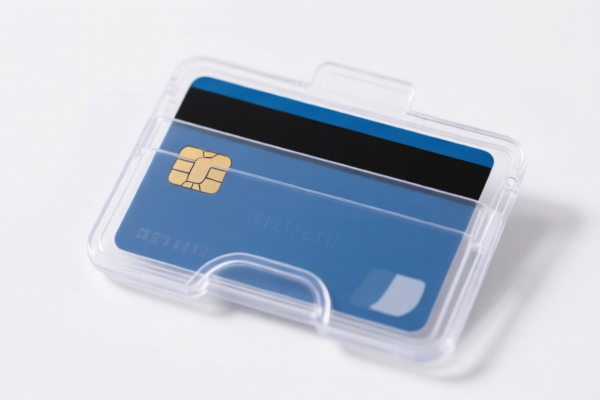
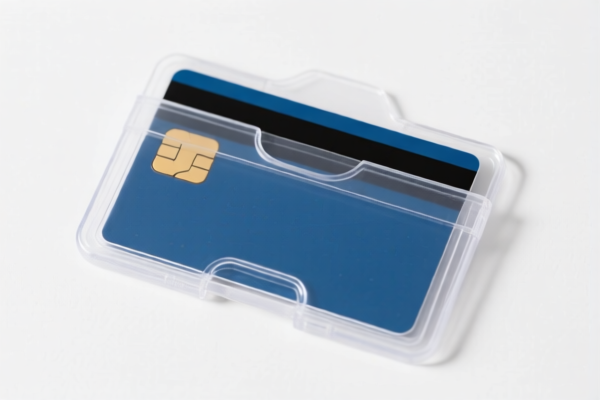
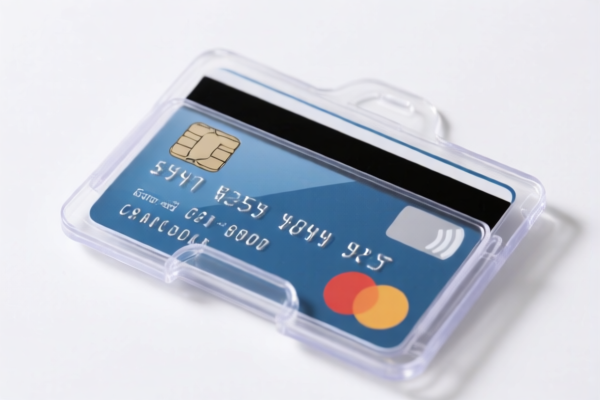

AI Analysis
💳 PVC Card Holder (Plastic Card Cases / Wallets)
🌐 HS Code Reference & Customs Clearance Guide | 2026 Latest Tariff Analysis | Professional Clearance Strategy
📌 I. Product Definition & Classification: Do You Really Know What a "PVC Card Holder" Is?
A PVC Card Holder is a common personal accessory used to store credit cards, ID badges, business cards, or small essentials. In international trade, these items are not classified simply by their material (PVC) but by their function, design, and intended use.
Misclassification is the #1 cause of customs delays and unexpected duties for PVC products. The key distinction lies in whether the item is considered: 1. Packaging/General Utility: A simple sleeve or pouch for general goods. 2. Personal Carry-All: A specific container for small personal items (often classified under Bags/Containers). 3. Fashion Accessory: A structured bag or wallet with zippers/buttons (classified under Luggage/Bags).
⚠️ Critical Distinction Point:
- If it’s a simple sleeve/pouch with no complex structure → It’s likely “Packaging” (Ch 39).
- If it’s a small container for keys/cards/coins → It’s likely “Articles for Personal Use” (Ch 42 or Ch 39 specific subheadings).
- If it’s a structured wallet/handbag shape → It’s likely “Luggage/Bags” (Ch 42).
📦 II. HS Code Classification Details (2026 Latest Tariff Authority Comparison)
| HS Code | Product Description | Application Scenario | Structural Complexity |
|---|---|---|---|
3923.90.00.80 |
PVC material; considered Plastic packaging articles | Simple slip-in sleeves, generic PVC pouches for bulk packaging | ❌ Low (Simple sheet/film) |
4202.32.10.00 |
PVC material; considered Container for small personal items (e.g., coin purse, card case with compartments) | Structured card holders, wallets, small organizers with lining/zippers | ✅ High (Manufactured structure) |
3926.90.99.89 |
PVC material; considered Other plastic articles | Miscellaneous PVC items not fitting packaging or bag definitions | ❌ Low/Medium (Generic plastic item) |
3923.29.00.00 |
PVC material; considered Plastic sacks/bags/pouches | Flexible plastic bags/sleeves for packaging cards or goods | ❌ Low (Flexible packaging) |
3926.90.87.00 |
PVC material; considered Plastic sheaths/sleeves | Protective sleeves for documents, ID cards, or books | ❌ Low (Protective sleeve) |
4202.32.20.00 |
PVC material; articles of a kind normally carried in the pocket or handbag, with an outer surface of plastic sheeting | Structured Wallets, Card Cases with multiple slots, coin purses, zippered cases | ✅ High (Fashion/Personal item) |
🔍 Key Reminder:
- Ch 42 (Luggage/Bags) items generally face higher tariffs than Ch 39 (Plastics) due to the "301 Tariff" and Section 122 tariffs.
- If the item is a simple sleeve (e.g., a clear plastic card sleeve),3923.90.00.80or3923.29.00.00is more appropriate.
- If the item is a structured wallet (with stitching, lining, multiple pockets), it MUST be classified under4202.32.xx.
💰 III. 2026 Latest Tariff Rate Details (Including Surcharges, Policy Add-ons)
✅ Applicable Country: United States (US)
✅ Origin: China (CN)
✅ Effective Date: 2025 November 10 (Includes subsequent imports)
🎯 1. 3923.90.00.80 & 3923.29.00.00 —— Plastic Packaging/Sacks
| Item | Content |
|---|---|
| Base Tariff | 3.0% (Ad Valorem) |
| Section 301 Surcharge | +25.0% (On top of base) |
| Section 122 Tariff | +10.0% (China-specific, effective Nov 2025) |
| Total Tariff | 38.0% |
| Tax Calculation | CIF Value × 38.0% |
| De Minimis Eligibility | ❌ Not Eligible (denied_de_minimis for China origin under these codes) |
| Legal Basis Path | USITC:3923.90.00.80 → FOOTNOTE:301_3923 → IEEPA:122_China |
📌 Explanation:
- These codes are classified as packaging.
- The total tax is 38.0%, which is moderate but still significant.
- Warning: Many sellers incorrectly classify structured wallets here to save tax, but if the item has a manufactured structure (lining, zippers), Customs will reclassify it, leading to penalties.
🎯 2. 4202.32.10.00 & 4202.32.20.00 —— Personal Carry-Alls / Structured Wallets
| Item | Content |
|---|---|
| Base Tariff | 12.1¢/kg + 4.6% (Code .10) OR 20.0% (Code .20) |
| Section 301 Surcharge | +25.0% |
| Section 122 Tariff | +10.0% |
| Total Tariff | 12.1¢/kg + 4.6% + 35.0% (for .10) OR 55.0% (for .20) |
| Tax Calculation | (12.1¢ × Weight in kg) + (CIF × 4.6% + 35%) OR CIF × 55% |
| De Minimis Eligibility | ❌ Not Eligible (High tariff items excluded) |
| Legal Basis Path | USITC:4202.32.xx → FOOTNOTE:301_4202 → IEEPA:122_China |
📌 Explanation:
-4202.32.10.00: Often used for small pouches/coin purses. Tax is complex: 12.1 cents per kg + 39.6% total effective rate (4.6% + 35% surcharges).
-4202.32.20.00: Used for structured wallets/handbags. Total tax is a flat 55.0%.
- Why so high? Ch 42 items are considered "finished consumer goods" and attract the highest combined tariff burden (Base + 301 + 122).
🎯 3. 3926.90.99.89 & 3926.90.87.00 —— Other Plastic Articles
| Item | Content |
|---|---|
| Base Tariff | 5.3% |
| Section 301 Surcharge | +7.5% (for .89) OR +25.0% (for .87) |
| Section 122 Tariff | +10.0% |
| Total Tariff | 22.8% (for .89) OR 40.3% (for .87) |
| Tax Calculation | CIF × 22.8% or CIF × 40.3% |
| De Minimis Eligibility | ❌ Not Eligible |
| Legal Basis Path | USITC:3926.90.xx → FOOTNOTE:301_3926 → IEEPA:122_China |
📌 Explanation:
-3926.90.99.89: "Other plastic articles." Tax is 22.8%. Lower, but often scrutinized if the item is clearly a "bag/wallet" (Ch 42).
-3926.90.87.00: "Plastic sheaths/sleeves." Tax is 40.3%. Higher base tariff (5.3%) and higher 301 (25%).
🛠️ IV. Customs Clearance Practical Advice (Field Avoidance Guide)
✅ 1. Required Documentation Checklist (Non-negotiable)
| Document | Required | Description |
|---|---|---|
| ✅ Product Specifications | ✔️ | Material (100% PVC or PVC blend), dimensions, weight, number of slots. |
| ✅ Product Photos | ✔️ | Clear images showing structure: Is it a simple sleeve? A zippered pouch? A structured wallet with lining? |
| ✅ Commercial Invoice | ✔️ | Must explicitly state: "PVC Card Holder, Model XXX, HS Code: XXXX" |
| ✅ Packing List | ✔️ | Must include net weight (kg) and gross weight (kg) for per-kg tax calculations. |
| ✅ Material Declaration | ✔️ | Confirm PVC content. If mixed with fabric, it may still be Ch 42. |
✅ 2. Classification Strategy (Key Mnemonic)
🔥 "Structure Dictates Code, Simple is Ch 39, Fancy is Ch 42!"
| Scenario | Correct HS Code | Estimated Total Tax | Why? |
|---|---|---|---|
| Simple PVC Sleeve (No lining, no zipper, just a pocket) | 3923.90.00.80 or 3923.29.00.00 |
38.0% | Classified as "Plastic Packaging." |
| Clear Card Protector (Document sleeve) | 3926.90.87.00 |
40.3% | Classified as "Plastic Sheath." |
| Generic PVC Pouch (No brand, simple function) | 3926.90.99.89 |
22.8% | Classified as "Other Plastic Article." (Lowest Tax, but risky if structured) |
| Structured Wallet/Card Case (Zippers, stitching, lining, compartments) | 4202.32.10.00 or 4202.32.20.00 |
~39.6% - 55.0% | Classified as "Bag/Article for Personal Use." |
📌 Warning:
- Do NOT try to classify a structured wallet (Ch 42) as a plastic bag (Ch 39) to save tax. Customs CBP has strict rules: If it looks like a bag and carries personal items, it’s Ch 42.
-3926.90.99.89(22.8%) is the "sweet spot" for low-tax classification, but it applies only if the item is not clearly a "bag" or "packaging." It’s for miscellaneous plastic items. If the item is a card holder, CBP may argue it’s either packaging (Ch 39) or a bag (Ch 42).
✅ 3. Special Case Handling
| Scenario | Handling Advice |
|---|---|
| OEM Custom Card Holder | Provide design blueprints. If the design mimics a wallet, use Ch 42. |
| PVC + Fabric Mix | If fabric is the "outer surface," it may still be Ch 42. If PVC is dominant, check Ch 39. |
| Sample vs. Bulk | Samples under $800 may qualify for De Minimis (Section 321), but NOT if declared as high-risk Ch 42 items with high duty. Verify current De Minimis rules for China. |
| Misclassification Penalty | If you declare 4202 but Customs reclassifies to 3923, you may face a refund of duties. However, if you declare 3923 but it’s actually 4202, you face penalties + back taxes. |
🌍 V. Global Market Comparison (2026 Latest)
| Country/Region | Recommended HS Code | Tariff (China Origin) | Certification | Notes |
|---|---|---|---|---|
| 🇺🇸 USA | 4202.32.20.00 (Wallet) / 3923.90.00.80 (Packaging) |
55.0% / 38.0% | No specific | High tariffs due to Section 301 + 122. |
| 🇨🇳 China | 4202.32.20.00 |
5% | CCC (if applicable) | Low duty. |
| 🇪🇺 EU | 4202.32.20.00 |
12% | CE (if electronic) | No Section 301. |
| 🇬🇧 UK | 4202.32.20.00 |
12% | UKCA | Post-Brexit rules apply. |
| 🇦🇺 Australia | 4202.32.20.00 |
5% | RCM | Low duty. |
📌 Conclusion:
- The USA is the only market with punitive tariffs (up to 55%) for PVC card holders from China.
- European markets are far more favorable (12% vs 55%).
- Strategy: For the US market, consider shifting production to Vietnam/Mexico to avoid Section 122 and 301 tariffs, or reclassify carefully as "Packaging" (3923) if structurally appropriate.
📌 VI. Common Mistakes & Pitfalls (Blood Lessons)
❌ Mistake 1: Calling a structured wallet a "Plastic Bag" (3923) to get 38% instead of 55%.
👉 Consequence: CBP reclassifies to 4202.32.20.00, demands back taxes + penalty.
❌ Mistake 2: Ignoring the "Per Kg" tax in 4202.32.10.00.
👉 Consequence: For heavy items, the per-kg charge + 4.6% can exceed 55%. Always calculate total CIF value impact.
❌ Mistake 3: Declaring "Card Holder" without specifying structure.
👉 Consequence: Customs delays while they inspect the physical product to determine Ch 39 vs Ch 42.
✅ Correct Declaration Example:
"PVC Card Holder, Model ABC, 100% PVC, No Zipper, Simple Sleeve, HS Code: 3923.90.00.80, Made in China"
🎯 VII. Conclusion: Smart Classification, Lower Costs!
🎯 Remember the Mnemonic:
🔹 "Simple Sleeve? Use 3923 (38%). Structured Wallet? Use 4202 (55%). Miscellaneous Plastic? Use 3926 (22.8%)."
🔹 "HS Code defines your cost. A $1 item can cost $1.55 to import to the US. Choose wisely!"
📌 Pro Tip:
If your card holder is simple (no lining, no zipper, no brand), strictly declare it as "Plastic Packaging Article" (3923.90.00.80) or "Other Plastic Article" (3926.90.99.89) to minimize tax.
If it’s fancy (structured, zipped, branded), declare it as "Bag/Personal Item" (4202.32.20.00) and accept the 55% tax, or relocate production to avoid China-origin surcharges.
📣 Take Action Now:
📞 Contact your customs broker with clear photos of the product.
🚀 Request an Advance Ruling from CBP if you are unsure about Ch 39 vs Ch 42.
💼 Your profit margin depends on your HS Code!
Customer Reviews
About HS Code Classification
The Harmonized System (HS) is an internationally standardized nomenclature developed by the World Customs Organization (WCO) to classify traded products. Over 200 countries use the HS system as the basis for customs tariffs, trade statistics, and import/export regulations.
Each HS code follows a hierarchical structure:
- Chapter (2 digits) — Broad category of goods (e.g., Chapter 84: Machinery and Mechanical Appliances)
- Heading (4 digits) — More specific grouping within the chapter
- Subheading (6 digits) — Internationally standardized breakdown, used by all WCO member countries
- National subdivisions (8-10 digits) — Country-specific extensions for further classification, such as US HTSUS 10-digit codes
Correct HS code classification is essential for smooth customs clearance, accurate duty payment, and compliance with trade regulations. Misclassification can lead to customs delays, overpayment of duties, or penalties.
When importing from CN to US, the applicable tariff rates may include:
- Most-Favored-Nation (MFN) rate — The standard duty rate applied to WTO members
- General rate — Applied to countries without trade agreements
- Trade remedy duties — Additional tariffs such as Section 301 (anti-dumping), Section 232 (national security), or countervailing duties
The information provided on this page is for reference purposes only. For official classification, please consult with your local customs authority or a licensed customs broker.