PVC Ceiling Decorative Panel
CN → US| HS Code | Tariff Rate | Origin | Destination | Doc |
|---|---|---|---|---|
| 3921125000 | 41.5% | CN | US | Official Doc |
| 3925900000 | 40.3% | CN | US | Official Doc |
| 3916200091 | 40.8% | CN | US | Official Doc |
| 3921121100 | 39.2% | CN | US | Official Doc |
| 3916200010 | 40.8% | CN | US | Official Doc |
Product Images
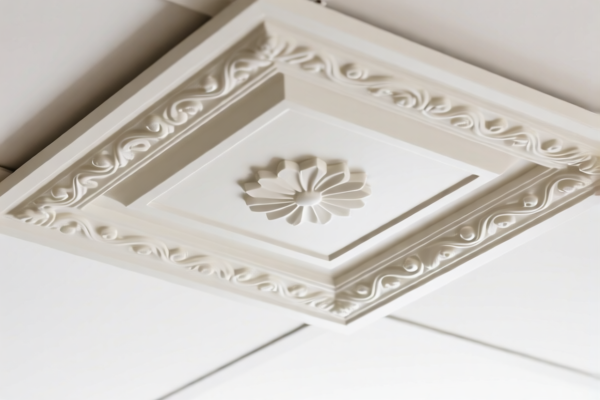
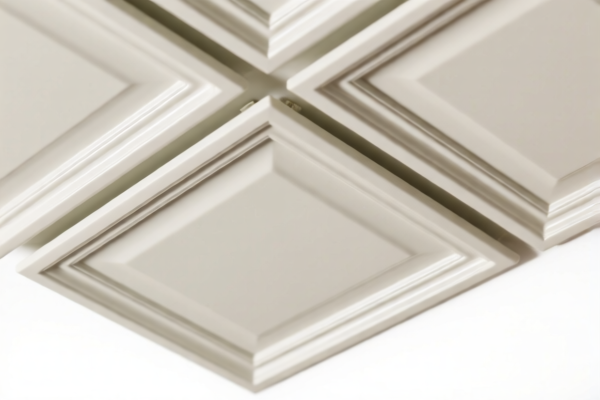
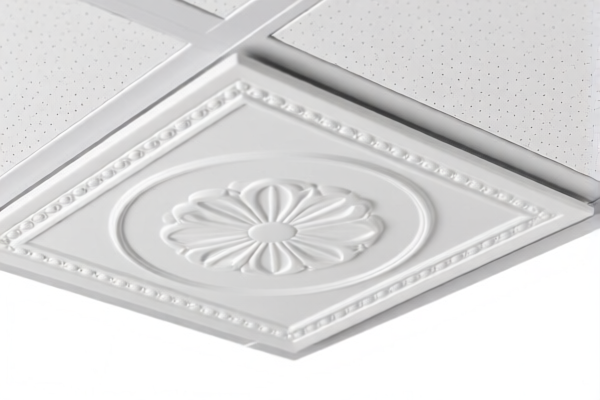

AI Analysis
🏗️ PVC Ceiling Decorative Panel (Stone-Grain Finish)
🌐 HS Code Reference & Customs Clearance Guide | 2026 Latest Tariff Analysis | Professional Clearance Strategy for U.S. Imports
📌 I. Product Definition & Classification: Is it a "Board," a "Profile," or a "Building Component"?
PVC Ceiling Decorative Panels, specifically those with a Stone-Grain Finish (石纹), are rigid plastic building materials used for interior decoration. In international trade, their classification hinges on their physical form and intended end-use within the construction context.
Key Classification Ambiguity: - Plastic Boards/Plates (3921): If the panel is primarily viewed as a flat sheet of rigid plastic used for lining. - Building Components (3925): If explicitly categorized as an architectural accessory or part of the building structure. - Plastic Profiles/Extrusions (3916): If the panel has a specific cross-sectional profile designed to interlock or mount as a construction profile.
⚠️ Critical Distinction:
- The "Stone-Grain" effect is merely a surface aesthetic; it does not change the material classification (still PVC/VCM polymer).
- The difference lies in whether Customs views it as a generic Plastic Sheet (3921), a Building Part (3925), or a Plastic Profile (3916).
- Lower Duty Base Rate = Lower Total Tax Burden. All options below include significant punitive tariffs (Section 301 & Section 122).
📦 II. HS Code Classification Matrix (2026 Latest Tariff Authority)
| HS Code | Product Description | Basis for Classification | Total Tax Rate (China Origin) |
|---|---|---|---|
3921.12.11.00 |
PVC Stone-Grain Ceiling Panel | Board/Plate. Classified under "Plastics... in primary forms or in plates, sheets... of vinyl chloride polymers." | 39.2% |
3925.90.00.00 |
PVC Stone-Grain Ceiling Panel | Building Component. Classified under "Other builders' ware of plastics." | 40.3% |
3916.20.00.91 |
PVC Stone-Grain Ceiling Panel | Profile. Classified under "Profiles of plastics... other." | 40.8% |
3916.20.00.10 |
PVC Stone-Grain Ceiling Panel | Profile (Building Use). Classified under "Profiles... of plastics... for building purposes." | 40.8% |
3921.12.50.00 |
PVC Stone-Grain Ceiling Panel | Board (Generic). Classified under "Plates, sheets... of vinyl chloride polymers" (Other). | 41.5% |
🔍 Key Insight:
-3921.12.11.00offers the lowest total tax rate (39.2%) because it has the lowest Base Duty (4.2%).
-3921.12.50.00is the most expensive (41.5%) due to a higher Base Duty (6.5%).
-3925and3916fall in the middle, but carry higher base duties (5.3%-5.8%) than the optimal3921subheading.
💰 III. 2026 Latest Tariff Rate Breakdown (Detailed Tax Clauses)
✅ Applicable Country: United States (US)
✅ Country of Origin: China (CN)
✅ Effective Date: Rates apply to imports subject to Section 301 and Section 122 tariffs.
🎯 1. 3921.12.11.00 —— OPTIMAL: PVC Plates/Sheets (Base Duty 4.2%)
| Item | Content |
|---|---|
| Base Duty | 4.2% (General Rate) |
| Section 301 Add-on | +25.0% (List 4A) |
| Section 122 Add-on | +10.0% (Targeting China-specific goods) |
| Total Tax Rate | 39.2% |
| Calculation Basis | CIF Value × 39.2% |
| De Minimis Exemption | ❌ NO (Deny de minimis for this category) |
| Legal Path | USITC:3921.12.11.00 → Section301:List4A → Section122:ChinaTarget |
📌 Explanation:
- This classification views the panel as a plastic sheet/board.
- Despite being used for ceilings, if it fits the technical definition of a "plate/sheet" of vinyl chloride polymer, it may qualify here.
- Savings: Compared to the highest option (3921.12.50.00), this saves 2.3% on the total tax burden.
🎯 2. 3925.90.00.00 —— Building Components (Base Duty 5.3%)
| Item | Content |
|---|---|
| Base Duty | 5.3% (General Rate) |
| Section 301 Add-on | +25.0% |
| Section 122 Add-on | +10.0% |
| Total Tax Rate | 40.3% |
| Calculation Basis | CIF Value × 40.3% |
| De Minimis Exemption | ❌ NO |
| Legal Path | USITC:3925.90.00.00 → Section301:List4A → Section122:ChinaTarget |
📌 Explanation:
- Customs may classify ceiling panels as "builders' ware" because they are installed in buildings.
- This is a common alternative classification but results in a 1.1% higher total tax than3921.12.11.00.
🎯 3. 3916.20.00.91 & .10 —— Plastic Profiles (Base Duty 5.8%)
| Item | Content |
|---|---|
| Base Duty | 5.8% (General Rate) |
| Section 301 Add-on | +25.0% |
| Section 122 Add-on | +10.0% |
| Total Tax Rate | 40.8% |
| Calculation Basis | CIF Value × 40.8% |
| De Minimis Exemption | ❌ NO |
| Legal Path | USITC:3916.20.00.xx → Section301:List4A → Section122:ChinaTarget |
📌 Explanation:
- If the panel has a complex cross-section (e.g., tongue-and-groove, specific mounting channels), Customs might argue it is a "profile."
- Risk: Higher base duty (5.8%) makes this less favorable than board classifications.
🎯 4. 3921.12.50.00 —— Generic PVC Boards (Base Duty 6.5%)
| Item | Content |
|---|---|
| Base Duty | 6.5% (General Rate) |
| Section 301 Add-on | +25.0% |
| Section 122 Add-on | +10.0% |
| Total Tax Rate | 41.5% |
| Calculation Basis | CIF Value × 41.5% |
| De Minimis Exemption | ❌ NO |
| Legal Path | USITC:3921.12.50.00 → Section301:List4A → Section122:ChinaTarget |
📌 Explanation:
- This is the "catch-all" for PVC boards that don't fit specific subheadings.
- Avoid if possible, as it has the highest total tax rate (41.5%).
🛠️ IV. Customs Clearance Practical Advice (Pitfall Avoidance Guide)
✅ 1. Documentation Checklist (Non-Negotiable)
| Document | Required | Explanation |
|---|---|---|
| Product Spec Sheet | ✔️ | Must explicitly state: "PVC," "Vinyl Chloride Polymer," "Flat Sheet/Board," and "Surface Finish: Stone-Grain (Aesthetic Only)." |
| Cross-Section Diagram | ✔️ | Critical to prove it is a Flat Board (3921) rather than a complex Profile (3916) or distinct Building Assembly (3925). |
| Commercial Invoice | ✔️ | Description should match the HS Code. Example: "PVC Decorative Ceiling Panel, Sheet Form, PVC Material." |
| Material Safety Data Sheet (MSDS) | ✔️ | To confirm composition is primarily PVC/VCM. |
| Packing List | ✔️ | Must show quantity and dimensions consistent with "Sheets/Boards." |
✅ 2. Declaration Strategy (Key Mantra)
🔥 “Claim as Sheet, Not Profile. Low Base Rate, Save Big Dollar!”
| Scenario | Correct Declaration | Wrong Declaration | Consequence |
|---|---|---|---|
| Standard Flat Panel | 3921.12.11.00 (PVC Board) |
3916.20.00.10 (Profile) |
+1.6% extra tax due to higher base rate. |
| Interlocking Panel | 3921.12.11.00 (Still Board) |
3925.90.00.00 (Building Component) |
+1.1% extra tax. |
| Mixed Shipment | Do NOT split | Splitting into accessories | If accessories are small, they may attract 89.5% if misclassified. Keep as one unit. |
⚠️ Warning:
- If the panel is flexible (thin film), it might be classified differently, but "Ceiling Panels" are typically rigid. Ensure your description says "Rigid" or "Sheet" to avoid being classified as a flexible film (which might have different rules).
✅ 3. Special Situations
| Situation | Handling Advice |
|---|---|
| Pre-cut to Size | Still qualifies as "Plate/Sheet" (3921) if the primary form is a sheet. |
| With Adhesive Backing | Caution: If it has an adhesive layer, Customs may argue it's a "self-adhesive plate" or even move it to Chapter 35/48. However, PVC ceiling panels are often just PVC. If adhesive is minimal, stick with 3921. If significant, consult a broker. |
| Wood-Plastic Composite (WPC) | NOT PVC. If it contains wood fiber, it is NOT 3921. It would be 4418 (Wood) or 3925 depending on composition. This guide assumes 100% PVC. |
🌍 V. Global Market Comparison (2026)
| Country/Region | Recommended HS Code | Base Duty | US Specific Add-ons | Total Effective Rate (China Origin) |
|---|---|---|---|---|
| 🇺🇸 USA | 3921.12.11.00 |
4.2% | +35% (301+122) | 39.2% |
| 🇪🇺 EU | 3921.12.00 |
6.5% | None | 6.5% |
| 🇨🇳 China (Export) | 3921.12.11.00 |
0% (Refund) | None | 0% (Export Duty) |
| 🇦🇺 Australia | 3921.12.00 |
5.0% | None | 5.0% |
| 🇨🇦 Canada | 3921.12.00 |
5.0% | None | 5.0% |
📌 Conclusion:
- The US market is the most expensive due to the 35% punitive tariffs (25% Section 301 + 10% Section 122).
- Strategy: For US imports, every 0.1% of base duty matters. Choosing3921.12.11.00over3921.12.50.00saves 2.3% of the CIF value. On a $100,000 shipment, this is a $2,300 savings.
📌 VI. Common Mistakes & Pitfalls (Blood & Tears)
❌ Mistake 1: Declaring as "Plastic Profile" (3916) because it has grooves.
👉 Result: Base duty jumps to 5.8%. Loss: $1,600 per $100k shipment.
✅ Fix: Emphasize "Flat Sheet" or "Board" in description. Grooves for installation do not necessarily make it a "profile" if the primary form is a plate.
❌ Mistake 2: Declaring as "Building Component" (3925) to seem "specific."
👉 Result: Base duty 5.3%. Loss: $1,100 per $100k shipment.
✅ Fix: PVC panels are primarily plastics in sheet form. 3921 is the primary heading for plates/sheets.
❌ Mistake 3: Ignoring Section 122.
👉 Result: If you only account for 25% (Section 301) and forget 10% (Section 122), you will underpay by 10%.
✅ Fix: Always add +35% total punitive tariff to the base rate for China-origin PVC ceilings to the US.
🎯 VII. Conclusion: Professional Clearance, Cost Optimization
🎯 Remember the Mantra:
🔹 "Sheet, Not Profile. 3921.11 is King. 4.2% Base, 39.2% Total. Save the Difference!"
🔹 "Stone-Grain is Just Paint. Material is PVC. Classify by Material Form, Not Look."
📌 Pro Tip:
- If you are importing large volumes, consider applying for a Pre-Immunity Hearing or Advance Ruling with US Customs if your product has unique features (e.g., extreme thickness, specific mounting systems) to lock in the 3921.12.11.00 classification.
- Verify "Stone-Grain": Ensure the description does not imply a "Wood-Plastic Composite" (WPC). If it contains wood flour, DO NOT use PVC HS Codes. It must be 100% PVC for these codes.
📣 Immediate Action:
📞 Consult a Licensed Customs Broker to review your product's cross-section and adhesive status.
📝 Prepare Specs: Highlight "PVC," "Rigid," "Sheet/Form."
🚀 Optimize Your Landed Cost: Every point of duty counts in the competitive US market.
✨ Precise Classification Starts with Understanding Material vs. Form!
💼 Your Profit Margin Depends on the Right HS Code!
Customer Reviews
About HS Code Classification
The Harmonized System (HS) is an internationally standardized nomenclature developed by the World Customs Organization (WCO) to classify traded products. Over 200 countries use the HS system as the basis for customs tariffs, trade statistics, and import/export regulations.
Each HS code follows a hierarchical structure:
- Chapter (2 digits) — Broad category of goods (e.g., Chapter 84: Machinery and Mechanical Appliances)
- Heading (4 digits) — More specific grouping within the chapter
- Subheading (6 digits) — Internationally standardized breakdown, used by all WCO member countries
- National subdivisions (8-10 digits) — Country-specific extensions for further classification, such as US HTSUS 10-digit codes
Correct HS code classification is essential for smooth customs clearance, accurate duty payment, and compliance with trade regulations. Misclassification can lead to customs delays, overpayment of duties, or penalties.
When importing from CN to US, the applicable tariff rates may include:
- Most-Favored-Nation (MFN) rate — The standard duty rate applied to WTO members
- General rate — Applied to countries without trade agreements
- Trade remedy duties — Additional tariffs such as Section 301 (anti-dumping), Section 232 (national security), or countervailing duties
The information provided on this page is for reference purposes only. For official classification, please consult with your local customs authority or a licensed customs broker.