PVC Chemical Pipe
CN → US| HS Code | Tariff Rate | Origin | Destination | Doc |
|---|---|---|---|---|
| 3917230000 | 38.1% | CN | US | Official Doc |
| 3917320010 | 38.1% | CN | US | Official Doc |
| 3926909987 | 22.8% | CN | US | Official Doc |
| 3926909989 | 22.8% | CN | US | Official Doc |
Product Images
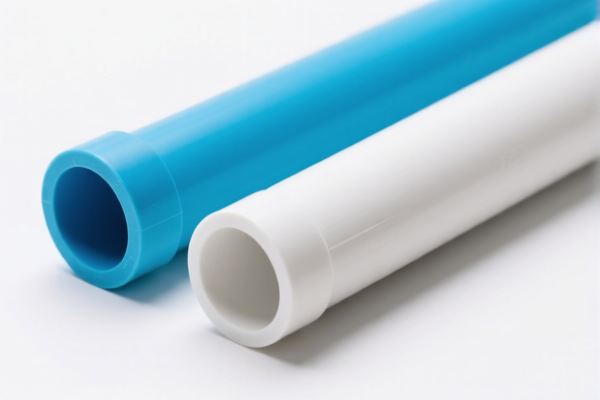
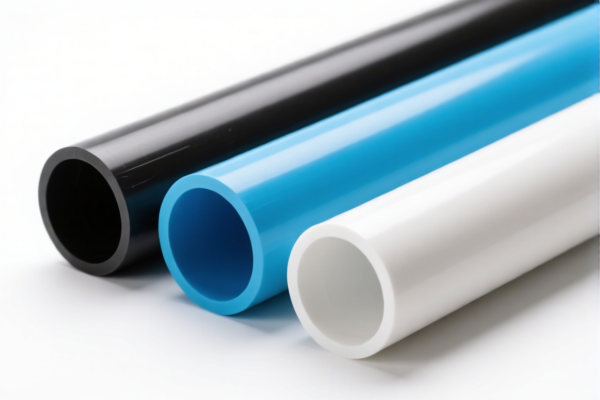

AI Analysis
🧪 PVC Chemical Pipe (PVC Chemical Conduit)
🌐 HS Code Reference & Customs Clearance Guide | 2026 Latest Tariff Analysis | Professional Clearance Strategy
📌 I. Product Definition and Classification: Do You Really Understand "PVC Chemical Pipes"?
PVC Chemical Pipes, in the context of international trade and customs classification, refer to rigid or semi-rigid tubing made from vinyl polymer plastics (specifically PVC), designed primarily for conveying, transporting, or protecting electrical wiring and chemical fluids.
In customs classification, these are strictly categorized under Chapter 39 (Plastics and articles thereof), specifically heading 3917 (Tubes, pipes and hoses, and joints therefor).
Key Distinction: * General PVC Pipes (3917 Series): If the pipe is explicitly described as being made of "polymers of vinyl chloride" or "PVC," it falls under 3917. This is the standard, most accurate classification for PVC chemical pipes. * Other Plastic Pipes (3926 Series): If the description is vague (e.g., "plastic pipe") and lacks specific polymer identification, or if it is a generic "other plastic article," it may incorrectly fall under 3926 (Other articles of plastics). ⚠️ Warning: Misclassification here leads to significantly different tax liabilities.
⚠️ Critical Classification Point:
- If the material is specifically identified as PVC/Vinyl Chloride Polymer →归入 3917 (Higher Tariff Due to Specific Trade Restrictions).
- If the material is vaguely described as "Plastic" without specifying PVC → Risks classification under 3926 (Lower Tariff, but risky if inspected).
📦 II. HS Code Classification Details (2026 Latest Tariff Authority对照)
| HS Code | Product Description | Application Scenario | Material Specificity |
|---|---|---|---|
3917.23.00.00 |
Tubes, pipes and hoses of plastics: Of polymers of vinyl chloride | Primary Classification for PVC Chemical Pipes • Standard PVC chemical conduits • Chemical-resistant piping |
✅ Explicitly PVC (Polymers of vinyl chloride) |
3917.32.00.10 |
Other tubes, pipes and hoses of plastics: Of plastics (Specific subheading for PVC pipes under 3917.32) |
Alternative PVC Classification • Specific PVC pipes not fitting 3917.23 • Rigid PVC tubes |
✅ Explicitly PVC (Polymers of vinyl chloride) |
3926.90.99.87 |
Other articles of plastics and articles of other materials of headings 3901 to 3914: Other (PVC Pipe, Material: Plastic, Use Unspecified) |
Fallback Category • Vague descriptions • Pipes not clearly identified as PVC |
❌ Vague ("Plastic" only, not specified as PVC) |
3926.90.99.89 |
Other articles of plastics and articles of other materials of headings 3901 to 3914: Other (PVC Pipe, Fallback Category) |
Bottom-Net Category • General plastic pipes • Non-specific plastic tubing |
❌ Vague ("Plastic" only) |
🔍 Key Insight:
- 3917 Codes are for specifically identified PVC/Vinyl Chloride pipes.
- 3926 Codes are for general plastic pipes where the polymer type is not explicitly declared or recognized as PVC in the 3917 heading.
- Customs Risk: Declaring "PVC Chemical Pipe" but using a 3926 code is a misdeclaration risk. Conversely, using 3917 for non-PVC plastic pipes is also a misdeclaration.
💰 III. 2026 Latest Tariff Rate Breakdown (Including Additional Duties)
✅ Applicable Country: USA (US)
✅ Country of Origin: China (CN)
✅ Effective Time: 2025/2026 (Current Trade War Context)
🎯 1. HS Code 3917.23.00.00 & 3917.32.00.10 —— PVC Pipes (Specific)
These codes attract the highest tariffs due to specific trade measures targeting vinyl chloride polymers.
| Item | Content |
|---|---|
| Base Duty Rate | 3.1% (Ad valorem) |
| Section 301 Additional Duty | +25.0% (USITC Footnote 9903.88.01) |
| Section 122 Duty / IEEPA | +10.0% (Targeted Chinese goods) |
| Total Effective Tariff Rate | 38.1% |
| Tax Calculation | CIF Value × 38.1% |
| De Minimis Exemption | ❌ Not Eligible (High value/duty category) |
| Legal Basis Path | USITC:3917.23.00.00 → FOOTNOTE:301.88.01 → IEEPA:9903.01.24 |
📌 Explanation:
- 3.1% Base: Standard MFN duty for PVC pipes.
- 25% Section 301: Retaliatory tariff on Chinese PVC goods.
- 10% Section 122/IEEPA: Additional levy on specific Chinese plastic products.
- Total 38.1%: This is a high-cost classification. Importers must plan for significant duty costs.
🎯 2. HS Code 3926.90.99.87 & 3926.90.99.89 —— Other Plastic Articles (Generic)
These codes have a lower total tariff, but are only applicable if the product is not clearly classified under 3917.
| Item | Content |
|---|---|
| Base Duty Rate | 5.3% (Ad valorem) |
| Section 301 Additional Duty | +7.5% (Reduced Section 301 rate for some 3926 items) |
| Section 122 Duty / IEEPA | +10.0% |
| Total Effective Tariff Rate | 22.8% |
| Tax Calculation | CIF Value × 22.8% |
| De Minimis Exemption | ❌ Not Eligible |
| Legal Basis Path | USITC:3926.90.99.87 → FOOTNOTE:301.88.01 → IEEPA:9903.01.24 |
📌 Explanation:
- 5.3% Base: Standard duty for "Other articles of plastics."
- 7.5% Section 301: Lower than the 25% rate for 3917.
- 10% Section 122: Still applies.
- Total 22.8%: Significantly cheaper than 38.1%, but must be justified by product description (i.e., not explicitly PVC/Vinyl Chloride).
🛠️ IV. Customs Clearance Practical Advice (Real-World Pitfall Avoidance)
✅ 1. Documentation Checklist (Non-Negotiable)
| Document | Must Provide | Description |
|---|---|---|
| ✅ Product Specification Sheet | ✔️ | Must explicitly state "Material: Polyvinyl Chloride (PVC)" and "Chemical Resistance Properties". |
| ✅ Material Safety Data Sheet (MSDS) | ✔️ | Confirms chemical composition and PVC content. |
| ✅ Product Photos (Labeled) | ✔️ | Clear images of the pipe, markings, and any "PVC" stamps. |
| ✅ Commercial Invoice | ✔️ | Must use precise language: "PVC Chemical Pipe, Material: Polymers of Vinyl Chloride". Avoid vague terms like "Plastic Tube." |
| ✅ Packing List | ✔️ | Detail weights, dimensions, and pipe diameters. |
| ✅ Certificate of Origin | ✔️ | Required for trade agreement checks (though China does not benefit from most FTA reductions for PVC). |
✅ 2. Declaration Strategy (Key Mantra)
🔥 "Be Specific on PVC, Avoid 3926 Traps, Declare Chemical Use Clearly!"
| Scenario | Correct Declaration | Incorrect Declaration | Risk |
|---|---|---|---|
| Standard PVC Pipe | 3917.23.00.00"PVC Chemical Pipe, PVC Material" |
"Plastic Pipe" | ❌ High Risk: Customs may reclassify to 3917 and audit, or penalize for vague declaration. |
| Vague Plastic Pipe | 3926.90.99.87"Plastic Conduit, Material: Thermoplastic" |
"PVC Pipe" | ⚠️ Medium Risk: If proven to be PVC, customs will switch to 3917 and charge 38.1%. |
| Chemical-Resistant Pipe | 3917.23.00.00"Chemical Resistant PVC Pipe" |
"Industrial Pipe" | ❌ High Risk: Under-declaration of function may trigger inspection. |
✅ 3. Special Handling Tips
| Situation | Recommendation |
|---|---|
| Mixed Materials | If the pipe has a PVC core but other layers, specify "PVC Core" and provide cross-section photos. |
| OEM Custom Pipes | Provide client specs showing PVC material requirement. |
| Chemical Transfer vs. Electrical | Both fall under 3917, but emphasizing "Chemical" ensures proper safety documentation is reviewed. |
| Small Samples (De Minimis) | ❌ Not Eligible: High duty rates (38.1% or 22.8%) mean even small shipments are taxable. |
🌍 V. Global Market Comparison (2026 Latest)
| Country/Region | Recommended HS Code | Tariff (China Origin) | Certification | Note |
|---|---|---|---|---|
| 🇺🇸 USA | 3917.23.00.00 |
38.1% | PVC Specifics | High duty due to Section 301 & 122. |
| 🇺🇸 USA | 3926.90.99.87 |
22.8% | PVC Specifics | Only if not strictly PVC/Vinyl Chloride. |
| 🇨🇳 China | 3917.23.00.00 |
3.1% | No extra duty | Base rate only. |
| 🇪🇺 EU | 3917.23.00.00 |
4.0% | REACH, RoHS | No major retaliatory tariffs. |
| 🇦🇺 Australia | 3917.23.00.00 |
5.0% | ACCC | No major retaliatory tariffs. |
📌 Conclusion:
- USA is the most expensive market for PVC chemical pipes due to 38.1% total duty.
- EU and Australia have standard, low tariffs (~4-5%).
- China domestic is only 3.1%.
- Strategy: For US imports, consider supply chain diversification (e.g., Vietnam, Thailand) if possible, or ensure accurate HS code declaration to avoid penalties.
📌 VI. Common Mistakes & Pitfall Avoidance (Lessons Learned)
❌ Mistake 1: Declaring "PVC Pipe" as "Plastic Pipe" (3926) to save tax.
👉 Consequence: Customs inspection reveals PVC → Reclassified to 3917 → Back taxes (38.1% - 22.8%) + Penalties + Delay.
❌ Mistake 2: Vague description "Chemical Pipe" without material specification.
👉 Consequence: Customs may classify under 3926 but demand proof. If proof is PVC, you still face 3917 duties.
❌ Mistake 3: Ignoring Section 122/IEEPA 10% in cost calculation.
👉 Consequence: Underestimating landed cost by 10%, leading to margin loss.
❌ Mistake 4: Using "Electrical Conduit" as the only description.
👉 Consequence: While 3917 covers both, emphasizing "Chemical" may require additional safety data. Ensure MSDS is ready.
✅ Correct Practice:
"PVC Chemical Pipe, Material: Polyvinyl Chloride, Chemical Resistant, Diameter X mm, HS Code: 3917.23.00.00, Duty: 38.1%"
🎯 VII. Conclusion: Professional Declaration, Save Costs, Avoid Risks!
🎯 Remember the Mantra:
🔹 "PVC Means 3917, 38.1% Duty for US!"
🔹 "Vague 'Plastic' is 3926, 22.8% but Risky!"
🔹 "Declare Material, Declare Use, Avoid Penalties!"
📌 Pro Tip:
If your PVC pipes are originally from Vietnam, Mexico, or Thailand, you may be eligible for IEEPA exemptions or lower Section 301 rates.
Recommendation: Apply for a Customs Ruling before shipment to confirm the correct HS code and duty rate.
📣 Immediate Action:
📞 Consult a licensed customs broker + Provide PVC Material Certification + Apply for HS Code Pre-Ruling
🚀 Ensure PVC Chemical Pipes clear customs smoothly, efficiently, and profitably!
✨ Professional Clearance Starts with Accurate Classification!
💼 Every cent of your cost deserves precise calculation!
Customer Reviews
About HS Code Classification
The Harmonized System (HS) is an internationally standardized nomenclature developed by the World Customs Organization (WCO) to classify traded products. Over 200 countries use the HS system as the basis for customs tariffs, trade statistics, and import/export regulations.
Each HS code follows a hierarchical structure:
- Chapter (2 digits) — Broad category of goods (e.g., Chapter 84: Machinery and Mechanical Appliances)
- Heading (4 digits) — More specific grouping within the chapter
- Subheading (6 digits) — Internationally standardized breakdown, used by all WCO member countries
- National subdivisions (8-10 digits) — Country-specific extensions for further classification, such as US HTSUS 10-digit codes
Correct HS code classification is essential for smooth customs clearance, accurate duty payment, and compliance with trade regulations. Misclassification can lead to customs delays, overpayment of duties, or penalties.
When importing from CN to US, the applicable tariff rates may include:
- Most-Favored-Nation (MFN) rate — The standard duty rate applied to WTO members
- General rate — Applied to countries without trade agreements
- Trade remedy duties — Additional tariffs such as Section 301 (anti-dumping), Section 232 (national security), or countervailing duties
The information provided on this page is for reference purposes only. For official classification, please consult with your local customs authority or a licensed customs broker.