PVC Chemical Pipes
CN → US| HS Code | Tariff Rate | Origin | Destination | Doc |
|---|---|---|---|---|
| 3917230000 | 38.1% | CN | US | Official Doc |
| 3926909989 | 22.8% | CN | US | Official Doc |
| 3917320010 | 38.1% | CN | US | Official Doc |
| 3926909987 | 22.8% | CN | US | Official Doc |
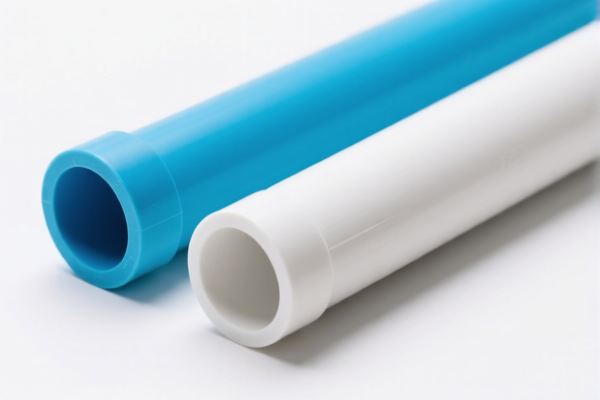
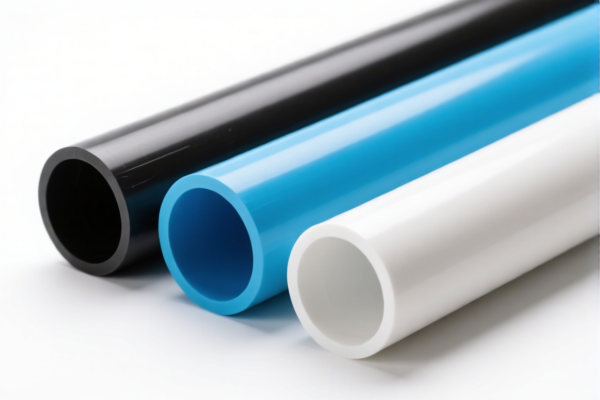
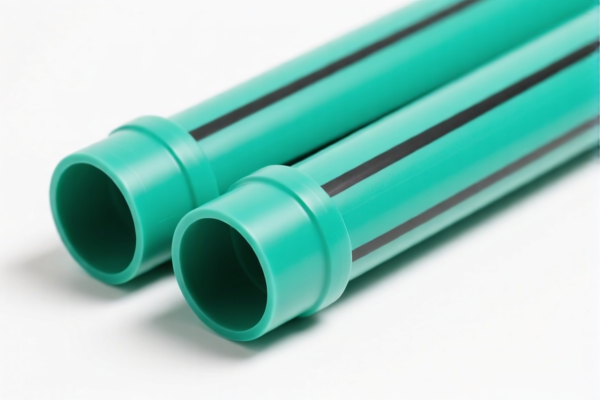
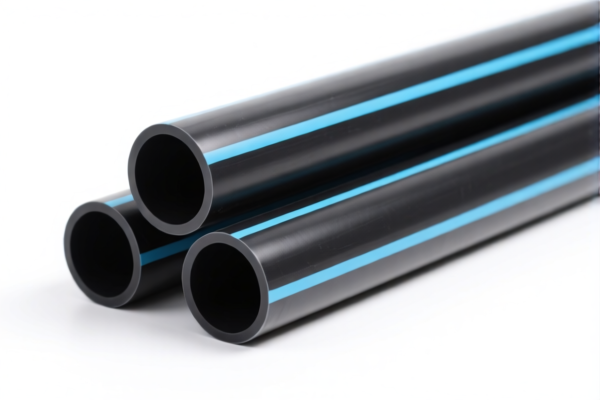
Product Images
AI Analysis
🏗️ PVC Chemical Pipes (PVC Pipes)
🌐 HS Code Reference & Customs Clearance Guide | 2026 Latest Tariff Analysis | Professional Clearance Strategy
📌 I. Product Definition & Classification: Do You Really Understand "PVC Pipes"?
PVC (Polyvinyl Chloride) pipes are rigid or semi-rigid tubes made from thermoplastic PVC, widely used in chemical industry, water supply, drainage, and industrial fluid transport. In international trade, classification depends on whether the product is considered a "pipe/conduit" (Chapter 39.17) or a "general plastic article" (Chapter 39.26).
⚠️ Key Distinction Point:
- If the product is explicitly a "pipe, tube, or hose" with specific dimensions, pressure ratings, or chemical resistance specs → Classify under 3917 (Articles of plastics, pipes, tubes, hoses).
- If the product is a "general plastic part" without clear pipe-specific features, or used as a generic component → Classify under 3926 (Other articles of plastics).
📦 II. HS Code Classification Details (2026 Latest Tariff Authority Comparison)
| HS Code | Product Description | Application Scenario | Classification Logic |
|---|---|---|---|
3917.23.00.00 |
PVC pipes made of氯乙烯 polymers, classified as pipes/conduits | Industrial chemical pipes, drainage pipes, pressure pipes | ✅ Correct: Specific to "pipes" of vinyl polymers |
3926.90.99.89 |
PVC pipes classified as "other plastic articles" (fallback category) | Generic plastic parts, non-specific fittings | ❌ Less Preferred: Used if pipe-specific classification is disputed |
3917.32.00.10 |
PVC pipes made of polyvinyl chloride, conforming to pipe shape requirements | Standard PVC chemical pipes, industrial tubing | ✅ Correct: Explicitly matches "pipe" definition |
3926.90.99.87 |
PVC pipes as "other plastic articles" due to shape | Generic plastic components, non-standard fittings | ❌ Less Preferred: Fallback for non-pipe-specific items |
🔍 Critical Reminder:
- All standard PVC pipes (with clear cylindrical shape, intended for fluid/gas transport) must be classified under 3917 series (pipes/tubes).
- Classifying PVC pipes under 3926 is only acceptable if the product lacks clear pipe characteristics or is used as a generic plastic part.
- Misclassification Risk: Declaring PVC pipes as "plastic articles" (3926) instead of "pipes" (3917) may lead to customs disputes, delays, or additional penalties.
💰 III. 2026 Latest Tariff Rate Breakdown (Including Additional Duties & Policy Surcharges)
✅ Applicable Country: United States (US)
✅ Origin: China (CN)
✅ Effective Date: November 10, 2025 (and subsequent imports)
🎯 1. 3917.23.00.00 —— PVC Pipes (Vinyl Polymers)
| Item | Content |
|---|---|
| Base Tariff Rate | 3.1% (ad valorem) |
| Section 301 Additional Tariff | +25.0% |
| Section 122 Tariff | +10.0% |
| Total Tariff Rate | 38.1% |
| Tax Calculation | CIF Value × 38.1% |
| De Minimis Eligibility | ❌ Not Applicable (denied) |
| Legal Authority Path | Base Tariff:3917.23 → Section 301:25% → Section 122:10% |
📌 Explanation:
- Base Tariff (3.1%): Standard MFN rate for PVC pipes.
- Section 301 Additional Tariff (25%): Imposed on Chinese goods under U.S. Trade Act Section 301.
- Section 122 Tariff (10%): Additional surcharge on certain plastic products from China.
- Total: 38.1%. This is a high tariff rate. Pre-planning is essential.
🎯 2. 3926.90.99.89 —— PVC Pipes as "Other Plastic Articles"
| Item | Content |
|---|---|
| Base Tariff Rate | 5.3% (ad valorem) |
| Section 301 Additional Tariff | +7.5% |
| Section 122 Tariff | +10.0% |
| Total Tariff Rate | 22.8% |
| Tax Calculation | CIF Value × 22.8% |
| De Minimis Eligibility | ❌ Not Applicable (denied) |
| Legal Authority Path | Base Tariff:3926.90 → Section 301:7.5% → Section 122:10% |
📌 Note:
- This classification applies only if the product is not clearly identified as a pipe under Chapter 39.17.
- Lower total tariff (22.8%) compared to 3917 (38.1%), but higher compliance risk.
- Customs may challenge this classification if the product is clearly a pipe.
🎯 3. 3917.32.00.10 —— PVC Pipes (Polyvinyl Chloride)
| Item | Content |
|---|---|
| Base Tariff Rate | 3.1% (ad valorem) |
| Section 301 Additional Tariff | +25.0% |
| Section 122 Tariff | +10.0% |
| Total Tariff Rate | 38.1% |
| Tax Calculation | CIF Value × 38.1% |
| De Minimis Eligibility | ❌ Not Applicable (denied) |
| Legal Authority Path | Base Tariff:3917.32 → Section 301:25% → Section 122:10% |
📌 Explanation:
- This HS code is synonymous with 3917.23.00.00 in terms of tariff treatment.
- Both fall under the same 38.1% total rate.
- The difference lies in sub-category precision (vinyl polymer vs. polyvinyl chloride), but tax impact is identical.
🎯 4. 3926.90.99.87 —— PVC Pipes as "Other Plastic Articles"
| Item | Content |
|---|---|
| Base Tariff Rate | 5.3% (ad valorem) |
| Section 301 Additional Tariff | +7.5% |
| Section 122 Tariff | +10.0% |
| Total Tariff Rate | 22.8% |
| Tax Calculation | CIF Value × 22.8% |
| De Minimis Eligibility | ❌ Not Applicable (denied) |
| Legal Authority Path | Base Tariff:3926.90 → Section 301:7.5% → Section 122:10% |
📌 Note:
- Same as3926.90.99.89in tariff rate.
- Lower tax burden, but higher classification risk.
- Only use if product lacks clear pipe-specific features.
🛠️ IV. Customs Clearance Practical Advice (Real-World Pitfall Avoidance Guide)
✅ 1. Documentation Checklist (All Required)
| Document | Required | Notes |
|---|---|---|
| ✅ Product Specification Sheet | ✔️ | Include material (PVC), diameter, wall thickness, pressure rating, chemical resistance |
| ✅ Product Photos (with labels) | ✔️ | Show pipe ends, markings, brand, model |
| ✅ Commercial Invoice | ✔️ | Clearly state "PVC Chemical Pipes" or "Polyvinyl Chloride Pipes" |
| ✅ Packing List | ✔️ | Indicate units, dimensions, weight |
| ✅ Certificate of Origin (CO) | ✔️ | If not Chinese origin, to claim preferential rates |
| ✅ Third-Party Test Reports | ✔️ | ASTM, ISO, or chemical resistance certification |
| ✅ Declaration Statement | ✔️ | Confirm product is "pipes" and not "general plastic articles" |
✅ 2. Declaration Tips (Key Mnemonics)
🔥 "Pipe Shape, Pressure Rating, Chemical Resist — Declare as 3917, Avoid 3926 Mistakes!"
| Scenario | Correct Declaration | Wrong Approach |
|---|---|---|
| Standard PVC pipe (cylindrical, for fluid transport) | 3917.23.00.00 or 3917.32.00.10 |
Declaring as "plastic parts" → 22.8% |
| PVC pipe fittings (elbows, tees) | 3917.23.00.00 or 3917.32.00.10 |
Declaring as "plastic fittings" → 22.8% |
| Non-standard plastic tubes (no clear pipe use) | 3926.90.99.89 |
Declaring as "pipes" → 38.1% |
| PVC pipes with chemical resistance certification | 3917.23.00.00 |
Declaring as "general plastics" → 22.8% |
✅ 3. Special Cases Handling
| Scenario | Advice |
|---|---|
| OEM Custom PVC Pipes | Provide customer order + technical drawings to prove pipe-specific use |
| PVC Pipes for Chemical Industry | Highlight "chemical resistance" in declaration to support 3917 classification |
| PVC Pipes + Fittings Sold Together | Declare as "pipes" (3917), not "fittings" (3926) |
| PVC Pipes with Insulation | Still classify as "pipes" (3917) if insulation is minor |
🌍 V. Global Customs Comparison (2026 Latest)
| Country/Region | Recommended HS Code | Tariff Rate | Certification Requirements | Notes |
|---|---|---|---|---|
| 🇺🇸 United States | 3917.23.00.00 |
38.1% (China origin) | No specific cert | High tariff due to Section 301 + 122 |
| 🇨🇳 China | 3917.23.00.00 |
5% | No additional tariff | Lower rate |
| 🇪🇺 European Union | 3917.23.00.00 |
0% (if CE compliant) | CE + RoHS | No additional duties |
| 🇦🇺 Australia | 3917.23.00.00 |
5% | No specific cert | No additional duties |
| 🇯🇵 Japan | 3917.23.00.00 |
0% | PSE | No additional duties |
📌 Conclusion:
- The U.S. imposes the highest tariffs on Chinese PVC pipes (38.1%).
- China, EU, Australia, and Japan have significantly lower or zero tariffs.
- Consider supply chain diversification (e.g., production in Vietnam, Mexico) to avoid U.S. tariffs.
📌 VI. Common Errors & Pitfall Avoidance (Lessons Learned)
❌ Error 1: Declaring PVC pipes as "plastic parts" (3926) instead of "pipes" (3917)
👉 Consequence: Incorrect classification → Customs audit, back taxes, penalties.
❌ Error 2: Not providing technical specifications for chemical resistance
👉 Consequence: Customs disputes classification → Delayed clearance.
❌ Error 3: Using "PVC Pipes" in declaration without confirming pipe-specific features
👉 Consequence: Misclassification risk → 38.1% vs. 22.8% rate difference.
❌ Error 4: Assuming de minimis exemption applies
👉 Consequence: No de minimis for PVC pipes from China → Full tariff liability.
✅ Correct Declaration Example:
"PVC Chemical Pipes, Polyvinyl Chloride, Diameter 50mm, Wall Thickness 3mm, Pressure Rating 10 Bar, Chemical Resistant, ASTM D1784 Compliant, Model XYZ, No Insulation"
🎯 VII. Conclusion: Precise Classification Saves Costs!
🎯 Key Takeaways:
🔹 "Pipes are Pipes: Declare as 3917, Avoid 3926 Risks!"
🔹 "Tariff Gap: 38.1% vs. 22.8% — Classification Matters!"
🔹 "Documentation is Key: Specs, Photos, Certifications Save Days!"
📌 Pro Tip:
If your PVC pipes are originating from Vietnam, Mexico, Thailand, or Malaysia, you may qualify for IEEPA exemptions or lower tariffs (0%~5%).
Consider applying for Advance Ruling from U.S. Customs to confirm HS Code classification.
📣 Immediate Action:
📞 Contact professional customs brokers + Provide product specs + Apply for HS Code Advance Ruling
🚀 Ensure smooth customs clearance, minimize costs, and maximize profit!
✨ Professional customs clearance starts with precise classification!
💼 Every dollar saved in tariffs is pure profit!
Customer Reviews
About HS Code Classification
The Harmonized System (HS) is an internationally standardized nomenclature developed by the World Customs Organization (WCO) to classify traded products. Over 200 countries use the HS system as the basis for customs tariffs, trade statistics, and import/export regulations.
Each HS code follows a hierarchical structure:
- Chapter (2 digits) — Broad category of goods (e.g., Chapter 84: Machinery and Mechanical Appliances)
- Heading (4 digits) — More specific grouping within the chapter
- Subheading (6 digits) — Internationally standardized breakdown, used by all WCO member countries
- National subdivisions (8-10 digits) — Country-specific extensions for further classification, such as US HTSUS 10-digit codes
Correct HS code classification is essential for smooth customs clearance, accurate duty payment, and compliance with trade regulations. Misclassification can lead to customs delays, overpayment of duties, or penalties.
When importing from CN to US, the applicable tariff rates may include:
- Most-Favored-Nation (MFN) rate — The standard duty rate applied to WTO members
- General rate — Applied to countries without trade agreements
- Trade remedy duties — Additional tariffs such as Section 301 (anti-dumping), Section 232 (national security), or countervailing duties
The information provided on this page is for reference purposes only. For official classification, please consult with your local customs authority or a licensed customs broker.