PVC Click Flooring
CN → US| HS Code | Tariff Rate | Origin | Destination | Doc |
|---|---|---|---|---|
| 3920435000 | 39.2% | CN | US | Official Doc |
| 3918102000 | 40.3% | CN | US | Official Doc |
| 3918101040 | 40.3% | CN | US | Official Doc |
| 3920490000 | 40.8% | CN | US | Official Doc |
| 3926909989 | 22.8% | CN | US | Official Doc |
Product Images
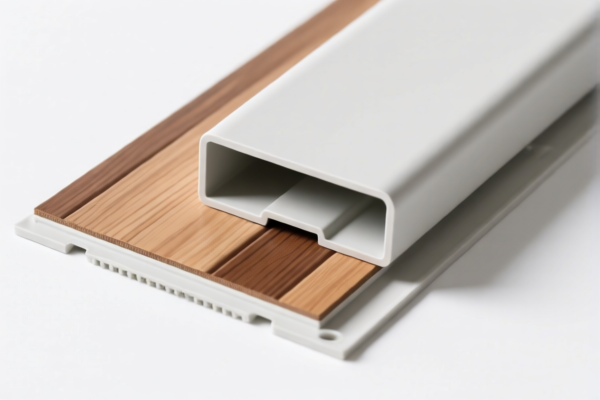

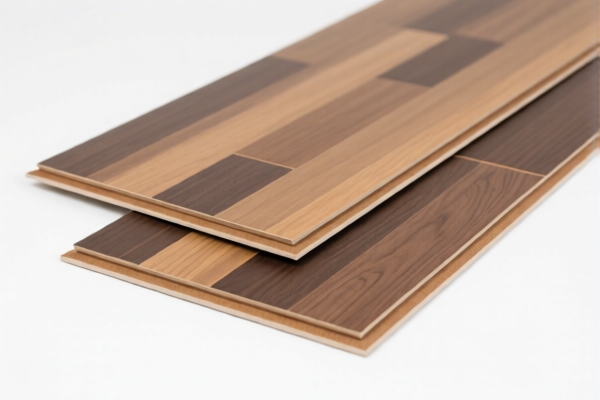
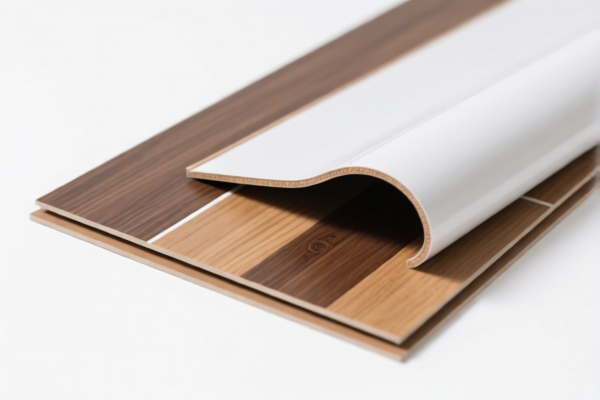
AI Analysis
🏠 PVC Click Flooring (Vinyl Click Flooring)
🌐 HS Code Reference & Customs Clearance Guide | 2026 Latest Tariff Analysis | Professional Compliance Strategy
📌 I. Product Definition & Classification: What Exactly is "PVC Click Flooring"?
PVC Click Flooring, often referred to as LVT (Luxury Vinyl Tile) or SPC/WPC (Stone Plastic Composite/Wood Plastic Composite) flooring, is a popular resilient flooring solution. In international trade, its classification hinges on its physical form and intended use.
The key distinction lies in whether it is classified as: 1. A generic plastic sheet/board product (Chapter 39, Heading 3920/3926): Focuses on the material composition (PVC) and form (sheets/boards). 2. A specific building material for floors (Chapter 39, Heading 3918): Focuses on its primary function as a floor covering.
⚠️ Critical Classification Point:
- If the product is described primarily by its material (PVC sheets/boards) without explicit "floor covering" context in the commercial invoice → 3920 Series.
- If the product is explicitly marketed, labeled, and used as floor coverings/tiles → 3918 Series.
- If the product is an unclassified plastic item (less common for standard flooring but possible for irregular shapes) → 3926 Series.
📦 II. HS Code Classification Details (2026 Latest Tariff Authority Comparison)
Based on the provided data, here are the five possible HS Codes for PVC Click Flooring and why they apply:
| HS Code | Product Description | Classification Logic / Reason |
|---|---|---|
| 3920.43.50.00 | PVC Flooring, Material: Polyvinyl Chloride, Form: Sheet/Board Products | Material-Based Classification: Focuses on the fact that the product is made of PVC and is in the form of sheets or boards. It does not explicitly emphasize the "floor" function in the summary. |
| 3918.10.20.00 | PVC Flooring, Material: Polyvinyl Chloride, Use: Floor Covering | Function-Based Classification (General): Specifically categorizes products as "floor coverings." This is a common classification for finished vinyl flooring rolls or tiles. |
| 3918.10.10.40 | PVC Flooring, Corresponding to Vinyl Tiles/Floor Coverings | Function-Based Classification (Specific): A more specific sub-category for "Vinyl Tiles" or modular floor coverings. Ideal for click-lock tile systems that mimic wood/stone. |
| 3920.49.00.00 | PVC Flooring, Material: Vinyl Polymers, Form: Plastic Sheets/Boards | Material-Based Classification (Broader Vinyl): Uses "Vinyl Polymers" instead of just PVC. Covers plastic sheets/boards not specifically identified as floor coverings in the heading 3918 context. |
| 3926.90.99.89 | PVC Flooring, Classified as Other Unspecified Plastic Articles | Catch-All Classification: Used when the product does not fit neatly into the specific "floor covering" (3918) or "sheet" (3920) definitions, often for custom or irregular plastic items. |
🔍 Key Takeaway:
- 3918.10.xxxx codes are generally preferred if the product is clearly a floor covering (tiles, rolls) intended for installation on floors.
- 3920.xxxx codes are used if the product is treated as industrial plastic sheets or if the "floor" aspect is not the primary descriptor in customs documentation.
- 3926.90.99.89 is the "backup" category with the lowest tariff, but risky if the product is clearly identifiable as flooring.
💰 III. 2026 Latest Tariff Rate Breakdown (Including Additional Taxes, Policy Surcharges)
✅ Applicable Country: United States (US)
✅ Country of Origin: China (CN)
✅ Effective Date: 2025/2026 (Ongoing trade tensions)
🎯 1. 3920.43.50.00 & 3920.49.00.00 —— PVC Plastic Sheets/Boards (Material-Based)
| Item | Content |
|---|---|
| Base Tariff | 4.2% – 5.8% (Ad Valorem) |
| Section 301 Additional Tariff | +25.0% (USITC Footnote for Section 301) |
| Section 122 Tariff | +10.0% (Specific to certain PVC/plastic products from China) |
| Total Tariff Rate | 40.2% – 40.8% |
| Calculation Basis | CIF Value × Total Rate |
| De Minimis Exemption | ❌ Not Applicable (High tariff threshold prevents $800 exemption) |
| Legal Reference Path | USITC:3920.43.50.00 → 301:Tariff 25% → 122:Tariff 10% |
📌 Explanation:
- Base Tax: Reflects the standard US import duty for plastic sheets.
- Section 301 (25%): The primary punitive tariff on Chinese plastics.
- Section 122 (10%): An additional tariff specifically targeting certain PVC products.
- Total: ~40.8% is a very high effective tariff rate.
🎯 2. 3918.10.20.00 & 3918.10.10.40 —— Floor Coverings (Function-Based)
| Item | Content |
|---|---|
| Base Tariff | 5.3% (Ad Valorem) |
| Section 301 Additional Tariff | +25.0% |
| Section 122 Tariff | +10.0% |
| Total Tariff Rate | 40.3% |
| Calculation Basis | CIF Value × Total Rate |
| De Minimis Exemption | ❌ Not Applicable |
| Legal Reference Path | USITC:3918.10.xxxx → 301:Tariff 25% → 122:Tariff 10% |
📌 Note:
- Slightly higher base tax (5.3%) compared to3920.43(4.2%), but the total rate is nearly identical (40.3% vs 40.2-40.8%).
- Classification here depends on proving the item is a "floor covering."
🎯 3. 3926.90.99.89 —— Other Plastic Articles (Catch-All)
| Item | Content |
|---|---|
| Base Tariff | 5.3% (Ad Valorem) |
| Section 301 Additional Tariff | +7.5% (Lower tier for some "other" plastics) |
| Section 122 Tariff | +10.0% |
| Total Tariff Rate | 22.8% |
| Calculation Basis | CIF Value × Total Rate |
| De Minimis Exemption | ❌ Not Applicable |
| Legal Reference Path | USITC:3926.90.99.89 → 301:Tariff 7.5% → 122:Tariff 10% |
📌 Warning:
- This is the LOWEST tariff (22.8%), but it is risky.
- Customs may reclassify your product to 3918 or 3920 if they determine it is clearly a flooring product, leading to back taxes, penalties, and delays.
- Only use this if the product has unusual features that do not fit standard "floor covering" definitions.
🛠️ IV. Customs Clearance Practical Advice (Real-World Pitfall Guide)
✅ 1. Required Documentation Checklist (Mandatory)
| Document | Required? | Details |
|---|---|---|
| ✅ Commercial Invoice | ✔️ | Must specify "PVC Click Flooring," material (PVC/Vinyl), and use ("Floor Covering"). |
| ✅ Packing List | ✔️ | Detail carton contents, including click-lock mechanisms if present. |
| ✅ Product Specifications | ✔️ | Include thickness, wear layer, core material (SPC/WPC), and installation method. |
| ✅ Material Safety Data Sheet (MSDS) | ✔️ | Required for chemical compliance (PVC/VOC content). |
| ✅ Certifications | ✔️ | CARB P2/TSCA Title VI (Formaldehyde), FloorScore, or GREENGUARD if applicable. |
| ✅ Photo of Product & Label | ✔️ | Show packaging with HS code or product name. |
✅ 2. Declaration Strategy (Key Rules)
🔥 “Describe by Function, Declare by Material, Match the Code!”
| Scenario | Recommended HS Code | Why? |
|---|---|---|
| Standard Click Vinyl Tiles | 3918.10.10.40 |
Clearly a "floor covering" and "vinyl tile." Most accurate function-based code. |
| PVC Rolls/Sheets for Flooring | 3918.10.20.00 |
Function is floor covering, but form is sheet/roll. |
| Raw PVC Boards (Not yet cut) | 3920.43.50.00 |
If sold as raw material/plastic sheet before final flooring shape. |
| Unusual Plastic Floor Panels | 3926.90.99.89 |
Risky: Only if it doesn't fit 3918/3920 definitions. Expect scrutiny. |
✅ 3. Special Situations & Handling
| Situation | Handling Advice |
|---|---|
| Click-Lock Mechanism Present | Do NOT declare as "plastic accessories." The locking mechanism is part of the flooring product itself. |
| SPC Core (Stone Plastic Composite) | Still classified under PVC/Vinyl flooring (3918/3920) as the surface is PVC. Do not misclassify as "stone." |
| Sample Shipment | Even samples are subject to duties if over $800 (unlikely for samples, but if multiple cartons, combine value). |
| Multiple SKUs in One Shipment | Ensure each HS code is declared separately. Mixed shipments can cause delays. |
🌍 V. Global Market Comparison (2026 Update)
| Country/Region | Recommended HS Code | Approx. Total Tariff | Notes |
|---|---|---|---|
| 🇺🇸 USA | 3918.10.10.40 or 3920.43.50.00 |
40.3% - 40.8% | High due to Section 301 + 122. |
| 🇨🇳 China | 3918.10.10.00 |
~5-6% | Low import duty for Chinese manufacturers importing back. |
| 🇪🇺 EU | 3918.10.91.00 |
~6.5% | No Section 301 equivalent. Standard MFN rate. |
| 🇬🇧 UK | 3918.10.90.00 |
~6.5% | Post-Brexit, aligns closely with EU rates. |
| 🇨🇦 Canada | 3918.10.90.00 |
~5% + Tariff War? | Check for USMCA eligibility if produced in US/Mexico. |
📌 Conclusion:
- USA is the most expensive market due to layered tariffs.
- EU/UK/Canada have significantly lower barriers (~6-7%), making them more attractive for pricing strategies.
📌 VI. Common Mistakes & Pitfalls (Lessons Learned)
❌ Mistake 1: Declaring as "Plastic Sheets" (3920) to avoid "Floor Covering" classification.
👉 Consequence: Customs may audit and reclassify to 3918 with penalties if documentation clearly states "flooring."
❌ Mistake 2: Using 3926.90.99.89 to save on tariffs.
👉 Consequence: High risk of customs hold, reclassification to 3918 (40.3%), plus 10% penalty for misdeclaration. Not worth the $17.5% savings risk.
❌ Mistake 3: Failing to disclose "Click-Lock" feature.
👉 Consequence: May be considered incomplete product, leading to requests for more info and delays.
❌ Mistake 4: Ignoring VOC/Chemical Compliance.
👉 Consequence: Rejection at US border if CARB/TSCA certificates are missing.
✅ Correct Practice:
"Vinyl Click Flooring, PVC Surface, SPC Core, Click-Lock Joint, for Residential/Commercial Floor Covering"
HS Code:3918.10.10.40
Declaration: Clearly state "Floor Covering" to justify 3918 classification.
🎯 VII. Conclusion: Professional Declaration, Cost Control, and Compliance
🎯 Remember:
🔹 "Function over Form": If it's for the floor, 3918 is usually the best bet for accuracy.
🔹 "Tariff Trap": The 40%+ US tariff is unavoidable for Chinese-origin PVC flooring.
🔹 "Compliance First": Misclassification leads to fines. Use3926only with strong justification.
📌 Pro Tip:
If you are exporting to the US, consider supply chain diversification (e.g., manufacturing in Vietnam or Thailand) to potentially avoid Section 301 tariffs, subject to local content rules.
For domestic US sales, factor in the 40% tariff into your pricing model.
📣 Immediate Action:
📞 Consult a licensed customs broker for a Pre-Ruling on your specific product.
📄 Prepare CARB/TSCA documentation in advance.
🚀 Accurate declaration saves time, money, and headaches!
✨ Professional Customs Clearance Starts with Precise Classification!
💼 Your Profit Margin Depends on Tariff Accuracy!
Customer Reviews
About HS Code Classification
The Harmonized System (HS) is an internationally standardized nomenclature developed by the World Customs Organization (WCO) to classify traded products. Over 200 countries use the HS system as the basis for customs tariffs, trade statistics, and import/export regulations.
Each HS code follows a hierarchical structure:
- Chapter (2 digits) — Broad category of goods (e.g., Chapter 84: Machinery and Mechanical Appliances)
- Heading (4 digits) — More specific grouping within the chapter
- Subheading (6 digits) — Internationally standardized breakdown, used by all WCO member countries
- National subdivisions (8-10 digits) — Country-specific extensions for further classification, such as US HTSUS 10-digit codes
Correct HS code classification is essential for smooth customs clearance, accurate duty payment, and compliance with trade regulations. Misclassification can lead to customs delays, overpayment of duties, or penalties.
When importing from CN to US, the applicable tariff rates may include:
- Most-Favored-Nation (MFN) rate — The standard duty rate applied to WTO members
- General rate — Applied to countries without trade agreements
- Trade remedy duties — Additional tariffs such as Section 301 (anti-dumping), Section 232 (national security), or countervailing duties
The information provided on this page is for reference purposes only. For official classification, please consult with your local customs authority or a licensed customs broker.