PVC Coated Antistatic Fabric
CN → US| HS Code | Tariff Rate | Origin | Destination | Doc |
|---|---|---|---|---|
| 3920435000 | 39.2% | CN | US | Official Doc |
| 3919905040 | 40.8% | CN | US | Official Doc |
| 3921121950 | 40.3% | CN | US | Official Doc |
| 3921125000 | 41.5% | CN | US | Official Doc |
| 3919905060 | 40.8% | CN | US | Official Doc |
Product Images
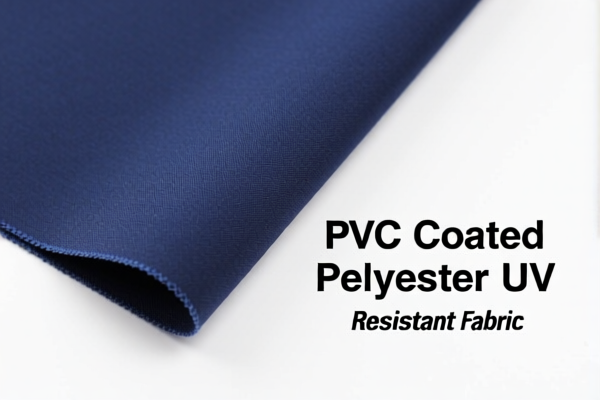
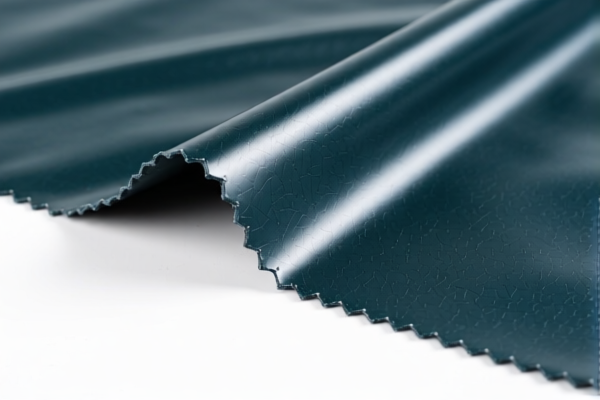
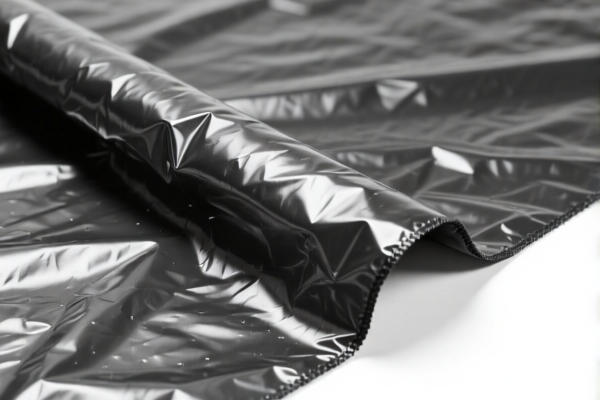
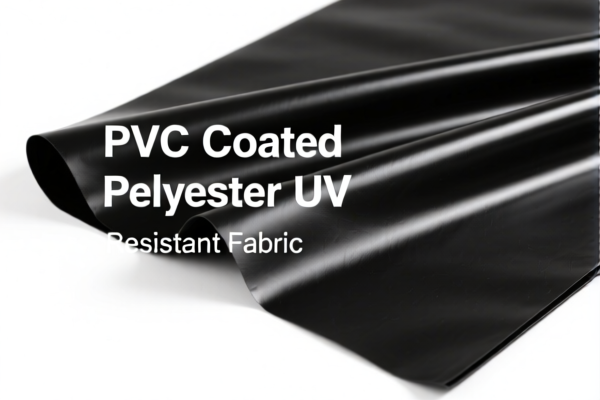
AI Analysis
🛡️ PVC Coated Antistatic Fabric & Membranes | Comprehensive HS Code Guide & Customs Clearance Strategy
🌐 HS Code Classification & Tax Analysis | 2026 Updated Tariff Guide | Professional Clearance Strategy
📌 Product Definition: What is "PVC Coated Antistatic Fabric/Membrane"?
PVC (Polyvinyl Chloride) Coated Antistatic Fabric/Membrane is a specialized functional plastic product. It is typically used in electronics manufacturing, cleanrooms, warehouses, and industrial flooring to prevent static electricity buildup.
Key Characteristics: - Material: PVC (Polyvinyl Chloride) or Vinyl Polymer. - Form: Film, Sheet, or Coated Fabric. - Function: Static dissipative/conductive properties. - Application: Industrial anti-static mats, flooring, packaging, or protective covers.
⚠️ Critical Distinction for Classification:
The classification depends on the physical form (is it a self-adhesive tape/film, a flat sheet, or a coated textile?) and the primary function. However, for import into the US from China, the following HS Codes are the most likely candidates based on standard trade data for PVC antistatic products.
📦 II. HS Code Classification Matrix (2026 Latest Tariff Data)
The following HS Codes are derived from the provided dataset for PVC Antistatic Membrane/Fabric. Please note that the exact code depends on whether the product is classified as a "plastic sheet," "self-adhesive film," or "other plastic articles."
| HS Code | Product Description | Applicable Scenario | Key Classification Feature |
|---|---|---|---|
3920.43.50.00 |
PVC Antistatic Film (Plastic Sheet) | General PVC antistatic membrane, non-adhesive | PVC material, sheet form, "other plastics" |
3919.90.50.40 |
Self-Adhesive PVC Antistatic Film | Antistatic PVC with adhesive backing (e.g., for flooring/mats) | Self-adhesive plastic film, "other" |
3921.12.19.50 |
Other PVC Polymer Sheets/Films | "Catch-all" category for PVC films not specified elsewhere | Vinyl polymer, film form, unspecified |
3921.12.50.00 |
PVC Polymer Film/Sheet | General PVC antistatic film under "other" | Vinyl polymer, film, "other" |
3919.90.50.60 |
Functional Antistatic PVC Film | Specific functional PVC films, self-adhesive or otherwise | PVC, functional (antistatic), film |
🔍 Important Note:
- All codes above are for US Import from China.
- The tax burden is extremely high due to Section 301 and IEEPA tariffs.
- Do not misclassify as "textile" (Chapter 59) unless the fabric is coated primarily with PVC but retains textile characteristics; however, the dataset provided focuses on plastic film/sheet classifications (Chapter 39). If the fabric is heavily coated, it may still be classified under 3921 or 3920. Always check the coating weight ratio.
💰 III. 2026 Tax Rate Breakdown (Detailed Customs Duties)
✅ Applicable Country: United States (US)
✅ Origin: China (CN)
✅ Effective Date: Includes all imports since November 10, 2025
All HS Codes listed below are subject to three layers of tariffs: 1. Base MFN Tariff (Most Favored Nation) 2. Section 301 Tariff (25%) 3. IEEPA Section 122 Tariff (10%)
🎯 1. 3920.43.50.00 – PVC Plastic Sheet, Antistatic Film
| Item | Details |
|---|---|
| Base Tariff | 4.2% |
| Section 301 Tariff | +25.0% |
| IEEPA (122 Clause) Tariff | +10.0% |
| Total Tax Rate | 39.2% |
| Calculation Basis | CIF Value × 39.2% |
| De Minimis Exemption? | ❌ No (Section 301 and IEEPA tariffs apply regardless of value) |
| Legal Path | USITC:3920.43.50.00 → 301:Footnote 9903.88.01 → IEEPA:9903.01.25 |
📌 Explanation:
- This code is for non-adhesive PVC antistatic sheets/films.
- The 39.2% rate is heavy. No de minimis (Section 321) exemption applies.
🎯 2. 3919.90.50.40 – Self-Adhesive PVC Antistatic Film
| Item | Details |
|---|---|
| Base Tariff | 5.8% |
| Section 301 Tariff | +25.0% |
| IEEPA (122 Clause) Tariff | +10.0% |
| Total Tax Rate | 40.8% |
| Calculation Basis | CIF Value × 40.8% |
| De Minimis Exemption? | ❌ No |
| Legal Path | USITC:3919.90.50.40 → 301:Footnote 9903.88.01 → IEEPA:9903.01.25 |
📌 Explanation:
- Use this if the antistatic PVC film has an adhesive backing (e.g., sticky mats).
- Slightly higher base rate due to "self-adhesive" classification.
🎯 3. 3921.12.19.50 – Other PVC Polymer Films (Catch-All)
| Item | Details |
|---|---|
| Base Tariff | 5.3% |
| Section 301 Tariff | +25.0% |
| IEEPA (122 Clause) Tariff | +10.0% |
| Total Tax Rate | 40.3% |
| Calculation Basis | CIF Value × 40.3% |
| De Minimis Exemption? | ❌ No |
| Legal Path | USITC:3921.12.19.50 → 301:Footnote 9903.88.01 → IEEPA:9903.01.25 |
📌 Explanation:
- This is a "residual" category for PVC films not specifically listed elsewhere.
- Often used when the product doesn't fit neatly into 3920 or 3919.
🎯 4. 3921.12.50.00 – PVC Polymer Film/Sheet (Other)
| Item | Details |
|---|---|
| Base Tariff | 6.5% |
| Section 301 Tariff | +25.0% |
| IEEPA (122 Clause) Tariff | +10.0% |
| Total Tax Rate | 41.5% |
| Calculation Basis | CIF Value × 41.5% |
| De Minimis Exemption? | ❌ No |
| Legal Path | USITC:3921.12.50.00 → 301:Footnote 9903.88.01 → IEEPA:9903.01.25 |
📌 Explanation:
- Another "other" category for PVC films.
- Highest base rate among the options (6.5%), leading to the highest total tax.
🎯 5. 3919.90.50.60 – Functional Antistatic PVC Film (Self-Adhesive or Other)
| Item | Details |
|---|---|
| Base Tariff | 5.8% |
| Section 301 Tariff | +25.0% |
| IEEPA (122 Clause) Tariff | +10.0% |
| Total Tax Rate | 40.8% |
| Calculation Basis | CIF Value × 40.8% |
| De Minimis Exemption? | ❌ No |
| Legal Path | USITC:3919.90.50.60 → 301:Footnote 9903.88.01 → IEEPA:9903.01.25 |
📌 Explanation:
- Specifically highlights "Antistatic" as a functional characteristic.
- May be preferred if customs requires explicit functional description.
🛠️ IV. Customs Clearance Practical Advice (Avoiding Pitfalls)
✅ 1. Documentation Checklist (Must-Have)
| Document | Required? | Purpose |
|---|---|---|
| Product Specification Sheet | ✔️ | Must state: Material (PVC), Function (Antistatic), Thickness, Width, Roll/Sheet format. |
| Anti-Static Test Report | ✔️ | Third-party lab report proving static dissipative properties (e.g., surface resistance < 10^9 ohms). |
| Commercial Invoice | ✔️ | Must clearly describe as "PVC Antistatic Film/Membrane" with HS Code. |
| Packing List | ✔️ | Weight, dimensions, number of rolls/sheets. |
| Certificate of Origin | ✔️ | To prove Chinese origin (critical for 301/IEEPA assessment). |
| Customs Entry Summary | ✔️ | Filed by your broker with correct HTS codes. |
✅ 2. Classification Tips (Key Mnemonics)
🔥 "Form Determines Code: Adhesive? Self-Adhesive. Non-Adhesive? Sheet. Function? Mention It!"
| Scenario | Recommended HS Code | Reason |
|---|---|---|
| Sticky Antistatic Mats/Films | 3919.90.50.40 or 3919.90.50.60 |
Has adhesive backing → Chapter 3919 |
| Non-Sticky Antistatic Rolls | 3920.43.50.00 |
PVC Sheet → Chapter 3920 |
| Unspecified PVC Film | 3921.12.19.50 or 3921.12.50.00 |
"Other" PVC films → Chapter 3921 |
✅ 3. Critical Warnings
⚠️ No De Minimis Exemption:
All these HS Codes are subject to Section 301 (25%) and IEEPA (10%) tariffs. Section 321 (De Minimis) does NOT apply to Chinese goods under these tariffs. Even small shipments (e.g., samples, e-commerce parcels) will be taxed at ~39-41.5%.
⚠️ Avoid "Textile" Misclassification:
Do not try to classify PVC-coated fabric as textile (Chapter 59) unless the fabric is the essential character and the coating is light. If it's a PVC membrane/film, it must be classified under Chapter 39. Misclassification can lead to audits, penalties, and back-taxes.
⚠️ Labeling:
Ensure the product label clearly states "Antistatic" and "PVC" to avoid customs disputes about functionality.
🌍 V. Global Market Comparison (2026)
| Country/Region | Recommended HS Code | Base Tariff | Additional Tariffs (China) | Total Estimate |
|---|---|---|---|---|
| 🇺🇸 USA | 3920.43.50.00 |
4.2% | +25% (301) + 10% (IEEPA) | ~39.2% |
| 🇨🇳 China (Import) | 3920.43.50.00 |
5.0% | None | 5.0% |
| 🇪🇺 EU | 3920.43.50.00 |
6.5% | None (if non-originating, may have anti-dumping) | ~6.5-12% |
| 🇬🇧 UK | 3920.43.50.00 |
6.5% | None | ~6.5% |
📌 Conclusion:
The US market is the most expensive due to trade war tariffs.
For EU/UK, ensure you have proper Certificate of Origin to avoid unnecessary duties.
📌 VI. Common Mistakes & Pitfalls
❌ Mistake 1: Applying De Minimis (Section 321) to small shipments
👉 Result: 100% seizure or forced payment of 39.2% tax + penalties.
❌ Mistake 2: Declaring as "Plastic Bag" or "Textile Fabric"
👉 Result: Wrong HS code, customs delay, potential fines for undervaluation or misclassification.
❌ Mistake 3: Ignoring the "Antistatic" Feature
👉 Result: If the product is functional, customs may ask for technical docs. Without them, they may classify it under a higher-tariff "other plastic" category.
✅ Best Practice:
"Declare accurately, specify function, prepare tech docs, and budget for 40% tax."
🎯 VII. Conclusion: Smart Clearance, Maximize Profit
🎯 Key Takeaway:
PVC Antistatic Fabric/Membrane is a highly regulated import into the US from China due to trade war tariffs.
🔹 "Know your code: Adhesive vs. Non-Adhesive."
🔹 "Budget for 40% tax: No exceptions."
🔹 "Document everything: Specs, Tests, Origin."
📌 Pro Tip:
If you are shipping small quantities (e.g., samples, low-value orders), consider:
1. Using a bonded warehouse to defer taxes.
2. Consolidating shipments to optimize customs processing.
3. Pre-classifying with a customs broker to avoid delays.
📣 Immediate Action:
📞 Consult a US Customs Broker before shipping.
📄 Prepare Technical Data Sheets showing antistatic properties.
🚀 Plan for 39-41% tax impact in your pricing strategy.
✨ Precision in Classification, Savings in Customs!
💼 Every dollar saved is a dollar earned!
Customer Reviews
About HS Code Classification
The Harmonized System (HS) is an internationally standardized nomenclature developed by the World Customs Organization (WCO) to classify traded products. Over 200 countries use the HS system as the basis for customs tariffs, trade statistics, and import/export regulations.
Each HS code follows a hierarchical structure:
- Chapter (2 digits) — Broad category of goods (e.g., Chapter 84: Machinery and Mechanical Appliances)
- Heading (4 digits) — More specific grouping within the chapter
- Subheading (6 digits) — Internationally standardized breakdown, used by all WCO member countries
- National subdivisions (8-10 digits) — Country-specific extensions for further classification, such as US HTSUS 10-digit codes
Correct HS code classification is essential for smooth customs clearance, accurate duty payment, and compliance with trade regulations. Misclassification can lead to customs delays, overpayment of duties, or penalties.
When importing from CN to US, the applicable tariff rates may include:
- Most-Favored-Nation (MFN) rate — The standard duty rate applied to WTO members
- General rate — Applied to countries without trade agreements
- Trade remedy duties — Additional tariffs such as Section 301 (anti-dumping), Section 232 (national security), or countervailing duties
The information provided on this page is for reference purposes only. For official classification, please consult with your local customs authority or a licensed customs broker.