PVC Coated Creative Fabric
CN → US| HS Code | Tariff Rate | Origin | Destination | Doc |
|---|---|---|---|---|
| 5903102500 | 42.5% | CN | US | Official Doc |
| 3926907500 | 14.2% | CN | US | Official Doc |
| 5903102090 | 35.0% | CN | US | Official Doc |
| 3921125000 | 41.5% | CN | US | Official Doc |
| 3921121100 | 39.2% | CN | US | Official Doc |
Product Images
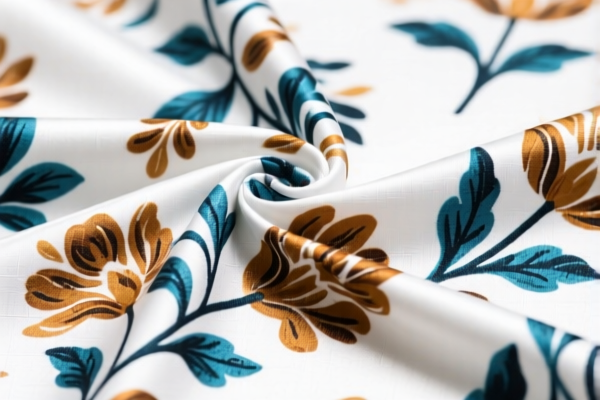



AI Analysis
🧵 PVC Coated Creative Fabric: The Ultimate Guide to HS Classification & US Import Strategy (2026)
🌐 HS Code Reference & Clearance Guide | 2026 Latest Tariff Analysis | Professional-Level Customs Strategy
📌 I. Product Definition & Classification: Do You Really Understand "PVC Coated Creative Fabric"?
"PVC Coated Creative Fabric" is a broad trade term covering a wide variety of textiles impregnated, coated, covered, or laminated with plastics (specifically Polyvinyl Chloride). In international trade, the classification depends heavily on the base material, structure, and end-use.
It is generally categorized into two main groups: * Textile-Based Coatings (Chapter 59): If the base is fabric (woven, knitted, non-woven) and the PVC is applied as a coating or lamination. * Plastic Sheet/Film-Based (Chapter 39): If the product is essentially a plastic sheet/film with a fabric backing or used as a raw material for inflatables/structures, often classified under "Other plastics and articles thereof."
⚠️ Critical Distinction Point: * If it is primarily a textile product with PVC coating for bags, tents, or awnings → Falls under Chapter 59. * If it is primarily a plastic product (e.g., inflatable components, specific composite sheets) → Falls under Chapter 39.
📦 II. HS Code Classification Details (2026 Latest Tariff Authority Comparison)
| HS Code | Product Description | Application Scenario | Key Feature |
|---|---|---|---|
5903.10.25.00 |
Textile fabrics impregnated, coated, covered or laminated with PVC, containing by weight 5% or more but less than 10% of plastics | Heavy-duty textiles, tarps, industrial fabrics | Base: Textile + PVC Coating |
3926.90.75.00 |
Other articles of plastics and articles of other materials of heading 3901 to 3914: Other | Inflatable parts, decorative plastic items, miscellaneous PVC articles | Base: Plastic Article / Inflatable Component |
5903.10.20.90 |
Other textile fabrics impregnated, coated, covered or laminated with PVC | General PVC-coated textiles, fashion fabrics, luggage materials | Base: Textile (Generic PVC Coating) |
3921.12.50.00 |
Other plates, sheets, film, foil and strip, of polymers of vinyl chloride | PVC sheets/films, possibly with fabric backing used as structural material | Base: PVC Sheet/Film Composite |
3921.12.11.00 |
Laminated with paper, of polymers of vinyl chloride: Laminated with paper | PVC laminated composite sheets | Base: PVC + Paper Lamination |
🔍 Key Reminder: * If the product is used as raw material for inflatables (like pool toys, air cushions), customs often lean towards
3926.90.75.00. * If it is used as finished textile goods (bags, tents, shoes), it usually falls under Chapter 59. * Misclassification between Chapter 59 and Chapter 39 can lead to significant duty differences and compliance risks.
💰 III. 2026 Latest Tariff Rate Details (Including Surcharges & Policy Add-ons)
✅ Applicable Country: United States (US) ✅ Country of Origin: China (CN) ✅ Effective Time: From November 10, 2025 (including subsequent imports)
🎯 1. 5903.10.25.00 —— Textile Fabrics Impregnated/Coated with PVC
| Item | Content |
|---|---|
| Base Tariff | 7.5% (ad valorem) |
| Section 301 Surcharge | +25.0% (USITC Footnote related to Section 301) |
| IEEPA Surcharge | +10% (Targeted at China/HK products, effective Nov 2025) |
| Total Rate | 42.5% |
| Tax Calculation | CIF Value × 42.5% |
| De Minimis Eligibility | ❌ Not Eligible (deny_de_minimis) |
| Legal Basis Path | IEEPA:9903.01.25 → USITC:5903.10.25.00 → FOOTNOTE:301 |
📌 Explanation: * The "Base Tariff 7.5%" is the standard US MFN rate for PVC-coated textiles. * The "Section 301 Surcharge 25%" is applied due to the ongoing trade restrictions on Chinese goods. * The "IEEPA 10%" is an additional surcharge under the International Emergency Economic Powers Act targeting Chinese imports. * Total 42.5% is a very high duty rate, making cost calculation critical for profitability.
🎯 2. 3926.90.75.00 —— Other Articles of Plastics (e.g., Inflatable Parts)
| Item | Content |
|---|---|
| Base Tariff | 4.2% |
| Section 301 Surcharge | 0.0% (Specific exclusion or lower bracket for this subheading in some contexts, or bundled differently) |
| IEEPA Surcharge | +10% |
| Total Rate | 14.2% |
| Tax Calculation | CIF Value × 14.2% |
| De Minimis Eligibility | ❌ Not Eligible (deny_de_minimis) |
| Legal Basis Path | IEEPA:9903.01.24 → USITC:3926.90.75.00 → FOOTNOTE:301 |
📌 Note: * This classification is often favored if the product is deemed an "article of plastic" rather than a "textile." * The total rate of 14.2% is significantly lower than the 42.5% for textile classifications. * However, proving that the item is an "inflatable part" or "miscellaneous plastic article" requires strong product documentation.
🎯 3. 5903.10.20.90 —— Other PVC-Coated Textile Fabrics
| Item | Content |
|---|---|
| Base Tariff | 0.0% |
| Section 301 Surcharge | +25.0% |
| IEEPA Surcharge | +10% |
| Total Rate | 35.0% |
| Tax Calculation | CIF Value × 35.0% |
| De Minimis Eligibility | ❌ Not Eligible (deny_de_minimis) |
| Legal Basis Path | IEEPA:9903.01.25 → USITC:5903.10.20.90 → FOOTNOTE:301 |
📌 Analysis: * Even though the base tariff is 0%, the Section 301 surcharge kicks in hard. * This is a common classification for general-purpose PVC fabrics (e.g., for luggage, upholstery). * 35.0% is still high, but better than 42.5%.
🎯 4. 3921.12.50.00 —— Other PVC Plates, Sheets, Film
| Item | Content |
|---|---|
| Base Tariff | 6.5% |
| Section 301 Surcharge | +25.0% |
| IEEPA Surcharge | +10% |
| Total Rate | 41.5% |
| Tax Calculation | CIF Value × 41.5% |
| De Minimis Eligibility | ❌ Not Eligible (deny_de_minimis) |
| Legal Basis Path | IEEPA:9903.01.25 → USITC:3921.12.50.00 → FOOTNOTE:301 |
📌 Analysis: * This applies if the product is considered a "sheet" or "film" rather than a flexible textile. * The high base rate combined with surcharges results in a 41.5% total duty. * Often used for rigid PVC composites or thick laminates.
🎯 5. 3921.12.11.00 —— PVC Laminated with Paper
| Item | Content |
|---|---|
| Base Tariff | 4.2% |
| Section 301 Surcharge | +25.0% |
| IEEPA Surcharge | +10% |
| Total Rate | 39.2% |
| Tax Calculation | CIF Value × 39.2% |
| De Minimis Eligibility | ❌ Not Eligible (deny_de_minimis) |
| Legal Basis Path | IEEPA:9903.01.25 → USITC:3921.12.11.00 → FOOTNOTE:301 |
📌 Analysis: * Specific to PVC laminated with paper. * If your "creative fabric" is actually a PVC-paper composite, this applies. * 39.2% is a middle-ground rate, better than pure PVC textiles but worse than some plastic articles.
🛠️ IV. Customs Clearance Practical Advice (Battle-Tested Pitfall Avoidance Guide)
✅ 1. Required Documentation Checklist (Non-Negotiable)
| Document | Must Provide | Explanation |
|---|---|---|
| ✅ Product Specification Sheet | ✔️ | Details composition (e.g., Polyester + PVC), weight, thickness |
| ✅ Product Photos (Clear) | ✔️ | Show texture, coating, and any labels/tags |
| ✅ Commercial Invoice | ✔️ | Must clearly state "PVC Coated Fabric" or "Plastic Coated Textile" |
| ✅ Packing List | ✔️ | Detail dimensions, weight, and quantity |
| ✅ Certificate of Origin (CO) | ✔️ | To prove country of origin (China) and potential duty exemptions (if applicable via other channels) |
| ✅ Third-Party Test Report | ✔️ | Certify PVC content percentage (critical for Chapter 59 vs 39) |
✅ 2. Declaration Tips (Key Mantra)
🔥 "Know your base! Textile goes to 59, Plastic to 39. Get it wrong, pay twice!"
| Scenario | Correct Declaration | Wrong Practice |
|---|---|---|
| PVC Coated Canvas for Tents | 5903.10.25.00 or 5903.10.20.90 |
Misreport as 3926.90.75.00 → Audit risk |
| Inflatable PVC Parts | 3926.90.75.00 |
Misreport as Textile → Higher duty (42.5% vs 14.2%) |
| PVC Laminated Sheet | 3921.12.50.00 |
Misreport as Fabric → Classification error |
| Mixed Bundle (Fabric + Plastic Toys) | Split Declaration | Bundling → Total seizure or high penalty |
✅ 3. Special Situation Handling
| Situation | Handling Advice |
|---|---|
| OEM Custom Fabric | Provide customer design specs to prove it's not a generic commodity |
| High PVC Content (>10%) | May shift classification within Chapter 59; ensure accurate weight percentage |
| Use in Medical Devices | If specialized, check for specific exclusions, but generally still subject to 301 |
| Re-export from Mexico/Vietnam | Crucial: If re-exported, ensure substantial transformation occurred. Direct shipment from China remains subject to surcharges. |
🌍 V. Global Main Market Clearance Comparison (2026 Latest)
| Country/Region | Recommended HS Code | Tariff Rate | Certification Requirements | Notes |
|---|---|---|---|---|
| 🇺🇸 USA | 5903.10.25.00 / 3926.90.75.00 |
14.2% - 42.5% (China) | None specific, but accurate classification | Highest risk zone due to Section 301 & IEEPA |
| 🇨🇳 China | 5903.10.25.00 |
7.5% | None | Low entry barrier |
| 🇪🇺 EU | 5903.10.25.00 |
6.5% | REACH (Chemical compliance) | No Section 301 surcharges |
| 🇦🇺 Australia | 5903.10.25.00 |
5% - 10% | ACCC (if consumer goods) | Moderate duties |
| 🇯🇵 Japan | 5903.10.25.00 |
10% - 15% | JIS (if applicable) | Stable trade relations |
📌 Conclusion: * USA is the most expensive market for PVC Coated Creative Fabrics due to layered tariffs. * EU and Japan are more favorable but require strict chemical compliance (REACH). * Strategic Sourcing: Consider supply chain diversification if targeting the US market heavily.
📌 VI. Common Errors & Pitfall Guide (Blood Lessons)
❌ Mistake 1: Declaring "PVC Coated Fabric" as "Plastic Sheet" to avoid textile duties 👉 Consequence: Customs audit reveals textile base → Back taxes + Penalties + Potential seizure.
❌ Mistake 2: Ignoring PVC weight percentage 👉 Consequence: Misclassification between subheadings in Chapter 59 → Incorrect duty calculation.
❌ Mistake 3: Not separating "Inflatable Parts" from "General Fabric" 👉 Consequence: If mixed in one shipment, customs may apply the highest duty rate to the entire container.
❌ Mistake 4: Assuming De Minimis applies 👉 Consequence: Section 321 (De Minimis) is explicitly denied for Section 301/IEEPA target goods from China. Small shipments will still be taxed.
✅ Correct Approach:
"PVC Coated Polyester Fabric, 50% PVC by weight, for outdoor tarpaulin use, Model XYZ, HS Code 5903.10.25.00"
🎯 VII. Conclusion: Professional Declaration, Save Time, Reduce Costs!
🎯 Remember the Mantra:
🔹 "Textile Base = Ch59 (High Duty); Plastic Article = Ch39 (Lower Duty). Verify PVC %, Get Pre-Ruling!" 🔹 "HS Code Determines Life or Death; Duty Differs by 28%, One Step Wrong, Cost Spikes!"
📌 Pro Tip:
If your PVC Coated Creative Fabric is used for inflatable products, push for classification under 3926.90.75.00 (14.2% total) rather than textile chapters (35-42.5%). Provide clear photos showing it as an "article" or "part" rather than just "fabric."
Consider applying for an Advance Ruling from CBP if the volume is high and the classification is borderline.
📣 Take Action Now:
📞 Contact a licensed customs broker + Provide detailed product specs + Apply for HS Code Advance Ruling 🚀 Ensure your PVC Coated Creative Fabric clears customs smoothly, exports efficiently, and maximizes profit!
✨ Professional Customs Clearance Starts with Accurate Classification! 💼 Every penny of your cost deserves precise calculation!
Customer Reviews
About HS Code Classification
The Harmonized System (HS) is an internationally standardized nomenclature developed by the World Customs Organization (WCO) to classify traded products. Over 200 countries use the HS system as the basis for customs tariffs, trade statistics, and import/export regulations.
Each HS code follows a hierarchical structure:
- Chapter (2 digits) — Broad category of goods (e.g., Chapter 84: Machinery and Mechanical Appliances)
- Heading (4 digits) — More specific grouping within the chapter
- Subheading (6 digits) — Internationally standardized breakdown, used by all WCO member countries
- National subdivisions (8-10 digits) — Country-specific extensions for further classification, such as US HTSUS 10-digit codes
Correct HS code classification is essential for smooth customs clearance, accurate duty payment, and compliance with trade regulations. Misclassification can lead to customs delays, overpayment of duties, or penalties.
When importing from CN to US, the applicable tariff rates may include:
- Most-Favored-Nation (MFN) rate — The standard duty rate applied to WTO members
- General rate — Applied to countries without trade agreements
- Trade remedy duties — Additional tariffs such as Section 301 (anti-dumping), Section 232 (national security), or countervailing duties
The information provided on this page is for reference purposes only. For official classification, please consult with your local customs authority or a licensed customs broker.