PVC Coated Insulated Textile
CN → US| HS Code | Tariff Rate | Origin | Destination | Doc |
|---|---|---|---|---|
| 3921121500 | 41.5% | CN | US | Official Doc |
| 5911102000 | 38.8% | CN | US | Official Doc |
| 5911101000 | 37.9% | CN | US | Official Doc |
| 3921121100 | 39.2% | CN | US | Official Doc |
| 6306120000 | 18.8% | CN | US | Official Doc |
Product Images
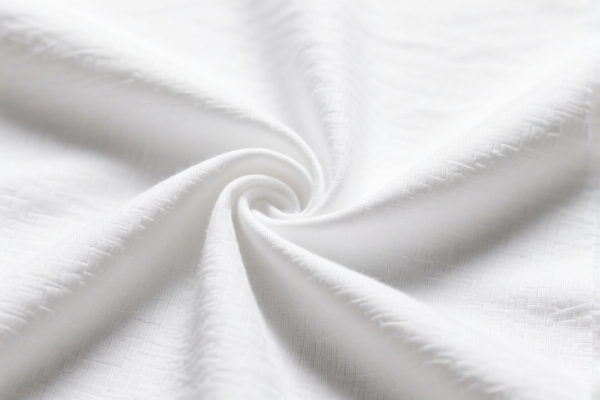

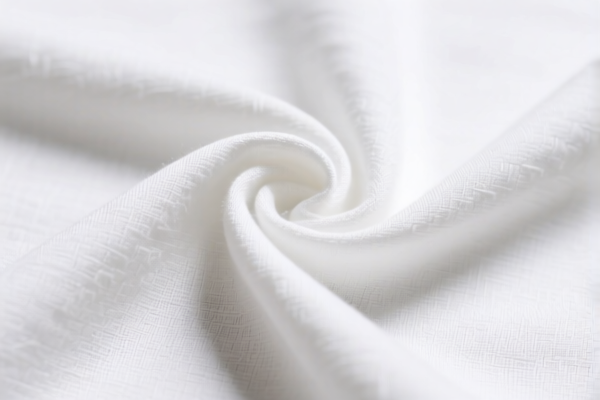

AI Analysis
🧵 PVC Coated Insulated Textile: The Ultimate Customs & Tariff Guide
🌐 HS Code Reference & Clearance Strategy | 2026 Latest Tariff Analysis | Professional Compliance Guide
📌 1. Product Definition & Classification Logic: Decoding "PVC Coated Insulated Textile"
PVC Coated Insulated Textile is a composite material combining polyvinyl chloride (PVC) resin with textile fabrics (usually polyester or fiberglass) to create a durable, waterproof, and electrically insulating material. In international trade, its classification hinges on whether the textile or the PVC coating provides the essential character.
Key Classification Divergence:
- As a Plastic Product (Chapter 39): If the PVC layer is thick enough to give the material its essential character, or if it is considered a "plastic film/fabric" rather than just a coating, it falls under 3921.
- As a Coated Textile (Chapter 59): If it is primarily a fabric coated with PVC for insulation or protection, it falls under 5911.
- As a Technical Textile (Chapter 63): If specifically marketed for UV protection or specific technical uses, it may fall under 6306.
⚠️ Critical Distinction Point:
- Essential Character Test: Does the PVC coating dominate the physical properties (weight, stiffness, water resistance)? → Chapter 39.
- Textile Base Dominance: Is the fabric structure clearly visible and providing structural integrity, with PVC merely as a functional coating? → Chapter 59.
- Specific Use: Is it explicitly sold as "UV protection fabric" or "tent material"? → Chapter 63.
📦 2. HS Code Classification Breakdown (2026 Tariff Book)
Based on the provided data, here are the five possible HS codes and their specific tax implications for imports into the United States (assuming Chinese origin, subject to Section 301 and IEEPA tariffs).
| HS Code | Product Description & Logic | Total Tax Rate | Tax Detail Breakdown |
|---|---|---|---|
| 3921.12.15.00 | PVC-Coated Insulating Fabric: PVC material, textile form, classified as PVC-textile composite with synthetic fiber dominance. | 41.5% | Base: 6.5% + Section 301: 25.0% + IEEPA (Sec 122): 10.0% |
| 5911.10.20.00 | PVC-Coated Insulating Fabric: Coated/laminated textile material. PVC is the coating, fabric is the base. Fits "textile fabric coated with PVC." | 38.8% | Base: 3.8% + Section 301: 25.0% + IEEPA (Sec 122): 10.0% |
| 5911.10.10.00 | PVC-Coated Insulating Fabric: Textile form, PVC coating. Fits "textile goods coated with other materials" for insulation. | 37.9% | Base: 2.9% + Section 301: 25.0% + IEEPA (Sec 122): 10.0% |
| 3921.12.11.00 | PVC-Coated Insulating Fabric: PVC material, coated fabric form, insulation use. Fits "polyvinyl chloride composites." | 39.2% | Base: 4.2% + Section 301: 25.0% + IEEPA (Sec 122): 10.0% |
| 6306.12.00.00 | PVC-Coated UV-Protective Textile: Textile form, UV protection use, PVC material. Fits "synthetic fiber made textiles for sun protection." | 18.8% | Base: 8.8% + Section 301: 0.0% + IEEPA (Sec 122): 10.0% |
🔍 Critical Insight:
- Highest Tax Bracket:3921.12.15.00at 41.5% is the most expensive, applicable if classified strictly as a plastic product.
- Lowest Tax Bracket:6306.12.00.00at 18.8% is the most advantageous, but only if the product is explicitly designed and marketed for UV protection. Note that Section 301 (25%) is waived here, but IEEPA (10%) still applies.
- Mid-Range Options:5911codes range from 37.9% to 38.8%, making them the most common and balanced classification for standard insulating fabrics.
💰 3. Detailed Tariff Analysis & Legal Basis (2026 Update)
✅ Applicable Country: United States (US)
✅ Origin: China (CN)
✅ Effective Date: 2025-11-10 (Includes subsequent imports)
🎯 1. 3921.12.15.00 — The Plastic Composite Route (41.5%)
| Item | Detail |
|---|---|
| Base Duty | 6.5% |
| Section 301 Duty | +25.0% |
| IEEPA (Sec 122) Duty | +10.0% |
| Total Effective Rate | 41.5% |
| Tax Calculation | CIF Value × 41.5% |
| De Minimis Exemption | ❌ Not Eligible |
| Legal Path | USITC:3921.12.15.00 → FOOTNOTE:9903.88.01 (301) → IEEPA:9903.01.24 (122) |
📌 Explanation:
- This code treats the material as a plastic sheet/fabric. The high base duty (6.5%) combined with full Section 301 and IEEPA tariffs makes this the least favorable option unless the PVC content is overwhelmingly dominant.
🎯 2. 5911.10.20.00 — The Coated Textile Route (38.8%)
| Item | Detail |
|---|---|
| Base Duty | 3.8% |
| Section 301 Duty | +25.0% |
| IEEPA (Sec 122) Duty | +10.0% |
| Total Effective Rate | 38.8% |
| Tax Calculation | CIF Value × 38.8% |
| De Minimis Exemption | ❌ Not Eligible |
| Legal Path | USITC:5911.10.20.00 → FOOTNOTE:9903.88.01 (301) → IEEPA:9903.01.24 (122) |
📌 Explanation:
- This is the standard classification for PVC-coated fabrics used in industrial insulation. The lower base duty (3.8%) helps reduce the total tax burden compared to Chapter 39.
🎯 3. 6306.12.00.00 — The Strategic "UV Protection" Loophole (18.8%)
| Item | Detail |
|---|---|
| Base Duty | 8.8% |
| Section 301 Duty | 0.0% |
| IEEPA (Sec 122) Duty | +10.0% |
| Total Effective Rate | 18.8% |
| Tax Calculation | CIF Value × 18.8% |
| De Minimis Exemption | ❌ Not Eligible |
| Legal Path | USITC:6306.12.00.00 → IEEPA:9903.01.24 (122) |
📌 Explanation:
- Crucial Advantage: Section 301 tariffs (25%) are not applied to this subheading. This results in a ~20% tax savings.
- Condition: The product must be clearly identified and used for UV protection. Misclassification here can lead to severe penalties. Use only if the product specification explicitly supports this use case.
🛠️ 4. Customs Clearance Practical Advice (Avoiding Pitfalls)
✅ 1. Required Documentation Checklist
| Document | Required | Notes |
|---|---|---|
| Product Specification Sheet | ✅ Yes | Must detail PVC thickness, fabric type (polyester/glass), and insulation properties. |
| Composition Breakdown | ✅ Yes | Weight % of PVC vs. Fabric. Critical for Chapter 39 vs. 59 decision. |
| Intended Use Statement | ✅ Yes | Explicitly state "Insulation," "UV Protection," or "Waterproofing." |
| Third-Party Test Report | ✅ Yes | UL/ASTM tests for insulation, water resistance, and UV degradation. |
| Commercial Invoice | ✅ Yes | Clear description: "PVC-Coated Polyester Fabric for Electrical Insulation." |
| Certificate of Origin | ✅ Yes | Required for origin verification and tariff application. |
✅ 2. Classification Strategy & Tips
🔥 Golden Rule: "Use Dictates Code, but Evidence Dictates Customs!"
| Scenario | Recommended HS Code | Why? |
|---|---|---|
| General Industrial Insulation | 5911.10.20.00 |
Balanced tax (38.8%), widely accepted for coated textiles. |
| Heavy-Duty PVC Dominant | 3921.12.15.00 |
If PVC is the main feature, but expect higher tax (41.5%). |
| Outdoor/UV-Protective Use | 6306.12.00.00 |
Lowest tax (18.8%), but requires proof of UV function. |
| Thin Coating on Light Fabric | 5911.10.10.00 |
If coating is minimal and fabric dominates (37.9%). |
✅ 3. Special Considerations
| Issue | Recommendation |
|---|---|
| Misclassification Risk | Do not use 6306.12.00.00 unless the product has verified UV-blocking properties. Customs may downgrade and assess back-taxes + penalties. |
| Section 301 Exclusions | Check if any PVC-coated fabrics are currently excluded from Section 301. (As of 2026, most are not excluded). |
| IEEPA Applicability | The 10% IEEPA tariff (Sec 122) applies to all these codes if originating from China. No exemptions available for this specific surcharge. |
| Pre-Ruling Strategy | File an Advance Ruling with CBP for 5911.10.20.00 or 6306.12.00.00 to lock in the classification and avoid post-import audits. |
🌍 5. Global Market Comparison (2026)
| Market | Recommended HS Code | Effective Tariff (China Origin) | Key Requirements |
|---|---|---|---|
| 🇺🇸 USA | 5911.10.20.00 |
38.8% | UL/ASTM Reports, IEEPA Compliance |
| 🇨🇳 China | 5911.10.20.00 |
3.8% | CCC Certification (if applicable) |
| 🇪🇺 EU | 5911.10.20.00 |
~6.5% | REACH Compliance, CE Marking |
| 🇦🇺 Australia | 5911.10.20.00 |
5-10% | RCM Marking (if electrical) |
| 🇯🇵 Japan | 5911.10.20.00 |
~6-8% | JIS Standards, PSE (if electrical) |
📌 Conclusion:
- The USA is the most challenging market due to Section 301 and IEEPA tariffs.
- Strategic Tip: If the product can be certified for UV protection, using6306.12.00.00saves ~20% in duties compared to the standard coated textile code.
📌 6. Common Mistakes & How to Avoid Them
❌ Mistake 1: Classifying as 3921 when it's clearly a textile product.
👉 Result: Higher base duty (6.5% vs 3.8%) and potential audit for misclassification.
✅ Fix: Provide weight percentages and structural analysis showing fabric dominance.
❌ Mistake 2: Using 6306.12.00.00 for standard insulation fabric without UV claims.
👉 Result: Customs will reclassify to 5911, apply 25% Section 301, and charge back-taxes + interest.
✅ Fix: Only use 6306 if test reports prove UV-blocking capability (UPF 50+).
❌ Mistake 3: Ignoring IEEPA (122) Tariffs.
👉 Result: Underpayment of duties by 10%.
✅ Fix: Always include the 10% IEEPA surcharge in cost calculations for China-origin goods.
🎯 7. Final Recommendation: Best Practice for Importers
🎯 Strategy Summary:
1. Default Choice: Use 5911.10.20.00 (38.8%) for general PVC-coated insulated textiles. It’s safe, widely accepted, and has moderate tax burden.
2. Tax Optimization: If your fabric has proven UV-blocking properties, use 6306.12.00.00 (18.8%). This saves ~20% in duties.
3. Avoid: 3921.12.15.00 (41.5%) unless the product is >50% PVC by weight and lacks textile structure.
🔹 Action Item:
- Obtain UL/ASTM Test Reports for insulation and UV properties.
- File for an Advance Ruling with CBP before the first shipment.
- Clearly label invoices as "PVC-Coated Insulating Textile – Industrial Use" to avoid ambiguity.
📣 Pro Tip:
"Tariffs are not just a cost; they are a design constraint. Optimize your product documentation to match the most favorable HS Code."
✨ Professional Clearance Starts with Precise Classification!
💼 Every Percent of Duty Saved is Pure Profit!
Customer Reviews
About HS Code Classification
The Harmonized System (HS) is an internationally standardized nomenclature developed by the World Customs Organization (WCO) to classify traded products. Over 200 countries use the HS system as the basis for customs tariffs, trade statistics, and import/export regulations.
Each HS code follows a hierarchical structure:
- Chapter (2 digits) — Broad category of goods (e.g., Chapter 84: Machinery and Mechanical Appliances)
- Heading (4 digits) — More specific grouping within the chapter
- Subheading (6 digits) — Internationally standardized breakdown, used by all WCO member countries
- National subdivisions (8-10 digits) — Country-specific extensions for further classification, such as US HTSUS 10-digit codes
Correct HS code classification is essential for smooth customs clearance, accurate duty payment, and compliance with trade regulations. Misclassification can lead to customs delays, overpayment of duties, or penalties.
When importing from CN to US, the applicable tariff rates may include:
- Most-Favored-Nation (MFN) rate — The standard duty rate applied to WTO members
- General rate — Applied to countries without trade agreements
- Trade remedy duties — Additional tariffs such as Section 301 (anti-dumping), Section 232 (national security), or countervailing duties
The information provided on this page is for reference purposes only. For official classification, please consult with your local customs authority or a licensed customs broker.