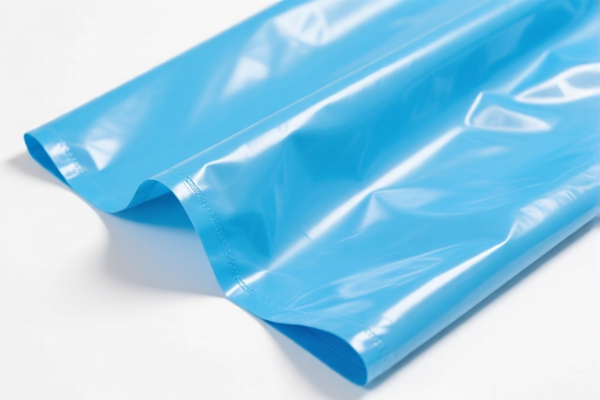
PVC Coated Medical Protective Fabric
CN → US| HS Code | Tariff Rate | Origin | Destination | Doc |
|---|---|---|---|---|
| 5903102090 | 35.0% | CN | US | Official Doc |
| 5903101000 | 37.7% | CN | US | Official Doc |
| 6307906090 | 17.5% | CN | US | Official Doc |
| 6307906800 | 17.5% | CN | US | Official Doc |
| 5903102010 | 35.0% | CN | US | Official Doc |
Product Images



AI Analysis
🏥 PVC Coated Medical Protective Fabric: HS Code Classification & US Customs Clearance Guide (2026)
🌐 HS Code Reference & Customs Clearance Guide | 2026 Latest Tariff Analysis | Professional通关 Strategy
📌 I. Product Definition & Classification: Do You Truly Understand "PVC Coated Medical Fabric"?
PVC Coated Medical Protective Fabric is a composite textile material widely used in surgical drapes, isolation gowns, hospital bedding, and medical barriers. In international trade, its classification is highly sensitive to its structure, manufacturing process, and specific end-use.
It is generally divided into two main categories based on its physical form and function:
- Textile Articles Impregnated/Covered with Plastics (Chapter 59):
- If the fabric's primary characteristic is the coating/lamination process (adding PVC to a textile base), it falls under Chapter 59.
- Key distinction: Is it a "textile with plastic coating" or a "finished textile article"?
- Other Made-Up Textile Articles (Chapter 63):
- If the product is cut and sewn into a specific shape (like a surgical drape or sheet) and the textile nature is secondary to the finished article's function, it may fall under Chapter 63.
- Key distinction: Is it sold as a "fabric roll" (raw material) or a "finished protective item"?
⚠️ Critical Distinction: * If sold as rolls of fabric (unfinished) → Classify under HS 5903 (Plastic-coated textiles). * If sold as cut/sewn items (e.g., surgical drapes, isolation gowns) → Classify under HS 6307 (Other made-up textile articles).
📦 II. HS Code Classification Details (2026 Latest Tariff Authority Cross-Reference)
Based on the provided data, here are the 5 specific HS Codes applicable to PVC Coated Medical Protective Fabric, ranging from raw textile materials to finished medical articles.
| HS Code | Product Description | Application Scenario | Key Classification Criteria |
|---|---|---|---|
5903.10.20.90 |
PVC-coated medical protective fabric, PVC material, coated textile fabric form, for medical protection. | Raw material rolls, bulk textile fabric for further processing. | Coating Process: Focuses on the "plastic-coated textile" structure. |
5903.10.10.00 |
PVC-coated medical protective fabric, PVC material, textile fabric form, fits impregnation/coating classification. | Industrial grade coated fabrics, general medical barrier fabrics. | Impregnation/Coating: Specifically fits the definition of fabric impregnated with plastics. |
6307.90.60.90 |
PVC-coated medical protective fabric, PVC coated, fabric form, medical protection use, fits surgical drape characteristics. | Finished surgical drapes, isolation pads, pre-cut protective sheets. | Finished Article: Classified as a "made-up article" (drape-like) rather than raw fabric. |
6307.90.68.00 |
PVC-coated medical protective fabric, PVC coated, medical protection use, fits synthetic fiber fabric attributes. | Generic medical protective textiles, non-specific shaped items. | Synthetic Fiber Attribute: Broad category for other made-up synthetic textile articles. |
5903.10.20.10 |
PVC-coated synthetic fiber protective fabric, PVC and synthetic fiber material, textile fabric form. | Blended fabrics (PVC + Synthetic base), high-performance medical textiles. | Composite Material: Explicitly mentions synthetic fiber base with PVC coating. |
🔍 Key Reminder: * Raw vs. Finished: If the product is unsewn rolls, use 5903 codes. If it is cut/sewn (like a gown or drape), use 6307 codes. * Material Composition: If the base fabric is explicitly "synthetic fiber" (e.g., polyester), ensure the description matches
5903.10.20.10if it fits the coating criteria.
💰 III. 2026 Latest Tariff Rate Detailed Analysis (Including Surtaxes & Policy Add-ons)
✅ Applicable Country: United States (US) ✅ Origin: China (CN) ✅ Effective Date: From November 10, 2025 (including subsequent imports)
🎯 1. 5903.10.20.90 & 5903.10.20.10 —— PVC-Coated Textile Fabrics (Base Tariff 0%)
These codes typically have a low base duty but are heavily impacted by trade policy surcharges.
| Item | Detail |
|---|---|
| Base Tariff | 0.0% (Ad Valorem) |
| Section 301 Surtax (Additional Tariff) | +25.0% |
| Section 122 Tariff | +10.0% |
| Total Tariff Rate | 35.0% |
| Tax Calculation | CIF Value × 35% |
| De Minimis Eligibility | ❌ Not Eligible (Subject to high tariffs, de minimis usually waived or not applicable for these specific HTSUs under current enforcement) |
| Legal Basis Path | Base: 0% → 301: 25% → 122: 10% |
📌 Explanation: * Base 0%: Textile plastics often have low base duties. * 301 (25%): Standard US-China trade war tariff. * 122 (10%): Specific policy addition (often related to recent enforcement actions or specific commodity lists). * Total 35%: A significant cost. Must be factored into pricing.
🎯 2. 5903.10.10.00 —— Impregnated/Coated Textile Fabric (Base Tariff 2.7%)
This code carries a small base duty, which is then augmented by surcharges.
| Item | Detail |
|---|---|
| Base Tariff | 2.7% |
| Section 301 Surtax (Additional Tariff) | +25.0% |
| Section 122 Tariff | +10.0% |
| Total Tariff Rate | 37.7% |
| Tax Calculation | CIF Value × 37.7% |
| De Minimis Eligibility | ❌ Not Eligible |
| Legal Basis Path | Base: 2.7% → 301: 25% → 122: 10% |
📌 Note: * The 2.7% base duty makes this 0.7% more expensive than the 5903.10.20 series. * This code is often used when the fabric is impregnated (soaked) rather than just surface-coated.
🎯 3. 6307.90.60.90 & 6307.90.68.00 —— Finished Medical Textile Articles (Base Tariff 0%)
These codes are for made-up articles (like drapes or finished sheets). They benefit from a lower surtax structure.
| Item | Detail |
|---|---|
| Base Tariff | 0.0% |
| Section 301 Surtax (Additional Tariff) | +7.5% |
| Section 122 Tariff | +10.0% |
| Total Tariff Rate | 17.5% |
| Tax Calculation | CIF Value × 17.5% |
| De Minimis Eligibility | ❌ Not Eligible (Check specific exemptions, but generally subject to surtax) |
| Legal Basis Path | Base: 0% → 301: 7.5% → 122: 10% |
📌 Crucial Advantage: * Total Rate: 17.5% is less than half of the raw fabric rate (35-37.7%). * Why? The 301 Surtax is only 7.5% for these "other made-up textile articles," not the standard 25%. * Strategy: If you are exporting finished surgical drapes or gowns, ensure the classification falls under 6307.90 to save ~20% in tariffs compared to importing raw fabric and finishing it elsewhere (or if re-exported).
🛠️ IV. Customs Clearance Practical Advice (Avoid Pitfalls)
✅ 1. Documentation Checklist (Non-Negotiable)
| Document | Required | Purpose |
|---|---|---|
| ✅ Commercial Invoice | ✔️ | Must clearly state: "PVC Coated Medical Protective Fabric," HS Code, Value, Origin (China). |
| ✅ Packing List | ✔️ | Detail rolls vs. cut pieces. Weight, dimensions, and packaging type. |
| ✅ Product Description | ✔️ | Critical: Specify if it is "Raw Fabric Roll" or "Cut/Sewn Drape." Mismatch causes delays. |
| ✅ Material Composition | ✔️ | e.g., "100% Polyester Base + PVC Coating." Required for HS 5903 vs. 6307 distinction. |
| ✅ Use Statement | ✔️ | "For use in hospital surgical drapes / isolation gowns." Helps justify Chapter 63 if applicable. |
| ✅ Certificate of Origin | ✔️ | Proves Chinese origin for surtax calculation. |
✅ 2. Declaration Strategy (Key Rules)
🔥 "Rolls are 5903, Finished is 6307. Accuracy saves 20%!"
| Scenario | Correct HS Code | Incorrect Action | Consequence |
|---|---|---|---|
| Selling rolls of fabric | 5903.10.20.90 or 5903.10.10.00 |
Declaring as "Surgical Drape" | Misclassification → Penalty + Back Taxes |
| Selling cut/sewn drapes | 6307.90.60.90 |
Declaring as "Fabric" | May be allowed, but 6307 is cheaper (17.5% vs 35%). Always declare as "Finished Article" if it is. |
| Mixed Shipment | Separate Lines | Combining rolls and finished items in one line | Customs may audit the entire shipment, holding up clearance. |
✅ 3. Special Considerations
- Medical Device vs. Textile: If the fabric has antimicrobial agents or sterile packaging marketed as a medical device, consult FDA regulations. However, for Customs/Tariff, it is still classified under Textiles (5903/6307) unless it is a fully assembled medical device (e.g., a gowned suit with integrated sensors).
- Section 122 Tariff (10%): Applies to both fabric and finished goods. No exemption for medical use in this surtax.
- Section 301 Surtax:
- Raw Fabric (5903): 25% (High).
- Finished Article (6307): 7.5% (Low).
- Strategy: If you have the capability to cut/sew in a third country (e.g., Vietnam, Mexico), consider substantial transformation to change the HS Code and avoid the 25% US-China tariff. However, simple cutting/sewing may not be enough for "Country of Origin" change; check FTZ rules.
🌍 V. Global Market Comparison (2026)
| Country/Region | Recommended HS Code | Tariff Rate (China Origin) | Notes |
|---|---|---|---|
| 🇺🇸 United States | 5903.10.20.90 (Raw) 6307.90.60.90 (Finished) |
35.0% (Raw) 17.5% (Finished) |
Highly sensitive to 301/122 tariffs. |
| 🇨🇳 China (Import) | 5903.10.20.90 |
~5-10% (VAT + Duty) | Lower duties, but VAT (13%) applies. |
| 🇪🇺 European Union | 5903.10.20 / 6307.90 |
0-6% (Depends on exact type) | No Section 301 or 122 equivalent. |
| 🇬🇧 United Kingdom | 5903.10.20 / 6307.90 |
0-6% | Post-Brexit tariffs apply. |
| 🇯🇵 Japan | 5903.10.20 / 6307.90 |
0-6% | No major surcharges for medical textiles. |
📌 Conclusion: * The US is the most expensive market due to Section 301 (25%) and Section 122 (10%). * Critical Cost Saving: Ensure correct classification. If the product is a finished surgical drape, use 6307.90.60.90 to pay 17.5% instead of 35%. * Do not under-declare: Customs will inspect samples to determine if it is "fabric" or "article."
📌 VI. Common Errors & Pitfalls (Lessons Learned)
❌ Mistake 1: Declaring finished surgical drapes as raw fabric (5903).
👉 Result: You pay 35% instead of 17.5%. Overpayment by nearly 100% on the duty portion.
👉 Fix: Always declare as "Medical Protective Drapes (Finished Article)" if cut/sewn.
❌ Mistake 2: Claiming De Minimis ($800 exemption) for these goods. 👉 Result: Most Chinese-origin textiles subject to 301/122 are excluded from de minimis relief or heavily scrutinized. 👉 Fix: Assume full tariff liability for shipments >$800 from China.
❌ Mistake 3: Vague Description: "Medical Cloth." 👉 Result: Customs issues a "Request for Information" (RFI), delaying clearance by 2-4 weeks. 👉 Fix: Use precise terms: "PVC Coated Polyester Medical Protective Fabric, Roll Form, For Surgical Drapes."
❌ Mistake 4: Ignoring Section 122 surtax. 👉 Result: Underpayment by 10%. 👉 Fix: Include 10% in your cost model for all codes listed.
✅ Correct Practice:
"PVC Coated Medical Protective Fabric, Synthetic Fiber Base, PVC Coating, Sold in Rolls, For Use in Surgical Drapes, HS 5903.10.20.90, Origin China"
🎯 VII. Conclusion: Professional Declaration, Cost Optimization!
🎯 Remember the Golden Rules:
🔹 "Rolls are Raw (5903), Finished is Done (6307)." 🔹 "5903 pays 35%, 6307 pays 17.5%." 🔹 "301 (25% or 7.5%) + 122 (10%) = Total Rate." 🔹 "Describe Precisely: 'PVC Coated' + 'Medical Use' + 'Form (Roll/Article)'."
📌 Pro Tip: If you are importing large volumes, consider Applying for an Advance Ruling from US Customs and Border Protection (CBP) to confirm whether your specific product is classified as "Fabric" (5903) or "Article" (6307). This provides legal certainty and prevents surprise audits.
📣 Immediate Action:
📞 Contact your freight forwarder + Provide Product Specs + Verify HS Code Pre-Ruling. 🚀 Clear Customs Smoothly, Save 20% in Duties, Maximize Profit!
✨ Professional Customs Clearance Starts with Precise Classification! 💼 Every cent counts in international trade!
Customer Reviews
About HS Code Classification
The Harmonized System (HS) is an internationally standardized nomenclature developed by the World Customs Organization (WCO) to classify traded products. Over 200 countries use the HS system as the basis for customs tariffs, trade statistics, and import/export regulations.
Each HS code follows a hierarchical structure:
- Chapter (2 digits) — Broad category of goods (e.g., Chapter 84: Machinery and Mechanical Appliances)
- Heading (4 digits) — More specific grouping within the chapter
- Subheading (6 digits) — Internationally standardized breakdown, used by all WCO member countries
- National subdivisions (8-10 digits) — Country-specific extensions for further classification, such as US HTSUS 10-digit codes
Correct HS code classification is essential for smooth customs clearance, accurate duty payment, and compliance with trade regulations. Misclassification can lead to customs delays, overpayment of duties, or penalties.
When importing from CN to US, the applicable tariff rates may include:
- Most-Favored-Nation (MFN) rate — The standard duty rate applied to WTO members
- General rate — Applied to countries without trade agreements
- Trade remedy duties — Additional tariffs such as Section 301 (anti-dumping), Section 232 (national security), or countervailing duties
The information provided on this page is for reference purposes only. For official classification, please consult with your local customs authority or a licensed customs broker.