PVC Coated Mold Resistant Fabric
CN → US| HS Code | Tariff Rate | Origin | Destination | Doc |
|---|---|---|---|---|
| 5903102010 | 35.0% | CN | US | Official Doc |
| 5903102090 | 35.0% | CN | US | Official Doc |
| 5911102000 | 38.8% | CN | US | Official Doc |
| 3921121500 | 41.5% | CN | US | Official Doc |
| 3921121100 | 39.2% | CN | US | Official Doc |
Product Images
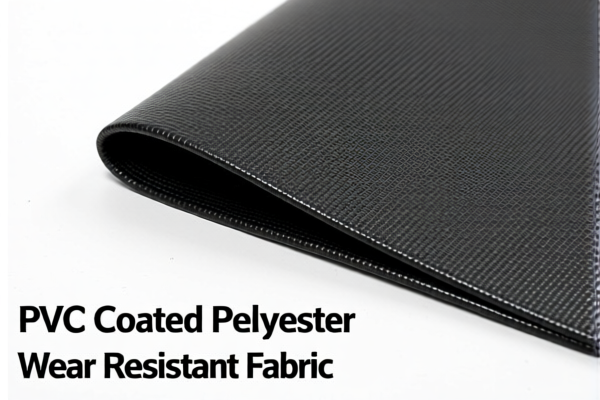
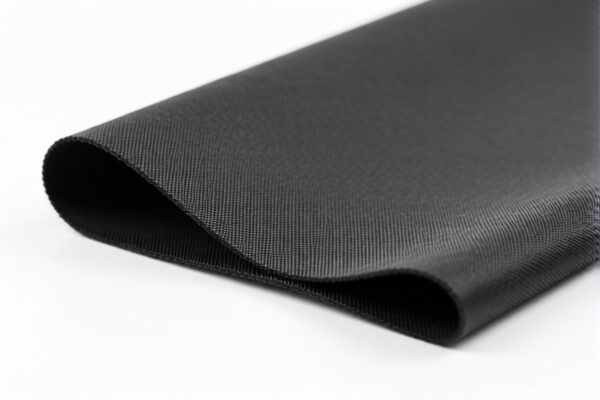
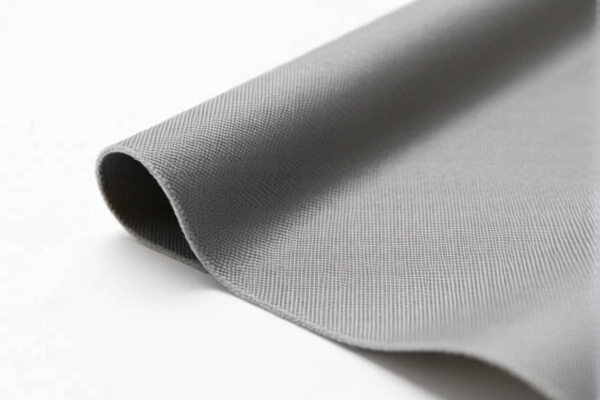
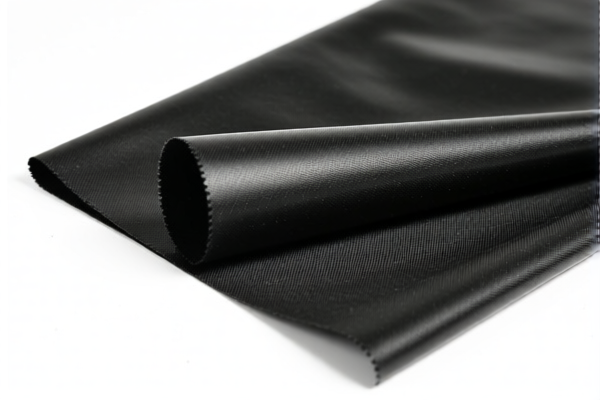
AI Analysis
🧵 PVC Coated Mold Resistant Fabric (Polyvinyl Chloride Coated Anti-Microbial Fabric)
🌐 HS Code Reference & Customs Clearance Guide | 2026 Latest Tariff Analysis | Professional Clearance Strategy
📌 I. Product Definition & Classification: Do You Really Understand "PVC Fabric"?
PVC Coated Mold Resistant Fabric is a high-performance composite material widely used in industrial tents, medical covers, waterproof packaging, and specialized protective clothing. In international trade, its classification is not determined solely by the name "Fabric", but by its structure, material composition, and primary function.
The key to accurate classification lies in distinguishing between: 1. Textile-Based Coated Fabrics (Chapter 59): The base material is a textile (woven/knitted), and the PVC is a coating for reinforcement/weatherproofing. 2. Plastic Sheetings/Products (Chapter 39): The product is primarily defined as a plastic sheet, possibly reinforced with fabric, or used for specific plastic-related functions (like shock absorption via plastic properties).
⚠️ Critical Distinction Point:
- If the product is essentially a textile coated with PVC for general purpose (tear resistance, weatherproofing) → HS Code 5903.
- If the product is primarily defined by its plastic nature for specific uses like shock absorption or as a composite plastic sheet → HS Code 3921.
- The term "Mold Resistant" often implies specific chemical treatment, but customs looks at the physical structure first.
📦 II. HS Code Classification Details (2026 Latest Tariff Authority Comparison)
Based on the provided data, here are the five precise classifications for this product, categorized by their nature:
| HS Code | Product Description | Applicable Scenario | Key Differentiator |
|---|---|---|---|
5903.10.20.10 |
PVC Coated Tear-Resistant Fabric Material: PVC; Form: Coated Fabric |
General industrial use, tarps, bags, awnings | Tear Resistance is the primary feature. Base is textile. |
5903.10.20.90 |
PVC Coated Tear-Resistant Fabric Material: PVC; Form: Coated Fabric |
General industrial use, other variants | General Coated Fabric (fallback for 5903.10.20). No specific "122" or other sub-category fit. |
5911.10.20.00 |
PVC Coated Shock-Absorbing Fabric Material: PVC; Form: Fabric; Feature: Coated Material Characteristics |
Industrial padding, protective gear, shock absorption | Shock Absorption function + Coated characteristics. Textile base. |
3921.12.15.00 |
PVC Coated Shock-Absorbing Fabric Material: PVC; Form: Fabric; Purpose: Shock Absorption |
Specialized shock-absorbing layers, plastic-sheet defined | Purpose-driven: Defined as "Shock Absorbing" under Plastic Chapter 39. |
3921.12.11.00 |
PVC Coated Shock-Absorbing Fabric Material: PVC; Form: Composite Fabric |
High-end composite applications, plastic-centric | Composite Nature: Classified under Plastic Chapter 39 as a composite sheet/product. |
🔍 Key Insight:
- Chapter 59 (5903/5911): Treats the product as a Textile first. Lower base tariffs (0% or 3.8%). Best for standard coated textiles.
- Chapter 39 (3921): Treats the product as Plastic first. Higher base tariffs (4.2% or 6.5%). Used when the plastic component dominates the function (e.g., specialized shock absorption).
💰 III. 2026 Latest Tariff Rate Breakdown (Including Surtaxes & Policy Add-ons)
✅ Applicable Country: United States (US)
✅ Country of Origin: China (CN)
✅ Effective Date: November 10, 2025 (and onwards)
🎯 1. 5903.10.20.10 & 5903.10.20.90 —— PVC Coated Tear-Resistant Fabric (Textile Basis)
| Item | Content |
|---|---|
| Base Tariff | 0% (Ad valorem) |
| USITC Surcharge (Section 301) | +25% |
| IEEPA Surcharge (122 Clause) | +10% |
| Total Tax Rate | 35.0% |
| Tax Calculation | CIF Value × 35% |
| De Minimis Exemption | ❌ Not Available (deny_de_minimis) |
| Legal Basis Path | IEEPA:9903.01.25 → USITC:5903.10.20.10/90 → FOOTNOTE:9903.88.01 |
📌 Explanation:
- These codes are classified under Chapter 59 (Coated Textiles).
- Base tariff is 0%, which is favorable.
- However, with the 25% Section 301 tariff and 10% IEEPA (122 Clause) tariff, the total burden is 35%.
- Note: The "122 Clause" is a specific U.S. trade remedy provision targeting certain Chinese goods, adding an extra 10%.
🎯 2. 5911.10.20.00 —— PVC Coated Shock-Absorbing Fabric (Textile Basis)
| Item | Content |
|---|---|
| Base Tariff | 3.8% |
| USITC Surcharge (Section 301) | +25% |
| IEEPA Surcharge (122 Clause) | +10% |
| Total Tax Rate | 38.8% |
| Tax Calculation | CIF Value × 38.8% |
| De Minimis Exemption | ❌ Not Available |
| Legal Basis Path | IEEPA:9903.01.25 → USITC:5911.10.20.00 → FOOTNOTE:9903.88.01 |
📌 Explanation:
- Classified under Chapter 59 but as Technical/Industrial Textiles (5911).
- Base tariff is 3.8%, which is higher than general coated fabrics.
- Total rate is 38.8%. This code is used when the fabric has specific technical features like shock absorption but retains a textile base.
🎯 3. 3921.12.15.00 —— PVC Coated Shock-Absorbing Fabric (Plastic Basis - Specific Purpose)
| Item | Content |
|---|---|
| Base Tariff | 6.5% |
| USITC Surcharge (Section 301) | +25% |
| IEEPA Surcharge (122 Clause) | +10% |
| Total Tax Rate | 41.5% |
| Tax Calculation | CIF Value × 41.5% |
| De Minimis Exemption | ❌ Not Available |
| Legal Basis Path | IEEPA:9903.01.25 → USITC:3921.12.15.00 → FOOTNOTE:9903.88.01 |
📌 Explanation:
- Classified under Chapter 39 (Plastics and Articles Thereof).
- Base tariff is 6.5%.
- Total rate is 41.5%. This is the highest among the "Plastic" classifications due to the higher base rate. It applies when the product is primarily considered a plastic sheet with shock-absorbing properties.
🎯 4. 3921.12.11.00 —— PVC Coated Shock-Absorbing Fabric (Plastic Basis - Composite)
| Item | Content |
|---|---|
| Base Tariff | 4.2% |
| USITC Surcharge (Section 301) | +25% |
| IEEPA Surcharge (122 Clause) | +10% |
| Total Tax Rate | 39.2% |
| Tax Calculation | CIF Value × 39.2% |
| De Minimis Exemption | ❌ Not Available |
| Legal Basis Path | IEEPA:9903.01.25 → USITC:3921.12.11.00 → FOOTNOTE:9903.88.01 |
📌 Explanation:
- Also classified under Chapter 39 but as a Composite Plastic Product.
- Base tariff is 4.2%.
- Total rate is 39.2%. Lower than3921.12.15.00due to a lower base rate, but still higher than the Chapter 59 options.
🛠️ IV. Customs Clearance Practical Advice (Real-World Pitfall Avoidance)
✅ 1. Document Checklist (Mandatory)
| Document | Required | Description |
|---|---|---|
| ✅ Product Specification Sheet | ✔️ | Must detail: Base material (e.g., polyester), PVC % content, coating thickness, mold-resistant additives. |
| ✅ Product Photos | ✔️ | Clear images showing the textile weave and PVC coating. If "shock-absorbing," show structure (e.g., foam layer, bubble structure). |
| ✅ Commercial Invoice | ✔️ | Must match HS Code description. Use terms like "PVC Coated Fabric, Tear-Resistant" for 5903, or "Shock-Absorbing PVC Composite" for 3921. |
| ✅ Packing List | ✔️ | Weight and dimensions. |
| ✅ Certificate of Origin | ✔️ | Required for any potential duty drawback or verification. |
✅ 2. Declaration Strategy (Key Mantra)
🔥 "Base Material Determines Chapter, Function Determines Subheading!"
| Scenario | Correct HS Code | Why? |
|---|---|---|
| Standard tear-resistant tarpaulin/cover | 5903.10.20.10 or .90 |
Primary feature is tear resistance of a coated textile. |
| Textile fabric with shock-absorbing properties | 5911.10.20.00 |
It is still a textile (Chapter 59) with a specific technical use. |
| Product primarily used as a plastic shock-absorber (e.g., in packaging) | 3921.12.15.00 |
Classified as Plastic (Chapter 39) due to primary function. |
| Composite plastic sheet with fabric reinforcement for shock absorption | 3921.12.11.00 |
Classified as Composite Plastic product. |
✅ 3. Special Handling
| Situation | Recommendation |
|---|---|
| Mold-Resistant Claim | Do not rely solely on "Mold-Resistant" for HS Code. Customs looks at structure. Provide lab reports proving mold resistance if questioned, but classify based on PVC/Textile structure. |
| High Tariff Avoidance | If the product is a simple coated fabric, avoid Chapter 39 unless necessary. Chapter 59 (5903.10.20.10) offers the lowest total tax (35%). |
| Pre-Ruling | Given the high complexity and high tariffs (35-41.5%), apply for an Advance Ruling (Pre-classification) from CBP to ensure the correct HS Code is used and avoid penalties. |
🌍 V. Global Market Comparison (2026 Latest)
| Country/Region | Recommended HS Code | Total Tariff (China Origin) | Notes |
|---|---|---|---|
| 🇺🇸 USA | 5903.10.20.10 |
35.0% | Best rate among options. |
| 🇨🇳 China | 5903.10.20.10 |
~10-13% | Import tax + VAT. No Section 301/IEEPA. |
| 🇪🇺 EU | 5903.10.20.10 |
~12% | Standard EU tariff. No US-style surcharges. |
| 🇦🇺 Australia | 5903.10.20.10 |
~5% | Low tariff, no major surcharges. |
| 🇯🇵 Japan | 5903.10.20.10 |
~7-8% | Moderate tariff. |
📌 Conclusion:
- USA is the most challenging market due to Section 301 and IEEPA surcharges.
- Chapter 59 (5903.10.20.10) is the optimal classification for standard PVC coated fabrics, offering the lowest total tax rate (35%).
- Avoid Chapter 39 unless the product is strictly a plastic composite, as taxes are higher (39-41.5%).
📌 VI. Common Errors & Pitfalls (Blood & Tears Lessons)
❌ Error 1: Declaring as "Fabric" without specifying "Coated"
👉 Consequence: Misclassification → Penalties + Back Taxes.
❌ Error 2: Using Chapter 39 (3921) for simple coated textiles
👉 Consequence: Higher tax (39-41.5%) instead of 35%. Overpaying 4.5-6.5%.
❌ Error 3: Claiming "De Minimis" (Section 321) for shipments under $800
👉 Consequence: Rejected. HS Codes 5903/5911/3921 are excluded from De Minimis exemption for Chinese goods.
❌ Error 4: Ignoring the "122 Clause" (IEEPA)
👉 Consequence: Underpaying by 10%. Customs audits will recover this + interest.
✅ Correct Declaration:
"PVC Coated Polyester Fabric, Tear-Resistant, 100% PVC Coated, Industrial Use, HS 5903.10.20.10"
🎯 VII. Conclusion: Precision Classification, Cost Control!
🎯 Remember the Mantra:
🔹 "5903 is King for Coated Fabrics, 35% Total Tax is the Best Bet!"
🔹 "Chapter 39 is for Plastics, 39-41% Tax is the Price to Pay!"
🔹 "No De Minimis for Chinese PVC Fabrics to USA!"
📌 Pro Tip:
If your PVC fabric is not made in China (e.g., Vietnam, Thailand, India), you may avoid the 25% Section 301 and 10% IEEPA tariffs, reducing the total tax to just the base rate (0% or 3.8%).
Strategic Sourcing: Consider shifting supply chain to non-China origins to save 25-35% in tariffs.
📣 Immediate Action:
📞 Contact your customs broker to apply for an Advance Ruling for HS Code
5903.10.20.10.
🚀 Optimize your supply chain to minimize tariff exposure!
✨ Professional Clearance Starts with Accurate Classification!
💼 Every percentage point saved is pure profit!
Customer Reviews
About HS Code Classification
The Harmonized System (HS) is an internationally standardized nomenclature developed by the World Customs Organization (WCO) to classify traded products. Over 200 countries use the HS system as the basis for customs tariffs, trade statistics, and import/export regulations.
Each HS code follows a hierarchical structure:
- Chapter (2 digits) — Broad category of goods (e.g., Chapter 84: Machinery and Mechanical Appliances)
- Heading (4 digits) — More specific grouping within the chapter
- Subheading (6 digits) — Internationally standardized breakdown, used by all WCO member countries
- National subdivisions (8-10 digits) — Country-specific extensions for further classification, such as US HTSUS 10-digit codes
Correct HS code classification is essential for smooth customs clearance, accurate duty payment, and compliance with trade regulations. Misclassification can lead to customs delays, overpayment of duties, or penalties.
When importing from CN to US, the applicable tariff rates may include:
- Most-Favored-Nation (MFN) rate — The standard duty rate applied to WTO members
- General rate — Applied to countries without trade agreements
- Trade remedy duties — Additional tariffs such as Section 301 (anti-dumping), Section 232 (national security), or countervailing duties
The information provided on this page is for reference purposes only. For official classification, please consult with your local customs authority or a licensed customs broker.