PVC Coated Mold Resistant Textile
CN → US| HS Code | Tariff Rate | Origin | Destination | Doc |
|---|---|---|---|---|
| 6306120000 | 18.8% | CN | US | Official Doc |
| 5903102010 | 35.0% | CN | US | Official Doc |
| 5903102090 | 35.0% | CN | US | Official Doc |
| 3921121100 | 39.2% | CN | US | Official Doc |
| 6306192110 | 22.6% | CN | US | Official Doc |
Product Images
AI Analysis
☂️ PVC Coated Mold Resistant Textiles (UV Protection)
🌐 HS Code Reference & Clearance Guide | 2026 Latest Tariff Analysis | Professional Compliance Strategy
📌 I. Product Definition & Classification: Do You Truly Understand "PVC Coated Textiles"?
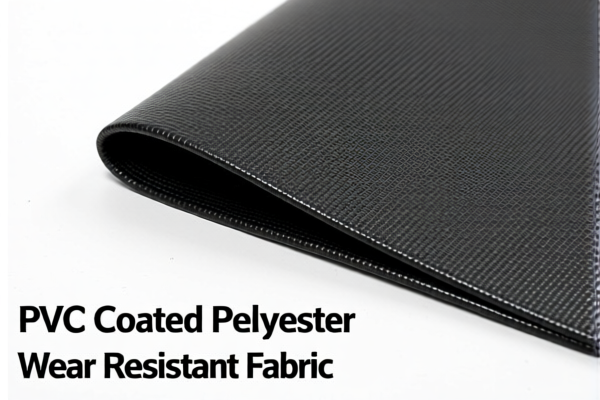
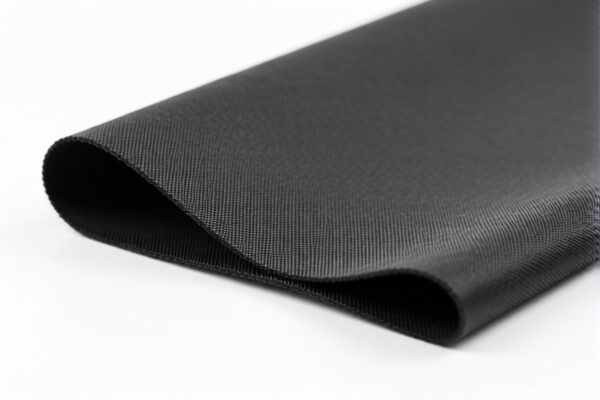
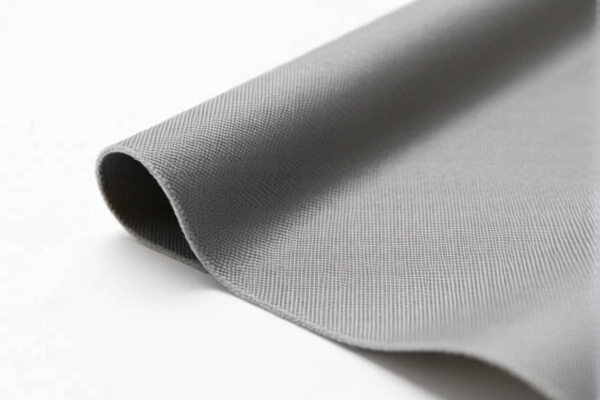
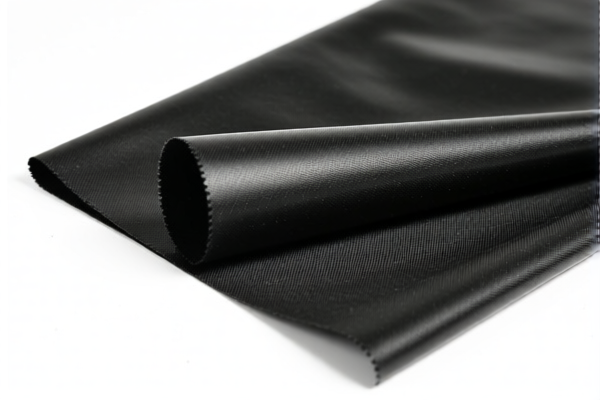
PVC Coated Mold Resistant Textiles are composite materials where a textile base (often synthetic or natural fiber) is impregnated, coated, or covered with Polyvinyl Chloride (PVC) plastic. These materials are specifically engineered to be mold-resistant and offer UV protection, making them ideal for outdoor shelters, awnings, tarpaulins, and industrial covers.
In international trade, the critical classification dilemma lies in determining whether the product is primarily a "Textile Product" (Chapter 63) or a "Plastic Composite/Coated Fabric" (Chapter 59 or 39). This distinction drastically alters the tariff burden due to Section 301 duties and IEEPA surcharges.
⚠️ Key Classification Distinction:
- If the PVC coating is merely a surface treatment for a finished textile article (like a tarp or awning) and the textile character dominates → Chapter 63.
- If the PVC coating impregnates/encases the fabric to the extent that it loses its textile structure or is defined as a composite plastic material → Chapter 59 or 39.
📦 II. HS Code Classification Details (2026 Latest Tariff Authority Comparison)
| HS Code | Product Description | Application Scenario | Primary Material Characteristic |
|---|---|---|---|
6306.12.00.00 |
PVC Coated UV-Resistant Textile (Tarpaulins/Awnings) | Finished outdoor covers, shade sails, tarpaulins | Textile-based, PVC-coated, UV-resistant. Lowest Duty Option. |
5903.10.20.10 |
PVC-Coated Textile Fabric (Impregnated) | Raw coated fabric rolls, industrial linings | Impregnated/coated with PVC, textile base. High Duty. |
5903.10.20.90 |
PVC-Coated Textile (Coated Type) | Coated textile materials for general use | Coated with PVC, retains textile form but classified under Ch 59. High Duty. |
3921.12.11.00 |
PVC-Textile Composite Material | Rigid or semi-rigid plastic composites | PVC dominates; treated as a plastic composite with textile reinforcement. Highest Duty. |
6306.19.21.10 |
PVC Coated UV-Resistant Textile (Synthetic Fiber Tarp) | Synthetic fiber awnings, sunshades, mosquito nets | Made of artificial/synthetic fibers, PVC coated, UV protection. Medium Duty. |
🔍 Critical Warning:
- Chapter 59 & 39 Codes attract 35%-39.2% total duties due to the 25% Section 301 surcharge.
- Chapter 63 Codes are generally less punitive, with6306.12.00.00offering the lowest overall rate (18.8%) if the product fits the definition of a finished tarp/awning.
- Misclassifying a finished awning (6306) as a raw coated fabric (5903) can result in doubling or tripling your tax liability.
💰 III. 2026 Latest Tariff Rate Breakdown (Including Surcharges & Policy Add-ons)
✅ Applicable Country: United States (US)
✅ Origin: China (CN)
✅ Effective Date: November 10, 2025 (and subsequent imports)
🎯 1. 6306.12.00.00 —— PVC Coated Textile (Tarpaulins/Awnings) [RECOMMENDED FOR FINISHED GOODS]
| Item | Content |
|---|---|
| Base Duty | 8.8% (Ad Valorem) |
| Section 301 Surcharge | 0.0% (No additional 25% tariff for this specific subheading under current rulings) |
| IEEPA Surcharge | 10% (Applied to Chinese-origin products) |
| Total Effective Rate | 18.8% |
| Tax Calculation | CIF Value × 18.8% |
| De Minimis Eligibility | ❌ No (Deny De Minimis – shipments < $800 must be fully declared and taxed) |
| Legal Basis Path | USITC: 6306.12.00.00 → IEEPA: 9903.01.25 (10% China tariff) |
📌 Explanation:
- This is the most cost-effective classification for finished PVC-coated textile articles like awnings or tarpaulins.
- The 0% Section 301 surcharge is a significant advantage compared to Chapter 59/39 codes.
- The 10% IEEPA tariff still applies, making the total 18.8%.
🎯 2. 5903.10.20.10 & 5903.10.20.90 —— PVC-Coated Textile Fabrics (Raw/Industrial)
| Item | Content |
|---|---|
| Base Duty | 0.0% |
| Section 301 Surcharge | +25.0% (Under USITC Footnote 9903.88.01) |
| IEEPA Surcharge | +10.0% |
| Total Effective Rate | 35.0% |
| Tax Calculation | CIF Value × 35.0% |
| De Minimis Eligibility | ❌ No |
| Legal Basis Path | IEEPA: 9903.01.25 → IEEPA: 9903.01.24 → USITC: 5903.10.20.xx → FOOTNOTE: 9903.88.01 |
📌 Note:
- Even though the base duty is 0%, the 25% Section 301 tariff makes this category extremely expensive.
- Applies to rolls of coated fabric intended for further manufacturing, not finished consumer/textile articles.
🎯 3. 3921.12.11.00 —— PVC-Textile Composite Material
| Item | Content |
|---|---|
| Base Duty | 4.2% |
| Section 301 Surcharge | +25.0% |
| IEEPA Surcharge | +10.0% |
| Total Effective Rate | 39.2% |
| Tax Calculation | CIF Value × 39.2% |
| De Minimis Eligibility | ❌ No |
| Legal Basis Path | IEEPA: 9903.01.25 → USITC: 3921.12.11.00 |
📌 Explanation:
- This code treats the product as a plastic composite.
- It carries the highest total tariff (39.2%) among the listed options.
- Only use this if the product is structurally a plastic sheet with textile reinforcement, not a textile with a coating.
🎯 4. 6306.19.21.10 —— PVC Coated UV-Resistant Textile (Synthetic)
| Item | Content |
|---|---|
| Base Duty | 5.1% |
| Section 301 Surcharge | +7.5% (Partial Section 301 or specific footnote) |
| IEEPA Surcharge | +10.0% |
| Total Effective Rate | 22.6% |
| Tax Calculation | CIF Value × 22.6% |
| De Minimis Eligibility | ❌ No |
| Legal Basis Path | USITC: 6306.19.21.10 → IEEPA: 9903.01.25 |
📌 Explanation:
- This code is for other tarpaulins/awnings made of synthetic fibers.
- The 7.5% Section 301 surcharge is lower than the 25% on Chapter 59/39, but still higher than6306.12.
- Use if the textile base is synthetic (e.g., polyester) and doesn't fit the specific6306.12definition.
🛠️ IV. Customs Clearance Practical Advice (Field Anti-Pitfall Guide)
✅ 1. Documentation Checklist (None Can Be Omitted)
| Document | Required | Description |
|---|---|---|
| ✅ Product Specification Sheet | ✔️ | Must clearly state: Material composition (Textile vs. PVC ratio), Coating method, UV resistance rating, Mold resistance proof. |
| ✅ Product Photos | ✔️ | High-res images showing the texture, coating thickness, and finished form (e.g., folded tarp vs. raw roll). |
| ✅ Composition Analysis Report | ✔️ | Crucial: Third-party lab report confirming whether the product is primarily "Textile" (Ch 63) or "Plastic Composite" (Ch 59/39). |
| ✅ Commercial Invoice | ✔️ | Must accurately describe the item as "PVC Coated Tarpaulin" or "UV Resistant Awning Fabric" – Avoid vague terms like "Plastic Sheet". |
| ✅ Packing List | ✔️ | Detail weight, dimensions, and quantity. Ensure consistency with invoice. |
| ✅ Certificate of Origin (CO) | ✔️ | Essential for verifying Chinese origin and applying IEEPA tariffs. |
✅ 2. Declaration Strategies (Key Mantras)
🔥 “Finished Tarp? Go Ch63. Raw Fabric? Ch59. Plastic Composite? Ch39. Wrong Code = Huge Tax Bill!”
| Scenario | Correct Declaration | Wrong Practice |
|---|---|---|
| Finished Tarpaulin/Awning | 6306.12.00.00 |
Misdeclare as 5903.10.20.10 → Tax jumps from 18.8% to 35%! |
| Roll of Coated Fabric | 5903.10.20.10 |
Misdeclare as 6306.12.00.00 → Customs may reject or reclassify. |
| Rigid PVC Sheet with Mesh | 3921.12.11.00 |
Misdeclare as 6306 → High risk of penalty. |
| Synthetic Fiber Sunshade | 6306.19.21.10 |
Misdeclare as 6306.12 → Potential rate adjustment. |
✅ 3. Special Case Handling
| Situation | Handling Advice |
|---|---|
| OEM Custom Awnings | Provide client design blueprints to prove it’s a "finished article" for Chapter 63. |
| Mixed Shipment (Fabric + Finished Goods) | Separate declarations required. Do not mix 5903 and 6306 in one line item to avoid confusion. |
| Mold Resistance Proof | If challenged on "Textile" character, provide antimicrobial treatment certificates to support the "Mold Resistant" claim under Ch 63. |
| UV Protection Feature | While important for marketing, UV protection does not change HS code. It only supports the "Tarpaulin/Awning" use case. |
🌍 V. Global Market Comparison (2026 Latest)
| Country/Region | Recommended HS Code | Total Duty (CN Origin) | Certification | Remarks |
|---|---|---|---|---|
| 🇺🇸 USA | 6306.12.00.00 |
18.8% | None specific | Best option for finished goods. |
| 🇺🇸 USA | 5903.10.20.10 |
35.0% | None specific | High duty for raw coated fabric. |
| 🇪🇺 EU | 5903.10.xx |
Varies (0-4%) | REACH, RoHS | No Section 301 equivalent. |
| 🇨🇳 China | 5903.10.xx |
0-5% | CCC (if applicable) | No IEEPA/301 tariffs. |
| 🇦🇺 Australia | 5903.10.xx |
5% | SAA | No extra surcharges. |
📌 Conclusion:
- USA is the most punitive market due to IEEPA (10%) and Section 301 (0-25%) tariffs.
- Strategic Recommendation: If your product is a finished tarp, awning, or shade cloth, fight to classify it under6306.12.00.00to save 16.2% - 20.4% in tariffs compared to Chapter 59/39 codes.
- If it is a raw roll of fabric, accept the 35% rate or explore supply chain adjustments.
📌 VI. Common Errors & Pitfall Avoidance (Blood Lessons)
❌ Error 1: Declaring a finished awning as 5903.10.20.10 (Coated Fabric)
👉 Consequence: You pay 35% instead of 18.8%. Overpayment of 16.2%.
❌ Error 2: Declaring a raw coated fabric roll as 6306.12.00.00 (Tarpaulin)
👉 Consequence: Customs rejects the declaration, demands reclassification, and applies 35% + penalties.
❌ Error 3: Ignoring the 10% IEEPA Tariff in cost calculations
👉 Consequence: Profit margin erosion. All these codes are subject to the 10% IEEPA surcharge regardless of Section 301 status.
❌ Error 4: Vague Description: "Plastic Textile"
👉 Consequence: Customs ambiguity leads to manual inspection, delays, and potential audit.
✅ Correct Practice:
“PVC Coated Polyester Tarpaulin, UV Resistant, Mold Inhibited, Size 10x10ft, Finished Article, Model XYZ, 100% Polypropylene Base with PVC Coating”
🎯 VII. Conclusion: Professional Declaration, Cost Savings, Risk Mitigation!
🎯 Remember the Mantra:
🔹 “Finished Article? Code 6306. Raw Fabric? Code 5903. Plastic Composite? Code 3921.”
🔹 “Chapter 63 Saves Money. Chapter 59/39 Costs Big. IEEPA Hits Everyone.”
📌 Pro Tip:
If your product is manufactured in Vietnam, Mexico, or Malaysia, you may be eligible to avoid the 10% IEEPA tariff, reducing the total duty to 8.8% (for 6306.12) or 25% (for 5903.10).
Recommendation: Always apply for an Advance Ruling from US Customs (CBP) before shipping high-volume PVC coated textiles to ensure correct HS Code classification and tariff liability.
📣 Immediate Action:
📞 Contact a licensed customs broker + Provide Product Specs + Request HS Code Pre-Ruling
🚀 Ensure your PVC Coated Mold Resistant Textiles clear customs smoothly, maximize profit margins, and avoid unexpected tax bills!
✨ Professional Clearance Starts with Accurate Classification!
💼 Every Cent of Cost Must Be Precisely Calculated!
Customer Reviews
About HS Code Classification
The Harmonized System (HS) is an internationally standardized nomenclature developed by the World Customs Organization (WCO) to classify traded products. Over 200 countries use the HS system as the basis for customs tariffs, trade statistics, and import/export regulations.
Each HS code follows a hierarchical structure:
- Chapter (2 digits) — Broad category of goods (e.g., Chapter 84: Machinery and Mechanical Appliances)
- Heading (4 digits) — More specific grouping within the chapter
- Subheading (6 digits) — Internationally standardized breakdown, used by all WCO member countries
- National subdivisions (8-10 digits) — Country-specific extensions for further classification, such as US HTSUS 10-digit codes
Correct HS code classification is essential for smooth customs clearance, accurate duty payment, and compliance with trade regulations. Misclassification can lead to customs delays, overpayment of duties, or penalties.
When importing from CN to US, the applicable tariff rates may include:
- Most-Favored-Nation (MFN) rate — The standard duty rate applied to WTO members
- General rate — Applied to countries without trade agreements
- Trade remedy duties — Additional tariffs such as Section 301 (anti-dumping), Section 232 (national security), or countervailing duties
The information provided on this page is for reference purposes only. For official classification, please consult with your local customs authority or a licensed customs broker.