PVC Coated Non woven Table Mat
CN → US| HS Code | Tariff Rate | Origin | Destination | Doc |
|---|---|---|---|---|
| 6307909891 | 24.5% | CN | US | Official Doc |
| 5903103000 | 37.7% | CN | US | Official Doc |
| 6307909875 | 17.0% | CN | US | Official Doc |
| 5903101000 | 37.7% | CN | US | Official Doc |
Product Images
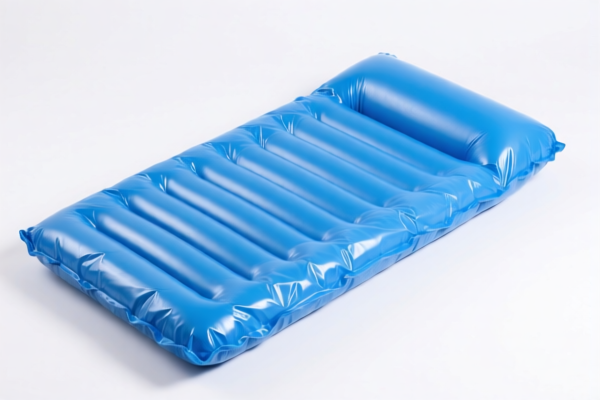
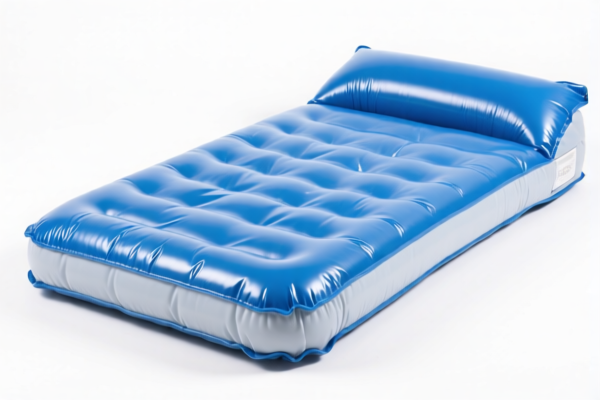
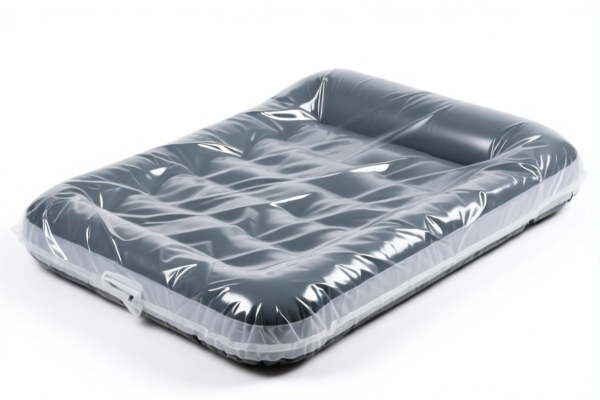
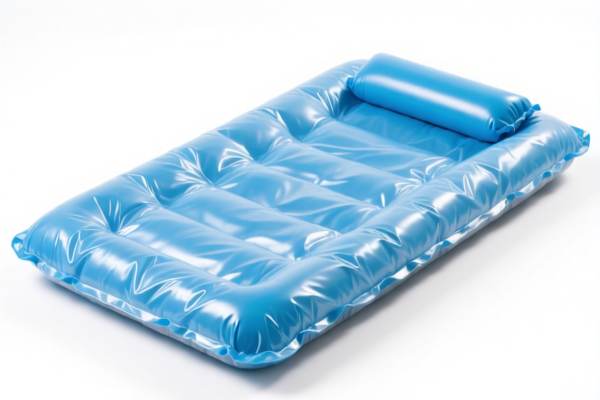
AI Analysis
🧺 PVC Coated Non-woven Table Mat
🌐 HS Code Reference & Customs Clearance Guide | 2026 Latest Tariff Analysis | Professional Clearance Strategy
📌 I. Product Definition & Classification: What Exactly is a "PVC Coated Non-woven Table Mat"?
A PVC Coated Non-woven Table Mat is a household textile accessory designed to protect table surfaces. It consists of a non-woven fabric base (a textile material not woven but bonded mechanically, chemically, or thermally) coated or impregnated with Polyvinyl Chloride (PVC).
In international trade, the classification hinges on two key factors: 1. Material Composition: Is it primarily a "textile fabric" (Section XI) or a "made-up article" (Section XI/XIII)? 2. Function/State: Is it an "impregnated/coated textile fabric" or a "finished product" (like a tablecloth or placemat)?
⚠️ Critical Distinction:
- If classified as a coated textile fabric, it falls under Chapter 59. This is often viewed as a raw material intermediate.
- If classified as a finished table accessory (placemat/table mat), it falls under Chapter 63 (Other made-up textile articles).
- Note: The term "Table Mat" implies a finished good, but US Customs often scrutinizes "coated" items to see if they retain the character of a fabric.
📦 II. HS Code Classification Details (Based on Provided Data)
The following HS Codes and tax details are derived strictly from the provided <DATA> source.
| HS Code | Product Description & Logic | Total Tax Rate | Tax Breakdown |
|---|---|---|---|
| 6307.90.98.91 | Other Made-up Articles: Classified under "Other" categories for finished products. Material: PVC-coated; Form: Mat. | 24.5% | Base: 7.0% Additional: 7.5% Section 301 (122 Clause): 10% |
| 5903.10.30.00 | Impregnated/Coated Textile Fabrics: Classified as textile fabric impregnated/coated with plastics (PVC). Material: Polyvinyl chloride; Form: Non-woven fabric. | 37.7% | Base: 2.7% Additional: 25.0% Section 301 (122 Clause): 10% |
| 6307.90.98.75 | Other Masks/Covers: Classified under "Other" for masks/coverings. Material: PVC-coated non-woven; Form: Mat. | 17.0% | Base: 7.0% Additional: 0.0% Section 301 (122 Clause): 10% |
| 5903.10.10.00 | Impregnated/Coated/Laminated Textile Fabrics: Classified as textile fabric impregnated/coated/laminated with PVC. Material: PVC; Form: Coated non-woven. | 37.7% | Base: 2.7% Additional: 25.0% Section 301 (122 Clause): 10% |
🔍 Key Insight from Data:
- Best Case Scenario: 6307.90.98.75 at 17.0% total tax (Lowest additional tariff).
- Worst Case Scenario: 5903.10.30.00 or 5903.10.10.00 at 37.7% total tax (High USITC 25% surcharge).
- Standard Scenario: 6307.90.98.91 at 24.5% total tax (Moderate surcharge).
💰 III. 2026 Latest Tariff Rate Breakdown (Detailed Analysis)
✅ Applicable Country: United States (US)
✅ Origin: China (CN) (Implied by "Section 301" and "122 Clause")
✅ Effective Time: 2025–2026 Import Period
🎯 1. 6307.90.98.91 – Other Made-up Articles (Mat)
- Base Tariff: 7.0%
- Section 301 Surcharge: 7.5%
- 122 Clause Tariff: 10%
- Total Effective Rate: 24.5%
- Calculation: CIF Value × 24.5%
- Legal Path:
6307.90.98.91→Footnote 122+Section 301
📌 Analysis:
This classification treats the item as a finished good ("Other made-up article"). The surcharge is moderate (7.5%), making it a viable option if the product is clearly defined as a "mat" rather than just "fabric."
🎯 2. 5903.10.30.00 & 5903.10.10.00 – Coated Textile Fabrics
- Base Tariff: 2.7%
- Section 301 Surcharge: 25.0%
- 122 Clause Tariff: 10%
- Total Effective Rate: 37.7%
- Calculation: CIF Value × 37.7%
- Legal Path:
5903→Footnote 9903.88.01(USITC) →IEEPA
⚠️ High Risk Alert:
- The 25% USITC surcharge is the dominant cost driver here.
- Customs may classify PVC-coated items as "coated fabrics" (Chapter 59) if they are sold in rolls or lack clear "finished product" characteristics.
- Do not assume lower base tax (2.7%) saves money; the 25% surcharge wipes out any benefit.
🎯 3. 6307.90.98.75 – Other Masks/Covers (Mat)
- Base Tariff: 7.0%
- Section 301 Surcharge: 0.0%
- 122 Clause Tariff: 10%
- Total Effective Rate: 17.0%
- Calculation: CIF Value × 17.0%
- Legal Path:
6307.90.98.75→Footnote 122(No additional Section 301 surcharge)
✅ Optimal Strategy:
- This is the most cost-effective classification IF the product can be legally argued as "Other Masks/Covers" or if the specific 98.75 subheading allows it for table mats.
- The 0% additional surcharge is a massive advantage.
- Caution: This requires strong justification that the item fits the "98.75" scope (often used for specific household textiles or covers) rather than a generic "other" mat.
🛠️ IV. Customs Clearance Practical Advice
✅ 1. Documentation Checklist (Mandatory)
| Document | Required | Purpose |
|---|---|---|
| Product Specification Sheet | ✔️ | Detail material layers (non-woven + PVC), thickness, weight per sqm. |
| Commercial Invoice | ✔️ | Clearly state "PVC Coated Non-woven Table Mat" (Finished Good), NOT "Coated Fabric." |
| Product Photos | ✔️ | Show the finished shape (cut to size), edges (finished/hemmed), and usage context. |
| Composition Statement | ✔️ | Confirm % of non-woven textile vs. PVC coating. |
| Origin Certificate | ✔️ | Required for Section 301 determination. |
✅ 2. Classification Strategy & Arguments
🔥 "Finished Good vs. Coated Fabric"
| Scenario | Recommended HS Code | Argument Strategy |
|---|---|---|
| Pre-cut, Hemmed, Ready-to-Use | 6307.90.98.91 or 6307.90.98.75 | Emphasize that the product is a finished article with a specific shape and use (table protection). It is not sold in rolls for further manufacturing. |
| Sold in Rolls, Unfinished Edges | 5903.10.30.00 | Likely to be classified as coated fabric. Prepare for 37.7% tax. |
| Specific "Cover" Design | 6307.90.98.75 | If the mat resembles a "cover" or has specific protective features, argue for 98.75 to leverage the 0% surcharge. |
✅ 3. Key Risk Mitigation
| Risk | Mitigation Action |
|---|---|
| Customs Rejection of 6307 | If CBP argues it's a "coated fabric," be prepared to pay the difference. Pre-clearance ruling is recommended. |
| Incorrect Description | Avoid terms like "PVC Coated Non-woven Fabric Roll." Use "Table Mat," "Placemat," "Table Protector." |
| Section 301 Surcharge Dispute | Verify if the product qualifies for any exclusions (if still applicable in 2026). Note: Most textile coatings do not have exclusions. |
🌍 V. Global Market Comparison (2026 Context)
| Market | Recommended HS Code | Est. Tax Rate | Notes |
|---|---|---|---|
| 🇺🇸 USA | 6307.90.98.75 |
17.0% | Best rate if classification holds. Avoid 5903 (37.7%). |
| 🇨🇳 China | 6307.99.90 |
~5-10% | Lower base tax, no Section 301. |
| 🇪🇺 EU | 5903.20 or 6307.90 |
0-4% | No heavy surcharges like US Section 301. |
| 🇬🇧 UK | 5903.20 or 6307.90 |
0-4% | Post-Brexit, similar to EU structure. |
📌 Conclusion for US Market:
- Avoid Chapter 59 (5903) if possible due to the 25% USITC surcharge.
- Aim for Chapter 63 (6307) as a finished article.
- Target6307.90.98.75for the lowest possible duty (17%) if your product description supports "other masks/covers."
📌 VI. Common Mistakes & Pitfalls
❌ Mistake 1: Describing the product as "PVC Coated Non-woven Fabric"
👉 Consequence: CBP classifies under 5903 → 37.7% tax.
👉 Fix: Always use "Table Mat" or "Placemat" in the name and description.
❌ Mistake 2: Assuming Base Tax (2.7%) is lower than Base Tax (7.0%) means savings
👉 Consequence: Ignoring the 25% surcharge leads to a 25% cost increase.
👉 Fix: Always calculate Total Effective Rate (Base + Surcharge).
❌ Mistake 3: Using generic "Other Made-up Articles" (98.91) when a better subheading exists
👉 Consequence: Paying 7.5% surcharge instead of 0%.
👉 Fix: Investigate 98.75 eligibility for "covers" or specific household textiles.
🎯 VII. Conclusion: Professional Clearance Strategy
🎯 Final Recommendation:
1. Primary Target: 6307.90.98.75 (17.0% Total Tax) – Requires strong argument for "cover/mask" category.
2. Secondary Target: 6307.90.98.91 (24.5% Total Tax) – Safer "other made-up article" classification.
3. Avoid: 5903.10.10.00 & 5903.10.30.00 (37.7% Total Tax) – High risk of being deemed "coated fabric."
📝 Pro Tip:
Submit a Customs Ruling Request to US CBP before shipping large volumes. Provide photos, specs, and argue that the product is a finished table mat, not a raw coated fabric. This provides legal protection against misclassification penalties.
✨ Accurate Classification Saves Money!
💼 25% Surcharge Avoided = Significant Margin Protected!
Customer Reviews
About HS Code Classification
The Harmonized System (HS) is an internationally standardized nomenclature developed by the World Customs Organization (WCO) to classify traded products. Over 200 countries use the HS system as the basis for customs tariffs, trade statistics, and import/export regulations.
Each HS code follows a hierarchical structure:
- Chapter (2 digits) — Broad category of goods (e.g., Chapter 84: Machinery and Mechanical Appliances)
- Heading (4 digits) — More specific grouping within the chapter
- Subheading (6 digits) — Internationally standardized breakdown, used by all WCO member countries
- National subdivisions (8-10 digits) — Country-specific extensions for further classification, such as US HTSUS 10-digit codes
Correct HS code classification is essential for smooth customs clearance, accurate duty payment, and compliance with trade regulations. Misclassification can lead to customs delays, overpayment of duties, or penalties.
When importing from CN to US, the applicable tariff rates may include:
- Most-Favored-Nation (MFN) rate — The standard duty rate applied to WTO members
- General rate — Applied to countries without trade agreements
- Trade remedy duties — Additional tariffs such as Section 301 (anti-dumping), Section 232 (national security), or countervailing duties
The information provided on this page is for reference purposes only. For official classification, please consult with your local customs authority or a licensed customs broker.