PVC Coated Non woven Wall Cloth
CN → US| HS Code | Tariff Rate | Origin | Destination | Doc |
|---|---|---|---|---|
| 5903102090 | 35.0% | CN | US | Official Doc |
| 3921121500 | 41.5% | CN | US | Official Doc |
| 3921121950 | 40.3% | CN | US | Official Doc |
| 5903102500 | 42.5% | CN | US | Official Doc |
| 5903102010 | 35.0% | CN | US | Official Doc |
Product Images
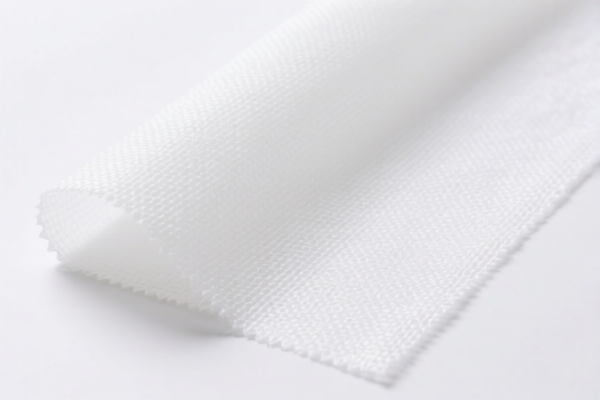

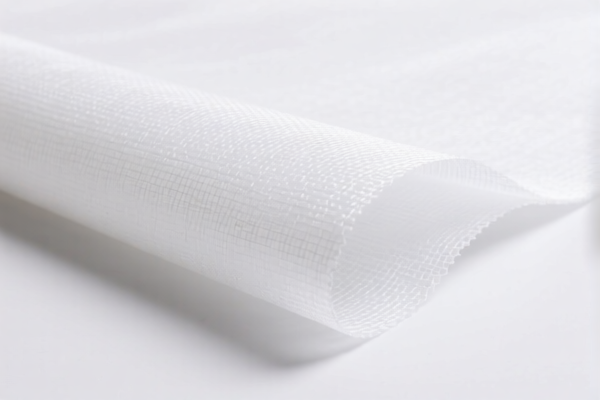
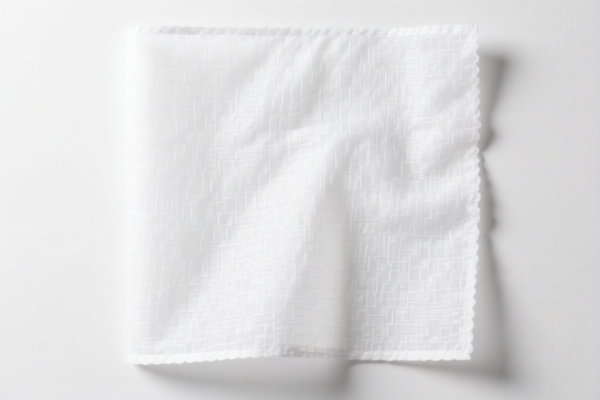
AI Analysis
🧱 PVC Coated Non-woven Wall Cloth (Wallpaper)
🌐 HS Code Reference & Customs Clearance Guide | 2026 Latest Tariff Analysis | Strategic Classification
📌 One Product, Four Classifications: Which Path Saves You Money?
PVC Coated Non-woven Wall Cloth (Wallpaper) is a common decorative building material. However, in international trade (specifically US Customs), its classification depends entirely on physical form and manufacturing process. Misclassification can lead to significant tariff discrepancies (from 35% to 42.5%) or customs holds.
This guide analyzes the 5 specific HS Codes found in the provided data, explaining why each applies and detailing the complex tax structure.
⚠️ Critical Note: All items in this dataset are subject to US Trade Remedies (Section 301 & Section 122/IEEPA). The total tax burden is extremely high (35%–42.5%).
📦 1. HS Code Classification Matrix (Based on Provided Data)
The following table breaks down the 5 specific HS Codes from the <DATA> set. Note that while they all describe "PVC Coated Non-woven Wall Cloth," the legal definition differs slightly.
| HS Code | Product Description (Summary) | Key Differentiator |
|---|---|---|
| 5903.10.20.90 | PVC Coated Knitted Wall Cloth | Form: Impregnated, coated, covered, or laminated textile fabric. |
| 3921.12.15.00 | PVC Coated Knitted Wall Cloth | Form: Boards, sheets, film, foil, and plates combined with textile materials. |
| 3921.12.19.50 | PVC Coated Knitted Wall Cloth | Form: Plates/films combined with textile materials (General Plastic Composite). |
| 5903.10.25.00 | PVC Coated Knitted Wall Cloth | Form: Impregnated, coated, covered, or laminated textile fabric (Specific Sub-heading). |
| 5903.10.20.10 | PVC Non-woven Wall Film | Form: Impregnated/coated textile fabric (Specifically "Wall Film"). |
💰 2. Tariff Structure Detailed Breakdown (2026)
All HS Codes in the <DATA> set share a common tax structure: Base Duty + Section 301 Duty + Section 122/IEEPA Duty.
📊 The Tax Formula
$$Total Tax = Base Duty + 25\% (Sec. 301) + 10\% (Sec. 122/IEEPA)$$
🔍 Detailed Analysis by HS Code
🎯 1. HS Code 5903.10.20.90
- Description: PVC Coated Knitted Wall Cloth (Textile Fabric Form)
- Total Tax: 35.0%
- Tax Breakdown:
- Base Duty: 0.0%
- Section 301 Duty: 25.0%
- Section 122/IEEPA Duty: 10.0%
- Why This Code?: It is classified as a Textile Fabric (Chapter 59) that has been impregnated or coated with PVC. It is not viewed primarily as a plastic sheet here.
- Best For: Standard wallpapers where the textile structure is the primary identity.
🎯 2. HS Code 3921.12.15.00
- Description: PVC Coated Knitted Wall Cloth (Plastic Composite Form)
- Total Tax: 41.5%
- Tax Breakdown:
- Base Duty: 6.5%
- Section 301 Duty: 25.0%
- Section 122/IEEPA Duty: 10.0%
- Why This Code?: Classified under Chapter 39 (Plastics). The product is viewed as a sheet/plastic board combined with textile. The base duty is higher (6.5%), leading to a higher total.
- Risk: Higher cost than 5903.10.20.90.
🎯 3. HS Code 3921.12.19.50
- Description: PVC Coated Knitted Wall Cloth (Other Plastic Composites)
- Total Tax: 40.3%
- Tax Breakdown:
- Base Duty: 5.3%
- Section 301 Duty: 25.0%
- Section 122/IEEPA Duty: 10.0%
- Why This Code?: Also Chapter 39, but a "Other" sub-category for plastic plates/films combined with textile.
- Comparison: Cheaper than 3921.12.15.00 but still more expensive than the textile-based 5903 codes.
🎯 4. HS Code 5903.10.25.00
- Description: PVC Coated Knitted Wall Cloth (Specific Textile Variant)
- Total Tax: 42.5%
- Tax Breakdown:
- Base Duty: 7.5%
- Section 301 Duty: 25.0%
- Section 122/IEEPA Duty: 10.0%
- Why This Code?: A specific sub-heading within Chapter 59. It has the highest base duty (7.5%) among all options, making it the most expensive.
- Warning: Avoid unless product specifications legally require this exact sub-heading.
🎯 5. HS Code 5903.10.20.10
- Description: PVC Non-woven Wall Film (Impregnated/Coated)
- Total Tax: 35.0%
- Tax Breakdown:
- Base Duty: 0.0%
- Section 301 Duty: 25.0%
- Section 122/IEEPA Duty: 10.0%
- Why This Code?: Specifically for "Wall Film" (墙面覆膜). Like 5903.10.20.90, it is treated as a textile fabric with 0% base duty.
- Best For: Products explicitly marketed as "Wall Film" or "Wall Covering" where the base duty exemption applies.
🛠️ 3. Customs Clearance Strategy & Recommendations
✅ Step 1: Choose the Cheapest Legally Valid Code
| Scenario | Recommended HS Code | Total Tax | Why? |
|---|---|---|---|
| Standard Wall Cloth/Cloth | 5903.10.20.90 |
35.0% | Lowest total tax. Classified as textile fabric. |
| Wall Film / Decorative Film | 5903.10.20.10 |
35.0% | Lowest total tax. Specifically for films. |
| Plastic Sheet / Composite Board | 3921.12.19.50 |
40.3% | If it cannot be classified as textile. |
| Avoid | 5903.10.25.00 |
42.5% | Highest cost due to 7.5% base duty. |
| Avoid | 3921.12.15.00 |
41.5% | Higher cost due to 6.5% base duty. |
✅ Step 2: Documentation Checklist
To prevent customs delays or re-classification by US CBP: 1. Product Description: Must clearly state "PVC Coated Non-woven" or "PVC Impregnated Textile". 2. Composition Statement: Provide % content of PVC vs. Non-woven fabric. 3. Function: Clearly state "For Wall Decoration/Wallpaper". 4. Photos: Show the front (coated side) and back (textile/non-woven side) to prove it is a fabric-based composite, not a plastic sheet with fabric backing. 5. Origin Proof: Certificate of Origin (CO) is mandatory for Section 122/301 duties.
✅ Step 3: Declaration Tips
- Do NOT simply write "Wallpaper." Use "PVC Coated Non-woven Wall Covering, Fabric Based".
- Highlight the Textile Nature: Emphasize that the product is impregnated/coated fabric (Chapter 59) to argue for the 0% base duty under 5903.10.20.xx.
- Avoid Plastic-First Language: Do not describe it as "Plastic sheet with fabric backing" unless necessary, as this pushes it to Chapter 39 (higher base duty).
⚠️ 4. Common Pitfalls & Risks
- Pitfall 1: Misclassifying as Chapter 39 (Plastic).
- Result: Paying 40.3%–41.5% instead of 35.0%.
- Fix: Prove the textile structure is the essential character.
- Pitfall 2: Ignoring Section 122/IEEPA.
- Result: Underpayment of 10%. This leads to penalties, interest, and seizure.
- Fix: Always include the 10% IEEPA duty in your cost calculation.
- Pitfall 3: Confusing "Knitted" vs. "Non-woven."
- Result: The data mentions "Knitted" in summaries, but the user asked for "Non-woven." Ensure the actual product matches the HS Code description. If it's truly non-woven,
5903.10.20.90or5903.10.20.10are still the best options, but ensure the description matches the physical product (non-woven is often grouped with knitted fabrics in Chapter 59 for coating purposes).
- Result: The data mentions "Knitted" in summaries, but the user asked for "Non-woven." Ensure the actual product matches the HS Code description. If it's truly non-woven,
🌍 5. Global Market Comparison (US Focus)
| Market | HS Code Range | Base Duty | US-Specific Duties (301+122) | Total Est. Tax |
|---|---|---|---|---|
| 🇺🇸 USA | 5903.10.20.xx | 0% | +35% (25%+10%) | 35.0% |
| 🇺🇸 USA (Wrong Code) | 3921.12.xx | 5-7% | +35% (25%+10%) | 40-42.5% |
| 🇨🇳 China (Export) | 5903 | 0-13% | None | 0% (Export duty may apply) |
| 🇪🇺 EU | 5903 | 6.5% | None | 6.5% |
| 🇬🇧 UK | 5903 | 6.5% | None | 6.5% |
| 🇨🇦 Canada | 5903 | 5-15% | None | 5-15% |
📌 Conclusion: The US market is the most challenging due to the 35% total tariff. Only ~6.5% of this is standard duty; ~66% is punitive/retaliatory tax.
📌 6. Final Advice for Importers
- Pre-Ruling is Critical: Submit an ACE Pre-Ruling Request to US CBP to confirm that your specific "Non-woven" product qualifies under
5903.10.20.90or5903.10.20.10and not Chapter 39. - Cost Calculation: Assume 35% tax on CIF value. Do not budget for less.
- Labeling: Ensure commercial invoices clearly state: "Textile Fabric, PVC Coated, for Wall Covering, HS 5903.10.20.90, Country of Origin: China".
- Avoid Ambiguity: Never use generic terms like "Wallpaper" alone. Use "PVC Coated Textile Wall Covering".
🎯 Summary: The Golden Rule
✅ Go with
5903.10.20.90or5903.10.20.10* Base Duty: 0% * Total Duty: 35% * Reason: Classify as Textile Fabric (Ch 59), not Plastic (Ch 39).❌ Avoid
3921and5903.10.25* Reason: Higher base duties (5.3%–7.5%) lead to 40.3%–42.5% total tax.
✨ Professional Customs Clearance Starts with Precise Classification! 💼 Save 7.5% by choosing the right HS Code – Your Profit Depends on It!
Customer Reviews
About HS Code Classification
The Harmonized System (HS) is an internationally standardized nomenclature developed by the World Customs Organization (WCO) to classify traded products. Over 200 countries use the HS system as the basis for customs tariffs, trade statistics, and import/export regulations.
Each HS code follows a hierarchical structure:
- Chapter (2 digits) — Broad category of goods (e.g., Chapter 84: Machinery and Mechanical Appliances)
- Heading (4 digits) — More specific grouping within the chapter
- Subheading (6 digits) — Internationally standardized breakdown, used by all WCO member countries
- National subdivisions (8-10 digits) — Country-specific extensions for further classification, such as US HTSUS 10-digit codes
Correct HS code classification is essential for smooth customs clearance, accurate duty payment, and compliance with trade regulations. Misclassification can lead to customs delays, overpayment of duties, or penalties.
When importing from CN to US, the applicable tariff rates may include:
- Most-Favored-Nation (MFN) rate — The standard duty rate applied to WTO members
- General rate — Applied to countries without trade agreements
- Trade remedy duties — Additional tariffs such as Section 301 (anti-dumping), Section 232 (national security), or countervailing duties
The information provided on this page is for reference purposes only. For official classification, please consult with your local customs authority or a licensed customs broker.