PVC Coated Oilcloth
CN → US| HS Code | Tariff Rate | Origin | Destination | Doc |
|---|---|---|---|---|
| 5903102090 | 35.0% | CN | US | Official Doc |
| 3921121100 | 39.2% | CN | US | Official Doc |
| 5903102010 | 35.0% | CN | US | Official Doc |
| 3921121500 | 41.5% | CN | US | Official Doc |
| 5903102090 | 35.0% | CN | US | Official Doc |
Product Images
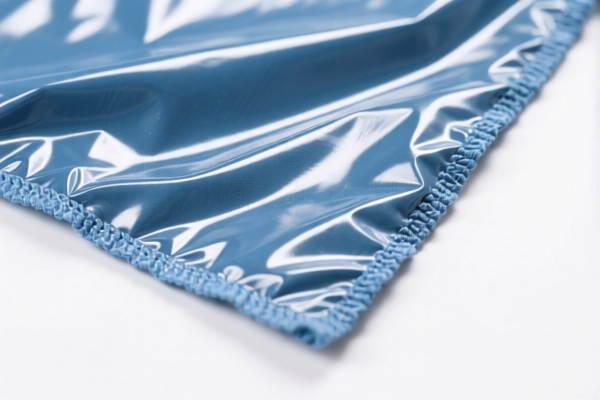
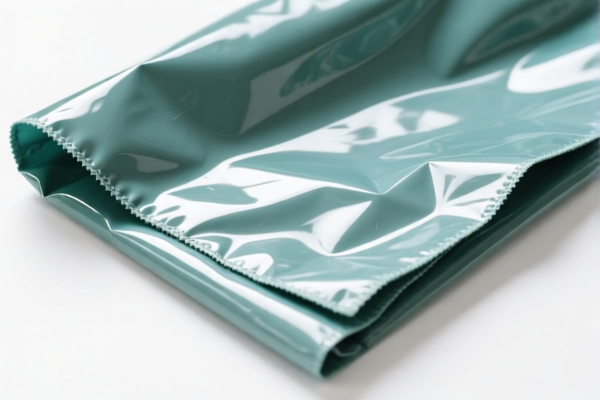
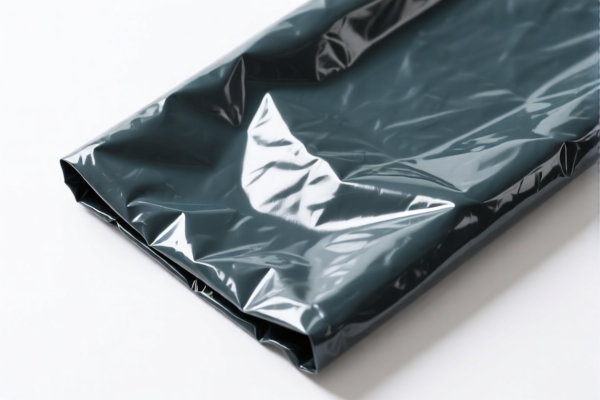
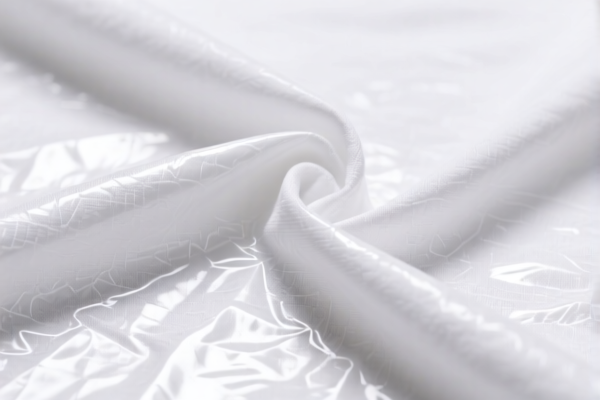
AI Analysis
🧥 PVC Coated Oilcloth: The Ultimate HS Code & Taxation Guide (US Customs 2026)
🌐 HS Code Reference & Clearance Strategy | 2026 Latest Tariff Analysis | Professional Clearance Strategy
📌 Part 1: Product Definition & Classification – Do You Really Know "PVC Coated Oilcloth"?
PVC Coated Oilcloth is a versatile composite material widely used in industrial tarps, outdoor furniture covers, automotive protection, and marine applications. In international trade, its classification hinges on physical form and manufacturing process. It is not a "one-size-fits-all" item; customs authorities distinguish between it as a textile fabric or a plastic composite board/film.
There are two primary classification pathways based on the product's structural integrity:
1. Textile-Based Classification (Chapter 59)
If the product is essentially a textile fabric (woven/knitted) that has been impregnated, coated, or covered with PVC, it falls under Chapter 59. This applies to materials that retain the flexibility and drape of fabric.
Key Indicator: The textile base is the primary identity; PVC is a coating layer.
2. Plastic Composite Classification (Chapter 39)
If the product is viewed as a plastic sheet/film/plate combined with textile fibers, or if it has rigid structural characteristics, it falls under Chapter 39. This applies when the plastic component dominates the character or when it is classified as a "composite plate/film."
Key Indicator: The polymer (PVC) matrix is the primary identity, or it is a stiffened composite.
⚠️ Key Distinction Point:
- If it is soft, flexible, and clearly fabric-based → Classify under 5903.10
- If it is stiff, sheet-like, or primarily plastic composite → Classify under 3921.12
📦 Part 2: HS Code Classification Details (2026 Latest Tariff Authoritative Comparison)
Based on the provided data, here are the specific HS Codes, their descriptions, and applicable tax rates for PVC Coated Oilcloth imported into the United States.
| HS Code | Product Description | Applicable Scenario | Tax Details |
|---|---|---|---|
| 5903.10.20.90 | PVC Coated Oilcloth, PVC material, coated textile fabric, used as oilcloth | Soft, flexible tarps, fabric-based covers | ✅ 35.0% Total Tax |
| 3921.12.11.00 | PVC Coated Oilcloth, PVC material, composite board/sheet/film, fits plastic-textile composite features | Semi-rigid sheets, composite panels, industrial liners | ✅ 39.2% Total Tax |
| 5903.10.20.10 | PVC Coated Oilcloth, PVC material, impregnated/coated textile fabric, classified as PVC-coated textile | Heavy-duty coated fabrics, industrial textiles | ✅ 35.0% Total Tax |
| 3921.12.15.00 | PVC Coated Oilcloth, PVC material, film/strip/plate, fits polymer-textile combined characteristics | Flexible films, strips, or plate-like composites | ✅ 41.5% Total Tax |
| 5903.10.20.90 | PVC Coated Oilcloth, PVC material, coated textile fabric, other classifications | General coated fabric items not falling into 5903.10.20.10 | ✅ 35.0% Total Tax |
🔍 Important Reminder:
- The difference between 35.0% and 41.5% tax rates depends entirely on whether customs classifies your product as a Textile (Ch 59) or a Plastic Composite (Ch 39). - Misclassification Risk: Declaring a stiff PVC sheet as "Textile" to get a lower rate can lead to audits, penalties, and back-tariffs. - Consistency: Ensure your commercial invoice, packing list, and product photos match the declared HS Code exactly.
💰 Part 3: 2026 Latest Tariff Rate Breakdown (Including Surcharges & Policy Add-ons)
✅ Applicable Country: United States (US)
✅ Country of Origin: China (CN)
✅ Effective Date: From November 10, 2025 (and subsequent imports)
🎯 1. 5903.10.20.90 / 5903.10.20.10 —— PVC Coated Textile Fabric
| Item | Content |
|---|---|
| Base Tariff | 0% (ad valorem) |
| Section 301 Surcharge (Additional Tariff) | +25.0% |
| Section 122 Tariff | +10.0% |
| Total Tax Rate | 35.0% |
| Tax Calculation | CIF Value × 35% |
| De Minimis Eligibility | ❌ Not Eligible (High risk of exemption denial) |
| Legal Basis Path | USITC:5903.10.20.90 → Section 301: 25% → Section 122: 10% |
📌 Explanation:
- These codes fall under Chapter 59 (Textiles). The base tariff is low (0%), but the additional surcharges are mandatory. - Total 35% is considered moderate-high. It is critical to prove the product is primarily a "textile fabric" to avoid being bumped to Chapter 39 rates.
🎯 2. 3921.12.11.00 —— PVC Composite Board/Sheet/Film
| Item | Content |
|---|---|
| Base Tariff | 4.2% |
| Section 301 Surcharge (Additional Tariff) | +25.0% |
| Section 122 Tariff | +10.0% |
| Total Tax Rate | 39.2% |
| Tax Calculation | CIF Value × 39.2% |
| De Minimis Eligibility | ❌ Not Eligible |
| Legal Basis Path | USITC:3921.12.11.00 → Section 301: 25% → Section 122: 10% |
📌 Explanation:
- This code falls under Chapter 39 (Plastics). Unlike Ch 59, the base tariff is 4.2%. - However, the surcharges still apply, pushing the total to 39.2%. - Note: If your product is rigid or sheet-like, this is the correct classification, but expect a higher base cost.
🎯 3. 3921.12.15.00 —— PVC Film/Strip/Plate
| Item | Content |
|---|---|
| Base Tariff | 6.5% |
| Section 301 Surcharge (Additional Tariff) | +25.0% |
| Section 122 Tariff | +10.0% |
| Total Tax Rate | 41.5% |
| Tax Calculation | CIF Value × 41.5% |
| De Minimis Eligibility | ❌ Not Eligible |
| Legal Basis Path | USITC:3921.12.15.00 → Section 301: 25% → Section 122: 10% |
📌 Explanation:
- This is the highest tax rate (41.5%) among the options. - It applies when the product is strictly defined as a plastic film/strip/plate with textile reinforcement. - Avoid Misclassification: Do not use this code if your product is clearly a flexible fabric. Use it only if your product is a specialized composite sheet.
🛠️ Part 4: Clearance Practical Advice (Pitfall Avoidance Guide)
✅ 1. Preparation Checklist (Non-negotiable)
| Document | Required | Notes |
|---|---|---|
| ✅ Product Specification Sheet | ✔️ | Must detail: Fabric type (e.g., polyester, nylon), PVC thickness, weight (gsm), and hardness/flexibility. |
| ✅ Product Photos | ✔️ | Clear images showing texture, flexibility, and cross-section (if possible) to prove textile vs. plastic dominance. |
| ✅ Commercial Invoice | ✔️ | Must accurately describe the product as "PVC Coated Oilcloth" or "PVC Coated Textile Fabric," matching the HS Code. |
| ✅ Packing List | ✔️ | Include dimensions, weight, and packaging type. |
| ✅ Certificate of Origin | ✔️ | Essential for determining origin-based surcharges (e.g., China origin triggers Section 301 & 122). |
| ✅ Third-Party Test Report | ✔️ | Optional but helpful: Report showing fabric tensile strength vs. plastic coating adhesion. |
✅ 2. Declaration Strategy (Key Mnemonics)
🔥 "Soft is Textile, Rigid is Plastic, Name Matters, Tax Halves!"
| Scenario | Correct Declaration | Wrong Practice |
|---|---|---|
| Flexible Tarpaulin | "PVC Coated Polyester Fabric" → 5903.10.20.90 |
"PVC Sheet" → 39.2% or 41.5% |
| Stiff Composite Panel | "PVC-Coated Composite Board" → 3921.12.11.00 |
"Fabric" → 35.0% (Risk of audit) |
| Strip/Film | "PVC-Coated Plastic Film" → 3921.12.15.00 |
"Fabric" → 35.0% (Incorrect) |
| General Oilcloth | "PVC Coated Oilcloth (Textile Base)" → 5903.10.20.10/90 |
Ambiguous "Oilcloth" → 39.2% |
✅ 3. Special Case Handling
| Situation | Handling Advice |
|---|---|
| OEM Custom Colors/Patterns | Provide print patterns and design files. Ensure description matches "Coated Textile" if fabric-based. |
| Heavy-Duty Industrial Use | If used for machinery covers, emphasize "Textile Fabric" in documentation to secure 35.0% rate. |
| Mixed Shipments | Clearly separate "Fabric" and "Sheet" products in different HS Code lines. Do not lump them together. |
| Origin Ambiguity | If PVC is imported from elsewhere but coating is done in China, still considered "China Origin" for tariff purposes. |
🌍 Part 5: Global Market Comparison (2026 Latest)
| Country/Region | Recommended HS Code | Tariff Rate (China Origin) | Certification Requirements | Notes |
|---|---|---|---|---|
| 🇺🇸 USA | 5903.10.20.90 (Textile) or 3921.12.11.00 (Plastic) |
35.0% or 39.2% or 41.5% | None specific for oilcloth | High tariffs due to Section 301 & 122 |
| 🇨🇳 China | 5903.10.20.90 |
9.0% (Import Duty) | None | Lower base rate |
| 🇪🇺 EU | 5903.10.20.90 |
6.5% | REACH, RoHS | No additional surcharges |
| 🇬🇧 UK | 5903.10.20.90 |
6.5% | UKCA, REACH | Post-Brexit rules apply |
| 🇦🇺 Australia | 5903.10.20.90 |
5.0% | ACCC | No surcharges |
📌 Conclusion:
- USA is the most expensive market for PVC Oilcloth due to Section 301 (25%) and Section 122 (10%) surcharges. - EU and UK have no such surcharges, making them more cost-effective for Chinese exports. - Strategic Advice: If targeting the US market, ensure your product is correctly classified as Textile (35%) rather than Plastic (39.2%-41.5%) to save up to 6.5% in taxes.
📌 Part 6: Common Mistakes & Pitfall Guide (Lessons from Blood & Tears)
❌ Mistake 1: Calling "PVC Sheet" "Oilcloth" to get lower textile rate
👉 Consequence: Customs rejects, reclassifies, and charges 39.2% + penalties!
❌ Mistake 2: Using vague terms like "PVC Material"
👉 Consequence: Customs assumes worst-case scenario → 41.5% tax!
❌ Mistake 3: Ignoring Section 122 Tariff
👉 Consequence: Underpayment → 10% back-tax + interest!
❌ Mistake 4: Mixing Textile and Plastic products in one declaration
👉 Consequence: Audit delay → Goods held at port for weeks!
✅ Correct Approach:
"PVC Coated Polyester Fabric, 500gsm, Flexible, For Outdoor Tarpaulin, Made in China"
🎯 Part 7: Conclusion – Professional Declaration, Save Costs!
🎯 Remember the Mnemonics:
🔹 "Fabric is 35%, Plastic is 39-41%, Name it Right, Save Big!"
🔹 "HS Code is King, Tax is Queen, Declare Correct, Stay Clean!"
📌 Pro Tip:
If your PVC Coated Oilcloth is originating from Vietnam, Thailand, or Malaysia, you may apply for IEEPA Exemption or avoid Section 301/122 surcharges, reducing rates significantly.
Recommend Advance Ruling from US Customs if you are unsure about the classification.
📣 Immediate Action:
📞 Contact a Professional Customs Broker + Provide Product Photos + Request HS Code Advance Ruling
🚀 Let Your PVC Oilcloth Clear Customs Smoothly, Maximize Profits, and Win Markets!
✨ Professional Clearance Starts with Precise Classification!
💼 Every Penny of Cost is Worth Calculating Precisely!
Customer Reviews
About HS Code Classification
The Harmonized System (HS) is an internationally standardized nomenclature developed by the World Customs Organization (WCO) to classify traded products. Over 200 countries use the HS system as the basis for customs tariffs, trade statistics, and import/export regulations.
Each HS code follows a hierarchical structure:
- Chapter (2 digits) — Broad category of goods (e.g., Chapter 84: Machinery and Mechanical Appliances)
- Heading (4 digits) — More specific grouping within the chapter
- Subheading (6 digits) — Internationally standardized breakdown, used by all WCO member countries
- National subdivisions (8-10 digits) — Country-specific extensions for further classification, such as US HTSUS 10-digit codes
Correct HS code classification is essential for smooth customs clearance, accurate duty payment, and compliance with trade regulations. Misclassification can lead to customs delays, overpayment of duties, or penalties.
When importing from CN to US, the applicable tariff rates may include:
- Most-Favored-Nation (MFN) rate — The standard duty rate applied to WTO members
- General rate — Applied to countries without trade agreements
- Trade remedy duties — Additional tariffs such as Section 301 (anti-dumping), Section 232 (national security), or countervailing duties
The information provided on this page is for reference purposes only. For official classification, please consult with your local customs authority or a licensed customs broker.