PVC Coated Shockproof Fabric
CN → US| HS Code | Tariff Rate | Origin | Destination | Doc |
|---|---|---|---|---|
| 3921121500 | 41.5% | CN | US | Official Doc |
| 3921125000 | 41.5% | CN | US | Official Doc |
| 5907006000 | 35.0% | CN | US | Official Doc |
| 5907001500 | 43.0% | CN | US | Official Doc |
| 3926903000 | 39.2% | CN | US | Official Doc |
Product Images
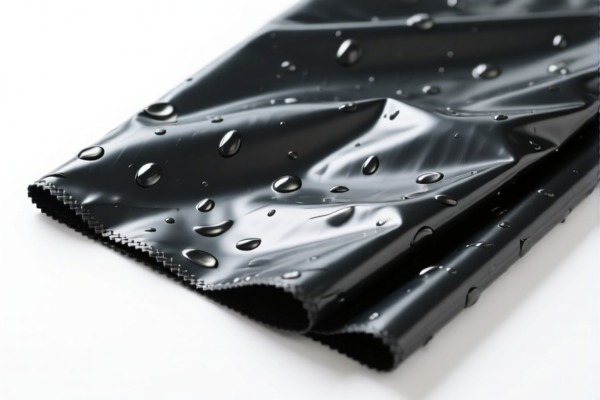
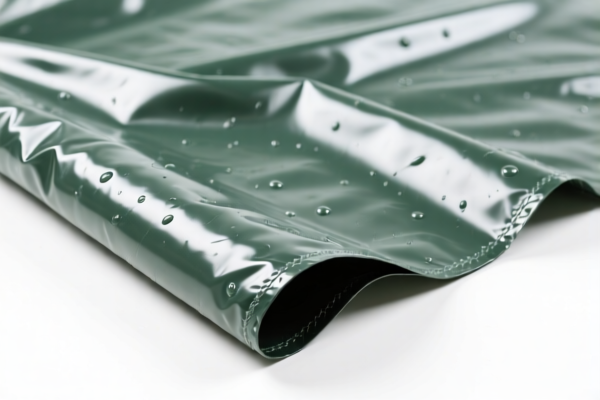


AI Analysis
🧥 PVC Coated Shockproof Fabric
🌐 HS Code Reference & Customs Clearance Guide | 2026 Latest Tariff Analysis | Professional Clearance Strategy
📌 I. Product Definition & Classification: Do You Really Understand “PVC Coated Shockproof Fabric”?
PVC Coated Shockproof Fabric is a composite material primarily used in waterproof bags, outdoor gear, automotive interiors, marine applications, and protective covers. It consists of a base fabric (textile) impregnated or coated with Polyvinyl Chloride (PVC) to enhance durability, water resistance, and shock absorption.
In international trade, the classification depends heavily on: 1. The Base Material: Is it synthetic fibers (polyester, nylon) or natural fibers? 2. The Form: Is it classified as a sheet/film (Chapter 39) or a coated textile (Chapter 59)? 3. The End Use: Does it fit specific industrial or transport categories?
⚠️ Key Distinction Point:
- If the product is considered a “plastic sheet/film with textile reinforcement” → Classified under Chapter 39.
- If the product is considered a “textile fabric impregnated/coated” → Classified under Chapter 59.
- If the product is a “finished plastic article” for specific use (e.g., boat parts) → Classified under Chapter 39 or 95.
📦 II. HS Code Classification Details (2026 Latest Tariff Authority Comparison)
| HS Code | Product Description | Application Scenario | Base Material Characteristic |
|---|---|---|---|
3921.12.15.00 |
PVC Coated Fabric, matching PVC material and textile combination features | General industrial PVC-coated textiles, composite materials | ✅ PVC + Textile composite |
3921.12.50.00 |
PVC Coated Fabric, matching vinyl polymer and sheet/film form | Thick PVC sheets, industrial film applications | ✅ Vinyl Polymer + Sheet/Film |
5907.00.60.00 |
PVC Coated Fabric, matching artificial fiber impregnated/coated textile | Synthetic fabric (polyester/nylon) base, coated for waterproofing | ✅ Artificial Fibers + PVC Coating |
5907.00.15.00 |
PVC Coated Fabric, matching polymer-coated impregnated textile | General polymer-coated textiles, broader coating applications | ✅ Polymer Coating on Textile |
3926.90.30.00 |
PVC Coated Fabric, matching plastic articles and marine vehicle part materials | Boat covers, marine interiors, specific plastic parts | ✅ Finished Plastic Article / Marine Use |
🔍 Key Reminder:
- Chapter 39 (3921/3926): Focuses on the plastic nature of the product. Often used when PVC is the dominant characteristic or when sold as a sheet/film.
- Chapter 59 (5907): Focuses on the textile nature being modified by coating. Used when the fabric structure is primary, but enhanced with PVC.
- Misclassification Risk: Declaring a textile-heavy product as a simple plastic sheet (or vice versa) can lead to audits and penalties.
💰 III. 2026 Latest Tariff Rate Details (Including Surcharges & Policy Add-ons)
✅ Applicable Country: United States (US)
✅ Origin: China (CN)
✅ Effective Date: From November 10, 2025 (including subsequent imports)
🎯 1. 3921.12.15.00 —— PVC Coated Fabric (Composite Characteristics)
| Item | Content |
|---|---|
| Base Tariff | 6.5% |
| Section 301 Surcharge | +25.0% |
| Section 122 Tariff | +10.0% |
| Total Effective Tax Rate | 41.5% |
| Tax Calculation | CIF Value × 41.5% |
| De Minimis Eligibility | ❌ No (deny_de_minimis) |
| Legal Basis Path | USITC:3921.12.15.00 → 301 Footnote → Section 122 |
📌 Explanation:
- The 6.5% base tariff applies to plastic plates, sheets, and film.
- The 25% Section 301 tariff is a heavy penalty on Chinese goods.
- The 10% Section 122 tariff is an additional national security-related levy on specific plastic and textile products from China.
- Total 41.5% is extremely high. Cost control is essential.
🎯 2. 3921.12.50.00 —— PVC Coated Fabric (Vinyl Polymer / Sheet Form)
| Item | Content |
|---|---|
| Base Tariff | 6.5% |
| Section 301 Surcharge | +25.0% |
| Section 122 Tariff | +10.0% |
| Total Effective Tax Rate | 41.5% |
| Tax Calculation | CIF Value × 41.5% |
| De Minimis Eligibility | ❌ No |
| Legal Basis Path | USITC:3921.12.50.00 → 301 Footnote → Section 122 |
📌 Note:
- Same tariff structure as3921.12.15.00.
- Use this code if the product is more akin to a rigid or semi-rigid sheet rather than a flexible textile.
🎯 3. 5907.00.60.00 —— PVC Coated Fabric (Artificial Fiber Base)
| Item | Content |
|---|---|
| Base Tariff | 0.0% |
| Section 301 Surcharge | +25.0% |
| Section 122 Tariff | +10.0% |
| Total Effective Tax Rate | 35.0% |
| Tax Calculation | CIF Value × 35.0% |
| De Minimis Eligibility | ❌ No |
| Legal Basis Path | USITC:5907.00.60.00 → 301 Footnote → Section 122 |
📌 Advantage:
- Lower Total Rate (35%) compared to Chapter 39 codes (41.5%).
- Suitable for synthetic fabric (polyester, nylon) heavily coated with PVC.
- If your product is clearly a textile first, use this code to save 6.5% on the base rate.
🎯 4. 5907.00.15.00 —— PVC Coated Fabric (General Polymer Coating)
| Item | Content |
|---|---|
| Base Tariff | 8.0% |
| Section 301 Surcharge | +25.0% |
| Section 122 Tariff | +10.0% |
| Total Effective Tax Rate | 43.0% |
| Tax Calculation | CIF Value × 43.0% |
| De Minimis Eligibility | ❌ No |
| Legal Basis Path | USITC:5907.00.15.00 → 301 Footnote → Section 122 |
📌 Caution:
- This code has a higher base tariff (8.0%) than5907.00.60.00.
- Only use if the specific polymer coating description matches this narrow subheading better than60.00.
- Not recommended if5907.00.60.00is applicable, as it increases costs.
🎯 5. 3926.90.30.00 —— PVC Coated Fabric (Plastic Articles / Marine Parts)
| Item | Content |
|---|---|
| Base Tariff | 4.2% |
| Section 301 Surcharge | +25.0% |
| Section 122 Tariff | +10.0% |
| Total Effective Tax Rate | 39.2% |
| Tax Calculation | CIF Value × 39.2% |
| De Minimis Eligibility | ❌ No |
| Legal Basis Path | USITC:3926.90.30.00 → 301 Footnote → Section 122 |
📌 Special Use Case:
- Lower base rate (4.2%), but only applicable if the fabric is finished as a part (e.g., boat cover, cushion, specific molded plastic item).
- If sold as raw fabric/sheet, this code may be rejected by Customs.
🛠️ IV. Customs Clearance Practical Advice (Battle-Tested Pitfall Guide)
✅ 1. Required Documentation Checklist (Non-Negotiable)
| Document | Mandatory? | Explanation |
|---|---|---|
| ✅ Product Specification Sheet | ✔️ | Must detail: Base fabric type (e.g., Polyester), PVC coating thickness, weight, dimensions. |
| ✅ Composition Analysis Report | ✔️ | Third-party lab report confirming % of PVC vs. Textile. Crucial for Chapter 39 vs. 59 distinction. |
| ✅ Product Photos (Clear Label) | ✔️ | Show texture, coating appearance, and any branding. |
| ✅ Commercial Invoice | ✔️ | Description must be precise: e.g., "PVC-Coated Polyester Fabric, Shockproof, For Outdoor Bags". Avoid vague terms like "Plastic Material". |
| ✅ Packing List | ✔️ | Include roll dimensions, weight, and package count. |
| ✅ Certificate of Origin (CO) | ✔️ | To verify Chinese origin for tariff calculations. |
✅ 2. Declaration Tips (Key Mantra)
🔥 “Base Material Defines Chapter, Coating Defines Subheading, End Use Defines Final Code!”
| Scenario | Correct Declaration Approach | Wrong Approach |
|---|---|---|
| Synthetic Fabric (Polyester) + PVC Coating | 5907.00.60.00 (35% Total) |
Misclassify as 3921... → 41.5% (Overpay) |
| General PVC Sheet with Textile Reinforcement | 3921.12.15.00 (41.5% Total) |
Misclassify as 5907... if it’s rigid sheet → Audit Risk |
| Finished Boat Cover (Marine Part) | 3926.90.30.00 (39.2% Total) |
Declare as raw fabric → Rejection due to "finished article" status |
| General Polymer Coated Textile | 5907.00.15.00 (43% Total) |
Use 60.00 if it’s synthetic → Underpayment Risk |
✅ 3. Special Circumstances Handling
| Situation | Handling Suggestion |
|---|---|
| OEM Custom Colors/Prints | Provide design proofs. Ensure description highlights "Coated Fabric" not just "Printed Textile". |
| Multi-Layer Fabric | Specify layers clearly. If PVC is the outer coating, Chapter 59 or 39 may apply depending on dominance. |
| Used for Medical Devices | If certified as medical grade, provide FDA documentation. May still fall under same HS, but prevents misuse flags. |
| Small Samples (< $800) | ❌ De Minimis Exemption Denied (Section 301/122 overrides). Pay full 35-43% tariff even on small shipments. |
🌍 V. Global Market Customs Comparison (2026 Latest)
| Country/Region | Recommended HS Code | Tariff Rate | Certification Requirements | Notes |
|---|---|---|---|---|
| 🇺🇸 USA | 5907.00.60.00 |
35.0% (China) | None specific for fabric, but FCC/RoHS if electronic parts included | Highest penalties due to 301/122 |
| 🇨🇳 China | 5907.00.60.00 |
7-10% | CCC (if applicable) | No additional surcharges |
| 🇪🇺 EU | 5907.00.60.00 |
6.5-12% | REACH, RoHS | Lower base tariffs, no Section 301 |
| 🇬🇧 UK | 5907.00.60.00 |
6.5-12% | UKCA, REACH | Post-Brexit rules apply |
| 🇦🇺 Australia | 5907.00.60.00 |
5-10% | RCM | No US-style surcharges |
📌 Conclusion:
- USA is the most expensive market for PVC coated fabrics from China due to Section 301 + Section 122.
- EU/UK/Australia have standard tariffs without political surcharges.
- Consider supply chain diversification (e.g., Vietnam, Thailand) if targeting the US market heavily.
📌 VI. Common Errors & Pitfall Guide (Blood Lessons)
❌ Error 1: Declaring "PVC Fabric" as "Plastic Sheet" when it’s clearly textile-based
👉 Consequence: Customs may reclassify to Chapter 59 or 63, leading to delayed clearance or additional duties.
❌ Error 2: Ignoring Section 122 Tariff (10%)
👉 Consequence: Underpayment of taxes. CBP audits will catch this, resulting in penalties + interest.
❌ Error 3: Using "Textile" description for a rigid PVC product
👉 Consequence: Misclassification. Rigid PVC belongs in Chapter 39. Audit risk.
❌ Error 4: Assuming De Minimis ($800) applies
👉 Consequence: Full tariff (35-43%) applies to all Chinese PVC coated fabrics regardless of value. No exemption.
✅ Correct Approach:
"PVC Coated Polyester Fabric, 500gsm, Black, Waterproof, Shockproof, Roll 1.5m x 100m, for Outdoor Bags, HS 5907.00.60.00"
🎯 VII. Conclusion: Professional Declaration Saves Money!
🎯 Remember the Mantra:
🔹 "Fabric Base? Try Chapter 59. Plastic Sheet? Try Chapter 39. Finished Part? Chapter 39/95."
🔹 "Section 122 adds 10%, Section 301 adds 25%. Total >35%. Plan accordingly!"
🔹 "HS Code determines tax. Wrong code = Higher Cost + Delay."
📌 Pro Tip:
If your PVC coated fabric is originating from Vietnam, Malaysia, or Thailand, you may avoid Section 301 and Section 122 tariffs.
Recommendation: Apply for a Pre-Ruling (Advance Ruling) from US CBP to confirm the correct HS Code and avoid post-clearance audits.
📣 Take Action Now:
📞 Contact a professional customs broker + Provide Lab Reports + Apply for Pre-Ruling
🚀 Let your PVC Coated Shockproof Fabric Clear Smoothly, Reduce Costs, and Boost Profits!
✨ Professional Clearance Starts with Accurate Classification!
💼 Every Cent of Tax Paid Should Be Justified!
Customer Reviews
About HS Code Classification
The Harmonized System (HS) is an internationally standardized nomenclature developed by the World Customs Organization (WCO) to classify traded products. Over 200 countries use the HS system as the basis for customs tariffs, trade statistics, and import/export regulations.
Each HS code follows a hierarchical structure:
- Chapter (2 digits) — Broad category of goods (e.g., Chapter 84: Machinery and Mechanical Appliances)
- Heading (4 digits) — More specific grouping within the chapter
- Subheading (6 digits) — Internationally standardized breakdown, used by all WCO member countries
- National subdivisions (8-10 digits) — Country-specific extensions for further classification, such as US HTSUS 10-digit codes
Correct HS code classification is essential for smooth customs clearance, accurate duty payment, and compliance with trade regulations. Misclassification can lead to customs delays, overpayment of duties, or penalties.
When importing from CN to US, the applicable tariff rates may include:
- Most-Favored-Nation (MFN) rate — The standard duty rate applied to WTO members
- General rate — Applied to countries without trade agreements
- Trade remedy duties — Additional tariffs such as Section 301 (anti-dumping), Section 232 (national security), or countervailing duties
The information provided on this page is for reference purposes only. For official classification, please consult with your local customs authority or a licensed customs broker.