PVC Coated Textile Agricultural Shade Net
CN → US| HS Code | Tariff Rate | Origin | Destination | Doc |
|---|---|---|---|---|
| 6306192110 | 22.6% | CN | US | Official Doc |
| 5903102090 | 35.0% | CN | US | Official Doc |
| 3926206000 | 35.0% | CN | US | Official Doc |
| 6306120000 | 18.8% | CN | US | Official Doc |
| 5903102010 | 35.0% | CN | US | Official Doc |
Product Images
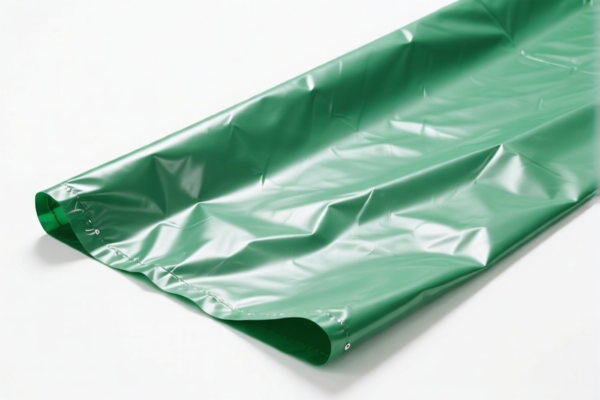
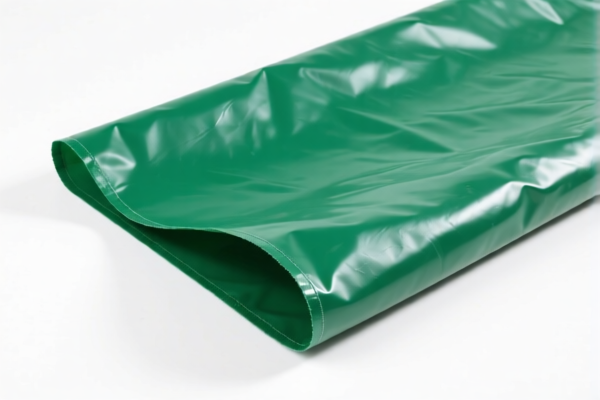
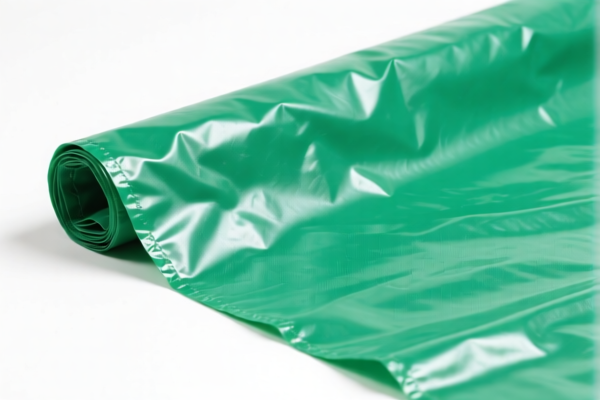
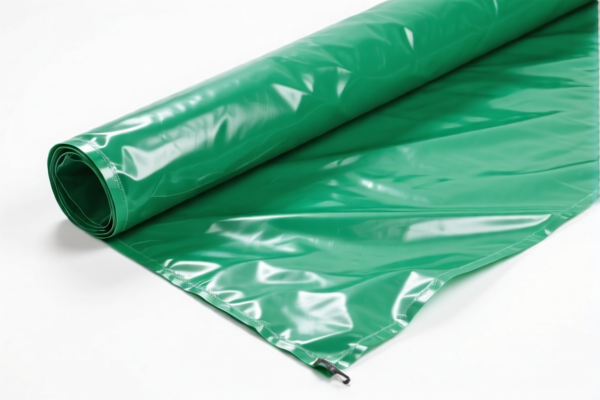
AI Analysis
🌿 Agricultural Shade Net (PVC Coated Textile)
🌐 HS Code Reference & Customs Clearance Guide | 2026 Latest Tariff Analysis | Professional Customs Strategy
📌 I. Product Definition & Classification: Do You Truly Understand "Shade Nets"?
Agricultural shade nets, particularly those with PVC (Polyvinyl Chloride) coatings, are critical components in modern agriculture, greenhouse construction, and outdoor storage protection. In international trade, they are classified based on their material composition, manufacturing process (impregnated, coated, covered, or laminated), and primary function.
The complexity arises because these products can fall under either Textile Articles (Chapter 63) if considered finished "tarps/coverings," or Plastic Products/Textile Fabrics (Chapter 59) if considered "impregnated/coated fabrics."
⚠️ Key Distinction Points:
- If the product is defined primarily as a "Tarpaulin, Tent, or Sunshade" made of textile material coated with PVC → Often falls under Chapter 63 (Specific Articles of Textiles).
- If the product is defined primarily as "Textile Fabric impregnated/coated with PVC" → Falls under Chapter 59 (Impregnated, Coated, Covered, or Laminated Textile Fabrics).
- If the product is considered a general "Plastic Article" without specific textile classification → Could fall under Chapter 39 (Miscellaneous Plastic Articles), though this is less common for coated fabrics.
📦 II. HS Code Classification Details (2026 Latest Tariff Authority Comparison)
Based on the provided data, here are the five potential HS Codes for PVC Coated Agricultural Shade Nets, along with their specific customs descriptions and tax implications.
| HS Code | Product Description & Logic | Key Classification Criteria | Total Tax Rate* |
|---|---|---|---|
6306.19.21.10 |
PVC Coated Tarpaulin | Purpose: Tarpaulin/Rain Cover; Material: PVC; Meets requirements for "Articles of Artificial Fibers." | 22.6% |
5903.10.20.90 |
PVC Coated Tarpaulin (Fabric) | Material: Polyvinyl Chloride (PVC); Form: Impregnated, Coated, Covered, or Laminated. | 35.0% |
3926.20.60.00 |
Miscellaneous Plastic Articles | Material: PVC; Form: Classified as "Tarpaulin-type" plastic article. | 35.0% |
6306.12.00.00 |
PVC Coated Tarpaulin (Synthetic) | Purpose: Tarpaulin; Material: PVC; Falls under "Synthetic Fiber/Synthetic Material" category. | 18.8% |
5903.10.20.10 |
PVC Coated Textile Fabric | Material: Polyvinyl Chloride; Form: Textile Fabric; Meets definition of "PVC-impregnated/coated textile." | 35.0% |
🔍 Critical Reminder:
- Chapter 63 (6306) is generally preferred if the product is a finished article (like a tarp or net) intended for specific use (shade/rain protection).
- Chapter 59 (5903) is applied if customs views the item primarily as a semi-fabric (coated textile) rather than a finished good.
- Chapter 39 (3926) is a fallback for plastic articles but is often subject to higher scrutiny and tariffs.
- The difference in tax rates is significant (18.8% vs. 35.0%), making accurate classification crucial for cost control.
💰 III. 2026 Latest Tariff Rate Breakdown (Including Surtaxes & Policy Add-ons)
✅ Applicable Country: United States (US)
✅ Origin: China (CN)
✅ Effective Date: 2025 November 10 onwards (including subsequent imports)
🎯 1. 6306.19.21.10 —— PVC Coated Tarpaulin (Textile Article)
| Item | Content |
|---|---|
| Base Tariff | 5.1% |
| Section 301 Surtax | 7.5% |
| Section 122 Surtax | 10% |
| Total Rate | 22.6% |
| Tax Calculation | CIF Value × 22.6% |
| De Minimis Exemption | ❌ Not Eligible (deny_de_minimis) |
| Legal Basis Path | Base: 5.1% → Section 301: 7.5% → Section 122: 10% |
📌 Explanation:
- This is the lowest tax rate among the five options.
- It classifies the product as a finished textile article (tarpaulin).
- Strategy: If your product is a finished net/tarp, argue for this classification to save ~12% vs. the 35% bracket.
🎯 2. 5903.10.20.90 & 5903.10.20.10 —— PVC Coated Textile Fabric
| Item | Content |
|---|---|
| Base Tariff | 0.0% |
| Section 301 Surtax | 25.0% |
| Section 122 Surtax | 10% |
| Total Rate | 35.0% |
| Tax Calculation | CIF Value × 35.0% |
| De Minimis Exemption | ❌ Not Eligible (deny_de_minimis) |
| Legal Basis Path | Base: 0.0% → Section 301: 25.0% → Section 122: 10% |
📌 Note:
- Despite a 0% base tariff, the 25% Section 301 surtax pushes the total to 35%.
- This classification views the product as impregnated/coated fabric (Chapter 59).
- Risk: High tax burden. Only use if customs authorities insist on Chapter 59 classification due to the "coated fabric" nature.
🎯 3. 3926.20.60.00 —— Miscellaneous Plastic Articles
| Item | Content |
|---|---|
| Base Tariff | 0.0% |
| Section 301 Surtax | 25.0% |
| Section 122 Surtax | 10% |
| Total Rate | 35.0% |
| Tax Calculation | CIF Value × 35.0% |
| De Minimis Exemption | ❌ Not Eligible (deny_de_minimis) |
| Legal Basis Path | Base: 0.0% → Section 301: 25.0% → Section 122: 10% |
📌 Warning:
- This is a high-risk classification. Customs may reject it if the product is clearly a textile fabric.
- Using this code may trigger additional scrutiny regarding whether it should be classified under Chapter 59 or 63 instead.
🎯 4. 6306.12.00.00 —— PVC Coated Tarpaulin (Synthetic)
| Item | Content |
|---|---|
| Base Tariff | 8.8% |
| Section 301 Surtax | 0.0% |
| Section 122 Surtax | 10% |
| Total Rate | 18.8% |
| Tax Calculation | CIF Value × 18.8% |
| De Minimis Exemption | ❌ Not Eligible (deny_de_minimis) |
| Legal Basis Path | Base: 8.8% → Section 301: 0.0% → Section 122: 10% |
📌 Advantage:
- This is the LOWEST possible tax rate (18.8%) in the provided data.
- It applies if the product is classified under 6306.12 (Tarpaulins, awnings, and sunblinds, of synthetic fibers).
- Key Argument: Emphasize that the product is a finished sunshade/tarpaulin made of synthetic materials, not just a raw coated fabric.
- Note: Section 301 surtax is 0% here, which is a major advantage.
🛠️ IV. Customs Clearance Practical Advice (Battle-Tested Pitfall Guide)
✅ 1. Document Checklist (Non-Negotiable)
| Document | Required | Explanation |
|---|---|---|
| ✅ Product Specification Sheet | ✔️ | Must detail: PVC coating thickness, base fabric type (synthetic/natural), weight per sqm, tensile strength. |
| ✅ Composition Statement | ✔️ | Clearly state % of PVC vs. base textile. Crucial for distinguishing between Chapter 59 and 63. |
| ✅ Product Photos (Labeled) | ✔️ | Show the full net/tarp, including edges, grommets, and any branding. |
| ✅ Commercial Invoice | ✔️ | Use precise terminology: "PVC Coated Synthetic Fiber Sunshade Net" or "Agricultural Tarpaulin." Avoid vague terms like "Plastic Sheet." |
| ✅ Packing List | ✔️ | Specify dimensions, weight, and quantity. |
| ✅ Origin Certificate | ✔️ | Essential for verifying Country of Origin (China) and applying surtaxes correctly. |
✅ 2. Declaration Strategy (Key Mantras)
🔥 "Finished Good Wins, Fabric Loses; Synthetic Base Saves, Plastic Fails!"
| Scenario | Correct Declaration | Wrong Approach |
|---|---|---|
| Finished Shade Net with Grommets/Cords | 6306.12.00.00 (18.8%) or 6306.19.21.10 (22.6%) |
Declaring as "Coated Fabric" → 35% |
| Rolls of Unfinished Coated Fabric | 5903.10.20.10 (35.0%) |
Trying to declare as "Finished Net" → Customs Rejection |
| Product is Primarily Plastic with Textile Reinforcement | 3926.20.60.00 (35.0%) |
Risky; may be reclassified to 59 or 63 |
| Clear Sunshade Net for Agriculture | 6306.12.00.00 |
Using generic "Plastic Product" code |
✅ 3. Special Case Handling
| Scenario | Handling Advice |
|---|---|
| OEM Custom Nets | Provide design specs and end-use proof (agricultural use) to support Chapter 63 classification. |
| Mixed Materials | If the base is natural fiber (e.g., cotton) vs. synthetic, it affects the sub-heading in Chapter 63. |
| High PVC Content | If PVC > textile weight, customs may lean toward Chapter 39 or 59. Argue for "Textile Article" if textile provides structural integrity. |
| Customs Audit Risk | Be prepared to provide lab test reports showing the ratio of PVC to fabric. |
🌍 V. Global Market Comparison (2026 Latest)
| Country/Region | Recommended HS Code | Tariff Rate (China Origin) | Key Certification | Notes |
|---|---|---|---|---|
| 🇺🇸 USA | 6306.12.00.00 |
18.8% | None specific | Lowest rate; avoid 35% brackets |
| 🇨🇳 China | 6306.12.00.00 |
~5-10% | GB Standards | Domestic trade |
| 🇪🇺 EU | 5903.10.20 |
0-4% | CE (if applicable) | Generally low tariffs |
| 🇦🇺 Australia | 6306.12.00 |
5% | None | Standard rates |
| 🇯🇵 Japan | 6306.12.00 |
0-3% | PSE (if electrical components) | Very competitive |
📌 Conclusion:
- USA is the only market with significant Section 301/122 surtaxes.
- Correct Classification (Chapter 63) can save you up to 16.2% in tariffs compared to misclassification (Chapter 59/39).
- Always prioritize6306.12.00.00if the product is a finished sunshade/tarpaulin made of synthetic fibers.
📌 VI. Common Errors & Pitfall Guide (Lessons Learned from Experience)
❌ Error 1: Declaring "PVC Coated Fabric" for a finished net
👉 Consequence: Tax jumps from 18.8% to 35% → Extra Cost: 16.2%!
❌ Error 2: Using "Plastic Sheet" as the product name
👉 Consequence: Customs may assign 3926.20.60.00 (35%) or demand reclassification → Delays & Penalties
❌ Error 3: Not specifying "Synthetic Fiber" in the description
👉 Consequence: May fall under 6306.19 (Other) instead of 6306.12 → Tax Increase from 18.8% to 22.6%
✅ Correct Practice:
"Agricultural Shade Net, PVC Coated, Synthetic Fiber Base, Finished Article with Grommets, Model XYZ, UV Stabilized"
🎯 VII. Conclusion: Professional Declaration, Save Costs, Ensure Clearance!
🎯 Remember the Mantra:
🔹 "Finished Net = Chapter 63 (18.8%-22.6%)"
🔹 "Coated Fabric = Chapter 59 (35%)"
🔹 "Misclassification = Double Taxation + Delays!"
🔹 "Lowest Rate:6306.12.00.00(18.8%)"
📌 Pro Tip:
If your shade net is originally from Vietnam, Mexico, or Thailand, you may qualify for IEEPA Exemptions or lower Section 301 rates.
Recommendation: Apply for an Advance Ruling (Pre-classification) with US Customs (CBP) to lock in the 18.8% rate for 6306.12.00.00.
📣 Immediate Action:
📞 Contact a Professional Customs Broker
📝 Provide Product Photos + Composition Details
🚀 Secure the 18.8% Rate, Avoid the 35% Trap, and Boost Your Margins!
✨ Professional Customs Clearance Starts with Precise Classification!
💼 Every Percentage Point Matters in Global Trade!
Customer Reviews
About HS Code Classification
The Harmonized System (HS) is an internationally standardized nomenclature developed by the World Customs Organization (WCO) to classify traded products. Over 200 countries use the HS system as the basis for customs tariffs, trade statistics, and import/export regulations.
Each HS code follows a hierarchical structure:
- Chapter (2 digits) — Broad category of goods (e.g., Chapter 84: Machinery and Mechanical Appliances)
- Heading (4 digits) — More specific grouping within the chapter
- Subheading (6 digits) — Internationally standardized breakdown, used by all WCO member countries
- National subdivisions (8-10 digits) — Country-specific extensions for further classification, such as US HTSUS 10-digit codes
Correct HS code classification is essential for smooth customs clearance, accurate duty payment, and compliance with trade regulations. Misclassification can lead to customs delays, overpayment of duties, or penalties.
When importing from CN to US, the applicable tariff rates may include:
- Most-Favored-Nation (MFN) rate — The standard duty rate applied to WTO members
- General rate — Applied to countries without trade agreements
- Trade remedy duties — Additional tariffs such as Section 301 (anti-dumping), Section 232 (national security), or countervailing duties
The information provided on this page is for reference purposes only. For official classification, please consult with your local customs authority or a licensed customs broker.