PVC Coated Vintage Fabric
CN → US| HS Code | Tariff Rate | Origin | Destination | Doc |
|---|---|---|---|---|
| 3921121500 | 41.5% | CN | US | Official Doc |
| 3926909989 | 22.8% | CN | US | Official Doc |
| 5903102090 | 35.0% | CN | US | Official Doc |
| 5903102500 | 42.5% | CN | US | Official Doc |
| 3921121100 | 39.2% | CN | US | Official Doc |
Product Images
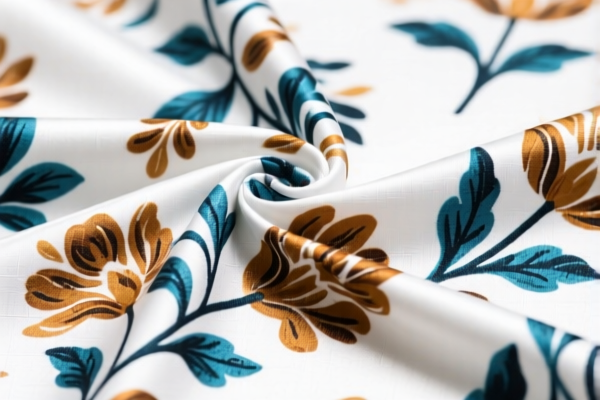



AI Analysis
🧵 PVC Coated Vintage Fabric: HS Code Classification & Customs Clearance Strategy | 2026 Updated Tariff Analysis
🌐 HS Code Reference & Customs Clearance Guide | 2026 Latest Tariff Rules | Professional-Level Pass-through Strategy
📌 I. Product Definition & Classification: Do You Really Understand “PVC Coated Vintage Fabric”?
PVC Coated Vintage Fabric is a composite textile material widely used in fashion, furniture, automotive interiors, and industrial applications. It consists of a base fabric (usually cotton, polyester, or linen) coated or impregnated with Polyvinyl Chloride (PVC) to enhance durability, water resistance, and aesthetic appeal.
In international trade, the classification depends heavily on: - Material Composition: Is it primarily textile-based or plastic-based? - Manufacturing Process: Is it impregnated, coated, covered, or laminated? - Usage Scenario: Is it used for general purposes, specific apparel, or industrial applications?
⚠️ Key Distinction:
- If the PVC layer dominates and the fabric acts as reinforcement → Often classified under Chapter 39 (Plastics).
- If the textile base dominates and PVC is merely a coating/impregnation → Often classified under Chapter 59 (Textile Articles).
📦 II. HS Code Classification Details (2026 Latest Tariff Authoritative Comparison)
| HS Code | Product Description | Applicable Scenario | Total Tax Rate | Key Reason for Classification |
|---|---|---|---|---|
3921.12.15.00 |
PVC-coated retro fabric: Classified as PVC polymer products, form is coated fabric. | General-purpose plastic-coated textiles where PVC weight > fabric weight. | 41.5% | Base: 6.5% + Section 301: 25% + IEEPA: 10% |
3926.90.99.89 |
PVC-coated vintage fabric: Classified as unlisted plastic articles, material is plastic. | Plastic articles not specified elsewhere; used for general plastic goods. | 22.8% | Base: 5.3% + Section 301: 7.5% + IEEPA: 10% |
5903.10.20.90 |
PVC-coated vintage fabric: Matches PVC textile fabric characteristics; form is impregnated, coated, covered, or laminated. | Textile fabrics where PVC is a coating/impregnation; textile base dominates. | 35.0% | Base: 0.0% + Section 301: 25% + IEEPA: 10% |
5903.10.25.00 |
PVC-coated vintage fabric: Matches PVC material and textile fabric characteristics; form is impregnated, coated, covered, or laminated. | High-quality PVC textile fabrics with higher value-added processing. | 42.5% | Base: 7.5% + Section 301: 25% + IEEPA: 10% |
3921.12.11.00 |
PVC-coated vintage fabric: Classified as PVC polymer products composite with textile materials; high plastic weight proportion. | Composite materials where PVC is the main component by weight. | 39.2% | Base: 4.2% + Section 301: 25% + IEEPA: 10% |
🔍 Critical Reminder:
- Textile-dominant (PVC as coating) → Typically 5903.xx
- Plastic-dominant (PVC as main layer) → Typically 3921.xx or 3926.xx
- Incorrect classification can lead to significant tariff differences (from 22.8% to 42.5%) and customs delays.
💰 III. 2026 Latest Tariff Rate Details (Including Additional Taxes & Policy Surcharges)
✅ Applicable Country: United States (US)
✅ Origin: China (CN)
✅ Effective Time: From November 10, 2025 (including subsequent imports)
🎯 1. 3921.12.15.00 —— PVC-Coated Retro Fabric (Plastic-Dominant)
| Item | Content |
|---|---|
| Base Tariff Rate | 6.5% (ad valorem) |
| USITC Additional Tax | +25% (from USITC Footnote 9903.88.01, Section 301) |
| IEEPA Additional Tax | +10% (Targeting China/Hong Kong products, effective from Nov 10, 2025) |
| Total Tax Rate | 41.5% |
| Tax Calculation | CIF Value × 41.5% |
| De Minimis Eligibility | ❌ Not Eligible (deny_de_minimis) |
| Legal Basis Path | IEEPA:9903.01.25 → IEEPA:9903.01.24 → USITC:3921.12.15.00 → FOOTNOTE:9903.88.01 |
📌 Explanation:
- The 25% USITC tax is a Section 301 surcharge;
- The 10% IEEPA tax is an additional duty on Chinese-origin goods;
- Total 41.5% is a high tariff, requiring advance planning.
🎯 2. 3926.90.99.89 —— Unlisted Plastic Articles (Plastic-Dominant)
| Item | Content |
|---|---|
| Base Tariff Rate | 5.3% |
| USITC Additional Tax | +7.5% |
| IEEPA Additional Tax | +10% |
| Total Tax Rate | 22.8% |
| Tax Calculation | CIF × 22.8% |
| De Minimis Eligibility | ❌ Not Eligible |
| Legal Basis Path | IEEPA:9901.25 → IEEPA:9903.01.24 → USITC:3926.90.99.89 → FOOTNOTE:9903.88.01 |
📌 Note:
- This is the lowest tax rate among all classifications;
- Applicable when the product is considered a generic plastic article not specified elsewhere;
- Requires justification that it does not fit standard textile or specific plastic categories.
🎯 3. 5903.10.20.90 —— PVC Textile Fabric (Textile-Dominant)
| Item | Content |
|---|---|
| Base Tariff Rate | 0.0% |
| USITC Additional Tax | +25% |
| IEEPA Additional Tax | +10% |
| Total Tax Rate | 35.0% |
| Tax Calculation | CIF × 35.0% |
| De Minimis Eligibility | ❌ Not Eligible |
| Legal Basis Path | IEEPA:9903.01.25 → IEEPA:9903.01.24 → USITC:5903.10.20.90 → FOOTNOTE:9903.88.01 |
📌 Note:
- Base tariff is 0%, but Section 301 adds 25%;
- Commonly used for textile-based PVC coatings;
- Must provide proof that textile base is dominant.
🎯 4. 5903.10.25.00 —— High-Value PVC Textile Fabric (Textile-Dominant)
| Item | Content |
|---|---|
| Base Tariff Rate | 7.5% |
| USITC Additional Tax | +25% |
| IEEPA Additional Tax | +10% |
| Total Tax Rate | 42.5% |
| Tax Calculation | CIF × 42.5% |
| De Minimis Eligibility | ❌ Not Eligible |
| Legal Basis Path | IEEPA:9903.01.25 → IEEPA:9903.01.24 → USITC:5903.10.25.00 → FOOTNOTE:9903.88.01 |
📌 Note:
- Highest tax rate among all options;
- Applies to high-value, processed PVC textile fabrics;
- Requires detailed product specifications and usage evidence.
🎯 5. 3921.12.11.00 —— PVC-Textile Composite (Plastic-Dominant)
| Item | Content |
|---|---|
| Base Tariff Rate | 4.2% |
| USITC Additional Tax | +25% |
| IEEPA Additional Tax | +10% |
| Total Tax Rate | 39.2% |
| Tax Calculation | CIF × 39.2% |
| De Minimis Eligibility | ❌ Not Eligible |
| Legal Basis Path | IEEPA:9903.01.25 → IEEPA:9903.01.24 → USITC:3921.12.11.00 → FOOTNOTE:9903.88.01 |
📌 Note:
- Intermediate tax rate;
- Applies when PVC and textile are both significant, but PVC weight is higher;
- Requires material composition proof.
🛠️ IV. Customs Clearance Practical Advice (Battle-Tested Pitfall Avoidance Guide)
✅ 1. Required Documentation Checklist (No Exceptions)
| Document | Mandatory? | Description |
|---|---|---|
| ✅ Product Specification Sheet | ✔️ | Include dimensions, material composition, PVC weight %, fabric type |
| ✅ Material Composition Proof | ✔️ | Lab test or supplier certificate confirming PVC vs. fabric weight ratio |
| ✅ Product Photos (Including Label) | ✔️ | Clear images showing texture, coating, and any labels |
| ✅ Third-Party Test Report | ✔️ | REACH, RoHS, OEKO-TEX (if applicable for consumer goods) |
| ✅ Commercial Invoice | ✔️ | Must state “PVC Coated Vintage Fabric” and HS Code |
| ✅ Certificate of Origin (CO) | ✔️ | If non-China origin, claim preferential rates |
| ✅ Packing List | ✔️ | Clearly separate components if sold as kits |
✅ 2. Declaration Tips (Key Mnemonic)
🔥 “Check Weight, Check Process, Name Accurately, Tax Rate Drops by Half!”
| Scenario | Correct Declaration | Wrong Practice |
|---|---|---|
| PVC layer > Fabric layer | 3921.12.15.00 or 3921.12.11.00 |
Misdeclare as textile → 42.5% |
| Fabric layer > PVC layer | 5903.10.20.90 or 5903.10.25.00 |
Misdeclare as plastic → 41.5% |
| Generic plastic article | 3926.90.99.89 |
Overcomplicate classification → Delays |
| Composite material | 3921.12.11.00 |
Split declaration → Higher total tax |
✅ 3. Special Case Handling
| Case | Handling Advice |
|---|---|
| OEM Custom Fabric | Provide customer order + material spec sheets to avoid “non-standard” labeling |
| Fabric for Apparel | If used for clothing, still classify by material dominance, not end-use |
| Industrial Use | If for industrial machinery covers, justify under Chapter 39 |
| Fashion/Decorative Use | If aesthetic value is high, may argue for 5903.10.25.00, but expect 42.5% |
🌍 V. Global Market Customs Clearance Comparison (2026 Latest)
| Country/Region | Recommended HS Code | Tariff | Certification Requirements | Notes |
|---|---|---|---|---|
| 🇺🇸 USA | 3921.12.15.00 or 5903.10.20.90 |
35–42.5% | REACH, RoHS, OEKO-TEX (if applicable) | High tariffs due to Section 301 + IEEPA |
| 🇨🇳 China | 5903.10.20.90 |
5–10% | CCC (if applicable) | No additional surcharges |
| 🇪🇺 EU | 5903.10.20.90 |
0–6.5% | CE, REACH | No Section 301; lower overall cost |
| 🇬🇧 UK | 5903.10.20.90 |
0–6.5% | UKCA, REACH | Post-Brexit rules apply |
| 🇯🇵 Japan | 5903.10.20.90 |
0–6% | PSE, JIS | Low tariffs, strict quality checks |
📌 Conclusion:
- USA has the highest tariffs due to multiple surcharges;
- EU and Japan are more cost-effective for PVC-coated fabrics;
- Consider supply chain diversification if exporting to the US.
📌 VI. Common Errors & Pitfall Avoidance (Blood-Teaching Lessons)
❌ Error 1: Declaring PVC-coated fabric as “textile” when PVC weight > 50%
👉 Consequence: Customs reclassifies → 41.5% tax + potential penalties
❌ Error 2: Using generic “plastic sheeting” HS code without justification
👉 Consequence: 22.8% tax but rejected for lack of proof → Delays
❌ Error 3: Not providing material composition proof
👉 Consequence: Customs assumes worst-case scenario → 42.5% tax
❌ Error 4: Splitting shipment to avoid thresholds
👉 Consequence: Anti-circumvention investigation → Seizure + fines
✅ Correct Practice:
“PVC-Coated Vintage Fabric, 60% PVC / 40% Polyester, Impregnated Process, Width 150cm, Width 150cm, for Upholstery Use, Certificates: REACH, RoHS”
🎯 VII. Conclusion: Professional Declaration, Save Time, Reduce Costs!
🎯 Remember the Mantra:
🔹 “Weight Dictates Code, Process Defines Chapter, Name Accurately, Tax Savings Are Real!”
🔹 “HS Code Determines Life, Tax Rate Differs by 20%, Declaration Error Costs Thousands!”
📌 Pro Tip:
If your PVC-coated vintage fabric is originated from Vietnam, Mexico, Thailand, or Malaysia, you may qualify for IEEPA Exemption, reducing tariffs to 0–6.5%.
Recommendation: Apply for an Advance Ruling before shipment to avoid clearance risks.
📣 Take Action Now:
📞 Contact a Professional Customs Broker + Provide Product Photos + Apply for HS Code Advance Ruling
🚀 Ensure your fabric clears customs smoothly, exports efficiently, and maximizes profits!
✨ Professional Clearance Starts with Accurate Classification!
💼 Every Cost Cent Counts!
Customer Reviews
About HS Code Classification
The Harmonized System (HS) is an internationally standardized nomenclature developed by the World Customs Organization (WCO) to classify traded products. Over 200 countries use the HS system as the basis for customs tariffs, trade statistics, and import/export regulations.
Each HS code follows a hierarchical structure:
- Chapter (2 digits) — Broad category of goods (e.g., Chapter 84: Machinery and Mechanical Appliances)
- Heading (4 digits) — More specific grouping within the chapter
- Subheading (6 digits) — Internationally standardized breakdown, used by all WCO member countries
- National subdivisions (8-10 digits) — Country-specific extensions for further classification, such as US HTSUS 10-digit codes
Correct HS code classification is essential for smooth customs clearance, accurate duty payment, and compliance with trade regulations. Misclassification can lead to customs delays, overpayment of duties, or penalties.
When importing from CN to US, the applicable tariff rates may include:
- Most-Favored-Nation (MFN) rate — The standard duty rate applied to WTO members
- General rate — Applied to countries without trade agreements
- Trade remedy duties — Additional tariffs such as Section 301 (anti-dumping), Section 232 (national security), or countervailing duties
The information provided on this page is for reference purposes only. For official classification, please consult with your local customs authority or a licensed customs broker.