PVC Coated Woven Wall Fabric
CN → US| HS Code | Tariff Rate | Origin | Destination | Doc |
|---|---|---|---|---|
| 5903102090 | 35.0% | CN | US | Official Doc |
| 3921121500 | 41.5% | CN | US | Official Doc |
| 3921121950 | 40.3% | CN | US | Official Doc |
| 5903102500 | 42.5% | CN | US | Official Doc |
| 5903102090 | 35.0% | CN | US | Official Doc |
Product Images
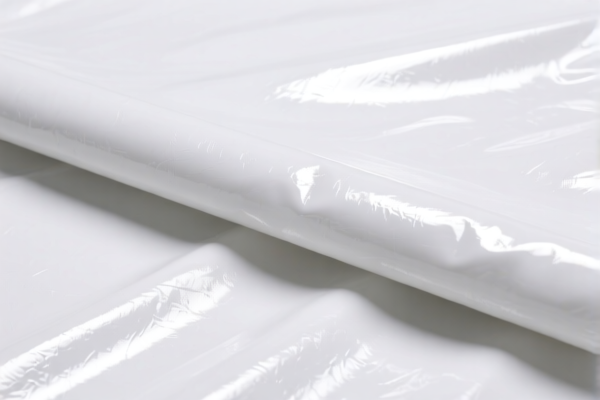
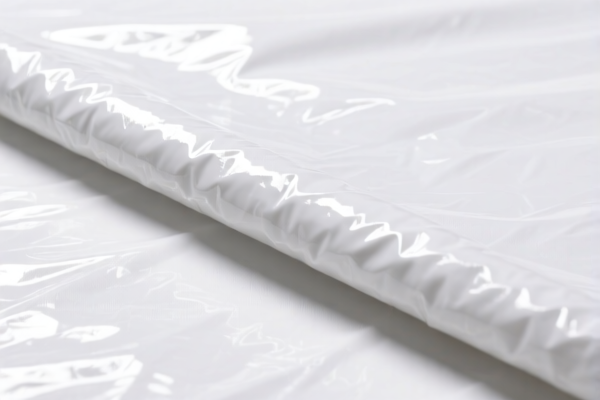


AI Analysis
🧵 PVC Coated Woven Wall Fabric
🌐 HS Code Reference & Customs Clearance Guide | 2026 Latest Tariff Analysis | Professional Clearance Strategy
📌 I. Product Definition & Classification: Do You Really Understand "PVC Coated Wall Fabric"?
PVC Coated Woven Wall Fabric is a composite decorative material widely used in interior design, hotel renovations, and commercial spaces. It combines the durability of synthetic fibers with the water-resistant and aesthetic properties of Polyvinyl Chloride (PVC).
In international trade, this product is not a single HS Code. Its classification depends heavily on: 1. Structure: Is it knitted (stretchy, looped) or woven (interlaxed, rigid)? 2. Processing Method: Is it impregnated, coated, covered, or laminated? 3. Primary Material: Is the textile fabric the essential character, or is the PVC plastic sheet the essential character?
⚠️ Critical Distinction Point:
- If the product is primarily a textile fabric coated/impregnated with PVC → It likely falls under Chapter 59 (Impregnated, Coated, Covered or Laminated Textile Fabrics).
- If the product is primarily a plastic sheet/film with a textile backing → It likely falls under Chapter 39 (Plastics and Articles Thereof).
📦 II. HS Code Classification Details (Based on Provided Data)
The following HS Codes are derived strictly from the provided dataset, which categorizes "PVC Coated Woven/Knitted Wall Fabric" based on nuanced structural differences.
| HS Code | Product Description (Summary) | Key Characteristics | Total Tax Rate |
|---|---|---|---|
| 5903.10.20.90 | PVC Coated Knitted Wall Fabric OR PVC Woven Wall Decor Material | Matches: PVC material + Coated/Weave form + Textile application. (Note: The data groups Knitted Wall Fabric and Woven Wall Decor under this same code in two separate entries.) |
35.0% |
| 3921.12.15.00 | PVC Coated Knitted Wall Fabric | Matches: PVC material + Combined with textile in sheet/film form + Knitted fabric characteristics. | 41.5% |
| 3921.12.19.50 | PVC Coated Knitted Wall Fabric | Matches: Vinyl polymer + Knitted fabric + Plastic board/film form. | 40.3% |
| 5903.10.25.00 | PVC Coated Knitted Wall Fabric | Matches: PVC material + Impregnated/Coated/Covered/Laminated form + Textile definition. | 42.5% |
🔍 Key Observation from Data:
Although the user input specifies "Woven," the provided dataset heavily features "Knitted" descriptions for codes3921.12.15.00,3921.12.19.50, and5903.10.25.00. Only5903.10.20.90explicitly mentions both "Knitted" and "Woven" contexts.
Crucial Advice: You must verify if your product is truly Woven (plain, twill, satin weave) or Knitted (looped structure). Misclassifying a knitted fabric as woven (or vice versa) under Chapter 39 vs. Chapter 59 can lead to significant tax discrepancies (35% vs. 42.5%).
💰 III. 2026 Latest Tariff Rate Details (Including Surcharges)
✅ Applicable Country: United States (US)
✅ Country of Origin: China (CN)
✅ Effective Date: 2025/2026 Trade Terms
All rates below include the Base Duty, Section 301 Surtax (25%), and Section 122 Tariff (10%).
🎯 1. 5903.10.20.90 – Best Case Scenario (35% Total)
Applicable to: PVC Woven Wall Decor Materials or PVC Coated Knitted Wall Fabrics (where textile character dominates).
| Item | Content |
|---|---|
| Base Tariff | 0.0% |
| Surtax (Sec. 301) | +25.0% |
| Section 122 Tariff | +10.0% |
| Total Tax Rate | 35.0% |
| Tax Calculation | CIF Value × 35% |
| De Minimis Exemption | ❌ Not Available (High risk of scrutiny) |
📌 Explanation:
This is the lowest tax rate in the dataset. It applies when the product is classified under Chapter 59 (Textiles) rather than Chapter 39 (Plastics). The base duty is 0%, but the aggressive surcharges push it to 35%.
🎯 2. 3921.12.19.50 – Intermediate Scenario (40.3% Total)
Applicable to: PVC Coated Knitted Wall Fabric (Vinyl polymer + Knitted + Plastic Board/Film form).
| Item | Content |
|---|---|
| Base Tariff | 5.3% |
| Surtax (Sec. 301) | +25.0% |
| Section 122 Tariff | +10.0% |
| Total Tax Rate | 40.3% |
| Tax Calculation | CIF Value × 40.3% |
📌 Explanation:
The base duty is higher (5.3%) because Chapter 39 generally has base tariffs for plastic products. The surcharges remain the same.
🎯 3. 3921.12.15.00 – High Tax Scenario (41.5% Total)
Applicable to: PVC Coated Knitted Wall Fabric (PVC + Textile Combined + Knitted Character).
| Item | Content |
|---|---|
| Base Tariff | 6.5% |
| Surtax (Sec. 301) | +25.0% |
| Section 122 Tariff | +10.0% |
| Total Tax Rate | 41.5% |
| Tax Calculation | CIF Value × 41.5% |
📌 Explanation:
Slightly higher base duty (6.5%) than the previous code. Often used for more specific "knitted" plastic composite definitions.
🎯 4. 5903.10.25.00 – Highest Tax Scenario (42.5% Total)
Applicable to: PVC Coated Knitted Wall Fabric (Impregnated/Coated/Laminated form).
| Item | Content |
|---|---|
| Base Tariff | 7.5% |
| Surtax (Sec. 301) | +25.0% |
| Section 122 Tariff | +10.0% |
| Total Tax Rate | 42.5% |
| Tax Calculation | CIF Value × 42.5% |
📌 Explanation:
Even though it is in Chapter 59 (Textiles), the specific subheading for "Impregnated/Coated/Laminated" has a higher base duty (7.5%). This is the most expensive classification in the dataset.
🛠️ IV. Customs Clearance Practical Advice (Battle-Tested Pitfall Guide)
✅ 1. Preparation Checklist (Non-Negotiable)
| Document | Required? | Purpose |
|---|---|---|
| ✅ Product Specification Sheet | ✔️ | Must detail: Fiber content (e.g., 100% Polyester), Weave type (Woven/Knitted), PVC coating thickness, GSM. |
| ✅ Product Photos | ✔️ | Clear shots of the texture (loops for knitted, grid for woven) and cross-section (to prove PVC is a coating, not a solid plastic sheet). |
| ✅ Commercial Invoice | ✔️ | Description must match HS Code exactly. Avoid vague terms like "Wall Covering." Use "PVC Coated Woven Textile Wall Fabric." |
| ✅ Packing List | ✔️ | Must match Invoice. |
| ✅ Certificate of Origin | ✔️ | Crucial for proving Chinese origin (triggers surcharges). |
✅ 2. Declaration Strategy (Key Mantra)
🔥 “Weave vs. Knit Defines Chapter; Coating Defines Subheading; Origin Defines Tax!”
| Scenario | Recommended HS Code | Why? | Risk |
|---|---|---|---|
| Product is truly Woven (e.g., PVC-coated polyester woven fabric) | 5903.10.20.90 |
Fits "Woven Wall Decor" or "PVC Coated... Textile". Lowest tax (35%). | If Customs views PVC thickness as dominant, they may reclassify to Ch.39. |
| Product is Knitted (e.g., stretchy PVC-coated jersey) | 3921.12.15.00 or 3921.12.19.50 |
Knitted structure often pushes classification toward Plastic Articles if PVC is substantial. | Higher tax (40-41.5%). |
| Product is Laminated (PVC sheet + Fabric backing) | 3921.12.xx |
If it looks more like a plastic sheet with fabric embedded, Ch.39 is safer but more expensive. | High base duty. |
| Misdeclaration | N/A | Claiming "Woven" when it is "Knitted" | Penalty, Seizure, Back Taxes! |
✅ 3. Special Considerations
| Issue | Advice |
|---|---|
| "Woven" vs "Knitted" Confusion | Many suppliers use "Woven" loosely. If the fabric stretches significantly in one direction and has loops, it is Knitted. Knitted items often fall under Ch.39 if the PVC layer is thick. |
| Section 122 Tariff (10%) | This is a specific surcharge on certain Chinese imports. It applies to all codes listed above. Do not ignore it. |
| Section 301 Tariff (25%) | Standard US-China tariff war surcharge. Applies to all. |
| De Minimis (Section 321) | ❌ DO NOT USE. These goods are high-value, high-duty items. Using de minimis for bulk shipments is high-risk and likely to be rejected for Chapter 39/59 goods. |
🌍 V. Global Market Comparison (2026 Context)
| Market | Likely HS Code | Est. Duty | Notes |
|---|---|---|---|
| 🇺🇸 USA | 5903.10.20.90 |
35.0% | Includes 301 + 122 surcharges. |
| 🇪🇺 EU | 5903.10.xx |
~6.5% | No 301/122 surcharges. Lower base duty. |
| 🇨🇳 China (Import) | 5903.10.20.90 |
~10-13% | Varies by specific entry. |
| 🇯🇵 Japan | 5903.10.00 |
~8-10% | No surcharges. |
📌 Conclusion:
The US is the most expensive market for PVC Coated Wall Fabrics due to the cumulative effect of Base Duty + Section 301 (25%) + Section 122 (10%).
Profit Margin Warning: Ensure your FOB price accounts for at least 35-42% in landed duties.
📌 VI. Common Errors & Pitfall Guide (Blood-Teaching Lessons)
❌ Mistake 1: Using "Wallpaper" or "Wall Covering" as the product name.
👉 Consequence: Ambiguous classification. Customs may assign a higher duty code or request detailed technical specs.
👉 Fix: Use "PVC Coated Woven Textile Fabric for Wall Decoration."
❌ Mistake 2: Confusing Woven and Knitted.
👉 Consequence: If you declare "Woven" but the fabric is knitted, Customs may reclassify to 3921.12.15.00 (41.5%) instead of 5903.10.20.90 (35%).
👉 Fix: Test stretch. Loops = Knitted. Grid/Interlaced = Woven.
❌ Mistake 3: Ignoring the "Section 122" tariff.
👉 Consequence: Underpayment of 10%.
👉 Fix: Always include the 10% surcharge in your cost model for US-bound PVC Textile goods from China.
❌ Mistake 4: Declaring as "Plastic Sheet" when it's clearly Fabric.
👉 Consequence: If it's a thick laminate, Ch.39 might be correct (higher base duty). But if it's fabric-first, Ch.59 is better.
👉 Fix: Analyze the "Essential Character." Does the fabric provide the strength/structure? If yes, Ch.59.
🎯 VII. Conclusion: Precise Classification, Maximized Profit!
🎯 Remember the Mantra:
🔹 "Woven = 5903 (35%)? Knitted = 3921 (40-42%)? Check the Texture First!"
🔹 "301 (25%) + 122 (10%) = 35% Minimum on Top of Base Duty."
🔹 "One wrong HS Code, and your profit vanishes into US Customs."
📌 Pro Tip:
If your product is Woven, strive to classify under 5903.10.20.90 to secure the 35% total rate.
If your product is Knitted, be prepared for 40.3% - 42.5% rates under Chapter 39.
Request a Pre-Ruling (Advance Ruling) from US CBP if the classification is borderline. It provides legal certainty and protects against future audits.
📣 Immediate Action:
📞 Verify Weave vs. Knit with your supplier.
📄 Submit Tech Spec Sheet with Photos.
🧮 Calculate Landed Cost with 35-42.5% Duty.
🚀 Clear Goods Efficiently, Secure Margins, Expand Global Markets!
✨ Professional Clearance Starts with Precise Classification!
💼 Every Percentage Point Counts in Cross-Border Trade!
Customer Reviews
About HS Code Classification
The Harmonized System (HS) is an internationally standardized nomenclature developed by the World Customs Organization (WCO) to classify traded products. Over 200 countries use the HS system as the basis for customs tariffs, trade statistics, and import/export regulations.
Each HS code follows a hierarchical structure:
- Chapter (2 digits) — Broad category of goods (e.g., Chapter 84: Machinery and Mechanical Appliances)
- Heading (4 digits) — More specific grouping within the chapter
- Subheading (6 digits) — Internationally standardized breakdown, used by all WCO member countries
- National subdivisions (8-10 digits) — Country-specific extensions for further classification, such as US HTSUS 10-digit codes
Correct HS code classification is essential for smooth customs clearance, accurate duty payment, and compliance with trade regulations. Misclassification can lead to customs delays, overpayment of duties, or penalties.
When importing from CN to US, the applicable tariff rates may include:
- Most-Favored-Nation (MFN) rate — The standard duty rate applied to WTO members
- General rate — Applied to countries without trade agreements
- Trade remedy duties — Additional tariffs such as Section 301 (anti-dumping), Section 232 (national security), or countervailing duties
The information provided on this page is for reference purposes only. For official classification, please consult with your local customs authority or a licensed customs broker.