PVC Colored Sheet
CN → US| HS Code | Tariff Rate | Origin | Destination | Doc |
|---|---|---|---|---|
| 3921125000 | 41.5% | CN | US | Official Doc |
| 3923900080 | 38.0% | CN | US | Official Doc |
| 3921121950 | 40.3% | CN | US | Official Doc |
Product Images

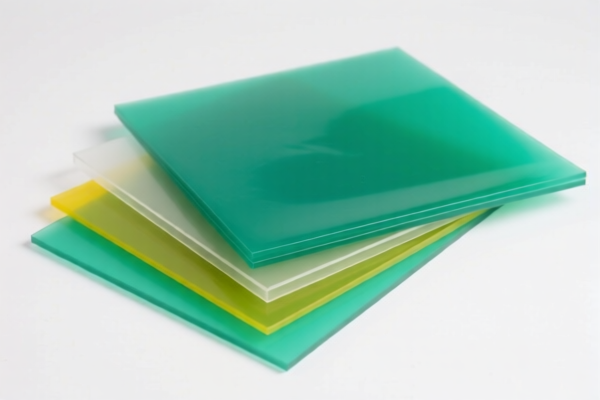
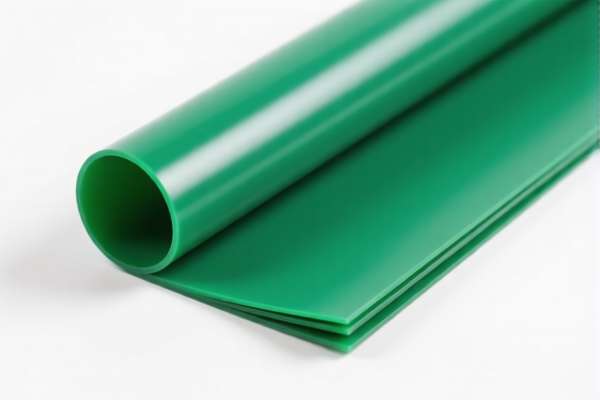
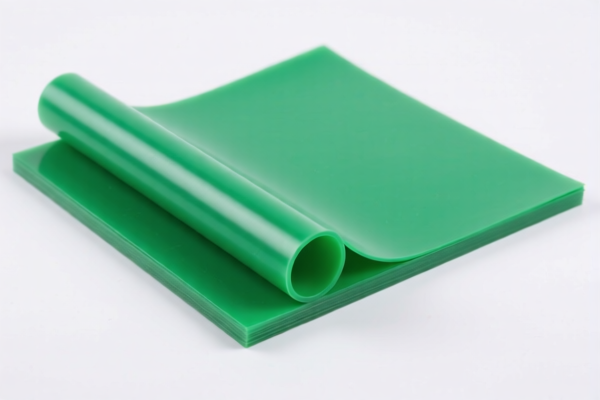
AI Analysis
🛠️ PVC Colored Sheet (聚氯乙烯彩色片材/板材)
🌐 HS Code Reference & Customs Clearance Guide | 2026 Latest Tariff Analysis | Professional Clearance Strategy
PVC (Polyvinyl Chloride) Colored Sheets are versatile polymer products used in construction, signage, packaging, and industrial applications. In international trade, the classification depends heavily on the exact form (plate/sheet) and specific usage. Based on the provided data, there are three primary classification paths, each with distinct tax implications under current US trade policies.
⚠️ Key Distinction:
- If classified as a generic PVC Plate/Sheet → High tariff burden due to Section 122 and Trade Act duties.
- If classified as a Packaging Product → Lower base duty, but still subject to additive tariffs.
- Crucial Note: All classifications below include Section 301 (25%) and Section 122 (10%) additional duties, significantly impacting landed cost.
📦 HS Code Classification Details (2026 Latest Tariff Authority)
Based on the provided data, the PVC Colored Sheet can be classified into three HS Codes. The choice depends on the specific manufacturing specification and end-use declaration.
| HS Code | Product Description | Summary & Logic | Total Tax Rate |
|---|---|---|---|
3921.12.50.00 |
PVC Plates, Sheets, Film, Foam (Other) | Material: PVC (Polyvinyl Chloride Polymer). Form: Plate/Sheet. Logic: Fits the description for vinyl chloride polymer plates/sheets. This is a standard classification for general-purpose PVC sheets. |
41.5% |
3923.90.00.80 |
Plastic Packaging Articles | Material: Plastic. Use: Packaging articles. Logic: If the PVC sheet is specifically manufactured or declared as "packaging supplies" (e.g., blister packs, protective wraps), it falls under plastic packaging articles. |
38.0% |
3921.12.19.50 |
PVC Plates/Sheets (Other) | Material: PVC (Vinyl Polymer). Form: Plate/Sheet. Logic: Classified under the "residual" or "catch-all" category for PVC plates/shapes based on residual category rules. Often used when specific sub-headings do not perfectly match the unique physical properties. |
40.3% |
🔍 Analysis of Tax Structure:
All three HS Codes share a common tariff structure: 1. Base Duty: Varies (5.3% - 6.5%). 2. Section 301 Duty: +25.0% (Retaliatory tariff on Chinese goods). 3. Section 122 Duty: +10.0% (Special trade remedy tariffs). Total Effective Tax: Ranges from 38.0% to 41.5%.
💰 Detailed Tariff Breakdown by HS Code (US Market Focus)
✅ Applicable Country: United States (US)
✅ Origin: China (CN) (Implied by Section 122 & 301 context)
✅ Effective Date: Current tariffs apply as per 2025/2026 updates.
🎯 1. 3921.12.50.00 – PVC Plates, Sheets (Standard Classification)
| Item | Detail |
|---|---|
| Base Duty | 6.5% |
| Section 301 Duty | +25.0% |
| Section 122 Duty | +10.0% |
| Total Tax Rate | 41.5% |
| Tax Calculation | CIF Value × 41.5% |
| Legal Basis | USITC Header 3921.12 + Section 122/301 footnotes |
📌 Explanation:
- This is the most direct classification for "PVC Colored Sheet" if used for general construction or industrial molding. - Warning: The 35% additive tariffs (25% + 10%) are non-negotiable for Chinese-origin goods.
🎯 2. 3923.90.00.80 – Plastic Packaging Articles (Lowest Tax Option)
| Item | Detail |
|---|---|
| Base Duty | 3.0% |
| Section 301 Duty | +25.0% |
| Section 122 Duty | +10.0% |
| Total Tax Rate | 38.0% |
| Tax Calculation | CIF Value × 38.0% |
| Legal Basis | USITC Header 3923.90 + Section 122/301 footnotes |
📌 Strategic Advantage:
- This is the lowest tax rate (38.0%) among the options. - Condition: The product MUST be clearly identifiable as a "packaging article" (e.g., for wrapping, palletizing, or blister packaging). - Risk: If the sheet is used for rigid construction (e.g., wall paneling) and declared as packaging, Customs may reclassify it, leading to penalties.
🎯 3. 3921.12.19.50 – PVC Plates/Sheets (Residual Category)
| Item | Detail |
|---|---|
| Base Duty | 5.3% |
| Section 301 Duty | +25.0% |
| Section 122 Duty | +10.0% |
| Total Tax Rate | 40.3% |
| Tax Calculation | CIF Value × 40.3% |
| Legal Basis | USITC Header 3921.12 (Other) + Section 122/301 footnotes |
📌 Explanation:
- This code is a "fallback" or "other" category for PVC plates. - It has a slightly higher tax (40.3%) than the packaging option but lower than the standard plate option (41.5%). - Use this if the specific physical characteristics don't fit the primary 3921.12.50.00 definition but are clearly PVC plates.
🛠️ Customs Clearance Practical Advice (Real-World Pitfall Guide)
✅ 1. Documentation Checklist (Non-Negotiable)
| Document | Required? | Explanation |
|---|---|---|
| ✅ Product Specification Sheet | ✔️ | Must detail: Material (100% PVC or blend), Thickness, Color, Hardness/Rigidity. |
| ✅ Commercial Invoice | ✔️ | Must clearly state: "PVC Colored Sheet" or "Plastic Packaging Sheet." Do not use vague terms like "Plastic Part." |
| ✅ Packing List | ✔️ | Show quantity, weight, and dimensions. |
| ✅ Certificate of Origin (CO) | ✔️ | Essential for confirming Chinese origin to apply (or avoid) specific duties. |
| ✅ Intended Use Statement | ✔️ | Critical for 3923.90.00.80. Must declare: "Used for packaging goods in shipment." |
✅ 2. Classification Strategy (Key Mantra)
🔥 "Define Use, Choose Code, Avoid Re-Classification!"
| Scenario | Recommended HS Code | Reason |
|---|---|---|
| Sheet used for Wall Panels/Construction | 3921.12.50.00 |
Clearly a plate/sheet of polymers. |
| Sheet used for Blister Packs/Food Wrapping | 3923.90.00.80 |
Clearly a packaging article. Saves 3.5% vs. Option 1. |
| Sheet with unique shape/size not in standard lists | 3921.12.19.50 |
Fallback category. |
⚠️ Critical Warning:
- Misclassification Risk: If you declare a rigid PVC wall panel as "Packaging Article" (3923.90.00.80) to save taxes, Customs may inspect and reclassify it to3921.12.50.00, charging the difference + penalties. - Evidence is Key: For3923.90.00.80, provide photos of the sheet being used to wrap/protect other goods.
✅ 3. Special Handling Tips
| Situation | Action |
|---|---|
| Mixed Shipment | If PVC sheets are mixed with non-PVC plastics, declare separately. Commingling can lead to higher duty rates for the entire lot. |
| Color/Additives | If the sheet contains significant additives (e.g., fiberglass reinforcement), it might be excluded from "Pure PVC" categories. Ensure the spec sheet lists "PVC" as the primary polymer. |
| Section 122/301 Applicability | These duties apply to goods from China. If shipped from Vietnam or Malaysia, verify if the origin rules are met to avoid these additional taxes. |
🌍 Global Market Comparison (2026 Snapshot)
| Destination | Recommended HS Code | Estimated Total Duty (China Origin) | Notes |
|---|---|---|---|
| 🇺🇸 USA | 3923.90.00.80 (if packaging) |
38.0% | Includes Section 301 (25%) + 122 (10%). |
| 🇺🇸 USA | 3921.12.50.00 (general) |
41.5% | Standard PVC plate duty. |
| 🇨🇳 China (Import) | 3921.12.50.00 |
~6.5% | No Section 301/122. Lower duty but different regulatory framework. |
| 🇪🇺 EU | 3921.12.50.00 |
~6.5% | No Section 301/122. CE marking may be required. |
📌 Conclusion:
- The US market is the most expensive due to aggressive trade policies. - Optimization Strategy: If your PVC sheet can be legally justified as a packaging material, use3923.90.00.80to save 3.5% in duties. - If used for construction/industrial purposes, accept the3921.12.50.00rate at 41.5%.
📌 Common Errors & Pitfalls (Lessons Learned)
❌ Error 1: Declaring rigid PVC floor tiles as "Packaging Articles" to save tax.
👉 Consequence: Customs reclassification to 3921.12.50.00 → Back taxes + 5% penalty.
❌ Error 2: Vague Description "Plastic Sheet."
👉 Consequence: Customs may default to the highest applicable duty or hold the shipment for further inspection → Delay.
❌ Error 3: Ignoring Section 122.
👉 Consequence: Underestimating landed cost by 10%. This is a separate duty from Section 301.
✅ Correct Practice:
"PVC Colored Sheet, 2mm Thickness, for Packaging Blister Packs, Model XYZ, Origin: China"
🎯 Final Recommendation: Professional Clearance, Cost Optimization!
🎯 Memory Mantra:
🔹 "Packaging Code is Cheaper (38%), General Plate is Higher (41.5%)."
🔹 "Section 301 + 122 = 35% Extra. Plan Your Cost!"
🔹 "Be Specific: 'PVC Plate' vs 'Packaging Article' Saves You Money!"
📌 Pro Tip:
If your PVC sheets are shipped from a third country (e.g., Vietnam) and undergo substantial transformation, you may avoid Section 301/122 duties. However, for direct China-origin shipments, the 38%-41.5% rate is unavoidable.
Action:
1. Confirm End-Use.
2. Select3923.90.00.80if applicable.
3. Prepare "Packaging Use" documentation.
4. File for CBP Ruling if unsure about classification.
📣 Immediate Action:
📞 Contact your Customs Broker with Product Photos + Intended Use Statement.
🚀 Clear Customs Smoothly, Control Costs, Maximize Profit!
✨ Professional Customs Clearance Starts with Accurate Classification!
💼 Every Percent Saved is Pure Profit!
Customer Reviews
About HS Code Classification
The Harmonized System (HS) is an internationally standardized nomenclature developed by the World Customs Organization (WCO) to classify traded products. Over 200 countries use the HS system as the basis for customs tariffs, trade statistics, and import/export regulations.
Each HS code follows a hierarchical structure:
- Chapter (2 digits) — Broad category of goods (e.g., Chapter 84: Machinery and Mechanical Appliances)
- Heading (4 digits) — More specific grouping within the chapter
- Subheading (6 digits) — Internationally standardized breakdown, used by all WCO member countries
- National subdivisions (8-10 digits) — Country-specific extensions for further classification, such as US HTSUS 10-digit codes
Correct HS code classification is essential for smooth customs clearance, accurate duty payment, and compliance with trade regulations. Misclassification can lead to customs delays, overpayment of duties, or penalties.
When importing from CN to US, the applicable tariff rates may include:
- Most-Favored-Nation (MFN) rate — The standard duty rate applied to WTO members
- General rate — Applied to countries without trade agreements
- Trade remedy duties — Additional tariffs such as Section 301 (anti-dumping), Section 232 (national security), or countervailing duties
The information provided on this page is for reference purposes only. For official classification, please consult with your local customs authority or a licensed customs broker.