PVC Composite Cloth Moisture proof Board
CN → US| HS Code | Tariff Rate | Origin | Destination | Doc |
|---|---|---|---|---|
| 3921125000 | 41.5% | CN | US | Official Doc |
| 3925200091 | 22.8% | CN | US | Official Doc |
| 3925900000 | 40.3% | CN | US | Official Doc |
| 3921121950 | 40.3% | CN | US | Official Doc |
| 3921125000 | 41.5% | CN | US | Official Doc |
Product Images
AI Analysis
🛡️ PVC Composite Cloth Moisture Proof Board: HS Code Classification & US Customs Clearance Guide (2026)
🌐 HS Code Reference & Customs Clearance Guide | 2026 Latest Tariff Analysis | Professional Strategy for US Imports
📌 I. Product Definition & Classification: Do You Truly Understand "PVC Moisture Proof Boards"?
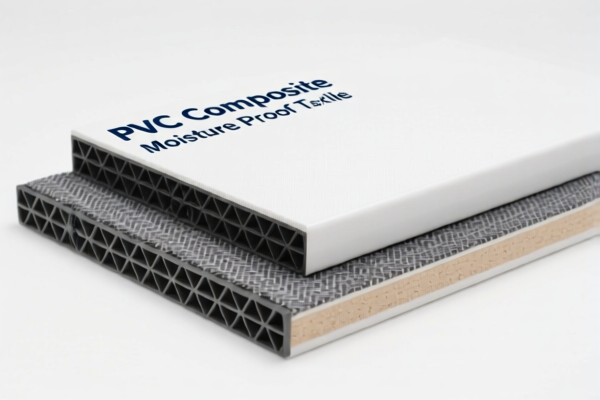
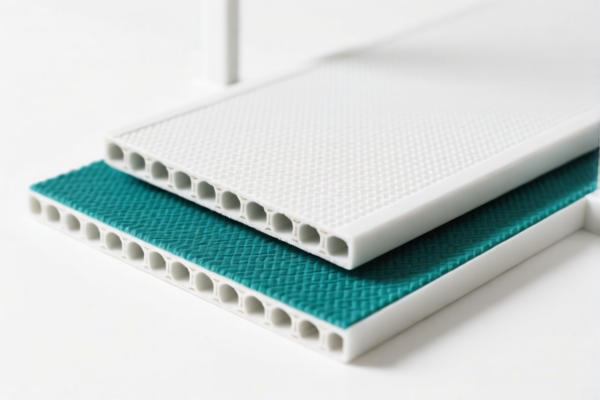
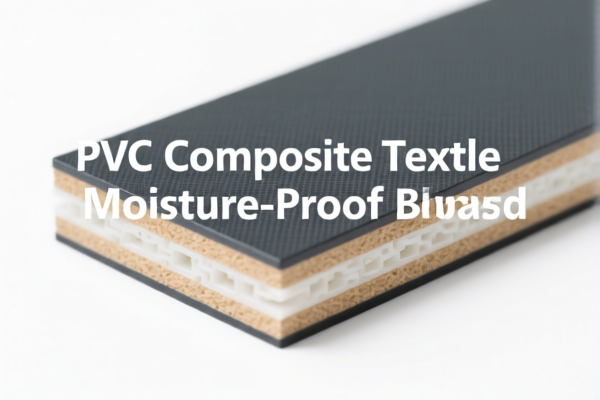
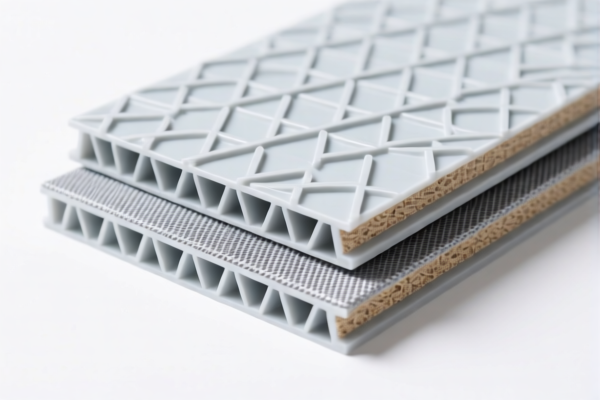
PVC Composite Cloth Moisture Proof Boards are versatile building materials used primarily for interior wall decoration, moisture protection, and insulation. They consist of a Polyvinyl Chloride (PVC) base, often reinforced or laminated with composite cloth to enhance durability, flexibility, and moisture resistance.
In international trade, these products are often misclassified because they straddle two main categories: 1. Plastic Plates/Sheets/Stripes (Chapter 39.01-39.14): If the product is primarily viewed as a manufactured plastic sheet. 2. Plastic Articles for Buildings (Chapter 39.25): If the product is specifically designed and shaped as a construction component.
⚠️ Key Distinction Point:
- If the board is considered a general-purpose plastic sheet that can be used for various industrial or household purposes beyond just building, it may fall under 3921.
- If the board is specifically identified as a construction component (e.g., wall paneling, cladding), it may fall under 3925.
- Note on "Composite Cloth": The presence of composite cloth does not automatically change the HS Code to textile (Chapter 63); if PVC is the essential character, it remains under Chapter 39.
📦 II. HS Code Classification Details (2026 Latest Tariff Authority Cross-Reference)
Based on the provided data, here are the four potential HS Codes for this product, ranked by likelihood and risk:
| HS Code | Product Description | Application Scenario | Tax Rate (Total) | Risk Level |
|---|---|---|---|---|
3925.20.00.91 |
PVC Wall Moisture Proof Board, PVC Material, Belongs to Plastic Building Components | Interior wall cladding, decorative wall panels | 22.8% | ✅ Low (Most Likely) |
3925.90.00.00 |
PVC Wall Moisture Proof Board, PVC Material, Use: Building Component, Other Plastic Building Components | General building components not elsewhere specified | 40.3% | ⚠️ Medium |
3921.12.19.50 |
PVC Wall Moisture Proof Board, PVC Material, Form: Sheet, Other Vinyl Polymer Sheets | General purpose PVC sheets, not specifically shaped as building parts | 40.3% | ⚠️ Medium |
3921.12.50.00 |
PVC Wall Moisture Proof Board, PVC Material, Form: Sheet, Fitting Description of Vinyl Polymer Sheets | Generic PVC plates/sheets | 41.5% | ❌ High (Highest Tax) |
🔍 Key Reminder:
-3925.20.00.91is the most favorable code (22.8% total tax) if the product is clearly marketed and used as a building component (e.g., wall panel).
-3921.12.50.00carries the highest tax burden (41.5%). Misclassifying a building-specific panel as a generic "sheet" can lead to severe penalties.
- The term "Composite Cloth" is descriptive of the material composition but does not override the primary characteristic of PVC as the base material.
💰 III. 2026 Latest Tariff Rate Breakdown (Including Surcharges & Policy Add-ons)
✅ Applicable Country: United States (US)
✅ Country of Origin: China (CN)
✅ Effective Date: From November 10, 2025 (and subsequent imports)
🎯 1. 3925.20.00.91 — Plastic Building Components (Most Recommended)
| Item | Content |
|---|---|
| Base Tariff | 5.3% (ad valorem) |
| Section 301 Surcharge | +7.5% |
| Section 122 Surcharge | +10% |
| Total Tax Rate | 22.8% |
| Tax Calculation | CIF Value × 22.8% |
| De Minimis Eligibility | ❌ Not Eligible (Due to Section 301 & 122 surcharges) |
| Legal Basis Path | USITC:3925.20.00.91 → USITC:Footnote 301 → USITC:Footnote 122 |
📌 Explanation:
- Base Tariff (5.3%): Standard MFN rate for plastic building articles.
- Section 301 Surcharge (7.5%): Applied to specific Chinese imports under the 301 Trade Action.
- Section 122 Surcharge (10%): Applied under Section 122 of the Trade Expansion Act for national security reasons.
- Total 22.8%: This is the lowest effective rate among the options, provided the product qualifies as a "Building Component."
🎯 2. 3925.90.00.00 — Other Plastic Building Components
| Item | Content |
|---|---|
| Base Tariff | 5.3% |
| Section 301 Surcharge | +25.0% |
| Section 122 Surcharge | +10% |
| Total Tax Rate | 40.3% |
| Tax Calculation | CIF Value × 40.3% |
| De Minimis Eligibility | ❌ Not Eligible |
| Legal Basis Path | USITC:3925.90.00.00 → USITC:Footnote 301 → USITC:Footnote 122 |
📌 Note:
- If the product does not fit neatly into3925.20(specific subheading), it falls into the "Other" category (3925.90), which attracts a higher Section 301 surcharge (25%).
- This highlights the importance of precise subheading classification.
🎯 3. 3921.12.19.50 — Other Vinyl Polymer Plates, Sheets, etc.
| Item | Content |
|---|---|
| Base Tariff | 5.3% |
| Section 301 Surcharge | +25.0% |
| Section 122 Surcharge | +10% |
| Total Tax Rate | 40.3% |
| Tax Calculation | CIF Value × 40.3% |
| De Minimis Eligibility | ❌ Not Eligible |
| Legal Basis Path | USITC:3921.12.19.50 → USITC:Footnote 301 → USITC:Footnote 122 |
📌 Note:
- Classified as a generic vinyl polymer sheet. Higher surcharge than the building component category.
🎯 4. 3921.12.50.00 — Vinyl Polymer Plates, Sheets, etc.
| Item | Content |
|---|---|
| Base Tariff | 6.5% |
| Section 301 Surcharge | +25.0% |
| Section 122 Surcharge | +10% |
| Total Tax Rate | 41.5% |
| Tax Calculation | CIF Value × 41.5% |
| De Minimis Eligibility | ❌ Not Eligible |
| Legal Basis Path | USITC:3921.12.50.00 → USITC:Footnote 301 → USITC:Footnote 122 |
📌 Note:
- This is the highest tax rate. It applies if the product is deemed a generic sheet without specific building application characteristics. Avoid this classification unless absolutely necessary.
🛠️ IV. Customs Clearance Practical Advice (Real-World Pitfall Avoidance Guide)
✅ 1. Preparation Checklist (缺一不可)
| Document | Required | Explanation |
|---|---|---|
| ✅ Product Specifications | ✔️ | Include dimensions, thickness, material composition (PVC %, cloth type), moisture resistance rating. |
| ✅ Product Photos | ✔️ | Clear images of the board, packaging, and any labels showing "Wall Panel," "Building Material," or "Moisture Proof." |
| ✅ Commercial Invoice | ✔️ | Clearly state: "PVC Composite Cloth Moisture Proof Board, for Interior Wall Construction." Avoid vague terms like "Plastic Sheet." |
| ✅ Bill of Lading | ✔️ | Ensure description matches invoice. |
| ✅ Proof of Building Application | ✔️ | If possible, include catalogues, installation guides, or B2B contracts showing end-use in construction. |
✅ 2. Declaration Strategy (Key Mnemonic)
🔥 “Buildings First, Sheets Last, Specific Subheading Saves Cash!”
| Scenario | Correct Declaration | Incorrect Action |
|---|---|---|
| Product is a wall panel/cladding | 3925.20.00.91 (22.8%) |
Misdeclare as "Plastic Sheet" → 41.5% |
| Product is a generic roll/sheet | 3921.12.xxxx (40.3%-41.5%) |
Misdeclare as "Building Component" → Risk of fraud penalty |
| Product is for exterior use | 3925.20.00.91 if applicable |
Use 3925.90 if no specific subheading → 40.3% |
✅ 3. Special Case Handling
| Scenario | Handling Advice |
|---|---|
| OEM Custom Boards | Provide client orders and design specs to prove specific building use. |
| Mixed Containers | If mixed with non-Section 301 goods, ensure proper segregation and documentation to avoid cross-contamination of tariff rates. |
| "Composite Cloth" Argument | Do NOT argue for textile classification (Chapter 63) unless PVC is not the essential character. Customs will likely reject this. |
| Pre-Ruling Application | Strongly recommended to apply for an Advance Ruling from US CBP before shipment, especially if the "Building Component" status is borderline. |
🌍 V. Global Main Market Comparison (2026 Latest)
| Country/Region | Recommended HS Code | Tariff | Certification | Remarks |
|---|---|---|---|---|
| 🇺🇸 USA | 3925.20.00.91 |
22.8% | None specific | 301 & 122 surcharges apply. |
| 🇨🇳 China | 3925.20.00.91 |
5% | CCC (if applicable) | No surcharges. |
| 🇪🇺 EU | 3925.90.00.00 |
4% | CE (if applicable) | No Section 301/122. |
| 🇬🇧 UK | 3925.20.00.91 |
4% | UKCA | Post-Brexit rules apply. |
| 🇦🇺 Australia | 3925.20.00.91 |
5% | RCM | No major surcharges. |
📌 Conclusion:
- The US is the most challenging market due to Section 301 and Section 122 surcharges.
- Classification as3925.20.00.91is critical to minimize the tax burden from 41.5% to 22.8%.
- Documentation proving "Building Component" use is the key to unlocking the lower rate.
📌 VI. Common Errors & Pitfalls (Lessons Learned the Hard Way)
❌ Error 1: Declaring "PVC Wall Panels" as "Plastic Plates" (3921.12.50.00)
👉 Consequence: Tax rate jumps from 22.8% to 41.5% → Extra cost of ~18.7% on CIF value!
❌ Error 2: Failing to specify "Building Component" in the commercial invoice
👉 Consequence: CBP may reclassify to 3925.90.00.00 or 3921 categories → 40.3% or 41.5% tax + potential penalties.
❌ Error 3: Using vague terms like "Decorative Sheet" without context
👉 Consequence: Ambiguity leads to higher scrutiny and potential misclassification.
❌ Error 4: Assuming "Composite Cloth" changes the material classification to Textile
👉 Consequence: CBP will reject under Section 32 (Textiles) and revert to Chapter 39, potentially with higher duties if not properly declared.
✅ Correct Approach:
“PVC Composite Cloth Moisture Proof Board, Specifically Designed for Interior Wall Cladding, HS Code 3925.20.00.91”
🎯 VII. Conclusion: Professional Declaration, Save Time, Reduce Costs!
🎯 Remember the Mantra:
🔹 “Building Component = 22.8%, Generic Sheet = 41.5%, Difference is Huge!”
🔹 “Specific Subheading Saves Money, Vague Declaration Costs Fortune!”
📌 Pro Tip:
If your PVC boards are sourced from Vietnam, Mexico, Thailand, or Malaysia, you may be eligible for IEEPA Exemptions or lower Section 301 rates.
Strongly Recommend: Applying for an Advance Ruling from US CBP to confirm the 3925.20.00.91 classification before shipment.
📣 Immediate Action:
📞 Contact a Professional Customs Broker + Provide Product Photos + Apply for HS Code Advance Ruling
🚀 Let your PVC Boards Clear Customs Smoothly, Efficiently Go Overseas, and Double Profits!
✨ Professional Customs Clearance Starts with Accurate Classification!
💼 Every Penny of Your Cost Deserves to be Precisely Calculated!
Customer Reviews
About HS Code Classification
The Harmonized System (HS) is an internationally standardized nomenclature developed by the World Customs Organization (WCO) to classify traded products. Over 200 countries use the HS system as the basis for customs tariffs, trade statistics, and import/export regulations.
Each HS code follows a hierarchical structure:
- Chapter (2 digits) — Broad category of goods (e.g., Chapter 84: Machinery and Mechanical Appliances)
- Heading (4 digits) — More specific grouping within the chapter
- Subheading (6 digits) — Internationally standardized breakdown, used by all WCO member countries
- National subdivisions (8-10 digits) — Country-specific extensions for further classification, such as US HTSUS 10-digit codes
Correct HS code classification is essential for smooth customs clearance, accurate duty payment, and compliance with trade regulations. Misclassification can lead to customs delays, overpayment of duties, or penalties.
When importing from CN to US, the applicable tariff rates may include:
- Most-Favored-Nation (MFN) rate — The standard duty rate applied to WTO members
- General rate — Applied to countries without trade agreements
- Trade remedy duties — Additional tariffs such as Section 301 (anti-dumping), Section 232 (national security), or countervailing duties
The information provided on this page is for reference purposes only. For official classification, please consult with your local customs authority or a licensed customs broker.