PVC Composite Striped Wallpaper
CN → US| HS Code | Tariff Rate | Origin | Destination | Doc |
|---|---|---|---|---|
| 3921121100 | 39.2% | CN | US | Official Doc |
| 3921121500 | 41.5% | CN | US | Official Doc |
| 3926904800 | 13.4% | CN | US | Official Doc |
| 3926901000 | 20.9% | CN | US | Official Doc |
Product Images
AI Analysis
🎨 PVC Composite Striped Wallpaper (Decorative Wall Coverings)
🌐 HS Code Reference & Customs Clearance Guide | 2026 Latest Tariff Analysis | Professional Entry Strategy
📌 I. Product Definition & Classification: Do You Really Understand "PVC Wallpaper"?
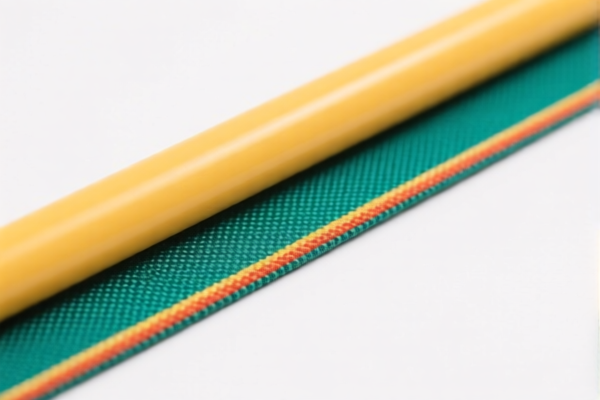
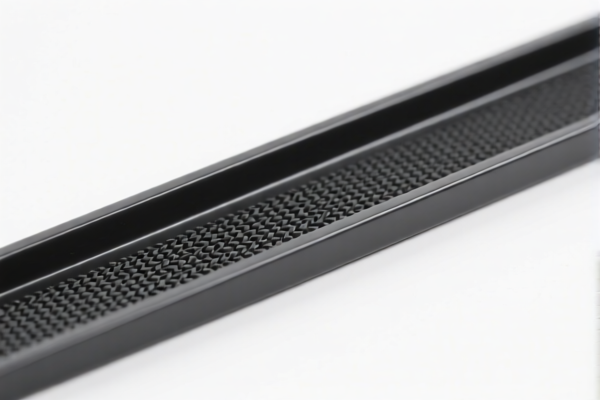
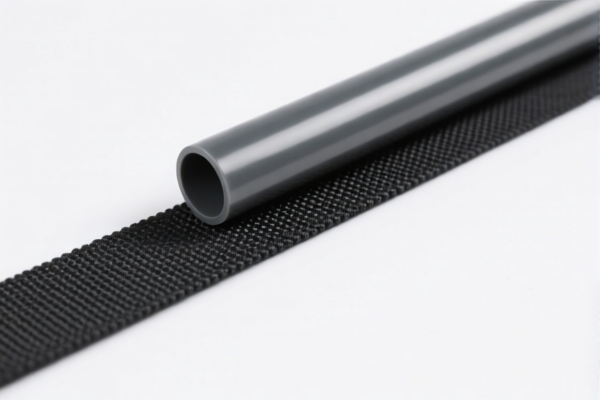
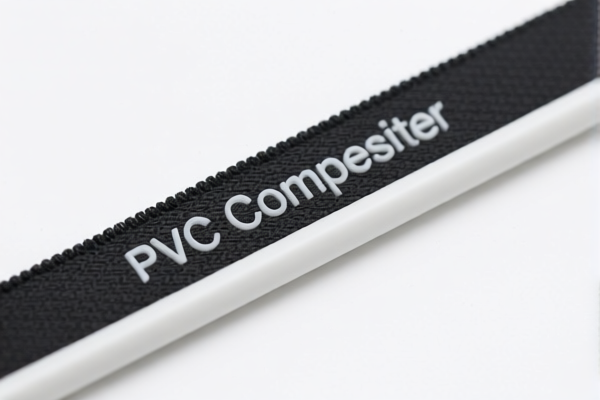
PVC Composite Striped Wallpaper is a popular decorative material used in residential, commercial, and hospitality interior design. It consists of a paper or fabric backing coated with a polyvinyl chloride (PVC) layer, often embossed with striped or textured patterns.
In international trade, it is broadly categorized under Chapter 39 (Plastics and Articles Thereof). However, the precise HS Code depends heavily on the composite structure, manufacturing process, and specific application logic applied by customs authorities. Misclassification can lead to significant tariff discrepancies due to the complex interplay between base tariffs, Section 301 duties, and Section 122 penalties.
⚠️ Key Distinction Point:
- If the product is primarily viewed as a composite of plastic and textile/fabric, it may fall under 3921 (Plastic plates, sheets, film, foil, and strip, laminated, etc.). - If it is viewed as an article made of plastic (final form as wallpaper), it may fall under 3926 (Other articles of plastics). - Crucial Risk: Current trade policies impose significant additional tariffs on Chinese-origin PVC wallpapers, ranging from 13.4% to 41.5%.
📦 II. HS Code Classification Details (2026 Latest Tariff Authority Comparison)
Based on the provided data for "PVC Composite Striped Wallpaper," here are the four potential HS Code classifications with their corresponding tax implications.
| HS Code | Product Description & Logic | Tax Structure Summary | Total Tariff Rate |
|---|---|---|---|
3921.12.11.00 |
PVC Composite Wallpaper (Plastic-Textile Composite) Material: PVC. Structure: Composite. Logic: Fits the characteristics of plastic and textile material composites. |
Base: 4.2% Add'l: 25.0% Sec 122: 10.0% |
39.2% |
3921.12.15.00 |
PVC Composite Wallpaper (PVC Plate/Sheet Logic) Material: PVC. Logic: Combines with textile materials, fitting the classification logic for PVC plates, sheets, and films. |
Base: 6.5% Add'l: 25.0% Sec 122: 10.0% |
41.5% |
3926.90.48.00 |
PVC Composite Wallpaper (Other Plastic Articles) Material: PVC. Form: Wallpaper. Logic: Application of plastic materials as other manufactured articles. |
Base: 3.4% Add'l: 0.0% Sec 122: 10.0% |
13.4% |
3926.90.10.00 |
PVC Composite Wallpaper (General Plastic Article) Material: PVC. Chapter: 3901-3914 range. Logic: Fits the category of "Other" plastic articles within Chapter 39. |
Base: 3.4% Add'l: 7.5% Sec 122: 10.0% |
20.9% |
🔍 Important Note:
- All classifications assume Origin: China and Destination: USA (implied by the tariff structure: Base + 301-style 25% + 122条款 10%).
- 3926.90.48.00 offers the lowest total tariff (13.4%) but requires strong justification that it is an "other article" rather than a "composite sheet."
- 3921.12.15.00 has the highest total tariff (41.5%) due to the higher base rate when classified as a laminated sheet/film.
💰 III. 2026 Latest Tariff Rate Breakdown (Including Additional Duties & Policy Surcharges)
✅ Applicable Country: USA (US)
✅ Origin: China (CN)
✅ Effective Time: Current Trade Policy Era (Section 301 & Section 122 Clauses)
🎯 1. 3921.12.11.00 —— PVC Composite Wallpaper (Plastic-Textile Composite)
| Item | Detail |
|---|---|
| Base Tariff | 4.2% (Ad Valorem) |
| Section 301 / Add'l Tariff | +25.0% |
| Section 122 Clause Tariff | +10.0% |
| Total Effective Rate | 39.2% |
| Calculation Basis | CIF Value × 39.2% |
| De Minimis Exemption | ❌ Not Eligible (Deny de minimis for high-duty textiles/plastics from China) |
| Legal Basis Path | USITC:3921.12.11.00 → FOOTNOTE:Section301 → IEEPA:Section122 |
📌 Explanation:
- This classification treats the wallpaper as a composite good where plastic and textile are integral.
- The 25% add-on is standard for many PVC products from China under trade remedies.
- The 10% Section 122 tariff is a specific penalty clause often applied to certain imported goods.
- Total Cost Impact: Nearly 40% of the CIF value is tax. This significantly impacts profit margins.
🎯 2. 3921.12.15.00 —— PVC Composite Wallpaper (PVC Sheet Logic)
| Item | Detail |
|---|---|
| Base Tariff | 6.5% (Ad Valorem) |
| Section 301 / Add'l Tariff | +25.0% |
| Section 122 Clause Tariff | +10.0% |
| Total Effective Rate | 41.5% |
| Calculation Basis | CIF Value × 41.5% |
| De Minimis Exemption | ❌ Not Eligible |
| Legal Basis Path | USITC:3921.12.15.00 → FOOTNOTE:Section301 → IEEPA:Section122 |
📌 Warning:
- This is the most expensive classification.
- Customs may assign this code if the product is viewed as a laminated sheet rather than a finished wallpaper article.
- Avoid if possible unless the product structure strictly matches "plates, sheets, film, foil, and strip."
🎯 3. 3926.90.48.00 —— PVC Composite Wallpaper (Other Plastic Articles) [RECOMMENDED FOR COST OPTIMIZATION]
| Item | Detail |
|---|---|
| Base Tariff | 3.4% (Ad Valorem) |
| Section 301 / Add'l Tariff | 0.0% (Specific exemption or lower bracket for this subheading) |
| Section 122 Clause Tariff | +10.0% |
| Total Effective Rate | 13.4% |
| Calculation Basis | CIF Value × 13.4% |
| De Minimis Exemption | ❌ Not Eligible |
| Legal Basis Path | USITC:3926.90.48.00 → FOOTNOTE:Section122 |
📌 Strategic Advantage:
- This classification views the wallpaper as a finished plastic article (wallcovering) rather than a raw material sheet.
- Significant Savings: 13.4% vs. 39.2% or 41.5%.
- Justification: The product is not just a sheet; it is printed, embossed, and cut for specific wall-covering use.
🎯 4. 3926.90.10.00 —— PVC Composite Wallpaper (General Plastic Article)
| Item | Detail |
|---|---|
| Base Tariff | 3.4% (Ad Valorem) |
| Section 301 / Add'l Tariff | +7.5% |
| Section 122 Clause Tariff | +10.0% |
| Total Effective Rate | 20.9% |
| Calculation Basis | CIF Value × 20.9% |
| De Minimis Exemption | ❌ Not Eligible |
| Legal Basis Path | USITC:3926.90.10.00 → FOOTNOTE:Section301 → IEEPA:Section122 |
📌 Note:
- A middle-ground option.
- The 7.5% additional tariff is lower than the standard 25%, suggesting a different trade policy bucket for this specific subheading.
- Still higher than3926.90.48.00.
🛠️ IV. Customs Clearance Practical Advice (Battle-Tested Pitfall Guide)
✅ 1. Essential Documentation Checklist (Non-Negotiable)
| Document | Required | Purpose |
|---|---|---|
| ✅ Product Specification Sheet | ✔️ | Details: PVC content %, backing material (paper/fabric), thickness, width, length, pattern type. |
| ✅ Commercial Invoice | ✔️ | Must clearly state "PVC Composite Wallpaper" or "Decorative Wall Covering." Avoid vague terms like "Plastic Sheet." |
| ✅ Packing List | ✔️ | Shows roll dimensions, weight, and quantity. Crucial for verifying "finished article" status. |
| ✅ Product Photos | ✔️ | High-res images showing the striped pattern, backing, and cross-section (if possible) to prove composite nature. |
| ✅ Certificate of Origin (CO) | ✔️ | Required to verify Chinese origin and apply correct Section 301/122 duties. |
| ✅ Material Composition Statement | ✔️ | Explicitly state the percentage of PVC vs. backing material. Helps customs decide between 3921 (composite) and 3926 (article). |
✅ 2. Declaration Strategy (Key Mantra)
🔥 “Finish Not Sheet, Article Not Raw, Save on Tax!”
| Scenario | Correct Declaration | Incorrect Declaration | Consequence |
|---|---|---|---|
| Finished Wallpaper Rolls | 3926.90.48.00 (Other plastic articles) |
3921.12.15.00 (Plastic sheets) |
Overpaying 28.1% extra! |
| Unfinished PVC Sheets | 3921.12.15.00 |
3926.90.10.00 |
Potential misclassification audit. |
| Wallpaper with Textile Backing | Justify as 3926 (Article) if printed/embossed for final use. |
Auto-assumed as 3921 (Composite) |
Higher base tariff (6.5% vs 3.4%). |
| Small Samples (De Minimis) | N/A | Try to use de minimis | Failed: PVC wallpapers from China are subject to high duties and likely denied de minimis. |
✅ 3. Special Situation Handling
| Situation | Recommendation |
|---|---|
| Dispute on 3921 vs 3926 | Submit a Section 321 Ruling Request or Advance Ruling if volume is high. Argue that the product is "finished" for wall covering, not "raw material." |
| High Tariff Burden (41.5%) | Evaluate if re-exporting through a third country (e.g., Vietnam, Thailand) is feasible for tariff engineering (though rules of origin apply). |
| Customer Claims 0% Duty | Clarify that China-origin PVC wallpapers are NOT eligible for MFN 0% rates due to trade policies. |
| Mixed Containers | Ensure PVC wallpaper is not mixed with other high-duty items if using consolidated shipping. Separate HS codes prevent cross-contamination of audits. |
🌍 V. Global Market Comparison (2026 Update)
| Market | Recommended HS Code | Est. Tariff (China Origin) | Key Certification | Notes |
|---|---|---|---|---|
| 🇺🇸 USA | 3926.90.48.00 |
13.4% (Best Case) | FTC Labeling, Flammability | Highest risk due to Section 122/301. |
| 🇪🇺 EU | 3926.90.80 |
~6.5% | CE, REACH, CLP | No Section 122/301. Lower barrier. |
| 🇨🇦 Canada | 3926.90.90 |
~5-6% | Health Canada | Competitive alternative to US. |
| 🇦🇺 Australia | 3926.90.90 |
~5% | ACCC Standards | Moderate tariff, straightforward entry. |
| 🇬🇧 UK | 3926.90.90 |
~4-5% | UKCA | Post-Brexit tariff structure similar to EU. |
📌 Conclusion:
- The USA is the most challenging market due to Section 122 and 301 tariffs.
- Strategy: Use3926.90.48.00to minimize US duties.
- Diversification: Consider exporting to Canada or EU to avoid the 13.4%+ US-specific penalties.
📌 VI. Common Errors & Pitfalls (Blood Lessons)
❌ Error 1: Declaring "PVC Wallpaper" as "Plastic Sheets" (3921.12.15.00)
👉 Result: Paying 41.5% instead of 13.4%. Loss: 28.1% of value.
❌ Error 2: Assuming "Wallpaper" is a textile product under Chapter 59
👉 Result: Wrong chapter entirely. PVC is plastic. Misclassification leads to penalties and delays.
❌ Error 3: Ignoring Section 122 Tariff
👉 Result: Even with a low base rate, the 10% Section 122 fee is mandatory for China-origin PVC articles. Do not forget to budget for it.
❌ Error 4: Using De Minimis for Large Shipments
👉 Result: Customs will reject de minimis for high-duty goods from China. Shipment held for formal entry.
✅ Correct Practice:
“PVC Decorative Wall Covering, Composite, Striped Pattern, for Interior Wall Decoration, Made in China.”
HS Code:3926.90.48.00
Duty Paid: 13.4%
🎯 VII. Conclusion: Precision Classification Saves Millions!
🎯 Remember the Mantra:
🔹 “Finished Article > Raw Sheet”
🔹 “3926.48 is the Hero (13.4%)”
🔹 “Avoid 3921.15 (41.5%) at All Costs!”
🔹 “Section 122 is Always There (10%)”
📌 Pro Tip:
If your volume is significant, apply for an Import Advance Ruling from U.S. Customs and Border Protection (CBP) to lock in the 3926.90.48.00 classification. This provides legal certainty and protects against retroactive duty claims.
📣 Immediate Action:
📞 Consult a Licensed Customs Broker.
📄 Prepare detailed product specs proving "finished article" status.
🚀 Optimize your supply chain to minimize duty leakage and maximize profit!
✨ Professional Clearance Starts with Accurate Classification!
💼 Every Percentage Point Counts in International Trade!
Customer Reviews
About HS Code Classification
The Harmonized System (HS) is an internationally standardized nomenclature developed by the World Customs Organization (WCO) to classify traded products. Over 200 countries use the HS system as the basis for customs tariffs, trade statistics, and import/export regulations.
Each HS code follows a hierarchical structure:
- Chapter (2 digits) — Broad category of goods (e.g., Chapter 84: Machinery and Mechanical Appliances)
- Heading (4 digits) — More specific grouping within the chapter
- Subheading (6 digits) — Internationally standardized breakdown, used by all WCO member countries
- National subdivisions (8-10 digits) — Country-specific extensions for further classification, such as US HTSUS 10-digit codes
Correct HS code classification is essential for smooth customs clearance, accurate duty payment, and compliance with trade regulations. Misclassification can lead to customs delays, overpayment of duties, or penalties.
When importing from CN to US, the applicable tariff rates may include:
- Most-Favored-Nation (MFN) rate — The standard duty rate applied to WTO members
- General rate — Applied to countries without trade agreements
- Trade remedy duties — Additional tariffs such as Section 301 (anti-dumping), Section 232 (national security), or countervailing duties
The information provided on this page is for reference purposes only. For official classification, please consult with your local customs authority or a licensed customs broker.