PVC Composite Textile Board
CN → US| HS Code | Tariff Rate | Origin | Destination | Doc |
|---|---|---|---|---|
| 5911102000 | 38.8% | CN | US | Official Doc |
| 5903102090 | 35.0% | CN | US | Official Doc |
| 5911101000 | 37.9% | CN | US | Official Doc |
| 5903102010 | 35.0% | CN | US | Official Doc |
| 3926905900 | 37.4% | CN | US | Official Doc |
Product Images
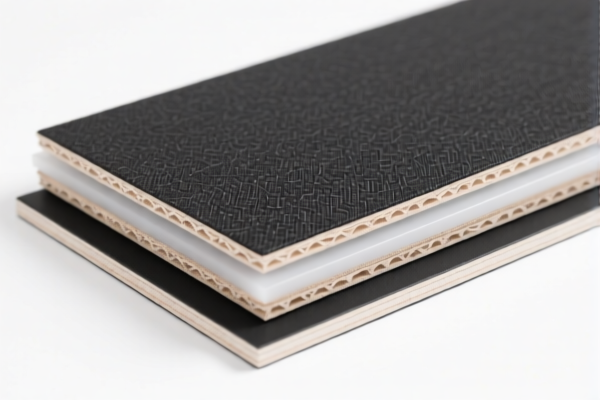
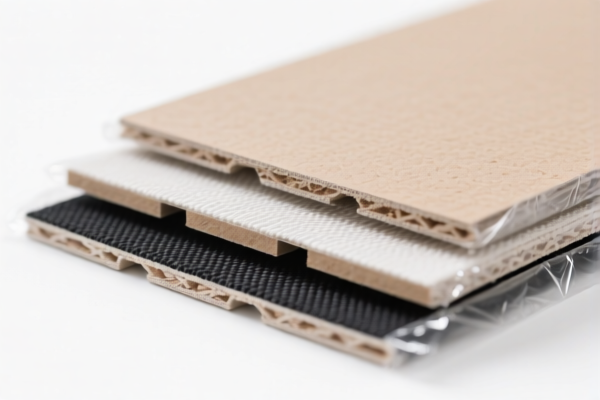
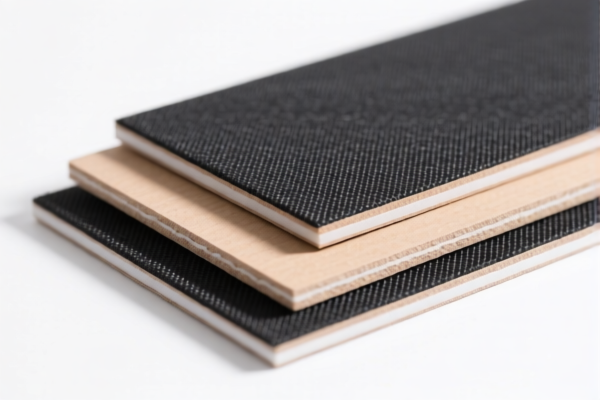
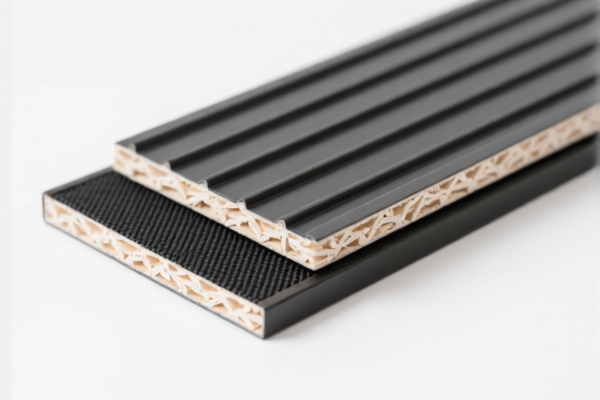
AI Analysis
🧵 PVC Composite Textile Board (PVC复合纺织条/板)
🌐 HS Code Reference & Customs Clearance Guide | 2026 Latest Tariff Analysis | Professional Clearance Strategy
📌 I. Product Definition & Classification: Do You Really Understand "PVC Composite Textile"?
PVC Composite Textile Board refers to a material where Polyvinyl Chloride (PVC) is compounded with textile substrates. In international trade, the classification hinges on the primary function, manufacturing process, and structural integrity of the composite.
Key Distinctions: * Industrial/Technical Textiles (HS 5911): If the textile is treated for technical use (e.g., filtration, strengthening, or coating for machinery parts), it falls under Chapter 59, Section XI. * Plastic-Coated Textile Fabrics (HS 5903): If the textile is impregnated, coated, covered, or laminated with PVC (plastic), it is classified under Chapter 59 as plastic-coated textiles. * Articles of Plastic (HS 3926): If the textile component is minor or the product is viewed primarily as a rigid/plastic board with minimal textile integration, it might be misclassified as general plastic articles.
⚠️ Critical Classification Point:
- If the textile serves as a structural reinforcement for a technical application → HS 5911.
- If the product is a fabric/strip heavily coated/laminated with PVC → HS 5903.
- If the product is considered a general plastic article with some textile fiber content → HS 3926 (Higher Risk of Rejection).
📦 II. HS Code Classification Details (2026 Latest Tariff Authority Comparison)
Based on the provided data, here are the five potential HS codes with their corresponding tax structures for US imports from China:
| HS Code | Product Description & Rationale | Tax Rate Structure | Total Tax |
|---|---|---|---|
| 5911.10.20.00 | Technical Textiles: Classified under "Other articles" for technical use. Material matches coated/covered textile strips. | Base: 3.8% Section 301: 25.0% Section 122: 10.0% |
38.8% |
| 5903.10.20.90 | PVC-Coated Textiles: PVC corresponds to polyvinyl chloride; "Composite" implies impregnation/coating/lamination. Textile strip is a fabric variant. | Base: 0.0% Section 301: 25.0% Section 122: 10.0% |
35.0% |
| 5911.10.10.00 | Reinforced Textiles: Textile is the base material; PVC composite matches the feature of fabrics coated/laminated with other materials. | Base: 2.9% Section 301: 25.0% Section 122: 10.0% |
37.9% |
| 5903.10.20.10 | Specific PVC Laminates: PVC is polyvinyl chloride; composite textile implies impregnated/laminated fabric. Material and form match. | Base: 0.0% Section 301: 25.0% Section 122: 10.0% |
35.0% |
| 3926.90.59.00 | Plastic Articles: Product material is PVC plastic containing textile components. Fits characteristics of plastic goods with textile fibers. | Base: 2.4% Section 301: 25.0% Section 122: 10.0% |
37.4% |
🔍 Key Insight:
- HS 5903 Codes (10 & 90) offer the lowest base tax (0%) but still incur the full 35% total effective rate due to US trade measures.
- HS 5911 Codes are for technical/industrial applications. If your "board" is used for filtration, insulation, or machinery, this is the more accurate technical classification.
- HS 3926 is generally used for finished plastic goods. If the textile is merely embedded in a plastic matrix without being a structural fabric, this may apply, but it carries a risk of being scrutinized as a textile product if the textile layer is dominant.
💰 III. 2026 Latest Tariff Rate Details (Including Surcharges & Policy Add-ons)
✅ Applicable Country: United States (US)
✅ Origin: China (CN)
✅ Effective Date: November 10, 2025 (and subsequent imports)
🎯 1. 5903.10.20.10 & 5903.10.20.90 —— PVC-Coated Textile Strips/Fabrics
| Item | Detail |
|---|---|
| Base Tariff Rate | 0.0% (ad valorem) |
| USITC Surcharge (Sec. 301) | +25% (From USITC Footnote 9903.88.01 / Section 301 List 4B) |
| IEEPA Surcharge | +10% (Against China/HK products, effective Nov 10, 2025) |
| Total Effective Rate | 35.0% |
| Tax Calculation | CIF Value × 35.0% |
| De Minimis Exemption? | ❌ NO (deny_de_minimis) |
| Legal Basis Path | IEEPA:9903.01.25 → IEEPA:9903.01.24 → USITC:5903.10.20.10/90 → FOOTNOTE:9903.88.01 |
📌 Explanation:
- These codes classify the product as plastic-coated textile fabrics.
- The 0% base rate is misleading; the 25% Section 301 tariff and 10% IEEPA tariff apply, resulting in a 35% total.
- Warning: If declared as "PVC Board" without referencing textile composition, CBP may reclassify it under HS 5911 or 3926, leading to discrepancies.
🎯 2. 5911.10.20.00 & 5911.10.10.00 —— Technical Textiles (Coated/Laminated)
| Item | Detail |
|---|---|
| Base Tariff Rate | 3.8% (for .20) / 2.9% (for .10) |
| USITC Surcharge (Sec. 301) | +25% |
| IEEPA Surcharge | +10% |
| Total Effective Rate | 38.8% / 37.9% |
| Tax Calculation | CIF Value × Total Rate |
| De Minimis Exemption? | ❌ NO |
| Legal Basis Path | IEEPA:9903.01.25 → IEEPA:9903.01.24 → USITC:5911.10.xx → FOOTNOTE:9903.88.01 |
📌 Explanation:
- These codes apply if the textile is used for technical purposes (e.g., filters, gaskets, strengthening layers).
- The base tariff is slightly higher than HS 5903, but the total rate is only ~1-3% higher than the 5903 codes.
- Crucial: You must provide evidence of the technical use of the textile substrate.
🎯 3. 3926.90.59.00 —— Other Plastic Articles
| Item | Detail |
|---|---|
| Base Tariff Rate | 2.4% |
| USITC Surcharge (Sec. 301) | +25% |
| IEEPA Surcharge | +10% |
| Total Effective Rate | 37.4% |
| Tax Calculation | CIF Value × 37.4% |
| De Minimis Exemption? | ❌ NO |
| Legal Basis Path | IEEPA:9903.01.25 → IEEPA:9903.01.24 → USITC:3926.90.59.00 |
📌 Explanation:
- This is a catch-all for plastic articles. If the textile is minimal or incidental, this might be used.
- Risk: CBP often rejects this classification for products with significant textile layers, directing them to Chapter 59 instead. This can lead to audits and back taxes.
🛠️ IV. Customs Clearance Practical Advice (Battle-Tested Pitfall Avoidance)
✅ 1. Document Checklist (All Required)
| Document | Required | Notes |
|---|---|---|
| ✅ Product Specification Sheet | ✔️ | Must detail: PVC percentage, textile type (polyester, cotton, etc.), coating thickness, technical function. |
| ✅ Material Composition Diagram | ✔️ | Show layers: Base textile → PVC coating/lamination → Any additional treatments. |
| ✅ Product Photos (Clear Labels) | ✔️ | Show flexibility, texture, and any markings. Differentiate between "fabric" and "rigid board". |
| ✅ Third-Party Test Reports | ✔️ | If claiming "Technical Use" (HS 5911), provide test results showing industrial application (e.g., filtration efficiency, tensile strength). |
| ✅ Commercial Invoice | ✔️ | Must accurately describe: "PVC Composite Textile Strip/Fabric for [Industrial Use]". Avoid vague terms like "Plastic Board". |
| ✅ Packing List | ✔️ | Indicate quantity, weight, and packaging type. |
✅ 2. Declaration Strategy (Key Mantra)
🔥 "Identify the Base, Declare the Coat, Specify the Use!"
| Scenario | Correct Declaration | Incorrect Practice |
|---|---|---|
| Coated Fabric/Strip | 5903.10.20.xx – "PVC-Coated Polyester Textile Strip" |
Declaring as "Plastic Sheet" → Risk of misclassification. |
| Technical Textile | 5911.10.10.00 – "Technical Textile for [Machine Part]" |
Declaring as "General Plastic Article" → High audit risk. |
| Rigid PVC Board with Fabric Backing | Analyze if fabric is structural. If yes → 5911 or 5903. If no → 3926. |
Using 3926 without justification for negligible textile. |
| Vague Description | "Composite Material" | CBP will assign worst-case duty or request reclassification. |
✅ 3. Special Cases Handling
| Case | Handling Advice |
|---|---|
| "Board" vs. "Strip" | If the product is flexible, it is likely a textile/fabric (HS 5903/5911). If it is rigid and non-flexible, it may be a plastic article (HS 3926), but CBP may still insist on Chapter 59 if textile is visible. |
| OEM/Custom Orders | Provide customer contracts and design specs to prove the intended industrial use, supporting HS 5911. |
| Mixed Materials | If the product has multiple layers, declare the principal material or the one that gives the product its essential character. For PVC+Textile, Chapter 59 usually prevails over Chapter 39. |
| Pre-Ruling Request | If uncertain, file an Application for Binding Ruling with CBP. This provides legal certainty on HS Code and tariff rate. |
🌍 V. Global Market Clearance Comparison (2026 Latest)
| Country/Region | Recommended HS Code | Tariff Rate | Certification Requirements | Notes |
|---|---|---|---|---|
| 🇺🇸 USA | 5903.10.20.xx or 5911.10.10.00 |
35.0% / 37.9% | None specific (General) | Highest cost due to 301 & IEEPA tariffs. |
| 🇨🇳 China | 5903.10.20.xx |
Varies (Import Duty) | CCC (if applicable) | Lower tariffs, but focus on export declarations. |
| 🇪🇺 EU | 5903.10.00 |
12% (General) | REACH, RoHS | No Section 301 equivalent. |
| 🇬🇧 UK | 5903.10.00 |
12% (General) | UKCA, REACH | Post-Brexit rules apply. |
| 🇯🇵 Japan | 5903.10.00 |
0% - 6% | PSE (if electrical) | FTA benefits may apply. |
📌 Conclusion:
- The US is the most expensive market for PVC composite textiles due to Section 301 (25%) and IEEPA (10%) tariffs.
- Total tariffs range from 35% to 38.8%, depending on the precise sub-classification.
- European and Asian markets are significantly cheaper (0-12%), making diversification advisable if possible.
📌 VI. Common Errors & Pitfalls (Blood Lessons)
❌ Error 1: Declaring "PVC Textile" as "Plastic Lumber" or "Composite Board"
👉 Consequence: CBP reclassifies to HS 5903/5911 → Back taxes + Penalties!
❌ Error 2: Omitting the textile component in the description
👉 Consequence: Underpayment of duties → Audit & Seizure!
❌ Error 3: Assuming "Board" means rigid plastic (HS 3926)
👉 Consequence: If the textile is structural, CBP may shift to HS 5911/5903 → Rate change from 37.4% to 35-38.8% (Minor difference, but accuracy is key).
✅ Correct Practice:
"PVC-Coated Polyester Textile Strip, Flexibility: Medium, Thickness: 0.5mm, Intended Use: Industrial Filtration"
🎯 VII. Conclusion: Professional Declaration Saves Money!
🎯 Remember the Mantra:
🔹 "Base Material Matters, Coating Defines the Code!"
🔹 "PVC + Textile = Chapter 59, Not Chapter 39!"
🔹 "Total Duty is 35-38%, No De Minimis!"
📌 Pro Tip:
If your product is flexible, it is almost certainly a textile product (Chapter 59).
If it is rigid, analyze if the textile is integral. If yes → Chapter 59. If no → Chapter 39.
Always declare the textile component explicitly to avoid CBP scrutiny.
📣 Immediate Action:
📞 Contact a licensed customs broker + Provide product samples + Apply for a Binding Ruling if unsure.
🚀 Ensure accurate HS Code to avoid costly delays and penalties!
✨ Professional Clearance Starts with Precise Classification!
💼 Your cost efficiency depends on accurate tariff engineering!
Customer Reviews
About HS Code Classification
The Harmonized System (HS) is an internationally standardized nomenclature developed by the World Customs Organization (WCO) to classify traded products. Over 200 countries use the HS system as the basis for customs tariffs, trade statistics, and import/export regulations.
Each HS code follows a hierarchical structure:
- Chapter (2 digits) — Broad category of goods (e.g., Chapter 84: Machinery and Mechanical Appliances)
- Heading (4 digits) — More specific grouping within the chapter
- Subheading (6 digits) — Internationally standardized breakdown, used by all WCO member countries
- National subdivisions (8-10 digits) — Country-specific extensions for further classification, such as US HTSUS 10-digit codes
Correct HS code classification is essential for smooth customs clearance, accurate duty payment, and compliance with trade regulations. Misclassification can lead to customs delays, overpayment of duties, or penalties.
When importing from CN to US, the applicable tariff rates may include:
- Most-Favored-Nation (MFN) rate — The standard duty rate applied to WTO members
- General rate — Applied to countries without trade agreements
- Trade remedy duties — Additional tariffs such as Section 301 (anti-dumping), Section 232 (national security), or countervailing duties
The information provided on this page is for reference purposes only. For official classification, please consult with your local customs authority or a licensed customs broker.