PVC Composite Textile Display Board
CN → US| HS Code | Tariff Rate | Origin | Destination | Doc |
|---|---|---|---|---|
| 3925900000 | 40.3% | CN | US | Official Doc |
| 3925200091 | 22.8% | CN | US | Official Doc |
| 3921121100 | 39.2% | CN | US | Official Doc |
| 3921121950 | 40.3% | CN | US | Official Doc |
| 5903102090 | 35.0% | CN | US | Official Doc |
Product Images
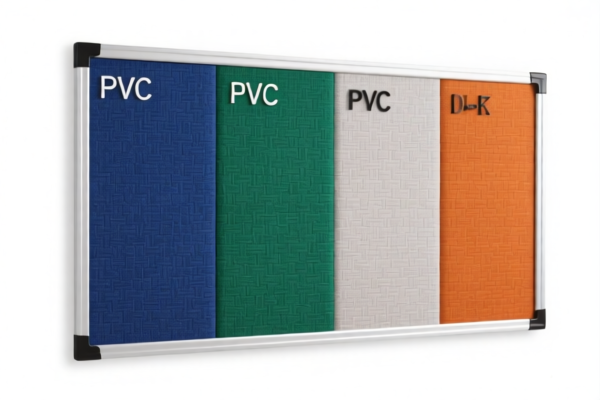
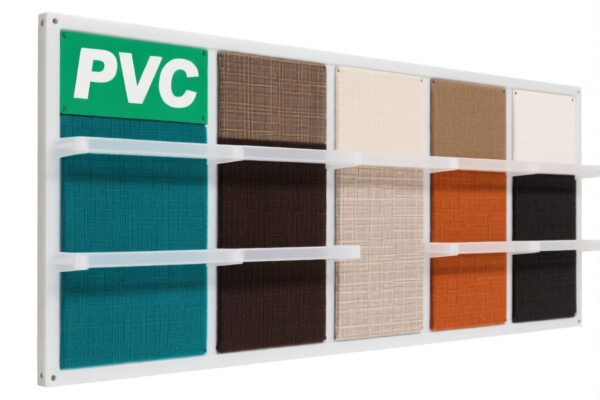
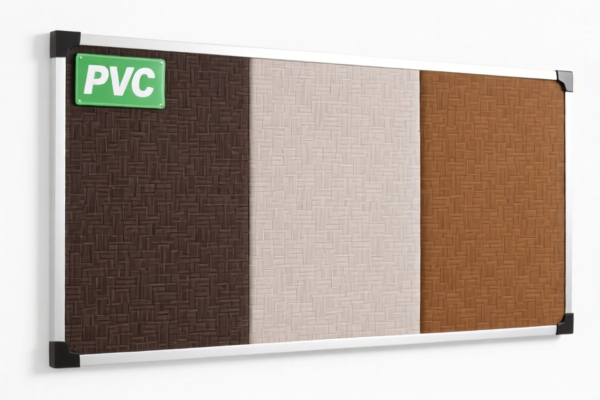
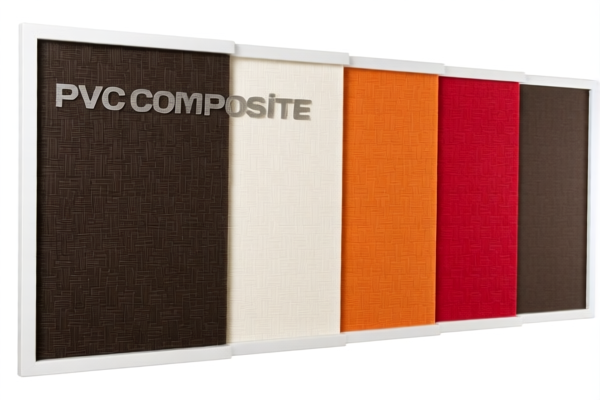
AI Analysis
🏗️ PVC Composite Textile Display Board (PVC复合纤维结构板/纺织品板)
🌐 HS Code Reference & Customs Clearance Guide | 2024 Latest Tariff Analysis | Professional Clearance Strategy
📌 I. Product Definition & Classification: Do You Really Understand "PVC Composite Textile Boards"?
The PVC Composite Textile Display Board is a hybrid construction material or display component, typically consisting of a PVC (Polyvinyl Chloride) core reinforced with or laminated to textile fibers. In international trade, its classification hinges on whether it is viewed as a structural plastic building component or a composite material involving textiles.
- Plastic Construction Parts: If the PVC structure dominates and the textile is merely a reinforcement layer, it may be classified under Chapter 39 (Plastics).
- Composite Materials: If the product is defined by the combination of PVC and textile materials for specific technical or display purposes, it falls under Chapter 39 (Plastics laminated with textiles) or Chapter 59 (Textiles impregnated/coated).
⚠️ Key Distinction Point: - If it is a rigid board used for construction/building purposes (e.g., wall panels, false ceilings) → Likely Chapter 39. - If it is a flexible or semi-rigid sheet primarily defined by its textile backing or coating → Likely Chapter 39 (Composite) or Chapter 59.
📦 II. HS Code Classification Details (Based on Provided Data)
| HS Code | Product Description | Application Scenario | Primary Composition | Total Tax Rate |
|---|---|---|---|---|
3925.90.00.00 |
Plastic construction articles, not elsewhere specified (N.E.S.) | Rigid PVC structural boards for buildings, composite fiber reinforced | PVC + Structural Board | 40.3% |
3925.20.00.91 |
Other plastic doors, windows, and frames; other plastic building articles | PVC composite fiber boards (other categories) | PVC + Board | 22.8% |
3921.12.11.00 |
PVC plates, sheets, film, foil, and strip, reinforced, laminated, supported, or similarly combined with textile materials | Specific PVC-textile composite boards | PVC + Textile | 39.2% |
3921.12.19.50 |
Other plates, sheets, film, foil, and strip of plastics, reinforced, laminated, supported, or similarly combined with textile materials | Other PVC-textile combinations | PVC + Textile | 40.3% |
5911.10.20.00 |
Textile fabrics, coated, covered, or laminated with plastics, for technical uses | PVC-coated textile strips/fabrics for technical/display use | Textile + PVC Coating | 38.8% |
🔍 Key Reminder: -
3925series generally applies to structural building components. If the board is rigid and used in construction (walls, ceilings), this chapter is most relevant. -3921series applies to flat plastic products (plates/sheets) that are laminated with textiles. -5911series applies if the base material is considered textile, with PVC as a coating for technical purposes.
💰 III. 2024 Latest Tariff Rate Breakdown (Including Surtaxes)
✅ Applicable Country: United States (US)
✅ Origin: China (CN)
✅ 生效时间 (Effective Date): Current trade terms apply (See tax details below)
🎯 1. 3925.90.00.00 – Plastic Construction Articles (N.E.S.)
| Item | Content |
|---|---|
| Base Duty Rate | 5.3% (ad valorem) |
| Surtax (Section 301 / 232) | +25.0% |
| 122 Clause Surcharge | +10.0% |
| Total Tax Rate | 40.3% |
| Tax Calculation | CIF Value × 40.3% |
| De Minimis Exemption | ❌ Not Applicable |
| Legal Basis Path | Base Tariff → Section 301 Surcharge → 122 Clause Surcharge |
📌 Explanation: - 5.3%: Base MFN (Most Favored Nation) tariff for other plastic construction articles. - 25.0%: Surtax imposed under Section 301 of the Trade Act of 1974 (China-specific). - 10.0%: Additional surcharge under "122 Clause" (likely referring to specific administrative trade remedies or recent updates). - Total: 40.3%. This is a high-cost item for imports into the US.
🎯 2. 3925.20.00.91 – Other Plastic Building Articles
| Item | Content |
|---|---|
| Base Duty Rate | 5.3% (ad valorem) |
| Surtax (Section 301 / 232) | +7.5% |
| 122 Clause Surcharge | +10.0% |
| Total Tax Rate | 22.8% |
| Tax Calculation | CIF Value × 22.8% |
| De Minimis Exemption | ❌ Not Applicable |
| Legal Basis Path | Base Tariff → Reduced Surtax → 122 Clause Surcharge |
📌 Explanation: - 5.3%: Base tariff. - 7.5%: Reduced surtax rate compared to the 25% rate (may apply to specific sub-categories or under certain exclusions). - 10.0%: 122 Clause Surcharge. - Total: 22.8%. This is the most favorable option among the provided codes if the product qualifies.
🎯 3. 3921.12.11.00 – PVC Plates/Sheets Reinforced with Textile
| Item | Content |
|---|---|
| Base Duty Rate | 4.2% (ad valorem) |
| Surtax (Section 301 / 232) | +25.0% |
| 122 Clause Surcharge | +10.0% |
| Total Tax Rate | 39.2% |
| Tax Calculation | CIF Value × 39.2% |
| De Minimis Exemption | ❌ Not Applicable |
| Legal Basis Path | Base Tariff → Section 301 Surtax → 122 Clause Surcharge |
📌 Explanation: - 4.2%: Base tariff for PVC plates/sheets combined with textiles. - 25.0%: Standard Section 301 surtax. - 10.0%: 122 Clause Surcharge. - Total: 39.2%.
🎯 4. 3921.12.19.50 – Other PVC Plates/Sheets Combined with Textile
| Item | Content |
|---|---|
| Base Duty Rate | 5.3% (ad valorem) |
| Surtax (Section 301 / 232) | +25.0% |
| 122 Clause Surcharge | +10.0% |
| Total Tax Rate | 40.3% |
| Tax Calculation | CIF Value × 40.3% |
| De Minimis Exemption | ❌ Not Applicable |
| Legal Basis Path | Base Tariff → Section 301 Surtax → 122 Clause Surcharge |
📌 Explanation: - 5.3%: Base tariff. - 25.0%: Section 301 surtax. - 10.0%: 122 Clause Surcharge. - Total: 40.3%. Same high rate as
3925.90.00.00.
🎯 5. 5911.10.20.00 – Textile Fabrics Coated with Plastics (Technical Use)
| Item | Content |
|---|---|
| Base Duty Rate | 3.8% (ad valorem) |
| Surtax (Section 301 / 232) | +25.0% |
| 122 Clause Surcharge | +10.0% |
| Total Tax Rate | 38.8% |
| Tax Calculation | CIF Value × 38.8% |
| De Minimis Exemption | ❌ Not Applicable |
| Legal Basis Path | Base Tariff → Section 301 Surtax → 122 Clause Surcharge |
📌 Explanation: - 3.8%: Base tariff for technical textile fabrics with plastic coating. - 25.0%: Section 301 surtax. - 10.0%: 122 Clause Surcharge. - Total: 38.8%.
🛠️ IV. Customs Clearance Practical Advice (Battle-Tested Guide)
✅ 1. Required Documentation Checklist (Non-Negotiable)
| Document | Required | Notes |
|---|---|---|
| ✅ Product Specification Sheet | ✔️ | Must detail layers: PVC core thickness, textile fiber type, lamination method. |
| ✅ Composition Ratio | ✔️ | Critical for determining if it's "Plastic" (Ch 39) or "Textile" (Ch 59). |
| ✅ Product Photos | ✔️ | Show cross-section to prove composite structure. |
| ✅ Commercial Invoice | ✔️ | Clearly state: "PVC Composite Textile Display Board" + HS Code. |
| ✅ Packing List | ✔️ | Confirm net/gross weight and dimensions. |
| ✅ Material Safety Data Sheet (MSDS) | ✔️ | If PVC contains additives, MSDS may be required for safety checks. |
✅ 2. Declaration Tips (Key Mantras)
🔥 “Define Structure, Choose Chapter, Avoid Penalties!”
| Scenario | Correct Declaration | Incorrect Action |
|---|---|---|
| Rigid board for wall/ceiling | 3925.90.00.00 or 3925.20.00.91 |
Declare as "Fabric" → Risk of misclassification |
| Flexible sheet for display back | 3921.12.11.00 or 3921.12.19.50 |
Declare as "Plastic Sheet" without textile note |
| Technical textile with PVC coating | 5911.10.20.00 |
Declare as "Plastic Board" → Discrepancy |
📌 Note: - If the product is rigid and structural,
3925is the strongest candidate. - If the product is flexible or sheet-like,3921is more appropriate. -3925.20.00.91offers the lowest total tax (22.8%) if the product qualifies as a "plastic building article" under the reduced surtax category.
✅ 3. Special Handling for High Tariffs
| Situation | Handling Advice |
|---|---|
| High Tax Burden (40.3%) | Consider if the product can be classified under 3925.20.00.91 (22.8%) by adjusting product description to emphasize "building article" rather than "composite textile". |
| Origin Labeling | Ensure "Made in China" is clearly marked on product and packaging to avoid origin fraud issues. |
| Pre-Ruling Application | Apply for a Binding Tariff Information (BTI) or Advance Ruling from CBP to confirm the correct HS Code before shipment. |
🌍 V. Global Market Comparison (2024 Update)
| Country/Region | Recommended HS Code | Estimated Duty | Certification | Notes |
|---|---|---|---|---|
| 🇺🇸 USA | 3925.20.00.91 |
22.8% | None specific | Highest tax burden; 122 Clause applies |
| 🇨🇳 China | 3925.90.00.00 |
5.3% | CCC (if applicable) | No surtaxes |
| 🇪🇺 EU | 3925.90.00 |
6.5% | CE (if electrical) | No Section 301 equivalent |
| 🇬🇧 UK | 3925.90.00 |
6.5% | UKCA | Post-Brexit rules apply |
| 🇦🇺 Australia | 3925.90.00 |
5.0% | RCM (if electrical) | Low duty, no surtax |
📌 Conclusion: - USA has the highest effective tariff due to Section 301 (25%) + 122 Clause (10%). - China, EU, UK, Australia do not apply punitive surtaxes of this magnitude. - Strategy: For US imports, try to qualify for
3925.20.00.91(22.8%) to save 17.5% in duties.
📌 VI. Common Mistakes & Pitfalls (Lessons Learned)
❌ Mistake 1: Declaring as "PVC Sheet" when it contains significant textile content.
👉 Consequence: Misclassification under 3921 instead of 3925, or vice versa, leading to corrective customs audits.
❌ Mistake 2: Ignoring the 122 Clause Surcharge. 👉 Consequence: Underpayment of duties by 10%, resulting in penalties and interest.
❌ Mistake 3: Assuming "De Minimis" applies. 👉 Consequence: Shipments under $800 are NOT exempt due to Surtaxes and 122 Clause. Full duty applies.
✅ Correct Approach:
"PVC Composite Fiber Board, Rigid, for Building Interior, Laminated with Glass Fiber, Model XYZ, Made in China"
🎯 VII. Conclusion: Precision in Classification Saves Money
🎯 Key Takeaways:
🔹 "Rigid & Structural → 3925; Flexible & Composite → 3921/5911"
🔹 "122 Clause Adds 10% Always! Plan for 22.8%-40.3% Total Tax"
🔹 "Apply for Pre-Ruling to Secure 22.8% Rate if Possible"
📌 Pro Tip:
If your PVC Composite Display Board is destined for the US market, immediately consult with a customs broker to evaluate if your product’s physical properties (rigidity, use case) allow classification under 3925.20.00.91 to benefit from the lower 7.5% surtax instead of 25%.
📣 Immediate Action:
📞 Contact a Licensed Customs Broker
📄 Provide Cross-Section Photos & Material Composition Report
🚀 Secure Advance Ruling to Mitigate Risk
✨ Professional Clearance Starts with Accurate Classification!
💼 Your Profit Margin Depends on Precise Tariff Codes!
Customer Reviews
About HS Code Classification
The Harmonized System (HS) is an internationally standardized nomenclature developed by the World Customs Organization (WCO) to classify traded products. Over 200 countries use the HS system as the basis for customs tariffs, trade statistics, and import/export regulations.
Each HS code follows a hierarchical structure:
- Chapter (2 digits) — Broad category of goods (e.g., Chapter 84: Machinery and Mechanical Appliances)
- Heading (4 digits) — More specific grouping within the chapter
- Subheading (6 digits) — Internationally standardized breakdown, used by all WCO member countries
- National subdivisions (8-10 digits) — Country-specific extensions for further classification, such as US HTSUS 10-digit codes
Correct HS code classification is essential for smooth customs clearance, accurate duty payment, and compliance with trade regulations. Misclassification can lead to customs delays, overpayment of duties, or penalties.
When importing from CN to US, the applicable tariff rates may include:
- Most-Favored-Nation (MFN) rate — The standard duty rate applied to WTO members
- General rate — Applied to countries without trade agreements
- Trade remedy duties — Additional tariffs such as Section 301 (anti-dumping), Section 232 (national security), or countervailing duties
The information provided on this page is for reference purposes only. For official classification, please consult with your local customs authority or a licensed customs broker.