PVC Composite Textile Lightweight Boards
CN → US| HS Code | Tariff Rate | Origin | Destination | Doc |
|---|---|---|---|---|
| 3925900000 | 40.3% | CN | US | Official Doc |
| 3921121100 | 39.2% | CN | US | Official Doc |
| 3925200091 | 22.8% | CN | US | Official Doc |
| 3921121950 | 40.3% | CN | US | Official Doc |
| 5903102090 | 35.0% | CN | US | Official Doc |
Product Images
AI Analysis
🏗️ PVC Composite Textile Lightweight Boards
🌐 HS Code Reference & Clearance Guide | 2026 Latest Tariff Analysis | Professional Clearance Strategy
📌 I. Product Definition & Classification: Do You Really Understand "PVC Composite Textile Boards"?
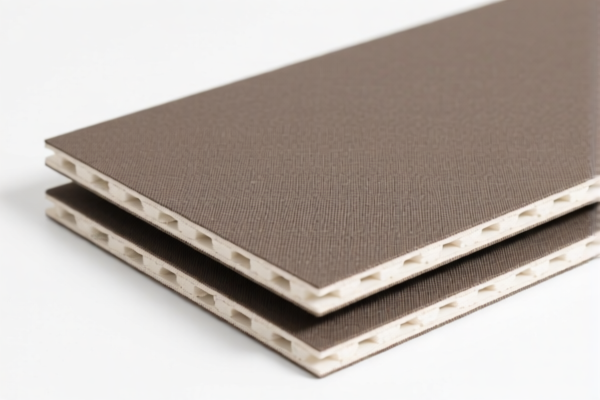
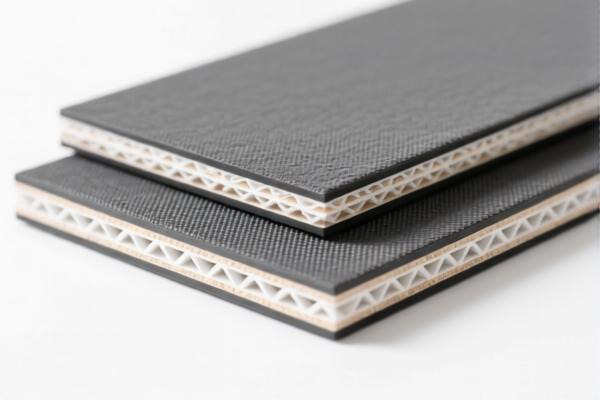
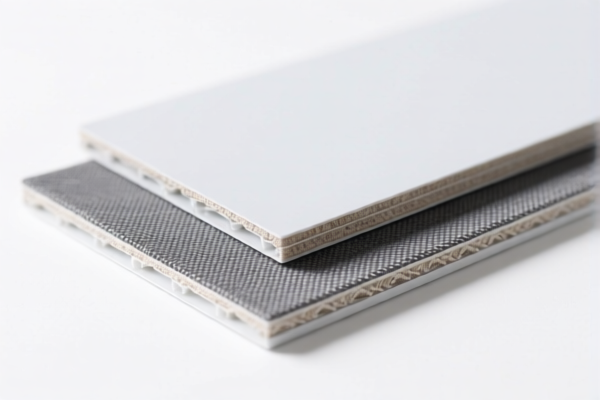
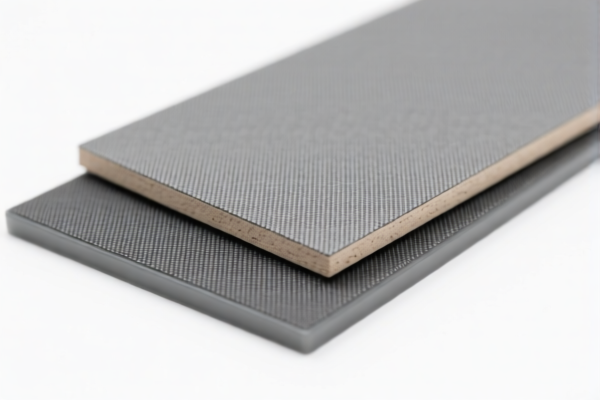
PVC Composite Textile Lightweight Boards are innovative building materials characterized by a sandwich structure: a PVC core reinforced with textile fibers. They are widely used in interior decoration, false ceilings, wall panels, and partition walls due to their lightweight, fire-resistant, and moisture-proof properties.
In international trade, classification depends on structural composition and primary use:
- Structural Panels (3925 Series): Rigid boards primarily used as construction components (e.g., ceiling panels, wall cladding).
- Composite Sheets (3921 Series): Sheets/plates composed of plastics and textile materials, not specifically identified as construction components.
- Textile Fabrics (5903 Series): If the product is flexible, fabric-like, and not rigid enough to be considered a "board" or "panel."
⚠️ Key Distinction Point:
- If the board is rigid and used for construction (ceilings/walls) → Likely 3925.xxxxxxxx
- If the board is a composite sheet (plastic + textile) without specific construction application → Likely 3921.xxxxxxxx
- If the product is flexible fabric (not a rigid board) → 5903.xxxxxxxx
📦 II. HS Code Classification Details (2026 Latest Tariff Authoritative Comparison)
| HS Code | Product Description | Application Scenario | Key Characteristics |
|---|---|---|---|
3925.90.00.00 |
Other builders' ware of plastics | Rigid PVC composite boards for ceilings/walls | ✅ Structural Building Component |
3921.12.11.00 |
Other plates, sheets, film, foil and strip, of plastics, combined with textile materials | Composite sheets where PVC is bonded to textile, not specifically for construction | ✅ Plastic-Textile Composite |
3925.20.00.91 |
Other builders' ware of plastics | PVC composite boards classified under residual categories for construction materials | ✅ Construction Material (Residual) |
3921.12.19.50 |
Other plates, sheets, etc., of plastics combined with textile materials | Similar to above, but specific sub-category for general composite sheets | ✅ General Composite Sheet |
5903.10.20.90 |
Textile fabrics impregnated, coated, covered or laminated with plastics | If the product is flexible textile (not a rigid board), coated with PVC | ✅ Textile Fabric (Non-rigid) |
🔍 Critical Reminder:
- Rigid Boards used for interior/exterior decoration (ceilings, walls) should generally be classified under Chapter 3925 (Builders' Ware).
- Flexible Sheets or non-structural composite panels should fall under Chapter 3921.
- Misclassification can lead to significant tariff differences (see below).
💰 III. 2026 Latest Tariff Rate Breakdown (Including Additional Taxes & Policy Add-ons)
✅ Applicable Country: United States (US)
✅ Origin: China (CN)
✅ Effective Date: November 10, 2025 onwards (including subsequent imports)
🎯 1. 3925.90.00.00 —— Builders' Ware of Plastics (Structural Panel)
| Item | Content |
|---|---|
| Base Tariff | 5.3% (ad valorem) |
| Section 301 Additional Tariff | +25.0% |
| Section 122 Tariff | +10.0% |
| Total Tariff Rate | 40.3% |
| Tax Calculation | CIF Value × 40.3% |
| De Minimis Eligibility | ❌ Not Eligible (deny_de_minimis) |
| Legal Basis Path | USITC:3925.90.00.00 → USITC:9903.88.01 (Section 301) → IEEPA:9903.01.24 (Section 122) |
📌 Explanation:
- Base 5.3%: Standard MFN tariff for builders' ware of plastics.
- +25% Section 301: USITC Footnote 9903.88.01 applies to most Chinese plastic products.
- +10% Section 122: Additional tariff under IEEPA for certain Chinese imports.
- Total 40.3%: High tariff burden. Proper classification is crucial to avoid overpayment.
🎯 2. 3921.12.11.00 —— Plastic-Textile Composite Plates/Sheets
| Item | Content |
|---|---|
| Base Tariff | 4.2% (ad valorem) |
| Section 301 Additional Tariff | +25.0% |
| Section 122 Tariff | +10.0% |
| Total Tariff Rate | 39.2% |
| Tax Calculation | CIF Value × 39.2% |
| De Minimis Eligibility | ❌ Not Eligible (deny_de_minimis) |
| Legal Basis Path | USITC:3921.12.11.00 → USITC:9903.88.01 → IEEPA:9903.01.24 |
📌 Note:
- Slightly lower base tariff (4.2%) compared to 3925.90 (5.3%), but still subject to 25% + 10% add-ons.
- Total 39.2% is marginally lower than 40.3%, but classification must be accurate. If it’s a structural panel, 3921 may be rejected by CBP.
🎯 3. 3925.20.00.91 —— Other Builders' Ware of Plastics (Residual Category)
| Item | Content |
|---|---|
| Base Tariff | 5.3% (ad valorem) |
| Section 301 Additional Tariff | +7.5% (Reduced due to specific exclusions or alternative footing) |
| Section 122 Tariff | +10.0% |
| Total Tariff Rate | 22.8% |
| Tax Calculation | CIF Value × 22.8% |
| De Minimis Eligibility | ❌ Not Eligible (deny_de_minimis) |
| Legal Basis Path | USITC:3925.20.00.91 → USITC:9903.01.24 (Footnote variation) → IEEPA:9903.01.24 |
📌 Key Advantage:
- Total 22.8% is significantly lower than other options.
- This rate applies if the product is classified under a specific residual category for builders' ware that benefits from a reduced Section 301 rate (7.5% instead of 25%).
- Caution: Must meet strict criteria for "other builders' ware" to qualify for this lower rate. CBP may challenge if it resembles standard PVC boards.
🎯 4. 3921.12.19.50 —— Other Plastic-Textile Composite Sheets
| Item | Content |
|---|---|
| Base Tariff | 5.3% (ad valorem) |
| Section 301 Additional Tariff | +25.0% |
| Section 122 Tariff | +10.0% |
| Total Tariff Rate | 40.3% |
| Tax Calculation | CIF Value × 40.3% |
| De Minimis Eligibility | ❌ Not Eligible (deny_de_minimis) |
| Legal Basis Path | USITC:3921.12.19.50 → USITC:9903.88.01 → IEEPA:9903.01.24 |
📌 Note:
- Same total rate as3925.90.00.00(40.3%).
- Higher base tariff than3921.12.11.00, so less favorable. Only use if specifically required by product structure.
🎯 5. 5903.10.20.90 —— Textile Fabrics Coated with Plastics (PVC)
| Item | Content |
|---|---|
| Base Tariff | 0.0% (ad valorem) |
| Section 301 Additional Tariff | +25.0% |
| Section 122 Tariff | +10.0% |
| Total Tariff Rate | 35.0% |
| Tax Calculation | CIF Value × 35.0% |
| De Minimis Eligibility | ❌ Not Eligible (deny_de_minimis) |
| Legal Basis Path | USITC:5903.10.20.90 → USITC:9903.88.01 → IEEPA:9903.01.24 |
📌 Important:
- Total 35.0% is lower than panel classifications.
- Only applicable if the product is a flexible textile fabric, not a rigid board.
- If imported as "boards" but classified as "textile," CBP will reject and reclassify, leading to penalties.
🛠️ IV. Clearance Practical Advice (Real-World Pitfall Avoidance Guide)
✅ 1. Required Documentation Checklist (All Mandatory)
| Document | Required | Description |
|---|---|---|
| ✅ Product Specification Sheet | ✔️ | Dimensions, density, fire rating, PVC content, textile type |
| ✅ Technical Drawings/Cross-Section | ✔️ | To prove rigid structure vs. flexible fabric |
| ✅ Product Photos (with Label) | ✔️ | Clear view of brand, model, and physical rigidity |
| ✅ Third-Party Test Report | ✔️ | Fire resistance (ASTM E84), flammability, structural integrity |
| ✅ Commercial Invoice | ✔️ | Must clearly state "PVC Composite Textile Board" or similar |
| ✅ Packing List | ✔️ | Detail quantity, weight, and packaging type |
✅ 2. Declaration Tips (Key Mnemonic)
🔥 “Rigid is Board, Flexible is Fabric; Construction Use, 3925 Fits Best!”
| Situation | Correct Declaration | Incorrect Action |
|---|---|---|
| Rigid Board for Ceiling/Wall | 3925.90.00.00 or 3925.20.00.91 |
Misdeclare as 5903 → 35% (but likely rejected) |
| Flexible PVC-Coated Textile | 5903.10.20.90 |
Declare as "Board" → CBP rejects, reclassifies to 3921/3925 |
| Non-Structural Composite Sheet | 3921.12.11.00 |
Declare as "Builders' Ware" → Unjustified higher tariff |
| Rigid Board, Specific Construction Use | 3925.20.00.91 |
Declare as 3921 → 39.2% vs. 22.8% potential savings |
✅ 3. Special Case Handling
| Situation | Handling Advice |
|---|---|
| Custom Size/Cut Board | Provide proof of custom cutting; still classified as 3925 if used for construction |
| Pre-Finished Panels (with print/pattern) | Still 3925; printing doesn’t change classification |
| Imported as Rolls (Flexible) | If flexible, declare as 5903; if rigidized post-import, still 5903 at entry |
| OEM for Construction Projects | Provide project specs to support 3925 classification |
🌍 V. Global Market Clearance Comparison (2026 Latest)
| Country/Region | Recommended HS Code | Tariff | Certification | Notes |
|---|---|---|---|---|
| 🇺🇸 USA | 3925.20.00.91 |
22.8% | No specific | Lowest rate if qualified |
| 🇺🇸 USA | 3925.90.00.00 |
40.3% | No specific | Standard structural panel |
| 🇨🇳 China | 3925.90.00.00 |
5% | CCC (if applicable) | No additional tariffs |
| 🇪🇺 EU | 3925.90.00 |
6.5% | CE + RoHS | No additional tariffs |
| 🇬🇧 UK | 3925.90.00 |
6.5% | UKCA + RoHS | No additional tariffs |
| 🇦🇺 Australia | 3925.90.00 |
5% | RCM | No additional tariffs |
📌 Conclusion:
- USA is the only market with high additional tariffs (25% + 10%).
- China, EU, UK, Australia have significantly lower tariffs (5-6.5%).
- Cost Optimization: If exporting to the US, ensure proper classification under3925.20.00.91to achieve 22.8% instead of 40.3%.
📌 VI. Common Errors & Pitfall Guide (Blood-Teaching Lessons)
❌ Error 1: Declaring rigid boards as "Textile Fabric" (5903)
👉 Consequence: CBP reclassifies to 3925 or 3921 → Back taxes + Penalties!
❌ Error 2: Declaring structural boards as general plastic sheets (3921)
👉 Consequence: Misses out on potential 22.8% rate if 3925.20.00.91 applies → Overpayment by ~16%!
❌ Error 3: Not providing technical drawings
👉 Consequence: CBP cannot verify rigidity → Delayed clearance or audit
❌ Error 4: Using vague descriptions like "Decorative Board"
👉 Consequence: CBP assigns highest duty rate by default → Unnecessary cost
✅ Correct Approach:
"PVC Composite Textile Rigid Panel, 3mm Thickness, Fire-Retardant, for Ceiling Installation, Model XYZ, ASTM E84 Certified"
🎯 VII. Conclusion: Professional Declaration, Save Time, Cut Costs!
🎯 Remember Mnemonic:
🔹 "Rigid Board, 3925 Fits; Flexible Fabric, 5903 It Is!"
🔹 "Classification Saves 17.5%, Mistakes Cost You Twice!"
📌 Pro Tip:
If your PVC composite boards are manufactured in Vietnam, Mexico, or Thailand, you may qualify for IEEPA Exemptions, reducing tariffs to 0%-5%.
Recommendation: Apply for Advance Ruling (CBP Binding Ruling) before shipment to confirm HS Code and avoid disputes.
📣 Immediate Action:
📞 Contact a Professional Customs Broker
📄 Provide Product Photos + Technical Specs
🚀 Apply for HS Code Advance Ruling
💡 Clear Your PVC Boards Smoothly, Reduce Costs, Boost Profits!
✨ Professional Clearance Starts with Accurate Classification!
💼 Every Dollar Counted, Every Shipment Clear!
Customer Reviews
About HS Code Classification
The Harmonized System (HS) is an internationally standardized nomenclature developed by the World Customs Organization (WCO) to classify traded products. Over 200 countries use the HS system as the basis for customs tariffs, trade statistics, and import/export regulations.
Each HS code follows a hierarchical structure:
- Chapter (2 digits) — Broad category of goods (e.g., Chapter 84: Machinery and Mechanical Appliances)
- Heading (4 digits) — More specific grouping within the chapter
- Subheading (6 digits) — Internationally standardized breakdown, used by all WCO member countries
- National subdivisions (8-10 digits) — Country-specific extensions for further classification, such as US HTSUS 10-digit codes
Correct HS code classification is essential for smooth customs clearance, accurate duty payment, and compliance with trade regulations. Misclassification can lead to customs delays, overpayment of duties, or penalties.
When importing from CN to US, the applicable tariff rates may include:
- Most-Favored-Nation (MFN) rate — The standard duty rate applied to WTO members
- General rate — Applied to countries without trade agreements
- Trade remedy duties — Additional tariffs such as Section 301 (anti-dumping), Section 232 (national security), or countervailing duties
The information provided on this page is for reference purposes only. For official classification, please consult with your local customs authority or a licensed customs broker.